
Atlanta Data Center Security System | Atlanta Buyer Guide
An Atlanta data center security system should fit the facility’s access patterns, critical areas, and response procedures. Start with what needs protection and how authorized people work, then choose controls and alert handling that support those needs without interrupting normal operations.
Discuss security system options for your facility
What should a data center security system protect?
A sound plan layers controlled entry, intrusion detection, alarm communication, and clear response steps. Map the site and its people first; this keeps equipment choices tied to real operational risks.
Data centers bring together valuable equipment, electrical and cooling infrastructure, network operations, delivery activity, and staff access. Those functions do not all call for the same restrictions. A loading point may need scheduled vendor access, while a server room may require a smaller approved user group and a record of entry. A control plan should distinguish those conditions rather than treating every doorway alike.
Begin with a simple floor plan. Mark the property boundary, all exterior doors, receiving and service areas, staffed workspaces, utility rooms, network operations areas, and server rooms. For each location, write down the asset or activity at risk, the people who need entry, normal access hours, and the consequence of an access problem. Include adjoining occupancies and shared routes if they apply.
- List access points: Include staff doors, delivery entrances, emergency exits, and doors used for maintenance.
- Mark sensitive spaces: Identify server rooms, power and cooling equipment spaces, and locations that house alarm or communications equipment.
- Trace work routes: Note how equipment, supplies, and service personnel move through the site.
- Record operating constraints: Flag rooms that need continuous access for authorized work and any periods when activity is limited.
This map becomes a practical design brief. It also gives facility managers a way to explain why a control belongs at one boundary and not another.
How should entry control match daily work?
Entry controls work best when permissions follow job needs and site routines. This section’s key planning point is to define who may enter each zone, at what times, and how exceptions are approved before deciding where readers or other controls belong.
Build an access-role list instead of beginning with a list of named individuals. Roles might include operations staff, facilities personnel, scheduled service providers, delivery contacts, and approved visitors. For each role, define the spaces it needs and whether access is continuous, time-limited, or supervised. A person who enters the building may not need direct access to every critical room.
Then document the credential lifecycle. Decide who can request, approve, issue, change, and deactivate credentials. Set a routine to review permissions when a person changes duties or no longer needs access. If a system supports individual credentials and event records, ask how those records are searched, retained, and reviewed. Avoid shared credentials where individual accountability is a design goal.
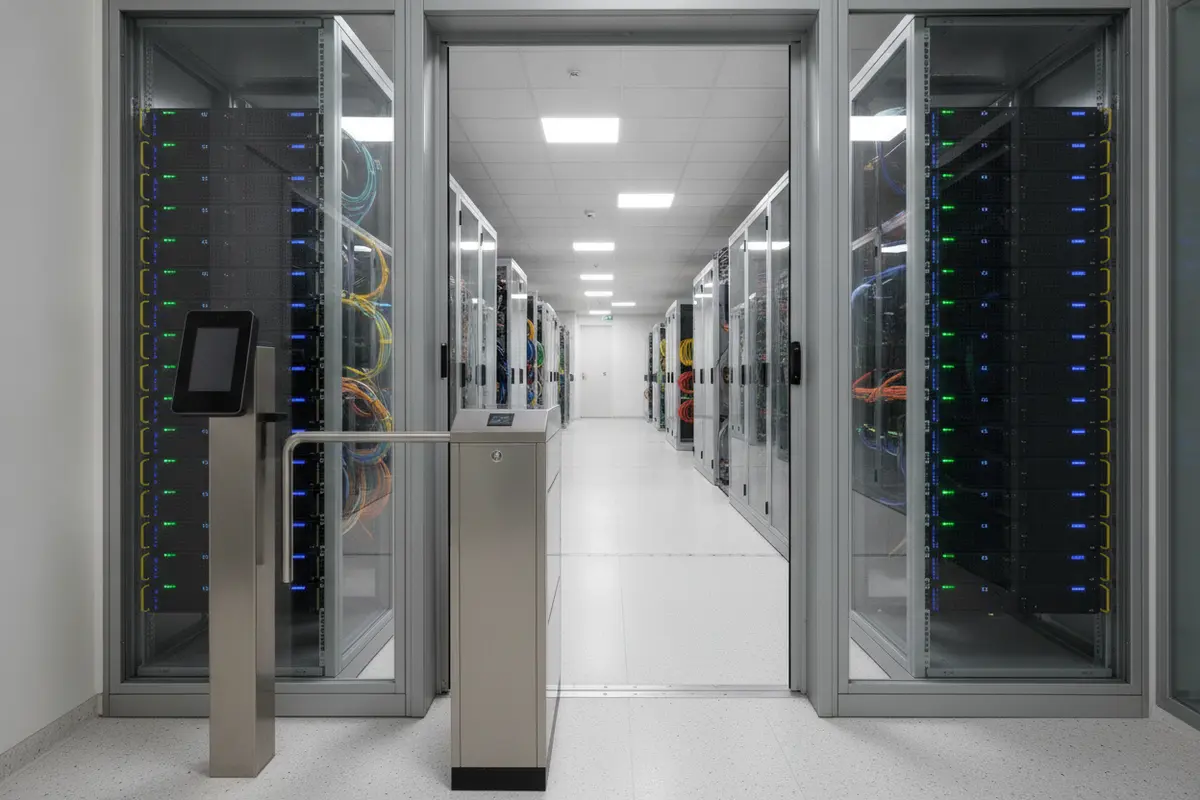
Vendor visits need a defined path too. The site may need a named sponsor, a scheduled time window, an approved work area, and a closeout step to confirm the visit has ended. Consider how urgent service calls differ from planned maintenance. The intent is not to add needless steps; it is to avoid leaving access decisions to whoever happens to be available.
Coordinate entry controls with safe egress and applicable life-safety requirements. Door hardware, release behavior, and any connection to other systems need review by qualified professionals for the actual building. For more on business entry options, see American Alarm’s guide to business access control systems and its practical access control planning guide.
How can intrusion detection support the site plan?
Intrusion detection adds another layer by signaling activity that falls outside expected access. The right coverage depends on the site layout, work schedule, and environmental conditions, so specify the event to detect and the response it should trigger before choosing devices.
Start at the outer boundary and work inward. Review doors and other openings, then consider the internal transitions into more sensitive spaces. A building with a staffed entrance may handle routine arrivals differently from a facility that has long unstaffed periods. A service corridor might have frequent authorized movement during a maintenance window but need a clear alarm state at other times.
Divide the plan into zones that match how the facility is operated. Each zone should have a useful name, a defined set of protected points, and an assigned arming and disarming procedure. If every alert is labeled with a generic building name, the recipient may have to spend time finding the relevant location. A clear event description can help the person receiving it decide what to check first.

- Check likely paths: Review doors and transitions that lead toward critical spaces.
- Account for normal conditions: Discuss equipment, airflow, routine movement, and work schedules that may affect placement or operation.
- Set zone names: Use labels that make sense to the people who receive and act on alerts.
- Test each state: Confirm that authorized work, arming, disarming, and alert transmission behave as designed.
Do not assume that adding more detection points automatically creates a better result. Poorly chosen locations or unclear operating steps can generate confusing signals and unnecessary interruptions. Ask the designer to explain what each point is intended to detect and how it fits the facility’s normal activity. American Alarm’s overview of business alarm system components can help frame that conversation.
How should alerts lead to a response?
An alarm signal is useful only when the right person receives it and knows what to do next. Set the notification path, escalation order, and verification steps in advance, including for nights, weekends, staff absences, and changes to contact details.
Write down the response sequence for each priority zone. For example, a signal from a service entrance might prompt a check of the scheduled work record and a call to the designated facility contact. An event in a restricted room may require a faster escalation to an authorized on-call contact. These are planning examples, not universal procedures; the facility should set steps that suit its own operations and obligations.
Decide whether alerts go to site contacts, a monitoring center, or both. Confirm which event details are passed along, how a recipient acknowledges an alert, and what follows if the first contact cannot be reached. Keep contact lists under an owner’s responsibility, and set a review schedule so changes do not remain unnoticed.
Discuss communications between the alarm equipment and its receiving point. Ask what happens if the primary signal path is interrupted, whether backup arrangements are available for the selected equipment, and how a communication failure is reported. Request plain-language documentation of assumptions and limitations. Do not rely on a label such as “connected” as a substitute for understanding the path and the response.
For context on signal handling and service models, read the guide to how monitored alarm systems work and the overview of alarm monitoring fees. The right arrangement depends on what your facility needs to communicate and who is expected to act.
What should the system design compare?
A comparison is most useful when it shows how proposed controls address defined site needs. The table below is a planning aid, not a prescriptive specification; a qualified assessment should confirm equipment suitability and installation details at the building.
| Facility need | Design element to discuss | Decision to document |
|---|---|---|
| Routine staff entry | Controlled entry and credential permissions | Which roles enter, at what hours, and who changes permissions? |
| Server room access | Restricted entry and event records | Who approves access and how are exceptions reviewed? |
| Scheduled service visit | Time-limited access procedure and alert handling | Who sponsors the visit, and how is completion confirmed? |
| Unstaffed periods | Intrusion detection, signal path, and escalation plan | Who receives the alert, and what is the next action? |
| System changes | Testing, documentation, and maintenance process | Who approves a change and verifies operation afterward? |
Ask vendors to identify what is included, what is outside the proposed scope, and what assumptions they made about staffing or existing equipment. Compare the operational plan alongside the device list. A design with a clear user process may be more workable than one with additional features that the facility cannot administer consistently.
How should you prepare to evaluate a provider?
Preparation helps a provider understand the property and gives your organization a fair basis for reviewing options. Bring relevant information to the first discussion, but do not share sensitive access credentials in an informal planning document.
- Choose a project contact: Select someone who can explain daily operations and gather decisions from facilities, IT, and management as appropriate.
- Gather site information: Prepare a floor plan, door list, operating hours, and known system details. Mark uncertain or outdated information for confirmation on site.
- Describe user roles: Summarize staff, vendor, and visitor access by function, including after-hours work and emergency access needs.
- Record constraints: Identify work windows, equipment moves, planned renovations, and spaces that cannot be interrupted.
- Set handoff expectations: Ask what user instructions, zone descriptions, test results, and system records will be provided.
During the assessment, ask the provider to walk the routes with you. Discuss each boundary and ask why it needs a proposed control. Confirm how a planned installation or service visit would be coordinated with ongoing operations. American Alarm’s article on choosing an alarm company provides more questions for comparing providers, while its page on commercial alarm service may be relevant when existing alarm equipment also needs attention.
Ask what testing will occur before handoff and who should attend. A practical handoff includes operating steps for authorized users, an explanation of alert destinations, a way to request service, and a record of agreed zone names. If the facility has multiple shifts, make sure every relevant group can access the instructions and knows who owns updates.
How do local service and broader resilience fit?
Local availability can matter when a facility needs an assessment, installation discussion, or service coordination. American Alarm serves Metro Atlanta and North Georgia; check its service area information to see whether the site is within its coverage and use the conversation to describe your requirements.
Data center security planning also sits within a wider resilience effort. The Cybersecurity and Infrastructure Security Agency (CISA) provides resources for critical infrastructure risk management and resilience planning. Its official agency site is a starting point for broader planning context; use facility-specific assessments and applicable requirements to determine what controls are appropriate at your location.
Keep the scope clear when discussing integrated systems. This article focuses on controlling entry, detecting unauthorized activity, communicating alarms, and defining response procedures. A separate review may be needed for information technology protections, fire protection, environmental monitoring, or continuity planning. Those functions can interact, but they have distinct requirements and should not be treated as interchangeable.
What questions should be settled before installation?
Close design gaps before work begins by turning assumptions into written decisions. These questions help expose unclear ownership, mismatched procedures, or overlooked site conditions.
- Coverage: Which doors and sensitive areas are included, and which areas are intentionally outside the scope?
- Permissions: Who approves access, reviews it, and removes credentials when they are no longer needed?
- Operations: How will after-hours work, deliveries, and service visits fit the alarm schedule?
- Alert flow: Who receives each type of event, and what happens if the first contact is unavailable?
- Communications: What signal path is used, and how are interruptions or faults reported?
- Change control: Who can request system changes, and how will testing and records be updated?
- Handoff: What instructions, contact details, zone descriptions, and test information will staff receive?
For facilities coordinating entry procedures across office or operations areas, the guide to office access control options can provide additional background. Use it as a prompt for questions, not as a substitute for a site-specific plan.
Talk with American Alarm about your facility’s system needs
Frequently asked questions
Use these answers as a starting point for planning; the final design should reflect the building and its operating requirements.
Does every data center need the same controls?
No. Layout, staffing, access roles, operating hours, and site conditions differ. A site review can help determine which entrances and internal areas need controls, how alerts should be divided, and what response steps are practical.
Should server rooms have separate access permissions?
That is a useful planning question. Consider whether only a subset of roles needs direct access, how exceptions are approved, and how access activity is reviewed. The policy should match business needs and applicable requirements.
How can a facility reduce confusing alarm events?
Map normal activity, define useful zones, and review environmental and operational conditions during design. Then test expected work routines and alert delivery before relying on the procedures. Ask the provider to explain the purpose of each detection point.
What should staff receive at handoff?
Request clear operating instructions, zone descriptions, alert and escalation contacts, testing information, and a process for service requests or changes. Make sure people who work different shifts can locate the relevant instructions.
Start a conversation about data center security planning
A well-planned Atlanta data center security system connects site conditions to access rules, detection, alert handling, and a response people can follow. Begin with the facility map and operating routines, then review the proposed design with a qualified alarm professional.

Leave a Reply
Want to join the discussion?Feel free to contribute!