Door Access Control Systems for Business 101
Traditional metal keys are a constant liability. They get lost, copied without your knowledge, or are never returned by former employees, forcing you into the expensive cycle of rekeying locks. It’s a reactive approach to a critical part of your company’s safety. Modern door access control systems for business offer a smarter way forward. Instead of worrying about who has a key, these business door security systems give you precise, real-time control over who can enter your property and when, creating a solution that truly protects your assets.
Key Takeaways
- Replace keys with smarter, trackable access: Modern systems let you grant or revoke entry permissions instantly using credentials like key cards or mobile apps, all while keeping a detailed log of who comes and goes for complete accountability.
- Choose a system that grows with your business: The right solution is scalable, allowing you to easily add more doors or users as your company expands. Plan for your future needs, not just your current ones, to make a smart long-term investment.
- Rely on professional installation for best results: A properly installed system works seamlessly with your other security tools, like alarms. Partnering with an expert ensures your system is set up correctly and supported for long-term, reliable performance.
What Is a Door Access Control System?
Think of a door access control system as a smart, modern gatekeeper for your business. Instead of relying on traditional metal keys that can be lost, stolen, or copied, these systems give you precise control over who can enter your building and specific areas within it. It’s a straightforward way to manage access for employees, vendors, and visitors, ensuring only authorized individuals can get into sensitive spaces like server rooms, inventory storage, or private offices.
At its core, an access control system is designed to protect your people and property by electronically restricting entry points. You decide who has access, where they can go, and at what times. This not only strengthens your building’s security but also simplifies day-to-day operations. You no longer have to worry about collecting keys from former employees or the expense of rekeying locks. Instead, you can grant or revoke access with a few clicks, creating a more secure and manageable environment for everyone. It’s a fundamental part of a comprehensive business security strategy.
What Are the Core Components?
Every access control system operates on three basic principles that work together to verify a person’s right to enter. It’s a simple but effective process that happens in seconds.
-
Identification: This is the first step, where a person presents their credential to the system. This credential could be a key card, a fob, a PIN code entered on a keypad, or even a biometric marker like a fingerprint. It’s how an individual tells the system who they are.
-
Authentication: Next, the system verifies that the credential is valid. It checks its database to confirm that the key card is active or that the fingerprint matches an authorized user. This step proves the person is who they claim to be.
-
Authorization: Finally, the system determines if the authenticated person has permission to enter that specific door at that specific time. An employee might have 24/7 access to the main entrance but only be allowed into the supply closet during business hours. This step enforces the rules you’ve set.
The Control Panel: The Brain of the System
The control panel is the central hub that makes every access control system work. Think of it as the brain of the operation. It’s a secure piece of hardware, usually installed in a protected location like an IT closet, that connects all the other components. When someone presents a key card or enters a code at a door reader, the panel receives that information, instantly verifies the user’s permissions against the rules you’ve set, and sends a command to the lock to either grant or deny entry. Every action—successful or not—is recorded, giving you a complete audit trail. This intelligent core is what transforms a simple lock into a dynamic tool for managing your business’s security.
Credentials and Door Readers
Credentials and readers are the parts of the system your team will interact with daily. The credential is what identifies a person; it can be a key card, a small fob that attaches to a keychain, a PIN code, or even an app on a smartphone. The door reader is the device mounted near the entrance that accepts the credential. When a card is tapped or a code is entered, the reader sends the data to the control panel for verification. This simple, two-part process is the first step in confirming someone’s identity and is far more secure and flexible than handing out traditional keys that can be easily misplaced or duplicated without your knowledge.
Electronic Locking Hardware
At its core, an access control system is designed to protect your people and property by electronically restricting entry points. The electronic locking hardware is what makes this possible. Unlike a standard lock, this hardware is wired to the control panel. When an authorized credential is presented, the panel sends a signal to the lock, which then disengages to allow entry. Common types include electric strikes, which replace the standard strike plate on a door frame, and magnetic locks. The key benefit is that you gain automated control over every door, ensuring they remain securely locked until an approved user requests access, which is a cornerstone of modern business security solutions.
Additional System Hardware
Beyond the main components, a few other pieces of hardware ensure your system is reliable and easy to manage. A dedicated power supply with a battery backup is essential, as it keeps your doors secure and operational even during a power outage. The most important element, however, is the management software. This is the user-friendly interface where you can add or remove users, set access schedules, and review activity logs from your computer. Instead of calling a locksmith, you can revoke a former employee’s access in seconds. When professionally installed, these components work together seamlessly to give you the precise control you need to protect your facility.
How the System Works Together
When these three components work in sync, they create a seamless and secure entry process. When an employee waves their key fob at a reader, the system instantly identifies the user, authenticates their credential, and checks their authorization level before unlocking the door. The entire process is quick and efficient, so it won’t slow down your team’s daily workflow.
One of the biggest advantages of this process is the detailed digital record it creates. Every access attempt, whether successful or denied, is logged with a timestamp and user details. This audit trail is incredibly valuable for accountability and for reviewing any unusual activity. When integrated with other security services like video surveillance, it provides a complete picture of who is moving through your facility and when, giving you total peace of mind.
What Are the Different Types of Access Control?
Choosing the right access control system is about finding the perfect fit for your business. The best option depends on your daily flow of people and security goals. From simple keypads to advanced biometrics, each type offers a different way to protect your property. Let’s look at the most common choices.
Understanding Access Control Models
Behind every access control system is a set of rules that determines who can go where. These rule sets are called access control models, and they act as the brain of the operation, making split-second decisions every time someone tries to enter. While the technology is advanced, the concepts are pretty straightforward. Understanding these models helps you choose a system that aligns with your business’s security needs, whether you prioritize flexibility, strict enforcement, or streamlined management. Let’s break down the four main models you’ll encounter.
Discretionary Access Control (DAC)
Discretionary Access Control, or DAC, is the most flexible model. Think of it like sharing a document online—the owner of the document gets to decide who can view or edit it. In a business setting, this means a department head could grant their team members access to a specific storage room or project area. While this flexibility is great for small, dynamic teams, it places the responsibility of managing permissions on individual users. This can become a security risk if permissions aren’t managed carefully, making it a less common choice for businesses that need consistent, top-down security policies.
Mandatory Access Control (MAC)
Mandatory Access Control (MAC) is the complete opposite of DAC. In this model, a central authority sets all access rules, and individual users have no control over them. Access is granted based on security classifications, where both the user and the resource (like a room or file) have a security level. A user can only access resources at or below their own clearance level. This rigid, hierarchical structure is common in government and military environments where security is paramount. For most businesses, MAC is too restrictive for day-to-day operations, but it’s a powerful example of a high-security framework.
Role-Based Access Control (RBAC): The Business Standard
Role-Based Access Control (RBAC) is the gold standard for most businesses, and for good reason. Instead of assigning permissions to individuals one by one, RBAC assigns access based on a person’s job role. For example, everyone in the accounting department gets access to the finance office, while only the IT team can enter the server room. This approach dramatically simplifies administration. When a new employee joins, you simply assign them a role, and they automatically get all the necessary permissions. It’s an efficient, scalable, and secure way to manage access in a growing organization.
Attribute-Based Access Control (ABAC)
Attribute-Based Access Control (ABAC) is the most dynamic and granular model. It makes decisions using a wide range of attributes in real-time. These attributes can include the user’s role, the time of day, their location, and the type of resource they’re trying to access. For instance, you could create a rule that allows managers to access sensitive reports, but only during business hours and from a company-owned device. This dynamic model offers an incredibly powerful and context-aware level of control, making it ideal for complex organizations with very specific security requirements.
Standalone vs. Networked Systems
Beyond the logical models, you also have a choice in how the system is physically structured. Standalone systems are self-contained and control a single door. All the hardware, including the reader and locking mechanism, is managed right at the entry point. They are simple to install and work well for securing a few specific doors, like a private office or a small supply closet. However, managing multiple standalone units can become cumbersome, as you have to program each one individually. They operate in isolation and don’t offer the centralized oversight that many businesses need.
Networked systems, on the other hand, connect all your access points to a central server. This allows you to manage your entire property from a single interface. You can instantly grant or revoke access, set schedules, and view activity logs for every door in real-time. This centralized approach is not only more efficient but also far more secure. A networked system can be integrated with your other security products, like your alarm monitoring and video surveillance, to create a truly comprehensive solution. For most businesses, a professionally installed networked system provides the scalability and control needed to protect their property effectively as they grow.
Key Cards and Proximity Readers
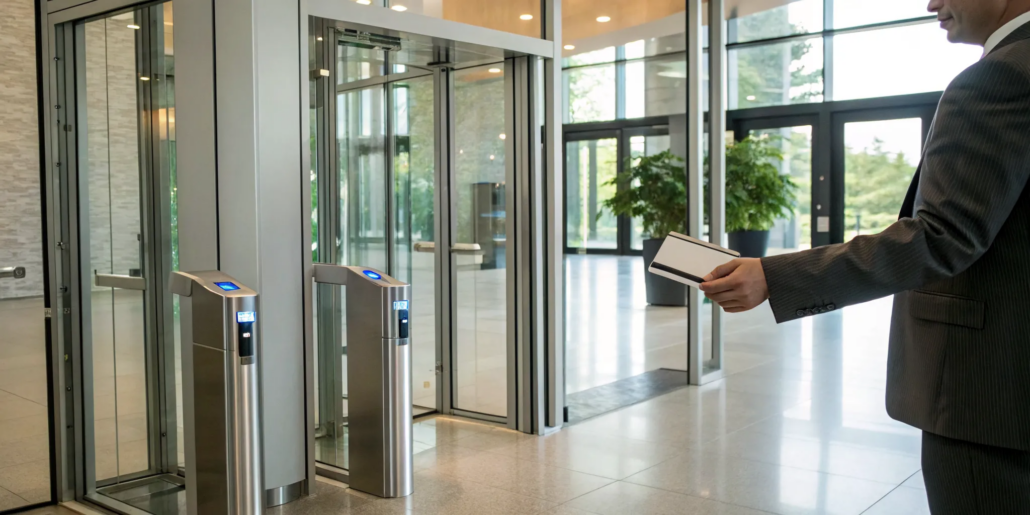
With these systems, an employee waves a card or fob to open a door. They’re popular because it’s easy to issue new cards and instantly deactivate lost ones without changing locks. This method helps businesses effectively control who can enter specific areas, making it a flexible choice for any office or commercial space.
Biometric Scanners (Fingerprint, Face, and More)
Biometric systems use unique human traits like a fingerprint or facial scan to grant access. Because these identifiers are nearly impossible to duplicate, they offer an exceptionally high level of protection for sensitive areas. While biometrics are very reliable, it’s smart to have a backup entry method, like a PIN, just in case.
Mobile Access Using Smartphones
This modern approach lets your team use a secure smartphone app to open doors. It’s convenient for them and powerful for you. You can grant or revoke access instantly, check activity logs, and manage and monitor your property’s entry points from anywhere. It’s a flexible solution for the modern business.
Keypads and PIN Code Entry
Keypad systems are a straightforward and dependable way to secure an entry point. Users simply type a unique code to unlock the door, eliminating the need for physical keys or cards that can be lost or copied. You can assign different codes to different people and change them anytime, providing a simple way to control entry points.
Cloud-Based vs. On-Premises: What’s the Difference?
Here, the choice is about where your system’s data is managed. On-premises systems store information on local servers, while cloud-based systems let you manage everything online. The cloud offers the flexibility to add users, check logs, and even unlock doors remotely from any device, making it a scalable option as your business grows.
Wired vs. IP-Based Connections
This choice comes down to how your system’s components talk to each other. Wired systems use dedicated physical cables to connect readers and locks to a central control panel, offering a highly secure and reliable connection that isn’t dependent on your network. This makes them a rock-solid choice for businesses prioritizing stability. On the other hand, IP-based systems leverage your existing computer network to connect components, often using Power over Ethernet (PoE) to simplify installation. This approach offers incredible flexibility, making it easier to scale your system by adding new doors without running extensive new wiring. Choosing between them often comes down to your building’s infrastructure and your long-term growth plans.
Why Invest in a Door Access Control System for Your Business?
Switching from traditional keys to an access control system is one of the most effective steps you can take to protect your business. It’s not just about locking doors; it’s about gaining precise control over your property and creating a safer environment for your employees and assets. An access control system gives you the power to decide exactly who can go where and when, all while simplifying your day-to-day operations.
Beyond just keeping the wrong people out, these systems provide valuable insights and operational efficiencies. You can say goodbye to the hassle and expense of changing locks every time an employee leaves. Plus, you gain a detailed record of entry and exit activity, which is invaluable for accountability. From managing access remotely to potentially lowering your insurance costs, the advantages are clear. Let’s look at some of the key benefits you can expect when you implement a modern access control system.
Protect Your Assets from Costly Threats
Property crimes like theft and vandalism are more than just a nuisance; they can be incredibly expensive. According to one FBI report, these incidents cost U.S. businesses over $17.2 billion each year. Relying on traditional metal keys leaves your business vulnerable, as they can be easily lost, copied, or never returned by former employees. An access control system directly addresses this liability. Instead of wondering who has a key, you gain precise control and a clear, real-time log of every entry attempt. This audit trail is crucial for protecting your valuable assets—from inventory and equipment to sensitive data—and ensuring complete accountability.
Prevent Unauthorized Entry
The primary job of an access control system is to manage who can enter your building and specific areas within it. Instead of relying on traditional keys that can be easily lost, stolen, or copied, you can use more secure methods like key cards, key fobs, or PIN codes. This means you can grant access to employees, contractors, and visitors without ever handing over a physical key.
If an employee leaves the company, you don’t have to worry about collecting keys or paying a locksmith to rekey your doors. You can simply deactivate their credential in the system with a few clicks. This immediately removes their access and ensures they can no longer enter the premises, giving you complete and instant control over your building’s security.
Manage and Monitor Access from Anywhere
Modern, cloud-based access control systems give you the freedom to manage your business’s security from wherever you are. Using a simple app on your phone or a web browser on your laptop, you can handle all your security tasks remotely. Need to let a delivery driver in after hours? You can unlock the door for them without leaving your home. Have a new employee starting? You can grant them access before they even arrive for their first day.
This remote capability also includes real-time monitoring. You can receive instant alerts via text or email for specific events, like a door being propped open or an unauthorized access attempt. This level of oversight allows you to respond quickly to potential issues and provides constant peace of mind, knowing you always have a handle on your building’s security.
Set Automatic Locking Schedules
One of the most practical features of an access control system is the ability to set automatic locking and unlocking schedules. This eliminates the daily worry of whether the last person to leave remembered to lock the doors. You can program your system to secure all entry points automatically at the close of business and unlock them just before your team arrives in the morning. This simple automation significantly reduces the risk of human error, which can leave your property vulnerable overnight. You can also create custom schedules for weekends, holidays, or special events, ensuring your building is always secure without requiring someone to be there to turn a key. The best part is the flexibility; you can easily adjust the locking schedule in real-time from your management portal to accommodate any unexpected changes. It’s a set-it-and-forget-it approach that adds a powerful layer of reliability to your security.
Create Detailed Audit Trails for Accountability
Have you ever wondered who was the last person to leave the office or who accessed a sensitive area over the weekend? An access control system eliminates the guesswork by creating a detailed audit trail of every entry and exit. The system automatically records who accessed a door, at what specific time, and whether the entry was successful or denied.
This log is an incredibly useful tool for accountability and incident investigation. If an issue arises, you can quickly review the access history to see exactly who was in a particular area at that time. These detailed reports help you track activity, identify any unusual patterns, and maintain a clear record of movement throughout your facility, which is essential for protecting your assets and ensuring employee safety.
Reduce Operational Costs and Insurance Premiums
While installing a new security system is an investment, it often leads to significant long-term savings. Think about the costs associated with traditional keys: rekeying locks every time an employee departs can be expensive and time-consuming. With an access control system, you eliminate that expense entirely. You also reduce the risk of theft, both internal and external, which protects your valuable inventory and equipment.
Furthermore, many insurance providers recognize the value of robust security measures. By installing a professional access control solution, you may qualify for lower insurance premiums. Insurers see your business as a lower risk, and they often pass those savings on to you. This can help offset the initial cost of the system, making it a financially smart decision for your business.
How Modern Systems Reduce Expenses
Let’s talk about the bottom line. One of the most immediate financial wins is saying goodbye to rekeying costs for good. Every time an employee moves on, you won’t have to call a locksmith. You just deactivate their key card or fob instantly, which cuts out that recurring expense and closes a potential security gap from unreturned keys. This also frees up valuable administrative time. On top of that, many insurance providers offer lower premiums for businesses with professional security measures. By demonstrating you have a solid system to control access and track activity, you can often secure a better rate. When you add up the insurance savings, the end of rekeying fees, and better protection for your assets, it’s easy to see how this investment pays for itself.
Secure More Than Just Entryways
While your main entrance is the first line of defense, true security extends to the sensitive areas within your building. Think about your server room, inventory storage, or offices containing confidential files. An access control system allows you to manage access to these critical spaces with the same precision as your front door. You can create specific permissions, ensuring only authorized personnel can enter certain rooms. For example, you can grant your IT team access to the server room while restricting it for everyone else. This granular control protects your most valuable assets from internal threats and unauthorized access, moving beyond a one-size-fits-all security approach.
This level of internal control also streamlines your daily operations. Instead of juggling multiple keys for different rooms, employees can use a single credential for every door they are authorized to open. An access control system also creates a detailed log of every entry attempt on these internal doors, providing a clear audit trail for enhanced accountability. If a piece of equipment goes missing from a storage closet, you can quickly review who entered that room and when. This gives you a complete picture of movement throughout your facility, not just at the perimeter, making it easier to protect your property and manage your team effectively.
How Much Do Business Door Security Systems Cost?
When you’re thinking about adding an access control system, one of the first questions that comes to mind is, “What’s this going to cost?” The answer isn’t a single number, because the price depends entirely on your business’s specific needs. It’s helpful to think of it less as a one-time expense and more as an investment in your company’s security and smooth operation.
The total cost is a mix of several factors, from the hardware you choose to the number of doors you need to secure. A small office with one entrance will have a very different budget than a large facility with multiple entry points and restricted areas. Understanding the key components of the cost will help you make an informed decision and find a solution that fits your budget without compromising on safety. Many business insurance providers even offer discounts for properties with robust security, which can help offset the initial investment over time.
Upfront Installation vs. Ongoing Maintenance Costs
Your total investment can be broken down into two main categories: the initial setup and the long-term upkeep. The upfront installation cost covers the physical hardware (like card readers, electronic locks, and control panels), the software that runs the system, and the professional labor to get it all working correctly. This is where the bulk of your initial spending will be.
After the system is up and running, you’ll have ongoing costs to consider. These can include monthly or annual software subscriptions, especially for cloud-based systems, and potential fees for maintenance or support. While our systems are built for reliability, planning for occasional repairs or upgrades is always a smart move. We believe in transparency, so we’ll walk you through all potential costs to ensure you find affordable options that fit your budget.
How System Type Affects Price
The technology you choose plays a huge role in the overall price. A simple keypad system for a single door will be the most budget-friendly option. As you move to more advanced solutions, the cost per door increases. For example, key card and fob systems are a popular middle-ground, while sophisticated biometric readers that use fingerprints or facial recognition represent a higher investment.
Generally, you can expect an access control system to cost between $1,000 and $5,000 per door. This range accounts for the type of reader, the locking hardware, and the complexity of the installation. The number of doors you need to secure is the biggest multiplier, so a clear understanding of your property’s layout is key. We can help you explore the different types of systems to find the right balance of security and cost for your business.
Cost Estimates for Different System Types
Let’s break down that per-door cost estimate a bit more. At the most budget-friendly end, you have keypad systems. These are an economical choice, perfect for securing a single office or a supply closet where you just need a simple, controlled entry point. Moving up in price and features, you’ll find key card and fob systems, which are the go-to for many businesses. They offer a great balance of security and convenience, making them a solid mid-range investment. For areas requiring the highest level of protection, like a server room or records archive, biometric systems are the top-tier choice. While they come with a higher price tag, the unmatched protection of a fingerprint or facial scan is often worth the investment. To find out exactly where your project falls, the best step is to get a personalized quote from our team.
Other Factors That Affect the Final Cost
Beyond the hardware and number of doors, a few other elements can shape your final cost. Scalability is a big one. A well-designed system should be able to grow with your business, allowing you to add more doors or users later without having to start from scratch. This flexibility is essential for any growing company.
Integration with other systems also affects the price. If you want your access control to work with your existing alarm, video surveillance, or fire safety systems, it may require additional hardware or programming. Creating a unified security structure provides more comprehensive protection and streamlined management. Our team specializes in designing these kinds of integrated security solutions to give you a complete and customized safety net for your business.
How to Find the Right Access Control Partner
Choosing the right technology is a big step, but finding the right partner to install and support it is just as important. The company you work with will be your guide, helping you select, implement, and maintain your system. Here’s what to consider when looking for a security provider you can trust.
Why a Custom Solution Matters
Every business is unique, and your security system should be, too. A well-designed system is both scalable and customizable, making it a smart investment for any business, no matter its size. Your provider should take the time to understand your specific needs, from your building’s layout to your daily operations. They should design a solution that fits you perfectly today and can grow with you tomorrow. We believe in creating customized systems that provide exactly the protection you need, without unnecessary extras.
What to Look for in a Provider
When evaluating potential partners, look for a few key qualities. A great provider will offer solutions that are scalable, so your system can expand as your business grows. They should also discuss integration, ensuring your new access control works smoothly with other software you use. Ask about modern features like mobile access for using smartphones as credentials and cloud-based management for controlling your system from anywhere. A provider who offers these flexible security services is invested in your long-term success.
Expertise with Vetted, High-Quality Hardware
The physical components of your system are its foundation, but not all hardware is created equal. A trustworthy partner won’t just sell you a box; they’ll recommend vetted, high-quality systems and products that are proven to be reliable in real-world business environments. This expertise ensures you avoid the frustration of faulty readers or locks that fail when you need them most. A professional installation is just as critical, guaranteeing that every component works together seamlessly and integrates with your other security solutions, like alarms or video surveillance, for long-term, dependable performance.
Why Local Support Matters
There’s a real advantage to working with a local expert. A professional security company brings an expertise and access to high-quality technology that you can’t find in off-the-shelf products. When your provider is right here in the Atlanta area, you get faster service when you need it most. A local partner understands the challenges facing businesses in our community and can offer more personalized advice. Having a dedicated team you can easily get in touch with provides peace of mind, knowing expert help is always nearby.
The Advantage of a Local Atlanta Partner
Choosing a partner based right here in Atlanta, like American Alarm, means you’re working with a team that genuinely understands the local business landscape. We’ve been protecting Atlanta businesses since 1995, so we’re familiar with the unique security challenges that companies in our community face. This local insight allows us to move beyond generic advice and design security solutions that are truly tailored to your operations. A national chain might offer a one-size-fits-all package that doesn’t quite fit, but a local partner can provide a solution that feels like it was made just for you—because it was. We take the time to understand your workflow, your property, and your goals to build a system that works for you.
Beyond tailored advice, the practical benefits are huge. When you need support, you’re not calling a distant call center; you’re reaching out to neighbors. Because we’re in the Atlanta area, you get faster service when you need it most, whether it’s for a routine check-up or an urgent repair. As a professional security company, we bring an expertise and access to high-quality technology that you simply can’t find in off-the-shelf products. Having a dedicated team you can easily get in touch with provides the peace of mind that comes from knowing expert help is always nearby. It’s about building a relationship with a team that’s as invested in your business’s safety as you are. That’s the American Alarm difference.
How to Choose the Right System for Your Business
Selecting the right access control system isn’t about picking the most expensive or feature-heavy option. It’s about finding the perfect fit for your business, both for today and for the years to come. A system that works for a small retail shop will have different requirements than one for a multi-floor office building. By taking the time to think through your specific needs, you can invest in a solution that provides real value and peace of mind. Let’s walk through the key considerations to help you make a confident choice.
Assess Your Current Security Needs
First, think about what you actually need to protect. How many doors need to be secured? Who needs to get in and out, and when? Commercial access control systems can use different methods to verify identity, from key cards and fobs to PIN codes and even biometrics like fingerprints. Consider the level of security you need for different areas. For example, a public entrance might just need a simple card reader, while a server room or records office could require a more advanced solution. Making a list of your must-have features will help you narrow down the systems and products that make sense for your property.
Choose a System That Can Scale with Your Business
Your business isn’t static, and your security system shouldn’t be either. What works for you now might not be enough in a few years. Think about your growth plans. Are you expecting to hire more employees, expand your office space, or open new locations? A well-designed system is scalable, meaning you can easily add more doors, users, or features as your business evolves. Choosing a flexible solution from the start saves you from the headache and expense of replacing an entire system down the road. It’s an investment in your business’s future, ensuring your protection can grow right alongside you.
Define User Roles and Access Levels
Not everyone on your team needs access to every part of your building. An intern probably shouldn’t be able to walk into the executive offices, and your accounting team may not need access to the warehouse after hours. This is where role-based access control comes in. By creating an access hierarchy, you can ensure employees can only enter the specific areas they need to do their jobs. This simple step is crucial for protecting sensitive information and valuable assets. You can contact us to discuss how to set up custom access levels that fit your team’s structure perfectly.
How to Integrate Access Control with Your Existing Systems
An access control system is powerful on its own, but it becomes a true security asset when it works in concert with the other systems protecting your property. Instead of having separate, siloed tools, integration creates a single, intelligent network that responds more effectively to any situation. When your access control, alarm, and other systems communicate, you get a more complete picture of what’s happening at your business and a more streamlined way to manage it all. This approach ensures every component is working together to keep your people and property safe.
Linking to Your Alarm System
Think of your alarm and access control systems as partners. When they’re connected, they can share information to create a smarter response. For example, if someone tries to force a door open, the access control system can instantly tell your alarm system to sound an alert and notify the monitoring center. You can also set rules to automatically arm or disarm certain areas when an authorized person uses their credential, reducing the chance of false alarms. This creates a unified business security structure that is both more secure and easier to manage day-to-day.
Linking to Fire and Life Safety Systems
In an emergency, every second counts. Integrating your access control with your fire and life safety systems is crucial for protecting your employees and visitors. When a fire alarm is triggered, the integrated system can automatically unlock designated emergency exit doors to ensure a clear and fast evacuation path. At the same time, it can keep other doors secured to prevent unauthorized access during the confusion. A well-designed system is scalable and customizable, making this essential connection possible for any business looking to provide comprehensive protection.
Pairing with Video Surveillance
Pairing access control with your video surveillance system gives you valuable visual context for every entry event. When someone swipes a card or enters a code, the system can automatically prompt a nearby video device to record the event. This allows you to visually confirm who is entering and create a complete record for accountability. Cloud-based access control systems can even send you mobile alerts with video clips, giving you a real-time view of your business’s entry points from anywhere. This combination of access data and video evidence provides a powerful layer of oversight.
3 Common Myths About Access Control
When you’re thinking about securing your business, it’s easy to run into some common misconceptions about access control. These systems can seem complex from the outside, but the reality is often much simpler. Let’s clear the air and bust a few myths so you can feel confident about choosing the right protection for your company.
Myth: “It’s only for large corporations.”
It’s a common belief that access control is a luxury reserved for huge companies with sprawling office parks. The truth is, a well-designed system is completely scalable. Whether you run a small retail shop, a local law firm, or a growing startup, your assets and your team are just as important. Modern access control systems are customizable, making them both accessible and essential for any business. You don’t need a massive budget to get effective, keyless entry that protects your property and simplifies your operations. It’s all about finding a solution that fits your specific needs today and can grow with you tomorrow.
Myth: “Cloud-based systems aren’t secure.”
Handing over your security data to the cloud can feel a little unsettling, but this is one area where perception doesn’t match reality. Cloud-based access control actually benefits from a massive, multi-billion dollar network security industry that provides a powerfully secured environment. These platforms are managed by experts whose entire job is to protect data with the latest encryption and threat detection. In many cases, this level of security is far more robust than what a single business could manage on its own with an on-site server. Your data is protected by constant monitoring and updates, giving you peace of mind and secure access from anywhere.
Myth: “I can just install it myself.”
While the hands-on approach is great for many business projects, installing a security system isn’t one of them. A professional installation is about more than just connecting a few wires. Professionals bring expertise and experience to ensure every component is installed correctly, integrated seamlessly, and positioned for optimal performance. They use commercial-grade technology that is more reliable and durable than off-the-shelf options. A proper installation eliminates vulnerabilities, ensures the system complies with local codes, and guarantees it will work exactly as it should when you need it most. This is one job that’s best left to the pros.
How to Prepare for a Smooth Installation
Once you’ve chosen the right access control system, the next step is putting it into place. A successful rollout is about more than just installation; it’s about integrating the new system into your daily operations without a hitch. With a bit of planning, you can ensure your team feels confident, your system is dependable, and your investment is protected for the long haul. This preparation phase is where a great system becomes a seamless part of your business security.
At American Alarm, we guide you through every step, making sure the transition is as smooth as the system itself. From training your staff to planning for the unexpected, we’re here to help you get it right from day one.
Train Your Team for a Seamless Transition
A new system is only effective if your team knows how to use it properly. The good news is that modern access control systems are designed to be user-friendly. We’ll walk your employees through everything they need to know, from using their credentials to understanding new security protocols. A well-designed system is scalable and customizable, making it accessible for any business. Our goal is to empower your team so they feel comfortable and confident with the new technology, ensuring everyone is on board and security remains a top priority.
Plan for System Reliability and Backups
What happens if the power goes out? It’s a question we help you answer before it ever becomes an issue. A solid backup plan ensures your property remains secure no matter what. This includes having backup power sources and clear procedures for manual overrides if needed. We also look at how to integrate your access control with other security solutions to create a unified structure. By planning for these scenarios ahead of time, you can maintain business continuity and enjoy the peace of mind that comes with knowing you’re always protected.
What to Expect for Ongoing System Maintenance
Your access control system works around the clock, so keeping it in top shape is key. Regular maintenance ensures everything runs smoothly, from the software to the door hardware. With a professional partner, you don’t have to worry about the technical details. We handle routine check-ups and updates to prevent issues before they start. Many modern cloud-based solutions also allow us to manage your system remotely, giving you one less thing to think about. Our team of experts provides the ongoing support you need to keep your system performing at its best for years to come.
Related Articles
- Guide to Access Control for Commercial Buildings
- Why Atlanta Businesses Need Access Systems
- How an Access Control System Secures Your Business
- Alarm & Access Control Systems for Atlanta Businesses
Frequently Asked Questions
What happens to my access control system if the power or internet goes out? This is a great question and a common concern. Professional access control systems are designed with reliability in mind. Most systems include a battery backup that keeps your doors secured and functional during a power outage. For cloud-based systems, if your internet connection is temporarily lost, the system can often continue to operate locally, meaning your team can still get in and out. Once the connection is restored, all the entry data will sync up.
How complicated is it to add or remove users from the system? It’s incredibly simple and one of the biggest advantages over traditional keys. Instead of calling a locksmith, you can log into the system from a computer or smartphone and make changes instantly. Removing access for a former employee takes just a few clicks, immediately securing your property. Adding a new team member is just as straightforward, allowing you to grant them specific permissions before they even start their first day.
Can I start with just a few doors and expand the system later? Absolutely. A well-designed system is built to be scalable, which means it can grow right alongside your business. You can begin by securing your most critical entry points, like the main entrance and a server room, and then easily add more doors as your needs change or your budget allows. This flexibility makes it a smart, long-term investment for any growing company.
Will an access control system work with the other security I already have? Yes, integration is a key feature of modern security. A professional access control system can be connected to your existing alarm, fire safety, and video surveillance systems. This creates a more cohesive and responsive security network. For example, a forced entry attempt can trigger your alarm, or an employee swiping their card can prompt a video device to record the event, giving you a more complete picture of your property’s activity.
Is a key card system really that much more secure than traditional locks and keys? It is, for a few important reasons. Physical keys can be easily copied, lost, or stolen, creating a security risk you might not even be aware of. With an access control system, you have complete control. You can instantly deactivate a lost fob, and you always have a digital record of who entered and when. This detailed audit trail provides a level of accountability and insight that you simply can’t get from a standard lock and key.


Leave a Reply
Want to join the discussion?Feel free to contribute!