Fire Alarm Supervisory Signal Meaning for Businesses
For facility managers and business owners, understanding the fire alarm supervisory signal meaning for businesses can prevent a warning from being mistaken for an active fire alarm or ignored as a minor panel message. A supervisory signal usually means that a monitored fire-protection condition is outside its normal position or range and needs prompt attention.
What does a fire alarm supervisory signal mean?
A fire alarm supervisory signal tells the panel and supervising station that a condition affecting a protected fire-safety feature needs attention. It does not normally mean that the system has detected a fire, but it can mean that part of the protection system is not ready to operate as designed.
Short answer: A supervisory signal is a monitored warning about the status of a fire-protection system or component, such as a sprinkler control valve that is not in its normal position. Treat it as important, identify the device shown by the panel, and have the condition evaluated by the responsible fire-alarm professional.
For Atlanta businesses that need a system review or service response, commercial fire alarm help can connect the panel message to the broader system, monitoring, and maintenance picture.
Call (770) 645-0061 for commercial fire alarm help.
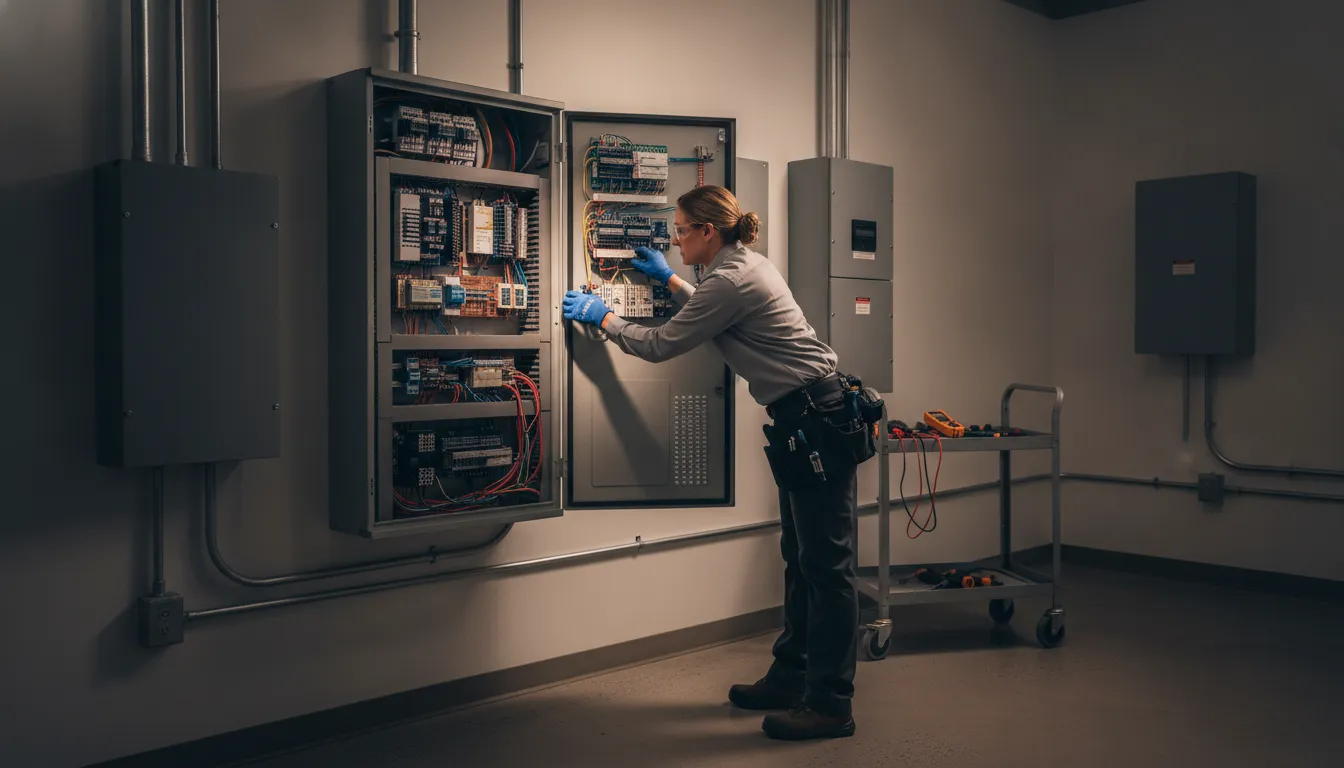
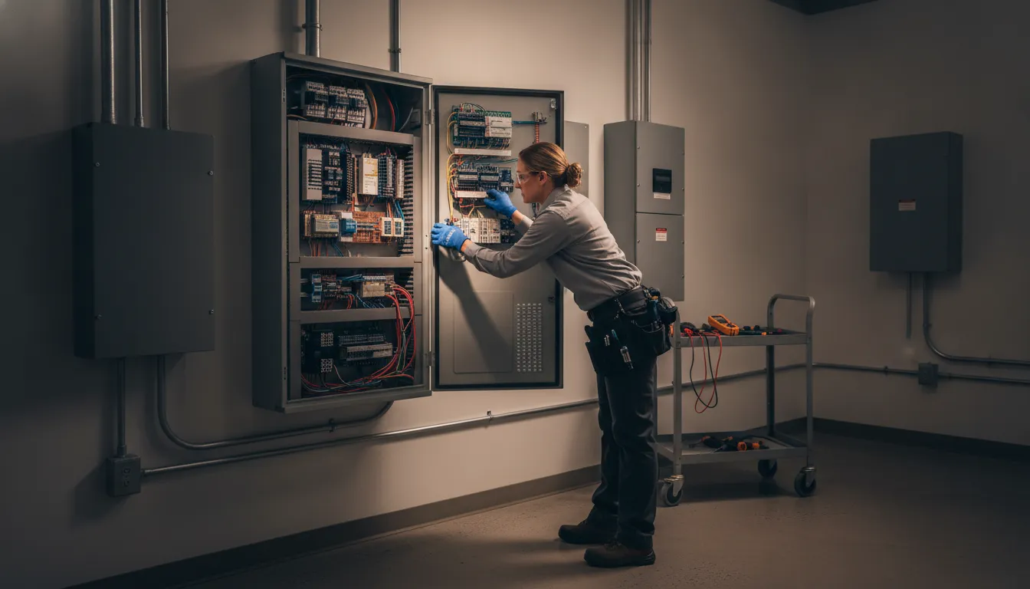
The exact wording varies by manufacturer and panel programming. A display may use “SUPV,” “SUPERVISORY,” or a plain-language description of the device. The message may also identify a zone, address, valve, pressure switch, fire pump, or other input. Read the panel message and event history rather than relying on the color of one indicator alone.
The panel is the system’s decision point, but it does not replace the documentation for the property. The point or zone description, riser diagram, sequence of operations, monitoring account information, and prior service records can show which physical component is connected to the message. That context matters in a multi-tenant office, warehouse, medical facility, or retail property where a device may be in a locked mechanical room or another tenant’s space. Keep the display information with the service record and give the technician the exact wording before anyone operates equipment.
For background on how a control panel classifies alarm, supervisory, and trouble conditions, see the commercial fire alarm panel types guide.
Supervisory vs. alarm vs. trouble signals
Alarm, supervisory, and trouble signals are different statuses even though they may appear together on a fire alarm control panel. Knowing the distinction helps staff follow the right emergency and service procedure.
| Signal | What it generally indicates | Business response |
|---|---|---|
| Alarm | The system has received an initiating condition associated with fire or another programmed emergency. | Follow the emergency plan, move people to safety, and contact emergency services as required. Do not wait for a service technician to investigate an active alarm. |
| Supervisory | A monitored fire-protection feature is outside its normal state or range, such as a sprinkler valve position or another supervised condition. | Notify the responsible contact and fire-alarm provider promptly. Identify and correct the condition before protection is assumed to be fully restored. |
| Trouble | The fire alarm system, power supply, wiring, device, or communication path has a fault or impairment. | Record the message and arrange qualified service. A trouble condition can reduce system reliability even when no fire is present. |
These descriptions are general. The approved sequence for a particular facility depends on the system design, monitoring agreement, emergency plan, manufacturer instructions, and requirements adopted by the local authority having jurisdiction.
Common causes of a supervisory signal
A supervisory signal commonly comes from equipment that helps a fire-protection system stay ready, rather than from a smoke detector sensing combustion. The initiating device and the building’s approved design determine the meaning of the specific message.
- Sprinkler valve position: A control valve may be partly closed, moved, or otherwise outside its normal monitored position.
- Water or air pressure: A pressure-related device may report that a supervised range is not normal for the protected system.
- Fire pump or suppression equipment: A monitored status associated with a pump, tank, or other fire-protection component may need investigation.
- Temperature or environmental condition: A supervised space or piece of equipment may be outside the range expected by the system design.
- System-specific supervisory input: The panel may monitor another approved fire-protection function configured by the designer or authority having jurisdiction.
NFPA’s explanation of supervision describes the purpose as monitoring the condition of fire-protection systems and signaling when a supervised feature is not in its normal state. Its sprinkler-supervision guidance is useful background, but the message on the panel and the facility’s documentation should control the next service step.
Read NFPA’s guide to fire alarm supervision and NFPA’s explanation of sprinkler supervision for authoritative background.
What should a business do when the panel shows supervisory?
Responding methodically helps preserve the information a technician needs while avoiding an unsafe or undocumented reset. Use the facility’s written emergency and impairment procedures first.
- Check for an active emergency: If the panel also shows an alarm, occupants report smoke or fire, or there is another sign of immediate danger, follow the emergency plan and call 911. A supervisory message should never delay evacuation or emergency response.
- Read and record the exact message: Note the time, signal type, zone or address, device description, and any related trouble or alarm status. Take a photo of the display if the facility’s policy permits it.
- Notify the responsible contact: Follow the building’s notification tree and monitoring agreement. Tell the fire-alarm provider what the panel says, not only that it is “beeping.”
- Do not change protected equipment casually: Do not operate a sprinkler valve, bypass an input, disconnect a device, or repeatedly reset the panel to make the message disappear unless the approved procedure and qualified personnel direct that action.
- Arrange evaluation and documentation: Have the condition investigated, corrected, and documented. If an impairment exists, the responsible parties may need temporary safeguards or additional notifications under the facility’s plan and local requirements.
A reset can clear a display without correcting the condition that caused it. The goal is not merely to silence the panel. The goal is to restore the supervised fire-protection feature and leave a record of what was found, corrected, tested, and returned to service.
Why supervisory signals matter for Atlanta businesses
Atlanta businesses depend on fire-alarm systems that are ready across changing operating conditions, maintenance visits, construction, tenant improvements, and routine building operations. A supervisory signal gives the facility an opportunity to address an abnormal protection condition before an emergency exposes the gap.
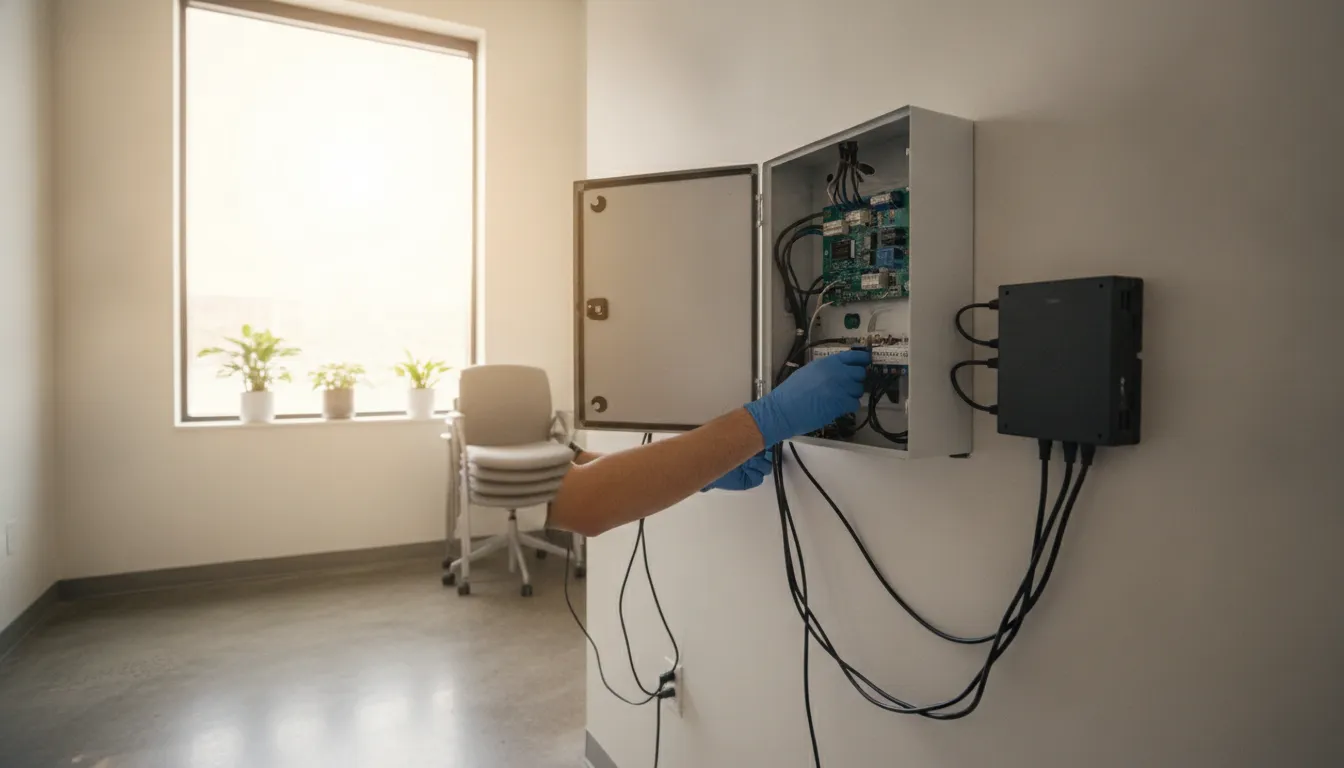
Monitoring and communication also matter. A signal that does not reach the supervising station cannot support the intended response. American Alarm’s commercial fire alarm service covers system design, monitoring, testing, and maintenance for Atlanta-area businesses. Its dual-path monitoring guide explains why alarm, trouble, and supervisory signals need dependable communication paths.
Schedule a commercial fire alarm signal review by calling (770) 645-0061.
How testing and maintenance support reliable signals
Testing checks whether devices and functions operate as intended, while maintenance helps preserve the condition of the system between major service events. Both should be performed within the facility’s approved scope and documented by the responsible provider.
- Review the panel: Confirm that normal status, active events, power indications, and event history are understood before testing begins.
- Coordinate with monitoring: Put the account into the correct test condition before an authorized test so an expected signal is not treated as an unplanned emergency.
- Check supervised equipment: Test or inspect valves, pressure devices, communication paths, and other inputs only through an approved procedure.
- Document the result: Record the devices tested, signals received, deficiencies found, corrective work, and any required retest.
- Close the loop: Confirm that temporary test settings are removed and that the monitoring center and responsible contacts know the final status.
For a broader process, see American Alarm’s commercial fire alarm testing checklist and commercial fire alarm maintenance guide. OSHA also states that fire detection systems must be maintained in operable condition and tested as required by its applicable standard; review the OSHA fire detection systems standard alongside your local requirements and system documentation.
Frequently asked questions
A supervisory signal is a service and life-safety status that deserves prompt attention, but it is not automatically the same as an active fire alarm. The exact device message and the facility’s response plan determine the next step.
Is a supervisory signal an emergency?
It is not normally an indication that the panel has detected a fire, but it can indicate that a fire-protection feature is not in its normal state. Treat it as important. If there are signs of fire or the panel shows an alarm, follow the emergency plan immediately.
Can I silence or reset the supervisory signal?
Follow the facility’s approved procedure and the provider’s direction. Silencing or resetting may stop an audible notification without fixing a valve, pressure, equipment, or other supervised condition.
What is the difference between supervisory and trouble?
Supervisory generally concerns the status of a monitored fire-protection feature. Trouble generally concerns a fault or impairment in the fire-alarm system, power, wiring, device, or communication path. The panel’s exact message and system documentation should be used to confirm the condition.
Who should investigate a supervisory signal?
Notify the responsible facility contact and the fire-alarm provider identified in the building’s procedures. A qualified professional should evaluate the system and document any correction, testing, impairment, and return to service.
Call (770) 645-0061 to discuss a supervisory signal at your Atlanta business.
This educational article is not a substitute for the adopted fire code, the system manufacturer’s instructions, the facility’s emergency plan, or direction from the local authority having jurisdiction.

Leave a Reply
Want to join the discussion?Feel free to contribute!