Commercial Fire Alarm Maintenance in Atlanta
Commercial fire alarm maintenance in Atlanta is more than a calendar reminder. It is the ongoing work that helps a life safety system communicate an emergency, withstand normal wear, and remain ready for inspection. For a business owner or property manager, a practical maintenance program should connect visual review, functional testing, documented deficiencies, timely repairs, and clear communication with the authority having jurisdiction.
What is commercial fire alarm maintenance in Atlanta?
Answer: Commercial fire alarm maintenance is the planned service that keeps a building’s fire alarm equipment, notification appliances, power supplies, initiating devices, communication paths, and records in dependable working condition. In Atlanta, the program should reflect the system design, adopted code requirements, manufacturer instructions, building use, and the expectations of the local authority having jurisdiction.
In brief: Maintenance is the continuing care between major projects and emergency calls. It helps identify developing faults early, confirms that system components remain available, and creates a record of what was examined, tested, corrected, or deferred.
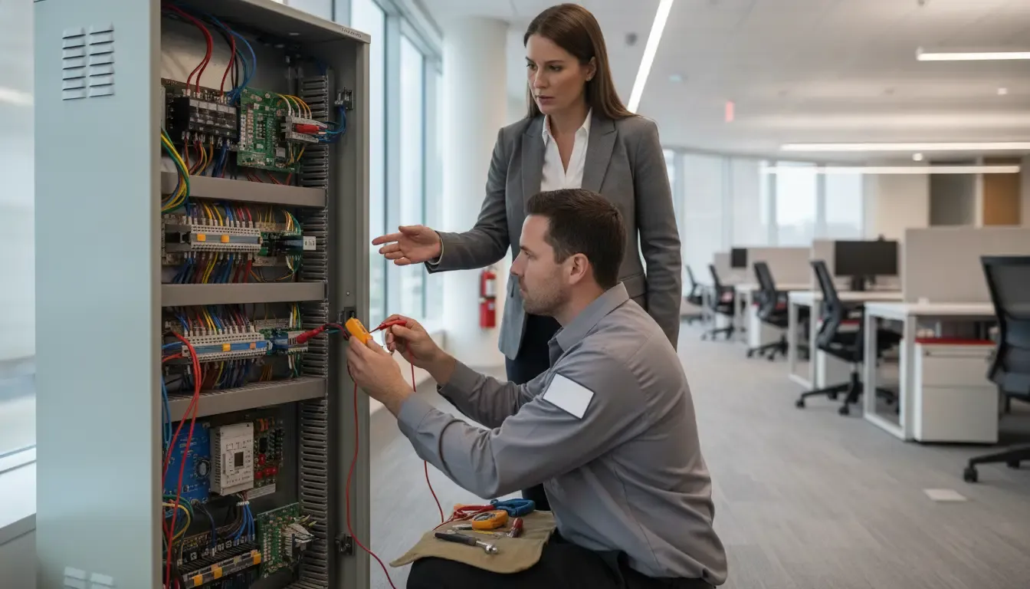
A commercial fire alarm system is a connected life safety network, not a single wall panel. Smoke detectors, heat detectors, manual pull stations, waterflow inputs, notification appliances, batteries, annunciators, control equipment, and communications all have to work together. A maintenance visit looks at the condition of that network and the environment around it.
The right scope depends on the property. An office, warehouse, medical practice, school, retail space, and industrial site may have different hazards, occupancy patterns, device counts, access needs, and emergency procedures. That is why a provider should review the existing documentation and system history before recommending a recurring program.
What does a professional maintenance visit cover?
In brief: A professional visit combines system review, device-level checks, power and communication checks, deficiency documentation, and follow-up. The technician should explain what was tested, what needs attention, whether any impairment exists, and which repairs or next steps should be prioritized.
A useful maintenance program is specific enough that a property manager can understand the condition of the system after the visit. Depending on the system and the authorized scope, the work may include:
- Control equipment: Review the fire alarm control unit, annunciators, indicators, trouble signals, event history, and visible signs of damage or contamination.
- Initiating devices: Examine smoke detectors, heat detectors, manual pull stations, supervisory inputs, waterflow inputs, and other devices for condition, accessibility, and expected operation.
- Notification appliances: Check horns, speakers, strobes, and other notification devices for damage, obstruction, audibility or visibility concerns, and proper response within the approved test scope.
- Power supplies: Review primary power, standby batteries, charger condition, battery age, terminals, and other power-related trouble conditions.
- Communication paths: Confirm that the system can transmit the appropriate signals through its approved communication path and that monitoring center procedures are coordinated before testing.
- Environmental conditions: Look for dust, moisture, construction activity, temperature changes, storage, blocked devices, or renovations that could affect system performance.
- Documentation: Record the date, scope, findings, deficiencies, tests performed, parts used, and recommended corrective action in a format the property can retain.
- Follow-up: Separate urgent impairments from routine recommendations, explain the operational impact, and establish a plan for correction and retesting when needed.
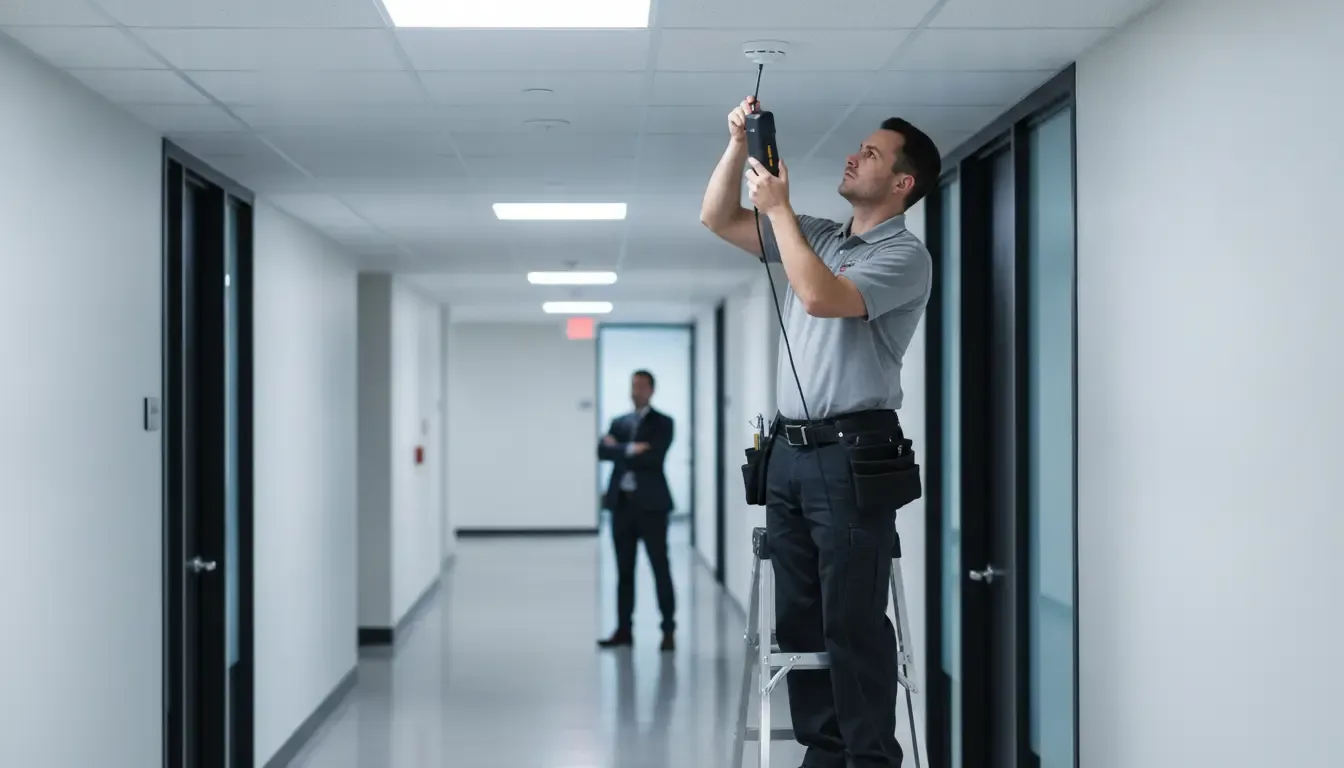
Maintenance is also an opportunity to catch changes that are easy to miss during day-to-day operations. A moved partition, a blocked detector, a new ceiling, a disconnected appliance, or a battery that has reached the end of its useful life can change the condition of a system even when the panel appears normal.
How is maintenance different from inspection, testing, and repair?
In brief: Inspection observes condition, testing confirms operation, maintenance preserves reliable performance, and repair corrects a known problem. These activities overlap in a well-run program, but they are not interchangeable. A provider should state which service is included and what documentation the visit produces.
These terms are often used together, but they answer different questions. The distinctions below help a property manager compare service proposals without assuming that a low-price inspection includes a complete maintenance program.
| Service activity | Primary question | Typical output |
|---|---|---|
| Inspection | Does the equipment and its installation appear to be in the expected condition? | Condition findings, access notes, and inspection documentation |
| Testing | Does the device, circuit, appliance, or signal respond as intended when tested? | Test results, exceptions, and identified deficiencies |
| Maintenance | What ongoing work helps preserve dependable operation between events? | Cleaning or adjustments within scope, condition review, records, and recommendations |
| Repair | What known fault, damage, or failed component must be corrected? | Corrective work, replacement details, and retest or restoration notes |
The current NFPA 72 National Fire Alarm and Signaling Code includes inspection, testing, and maintenance provisions. The exact application depends on the system, device type, adopted edition, manufacturer requirements, and authority having jurisdiction. Georgia also provides an official fire alarm system inspection and testing form that shows why clear system records matter.
For an Atlanta property, the safest approach is to ask for a written scope. A proposal should make clear whether it covers a routine maintenance visit, an inspection, testing, repairs, monitoring coordination, documentation, or a combination of those services. It should also explain how deficiencies are handled after the visit.
When should an Atlanta business schedule fire alarm maintenance?
In brief: Schedule maintenance according to the adopted requirements, system design, device type, manufacturer instructions, inspection history, and property risk. Also schedule a review after renovations, recurring trouble signals, water intrusion, construction dust, equipment changes, or a change in the building’s use.
There is no single schedule that fits every commercial property. The responsible schedule is the one supported by the applicable requirements and the system’s documented needs. Your fire alarm provider should help identify the recurring inspection and testing obligations that apply to your equipment and occupancy, then build maintenance tasks around those obligations.
In addition to the planned calendar, request service when the property experiences:
- Repeated trouble signals: A recurring panel message or intermittent fault should be investigated instead of repeatedly silenced.
- Renovation or construction: Dust, changed walls, altered ceilings, new electrical work, and temporary shutdowns can affect device placement or system operation.
- Water or environmental exposure: Leaks, humidity, temperature extremes, and other conditions can damage equipment or create nuisance conditions.
- Occupancy changes: A change in use, layout, processes, or stored materials may require a design or coverage review.
- Unresolved deficiencies: A maintenance program should track open items through correction, documentation, and retesting where applicable.
- Change in service provider: A new provider should review system records, equipment, communication arrangements, open deficiencies, and access procedures before taking responsibility.
American Alarm’s existing Atlanta guide to commercial fire alarm testing frequency addresses scheduling questions in more detail. This maintenance guide focuses on the broader service relationship: how a provider keeps the system supported between scheduled testing events and how the property can act on the findings.
What should you expect from an Atlanta maintenance provider?
In brief: Expect a provider to review the property and system history, define the scope before work begins, coordinate testing with monitoring procedures, document deficiencies, communicate impairments promptly, and explain corrective options. Local code familiarity and qualified technical oversight are especially important when the system is complex.
Before signing a maintenance agreement or approving a service visit, ask questions that reveal how the work will be performed:
- Who will perform the work? Ask about technician training, relevant certifications, licensing, and experience with the equipment installed at your property.
- What exactly is included? Confirm whether the proposal covers visual review, functional testing, cleaning, battery evaluation, communication coordination, reports, repairs, and return visits.
- How are impairments handled? Learn who is notified, how temporary conditions are documented, and what immediate steps are recommended when protection is reduced.
- How are deficiencies prioritized? A useful report distinguishes an urgent operational issue from a recommendation that can be planned with other work.
- Will records be easy to retrieve? Ask for clear reports, device or zone references when applicable, correction details, and a history that can support future inspections.
- Does the provider understand Atlanta-area requirements? Local experience helps when a property works with a fire marshal, building official, insurer, or other authority having jurisdiction.
Do not compare proposals on price alone. Compare the scope, response process, documentation, experience, communication, and ownership of follow-up work. A short proposal that omits these details can leave the property manager guessing about what was actually done.
How can maintenance reduce avoidable business disruption?
In brief: Planned maintenance can reduce avoidable disruption by finding developing faults before they become emergency calls, coordinating system work with operations, and keeping records organized. It cannot eliminate every failure, but it gives the property a repeatable way to identify, prioritize, and correct problems.
Unplanned fire alarm problems can interrupt operations, create occupant concern, complicate inspections, and require rushed decisions. A maintenance program helps the property plan service windows, provide access to secured areas, coordinate with the monitoring center, and communicate with affected occupants before work begins.
Good documentation also reduces repeat troubleshooting. When a technician can review prior trouble signals, replacement history, open deficiencies, and test results, the next visit starts with useful context. That history can help identify patterns such as recurring battery problems, environmental contamination, communication issues, or changes made during construction.
For repairs and troubleshooting outside a planned maintenance agreement, ask how American Alarm’s flat $69 service call rate applies to your visit. The final scope can depend on the system condition, parts, labor, access, and any required follow-up, so confirm the details before work begins.
Why choose American Alarm for commercial fire alarm maintenance?
In brief: American Alarm combines Metro Atlanta service experience with fire alarm design, installation, monitoring, testing, maintenance, and repair capabilities. Founder Scott Gilkey holds NICET IV certification and unlimited Georgia low-voltage credentials, giving commercial property owners a technically experienced local point of contact.
American Alarm has served Atlanta-area homes and businesses since 1995. The company supports commercial fire alarm systems with a focus on code-aware planning, dependable service, clear communication, and documented work. Its commercial fire alarm service page describes design, installation, testing, monitoring, maintenance, documentation, and upgrades for Metro Atlanta properties.
That combined perspective matters because maintenance is connected to the entire life of the system. A provider that understands design and installation can better recognize when a deficiency points to coverage, compatibility, power, communication, or documentation concerns rather than treating every issue as an isolated part replacement.
American Alarm also provides NFPA fire alarm certificate and service support for businesses that need a knowledgeable partner for compliance-related work. The right provider still needs to evaluate your specific property, equipment, adopted requirements, and service history before recommending a scope.
Commercial fire alarm maintenance FAQ
In brief: Commercial fire alarm maintenance should be based on the system, building use, adopted requirements, manufacturer guidance, and documented service history. A qualified provider can turn those factors into a clear scope, schedule, report, and correction plan for the property.
Is fire alarm maintenance required for Atlanta businesses?
Commercial fire alarm systems generally have inspection, testing, and maintenance obligations based on the applicable code, adopted local requirements, system design, device type, and authority having jurisdiction. Ask your provider to identify the requirements that apply to your property and retain the resulting documentation.
What is included in a commercial fire alarm maintenance agreement?
It may include scheduled system reviews, device and control equipment checks, power and communication checks, reports, deficiency tracking, priority response, and repair coordination. The exact scope varies, so compare the written inclusions and exclusions instead of relying on the agreement title.
How often should a commercial fire alarm system be serviced?
Service frequency depends on the adopted requirements, equipment, occupancy, manufacturer instructions, prior findings, and property conditions. A provider should help you map required inspections and testing to a maintenance plan, then add service after construction, environmental exposure, recurring trouble signals, or system changes.
Does maintenance replace an annual fire alarm inspection?
No. Maintenance supports reliable operation, while an inspection and testing program addresses its own defined requirements and documentation. A complete service plan should state how these activities relate and whether a visit includes inspection, testing, maintenance, repair, or more than one of them.
How should I choose a commercial fire alarm maintenance company in Atlanta?
Look for relevant technical credentials, Georgia licensing, experience with your system, familiarity with local authorities, clear written scopes, organized reports, responsive communication, and a defined process for correcting deficiencies. Ask who performs the work and how the provider handles impairments or retesting.
Leave a Reply
Want to join the discussion?Feel free to contribute!