Your 9-Step Commercial Fire Alarm Testing Checklist
As a business owner, you’re responsible for everything, from payroll to property maintenance. Fire safety is one of the most critical items on that list, and it’s non-negotiable. But ensuring your fire alarm system is truly ready for an emergency can feel overwhelming. How do you know you’ve checked every component? How can you be sure the system will work when it matters most? This is where a structured approach brings clarity and confidence. A detailed commercial fire alarm testing checklist transforms this daunting task into a manageable, repeatable process. It’s your step-by-step guide to confirming every detector, pull station, and notification device is fully operational, giving you documented proof of your commitment to safety.
Key Takeaways
- Testing is a shared responsibility: Your team can handle simple weekly visual checks, but certified professionals must perform the detailed annual inspections required for legal compliance and insurance.
- A checklist ensures nothing is missed: Following a step-by-step guide for every test confirms all components are working correctly and creates the documentation you need to prove your diligence to inspectors.
- Always call a professional for failures: A failed test, no matter how small it seems, requires an expert diagnosis; contacting a licensed fire alarm company immediately is the only way to ensure a proper repair and maintain your system’s integrity.
What Is a Commercial Fire Alarm Testing Checklist?
A commercial fire alarm testing checklist is your step-by-step guide to making sure every part of your fire alarm system is ready to work when you need it most. Think of it as a detailed to-do list for your building’s safety. It walks you or your technician through a series of checks to confirm that everything from the main control panel to the individual smoke detectors, heat detectors, and manual pull stations is functioning correctly. This isn’t just about ticking boxes; it’s a systematic process designed to catch potential issues before they become major problems during an emergency. A comprehensive checklist helps you verify that audible alarms are loud enough, visual strobes are flashing, and the system is properly communicating with your monitoring service.
Using a checklist ensures that no component is overlooked. It standardizes the inspection process, so whether you’re doing a quick monthly check or a more thorough annual inspection, you’re covering all your bases consistently every single time. This document is essential for maintaining a safe environment for your employees, visitors, and customers. It also serves as a crucial record of your commitment to safety, proving that you are taking proactive steps to protect your property. A well-maintained checklist helps you stay organized, compliant with safety regulations, and confident that your fire alarm system is fully operational and ready to alert everyone at the first sign of danger.
Why Your Business Needs One
Keeping people safe is the top priority for any business owner, and fire safety is a huge part of that responsibility. It’s not just a good practice; it’s a legal requirement. Your business is obligated to protect everyone on the premises from fire hazards, and regular, documented testing of your fire alarm system is a fundamental part of meeting that obligation. A checklist provides a clear, consistent framework for these tests. It ensures you’re following established safety standards and helps you stay compliant with local and national codes. Think of it as your roadmap for maintaining a secure environment and fulfilling your duty of care to your team and visitors.
How Testing Impacts Liability and Insurance
Properly maintaining and testing your fire alarm system directly affects your business’s liability and insurance coverage. In the unfortunate event of a fire, your insurance provider will investigate whether your safety systems were functional and properly maintained. If they find that smoke detectors were non-operational or that inspections were skipped, they could deny your claim, leaving you to cover the damages out of pocket. A completed testing checklist serves as tangible proof that you’ve performed your due diligence. Following a consistent inspection schedule with professional NFPA fire alarm services demonstrates your commitment to safety and can be critical in protecting your business from significant financial and legal consequences.
What Are the Legal Requirements for Commercial Fire Alarm Testing?
Keeping your commercial fire alarm system in working order isn’t just a smart safety measure; it’s a legal obligation. As a business owner, you’re responsible for ensuring your system meets a specific set of rules designed to protect your property, your employees, and your customers. These regulations come from both national authorities and local Atlanta and Georgia codes. Understanding these requirements is the first step toward creating a safe and compliant environment. Failing to do so can result in significant fines, legal liability, and, most importantly, a system that might not function when you need it most. Let’s walk through what you need to know to keep your business protected and up to code.
NFPA 72: The National Standard
The National Fire Protection Association (NFPA) is the leading authority on fire safety in the United States. Think of their guidelines as the foundational rulebook for your fire protection systems. Specifically, NFPA 72 is the code that outlines the requirements for fire alarm systems and signaling. This comprehensive standard covers everything from installation and performance to the inspection, testing, and maintenance schedules you must follow. Its primary goal is to ensure every component of your fire alarm system is fully functional and ready to operate effectively in an emergency. Adhering to NFPA 72 is non-negotiable for commercial properties across the country, including right here in Atlanta.
Meeting Atlanta and Georgia Compliance Codes
While NFPA 72 sets the national standard, you also need to follow state and local regulations. In Georgia, the law requires that all fire alarm systems be “adequately maintained.” This might sound vague, but it means your system must be regularly inspected by a competent person to ensure it’s always in good working order. For most businesses, this involves a professional inspection at least every six months. However, larger buildings or those with more complex systems may require more frequent checks, such as every three months. Our team can help you determine the specific NFPA fire alarm services your Atlanta business needs to stay compliant with all local and state codes.
Common Compliance Misconceptions to Avoid
It’s easy to fall for a few common myths about fire alarm maintenance, but these mistakes can be costly. One major misconception is that a single non-functioning smoke detector is a minor problem. In reality, if your system isn’t properly maintained, an insurance company may have grounds to refuse to cover damages in the event of a fire. A faulty fire alarm system is not considered “adequately maintained,” which can lead to serious legal and financial repercussions for your business. Regular testing isn’t just about checking a box; it’s about confirming your system is ready to perform and protecting your business from devastating losses.
How Often Should You Test Your Commercial Fire Alarms?
Keeping your commercial fire alarm system in top condition isn’t just a good idea; it’s a critical responsibility. But how often is “often enough” when it comes to testing? The answer involves a layered approach with different checks happening at different intervals. Think of it as a partnership between your on-site team and certified professionals. Your staff can handle the frequent, simple checks, while trained technicians perform the deep, comprehensive inspections.
This schedule isn’t arbitrary. It’s designed to meet national and local codes, satisfy insurance requirements, and, most importantly, ensure the system works when you need it most. Following a consistent testing routine helps you catch small issues before they become major problems, providing safety for your employees, customers, and property. At American Alarm, we specialize in NFPA fire alarm services that keep Atlanta businesses compliant and protected, so you can focus on running your business with confidence. The key is to create a clear, repeatable schedule that covers everything from weekly glances at the control panel to annual professional deep dives.
Weekly and Monthly Checks
Your first line of defense is your own team. Assigning a responsible person to perform simple, regular checks is a fundamental part of fire alarm maintenance. Every week, this person should visually inspect the fire alarm control panel. Are there any trouble lights, beeping sounds, or error messages? They should also walk the premises to ensure no smoke or heat detectors are blocked by new fixtures, stacked boxes, or other obstructions.
Once a month, you can perform a slightly more hands-on test. This involves activating a manual pull station to confirm the alarm sounds correctly. It’s a good practice to test a different pull station each month, rotating through all of them over time. Documenting these checks in a logbook is crucial for your records. These quick, consistent actions empower your team to spot potential issues early.
Semi-Annual and Annual Inspections
While your team handles the weekly and monthly basics, you need a certified professional for the more technical inspections. National standards recommend a thorough inspection by a qualified technician at least once a year, with many jurisdictions and larger facilities requiring semi-annual visits. During these appointments, a technician will test every component of your system, from individual smoke detectors and pull stations to the control panel’s communication with the monitoring center.
This comprehensive check goes far beyond what an in-house employee can do. Technicians test sensor sensitivity, verify power supply levels, inspect wiring, and ensure all audible and visual alarms function correctly. This professional verification is often required by your insurance provider and local Atlanta fire codes. You can schedule a professional inspection to ensure your system is fully compliant and functioning perfectly.
When to Schedule Additional Testing
Your regular testing schedule is the foundation, but sometimes your system needs attention outside of those planned checks. You should schedule an immediate service call if you notice any signs of a problem. This includes a fault light on the control panel, unexplained beeping, or frequent false alarms. Don’t wait for your next scheduled inspection to address a known issue.
Additionally, you should have your system tested after any significant event or change. This includes after a renovation, after repairs to the system, or if you change the layout of your space in a way that might impact alarm coverage. These situations can affect your system’s performance, and a professional test confirms everything is still working as it should. Promptly addressing these needs is a key part of responsible alarm system maintenance.
Your Complete Commercial Fire Alarm Testing Checklist
Following a consistent checklist is the best way to make sure your fire alarm tests are thorough and effective. This nine-step guide walks you through the essential checks your business should perform regularly. Working through these items systematically helps you protect your property, keep your employees safe, and maintain a clear record of compliance. Think of this as your go-to routine for peace of mind.
1. Inspect the Fire Alarm Control Panel
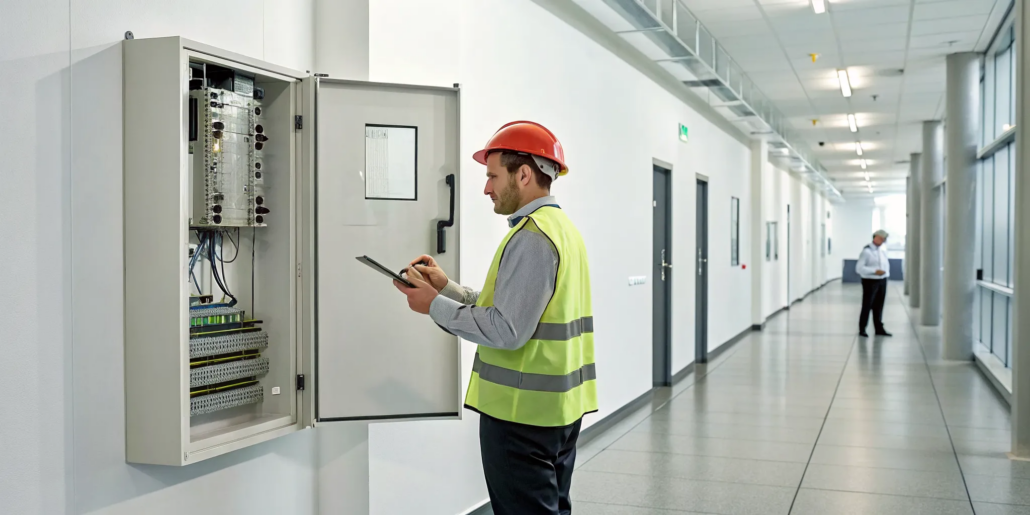
Your fire alarm control panel is the system’s brain, so it’s the perfect place to start. Begin by visually inspecting the panel. You’re looking for a clear, green “normal” light, with no active trouble signals, supervisory alerts, or alarm lights. If you see any error messages or warning lights, make a note of them immediately, as they point to specific issues that need attention. Also, ensure the area around the panel is clean and unobstructed. For businesses in Atlanta, our team provides expert NFPA fire alarm services to help you interpret panel signals and resolve any problems.
2. Test Smoke and Heat Detectors
Next, it’s time to check the devices that actually sense a fire. For most smoke detectors, you can simply press and hold the “test” button on the unit. This should trigger a response from the device and sound the alarm at the control panel. For a more comprehensive test, you can use canned smoke, but always check the manufacturer’s instructions first to avoid damaging the sensor. Make sure to test every single detector in your facility. It’s easy to miss one in a storage room or hallway, but complete coverage is essential for proper protection.
3. Check Manual Pull Stations
Manual pull stations are your first line of defense if someone spots a fire before a detector does. Walk through your building and locate every pull station. The most important check is for accessibility. Make sure none of them are blocked by furniture, equipment, or storage boxes. They should be clearly visible and easy to reach in an emergency. While you’re there, give each one a quick visual inspection to check for any signs of damage or tampering. Activating a pull station should trigger a full system alarm, which you can test during a scheduled drill.
4. Verify Audible and Visual Alarms
When the system activates, everyone needs to know. This step involves confirming that all your notification devices are working correctly. During a system test, listen for all horns and bells, and look for all flashing strobe lights. Walk the entire property to ensure the alarms are loud enough to be heard everywhere, even in noisy environments or behind closed doors. The visual strobes are critical for alerting individuals who are deaf or hard of hearing. All of these systems and products must function together to create an effective warning.
5. Test the Monitoring System Connection
A local alarm is good, but a monitored alarm is what gets help on the way. This test ensures your fire alarm system can successfully communicate with your off-site monitoring center. Before you begin, you must call your monitoring provider to put your system into “test mode.” This prevents them from dispatching the fire department. Once in test mode, activate your alarm. Your provider can then confirm if they received the signal. After you’re done, remember to call back and have them take your system out of test mode. Professional security system monitoring is a crucial link in your safety chain.
6. Inspect Sprinkler System Integrations
If your building has an automatic sprinkler system, it’s likely integrated with your fire alarm. The fire alarm panel monitors the sprinkler system for activation (water flow) and potential problems (tamper switches on the valves). During your inspection, you should check the fire alarm panel to ensure it’s properly receiving supervisory signals from the sprinkler system. This doesn’t mean you need to set off the sprinklers. Instead, a qualified technician can test these connections to confirm that a sprinkler activation would correctly trigger the fire alarm and notify your monitoring service.
7. Check Backup Power and Batteries
Your fire alarm system must work even if the power goes out. That’s why it has a backup power source, typically a set of sealed lead-acid batteries. Open the control panel and inspect the batteries. Check the date on them, as they usually need to be replaced every three to five years. Look for any signs of corrosion on the terminals or swelling in the battery case. A professional test will also check if the batteries can hold an adequate charge. This ensures your system remains fully operational during a power failure, giving you uninterrupted protection when you need it most.
8. Visually Inspect All Devices
After testing the individual functions, take a walk around your facility to perform a general visual inspection of all components. Look closely at each smoke detector, heat detector, pull station, and notification appliance. You’re searching for anything that could interfere with its operation. This includes heavy layers of dust, dirt, cobwebs, or paint on the device. Also, check for any physical damage, like cracked casings or loose wiring. A simple visual sweep can help you spot potential problems before they cause a device to fail during an emergency.
9. Review and Update Your Documentation
Finally, every test you perform needs to be documented. Keeping a detailed fire alarm logbook is a key part of staying compliant and organized. For each test, you should record the date, the name of the person who performed it, and a list of every device that was checked. Make a note of any deficiencies you found, along with the corrective actions that were taken to fix them. This logbook serves as your proof of compliance for fire marshals and insurance providers. If you need help establishing a testing and documentation process, don’t hesitate to contact us for guidance.
What to Do If Your Fire Alarm Fails a Test
Finding a problem during a fire alarm test can feel stressful, but it’s actually a good thing. It means your testing process is working. You’ve found a weakness before a real emergency did. A failed test is a critical signal that your system needs attention to ensure it can protect your property and people when it matters most. The key is to act quickly and methodically. Don’t ignore a fault light, a strange beep, or a device that doesn’t respond. A faulty system isn’t just a minor issue; it can mean you’re out of compliance and, more importantly, you’re not adequately protected.
A failed test doesn’t automatically mean your entire system is down. It could be an issue with a single component, a communication error, or even a simple power problem. The important thing is to treat every failure seriously until a professional can diagnose it. Think of it like the check engine light in your car. You don’t just keep driving and hope it goes away; you get it checked out. Similarly, a fire alarm fault requires a professional diagnosis to ensure the safety of everyone in your building. Following a clear protocol helps you manage the situation calmly and ensures you meet your legal and insurance obligations. Let’s walk through the exact steps to take to get your system back in working order.
Immediate Steps to Take
The moment you identify a failure, your first and most important step is to contact your fire protection company. A faulty system is considered inadequately maintained, which puts you at risk of non-compliance with fire codes. Don’t delay or assume it’s a minor glitch. Report any issue, whether it’s a false alarm, a fault light, beeping sounds, or a complete lack of power. When you call, be ready to provide specific details: which device failed, what the issue was, and when the test was performed. This information helps the technician diagnose the problem faster. Your priority is to get a licensed professional on-site to restore your system’s integrity and ensure your business remains protected.
Common Causes of Fire Alarm Failures
Understanding why a fire alarm might fail can help you troubleshoot simple issues and provide better information to your technician. Failures often stem from a few common culprits. Device-specific problems can include dead backup batteries, dirty sensors that mistake dust for smoke, or simply old detectors that have reached the end of their service life. Environmental factors also play a role. For instance, improper placement near kitchens or bathrooms can lead to false alarms. Other system-wide issues might involve power outages that affect the main panel or connection problems between the alarm and the monitoring station. Knowing these potential causes helps demystify the failure and reinforces the need for regular professional maintenance of your systems and products.
When to Call a Professional Service Provider
The short answer is: always. Any time your fire alarm system fails a test, it’s time to call a professional. Fire codes and insurance policies typically require that a licensed company performs a full check of the system after any fault. This isn’t a task for in-house staff. A certified technician has the tools and expertise to diagnose the root cause and ensure the repair meets all safety standards. For most faults, you should expect your fire alarm company to respond within 24 hours. For major issues that disable the entire system, the response should be much faster, usually within four hours. Choosing a reliable partner for your NFPA fire alarm services ensures you get the prompt, expert attention you need.
Who Should Perform Commercial Fire Alarm Testing?
When it comes to fire alarm testing, the responsibility is often shared. While your team can handle some of the basic weekly checks, the more detailed inspections required by law must be performed by a certified professional. Think of it as a partnership: your staff acts as the first line of defense, and a qualified technician provides the expert verification that keeps your system compliant and your business protected. Striking this balance is key to maintaining a safe environment without placing an undue burden on your day-to-day operations. Understanding who does what, and when, will help you create a testing schedule that is both effective and efficient.
Certified Technicians vs. In-House Staff
Your team can manage simple, frequent checks, like visually inspecting the control panel for trouble signals. However, when it comes to the required semi-annual and annual inspections, you need a certified professional. Standards like NFPA 72 are clear that a qualified person must conduct these thorough system-wide tests. A licensed company has the specific tools and training to check every component, from detectors to monitoring connections, ensuring everything functions as a cohesive unit. For these comprehensive inspections, you need an expert who understands NFPA fire alarm services and can provide the official documentation you need for compliance and insurance purposes.
How to Train Your Team on Fire Alarm Procedures
A fire alarm is only as good as the response it triggers. That’s why training your employees on what to do when an alarm sounds is just as important as the technical testing itself. Your team should know the evacuation routes, the location of manual pull stations, and who the designated fire wardens are. Regular fire drills are essential to make sure everyone can exit the building quickly and safely. This procedural knowledge ensures a calm and orderly response during a real emergency. If you need guidance on setting up these procedures or training your staff, don’t hesitate to contact us for expert advice.
How to Keep Your Fire Alarm Records Organized
Keeping track of your fire alarm tests might feel like just another administrative task, but it’s one of the most important things you can do for your business. Think of it this way: organized records are your proof of diligence. They show inspectors, insurance providers, and authorities that you are committed to safety and are meeting legal requirements. When an auditor stops by, having a clear, accessible logbook makes the process smooth and stress-free. It removes any guesswork and demonstrates your proactive approach to safety.
More importantly, these records provide a complete history of your system’s health, helping you spot patterns and prevent potential issues before they become serious problems. For example, if a specific detector repeatedly causes false alarms, your logbook will make that trend obvious, allowing you to address the root cause. This detailed paper trail protects your business, your employees, and your property. It’s not just about compliance; it’s about creating a reliable safety net and maintaining a system you can trust when it matters most.
What to Document After Every Test
Your fire logbook tells the story of your system’s performance, so it needs to be detailed and accurate. After every test, inspection, or event, make sure you document everything clearly. This isn’t just about ticking a box; it’s about creating a useful resource for your team and for service technicians who may need to diagnose a problem in the future.
Your log should always include:
- The date and results of every weekly, monthly, and annual test.
- Dates of professional servicing and the name of the company that performed it.
- A detailed description of any issues, false alarms, or actual alarm activations.
- Records of all staff fire drills and any safety training sessions you’ve held.
How Long to Keep Your Records
A common question is, “How long do I need to hold onto these records?” The short answer is that you should maintain detailed logs of all inspections, tests, and repairs for as long as required by your local jurisdiction and the NFPA. These records are your compliance backbone, so keeping them organized and accessible is non-negotiable. For businesses in Georgia, specific codes may apply. If you’re unsure about Atlanta’s local requirements, working with a professional service that understands NFPA fire alarm services can give you peace of mind. Having these documents ready for a safety audit will save you time and potential headaches down the road.
How to Keep Your Checklist Current
Your fire alarm testing checklist is a living document, not something you create once and file away. As your business evolves, so might your fire alarm system. Did you recently renovate or add new detectors? Your checklist needs to reflect those changes. Make it a habit to review and update your checklist annually or anytime you modify your system. To make tracking easier, consider using a digital platform. Tools like SafetyCulture can help you manage checklists, assign tasks, and generate reports right from a phone or tablet. This reduces the chance of missed steps and keeps your records consistently accurate and up-to-date.
Overcoming Common Fire Alarm Testing Challenges
Even with a perfect checklist, you might hit a few snags during your fire alarm testing. That’s completely normal. The key is knowing what these common hurdles are and having a plan to address them before they become bigger issues. From making sure your team is prepared to handling the quirks of a complex system, a little foresight goes a long way. Let’s walk through some of the most frequent challenges and how you can confidently manage them, ensuring your testing process is always smooth and effective.
Closing Gaps in Staff Training
Your fire alarm system is a powerful tool, but it’s only as effective as the people who know how to respond to it. If your team isn’t sure what to do when an alarm sounds, it can lead to confusion and put people at risk. Consistent training is the answer. This means doing more than just pointing to the exit signs. You should conduct regular fire drills to give everyone hands-on practice with evacuation routes. It’s also crucial to teach your staff how to safely exit the building from their specific work areas. An employee alarm system is meant to trigger a clear, immediate response, and that only happens with preparation.
Handling Complex Systems
Commercial buildings come in all shapes and sizes, and so do their fire alarm systems. A small retail shop has very different needs than a multi-story office building or a large warehouse. One of the biggest challenges is ensuring your system is properly designed for your unique space and that its alerts are truly effective. The alarms must be loud and bright enough to cut through the normal noise and light of your workplace. If you have a large or complex building, you might have an addressable system that pinpoints the exact location of the alarm, which requires specific testing knowledge. Choosing the right systems and products from the start is essential for reliable protection.
Keeping Up with Changing Regulations
Fire codes and standards are not set in stone. They are updated regularly to incorporate new technology and safety findings. Staying on top of these changes can feel like a full-time job, but it’s a critical part of keeping your business compliant and safe. For example, the NFPA 72, the national fire alarm code, is revised every few years. Falling behind on these regulations can lead to failed inspections and potential fines. The best way to handle this is to partner with a professional service that lives and breathes fire code. A certified expert can ensure your system is always up to date and help you manage the required inspection and maintenance schedules, taking the guesswork out of compliance for you.
How to Choose the Right Fire Alarm Partner in Atlanta
Picking the right company to handle your fire alarm system is a big deal. This isn’t just about ticking a box for compliance; it’s about protecting your property, your employees, and your customers. You need a partner you can trust completely. So, what should you look for when making this decision here in Atlanta?
First, consider their experience. A company with a long history in the fire alarm industry will have a deep understanding of the technology and, just as importantly, the local regulations. They’ll be familiar with the National Fire Protection Association (NFPA) standards that form the backbone of fire safety codes across the country. A seasoned team knows how to apply these rules to your specific building, ensuring everything is done right the first time. Also, make sure any technicians working on your system have proper certifications, like those from the National Institute for Certification in Engineering Technologies (NICET). This is your proof that they are trained on the latest standards and technologies.
You’ll also want a partner who offers a full range of NFPA fire alarm services. It’s much easier to work with one company that can handle installation, testing, monitoring, and repairs than to juggle multiple vendors. This ensures every part of your system works together perfectly. And since fire codes are not the same everywhere, local expertise is key. A partner based in the Atlanta area will be familiar with the specific requirements set by the Atlanta Fire Rescue Department, which helps you avoid any compliance headaches down the road. Finally, take a look at their reputation. Check online reviews and see what other local businesses are saying. A reliable company will have a history of satisfied clients.
Choosing the right partner gives you more than just a working fire alarm system; it gives you peace of mind. If you’re ready to work with a team that checks all these boxes, we’d love to talk. You can get in touch with us to discuss your property’s specific needs.
Related Articles
- 4-Step Commercial Fire Alarm Installation Guide
- When Are Fire Alarm Systems Required? The 2026 Guide
- UL Fire Alarm Standards: What You Need to Know
Frequently Asked Questions
My system seems to be working fine. Do I really need a professional inspection every year? This is a common question, and it’s understandable to want to save on costs. However, an annual professional inspection is about more than just checking for obvious problems. It’s a legal and insurance requirement. A certified technician tests things your staff can’t, like sensor sensitivity, backup battery voltage, and the communication link to the monitoring center. These inspections provide the official documentation you need to prove compliance to fire marshals and your insurance provider, protecting your business from major liability.
What’s the difference between a “trouble” light and an “alarm” light on my panel? Think of it this way: an “alarm” light means the system believes there is a fire and is actively telling people to evacuate. This is an emergency. A “trouble” or “supervisory” light is different; it signals a problem with the system’s health. This could be anything from a low battery to a dirty sensor or a communication fault. It’s not an immediate emergency, but it does require a prompt service call to ensure your system is ready to work when you actually need it.
Can my own staff handle all the testing to save money? Your staff plays a vital role in fire safety, but they can’t handle everything. It’s great to have an employee perform weekly visual checks, like making sure the control panel is clear and that no detectors are blocked. However, the comprehensive semi-annual and annual tests required by law must be performed by a certified professional. They have the specialized tools and training to test every component according to NFPA standards, which is necessary for keeping your business compliant and protected.
How do I test the system without causing a panic or disrupting my business? A successful test is a planned one. The most important step is to call your monitoring company beforehand and ask them to put your system on “test mode.” This prevents them from dispatching the fire department when the alarm goes off. You should also notify all your employees that a test will be happening, explaining when it will occur and what they should expect. Scheduling these audible tests during off-hours is another great way to minimize disruption to your daily operations.
What’s the first thing I should do if I find a problem during a test? If any part of your system fails a test, your first and only step should be to call your professional fire alarm service provider immediately. Don’t try to fix the issue yourself or assume it’s a minor glitch that will go away. A faulty system means your property is not adequately protected and you could be out of compliance with fire codes. A licensed technician can diagnose the root cause correctly and perform a repair that meets all safety standards.


Leave a Reply
Want to join the discussion?Feel free to contribute!