Atlanta Laboratory Security System | Atlanta Buyer Guide
Planning an Atlanta laboratory security system starts with understanding how people, materials, and work areas move through a facility. A lab may need controlled entry, intrusion detection, alarm monitoring, video surveillance, or a combination of these layers. The right design depends on the building, operating hours, sensitive areas, and the procedures staff already follow.
Call (770) 645-0061 to discuss your laboratory security needs.
What should an Atlanta laboratory security system include?
Answer: Start with a site-specific plan that separates public, staff, and restricted areas, then match each boundary to an appropriate combination of access control, intrusion detection, monitoring, and life-safety measures. Do not select equipment before documenting the risks and daily movement patterns it must address.
A useful plan does not assume that every room needs the same controls. A reception entrance, a staff-only corridor, a storage room, and a high-sensitivity work area serve different purposes. The system should support those distinctions without making ordinary work unnecessarily difficult.
American Alarm serves homes and businesses in the greater Atlanta area and provides security system design, installation, monitoring, and maintenance. A conversation with a qualified provider can help determine whether the requested scope fits the facility and what details need review before a proposal is prepared. Explore the company’s security and alarm services or its systems and product options to understand the broad types of systems available.
How do you map laboratory areas and access needs?
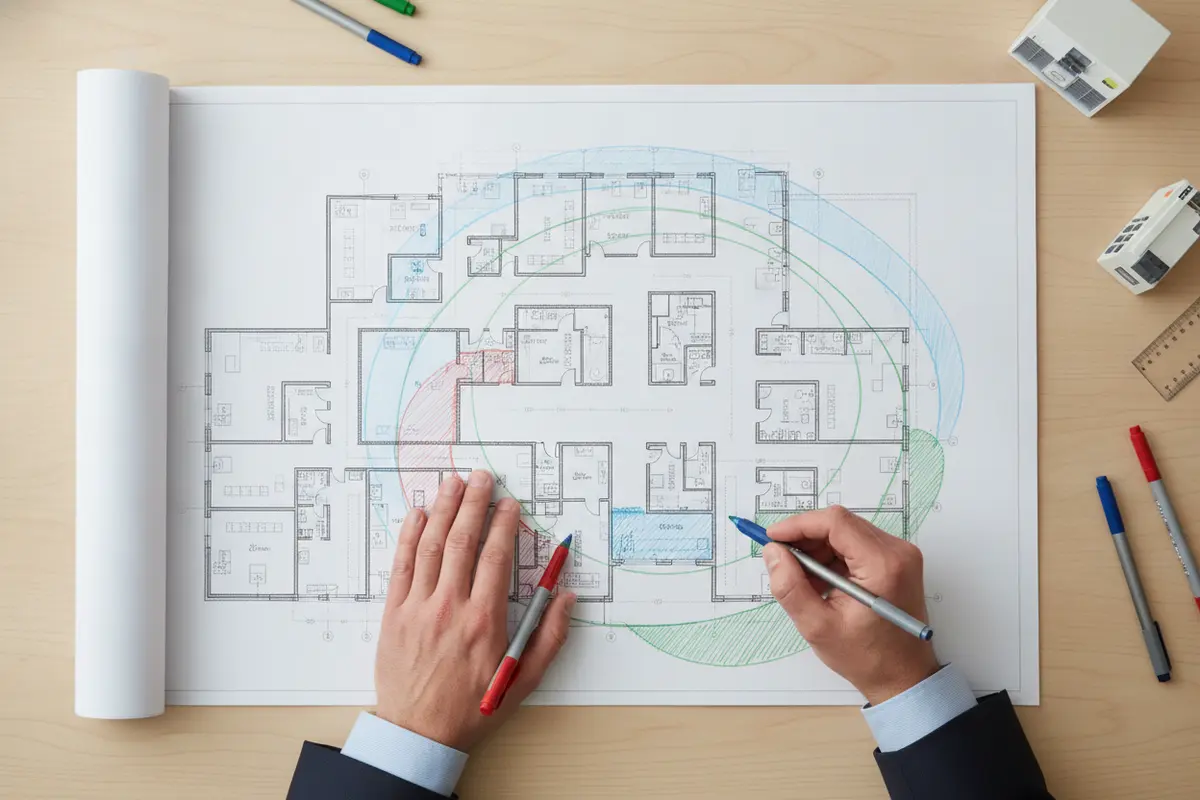
Begin with a plain floor plan and a walkthrough. Mark every public entrance, staff entrance, delivery point, interior transition, and area where entry should be limited. Include normal operations as well as after-hours access, cleaning, maintenance, and emergency movement. This creates a practical basis for discussing access control and alarm coverage.
- Public or visitor areas: Identify the reception point, visitor waiting area, and the boundary beyond which visitors should not proceed without authorization.
- Staff work areas: Note the entrances employees use, the hours those doors are active, and the process for issuing or removing credentials when staff roles change.
- Restricted rooms: Identify rooms with sensitive equipment, records, samples, or supplies. Decide who needs access, when it is allowed, and who reviews access records.
- Service and delivery routes: Map loading doors and other secondary openings. Clarify how deliveries are received and how staff distinguish expected access from an unusual entry.
- Emergency paths: Review how people leave the building during an emergency. Security controls must be planned alongside applicable fire and life-safety rules.
Keep the plan focused on actual work practices. For example, a door that remains open for frequent movement may need a different operating plan from an entrance used only at shift changes. Ask who will administer access, who receives alarm notifications, and how the facility handles a lost credential or an employee departure.
For a closer look at entry choices, review this guide to business access control systems. If the facility has several doors or a gate, the access control gate overview can help frame questions about controlled vehicle or pedestrian entry.
Which system layers should you compare?
Laboratory protection is usually a set of connected decisions rather than one product choice. Compare each layer by what it does, where it applies, and who is responsible for using it. The table below is a planning aid, not a substitute for a site assessment or code review.
| System layer | Primary purpose | Questions to ask |
|---|---|---|
| Access control | Manage who can enter selected doors or areas and at what times. | Which entrances need control? Who assigns credentials? How are access changes handled? |
| Intrusion detection | Identify unauthorized entry or activity when an area is armed. | Which doors or rooms need coverage? Who arms and disarms the system? What happens after hours? |
| Alarm monitoring | Route alarm signals to a monitoring service under the agreed response procedure. | Which signals are monitored? Who is on the call list? Are contact details and instructions maintained? |
| Video surveillance | Provide visual context at selected entrances or other approved locations. | Where is recording appropriate? Who can review it? How will privacy and retention policies be addressed? |
| Fire alarm and life safety | Support warning and response for fire or other life-safety conditions as designed. | What codes, authority requirements, inspections, and facility procedures apply to this building? |
These layers should not be treated as interchangeable. Access control manages permission at a door; intrusion detection identifies a defined alarm condition; monitoring communicates specified signals according to agreed procedures. Video can add context, but it does not replace alarm coverage or staff procedures. A system plan should describe how the components work together and what happens when one component is unavailable.
If video is under consideration, review the practical planning questions in the guide to business surveillance systems. For alarm signal transport, the overview of how monitored alarm systems work offers a useful starting point for questions about response and contacts.
How should a facility address fire and life-safety planning?
Security planning in a laboratory must sit alongside fire protection and life-safety planning. Doors, access rules, alarms, and occupant procedures can affect one another. Before selecting or changing equipment, confirm which requirements apply to the specific building and occupancy with the authority having jurisdiction and qualified professionals.
The National Fire Protection Association provides fire and life-safety codes, standards, and related resources. Use its official resource site as a starting point, then verify the rules that apply locally and to the facility’s use. A general web article cannot determine which code provisions apply to a particular lab.
For fire alarm planning, the provider should understand the existing system, panel condition, inspection history, facility changes, and any direction from the local authority. Avoid deciding that replacement is necessary based only on a broad age rule. Equipment condition, manufacturer guidance, applicable code, inspection results, and professional assessment all matter. The fire alarm panel guide can help you prepare questions about the installed system.
Keep written operating procedures consistent with the design. Identify who receives alarm notices, who may respond, and how contact information is kept up to date. Make sure staff know what to do if a system reports a fault or a door does not behave as expected.
What should an Atlanta provider learn before preparing a proposal?
A useful proposal should reflect how the laboratory functions, not just a count of doors or devices. Share the floor plan, operating schedule, entry procedures, known system information, and any constraints on installation or facility access. Explain the result you need, then ask the provider to show how the proposed design addresses it.
- Facility use: Describe the work performed, areas with controlled access, and any changes planned for the space.
- Existing equipment: Provide panel and device details if available, plus records of recent service, inspection, or recurring faults.
- Daily movement: Explain staff shifts, visitor check-in, deliveries, and after-hours access. These routines affect system configuration.
- Response process: List the people who should be contacted for each relevant signal and how those instructions will be maintained.
- Life-safety context: Share fire alarm documentation and any guidance from the authority having jurisdiction.
- Project boundaries: Identify access windows, areas that cannot be interrupted, and any coordination needed with other facility work.
Ask whether the proposal distinguishes equipment, installation, monitoring service, and ongoing maintenance. Request a clear description of what is included, what is not included, and which assumptions could change the scope. Clear documentation makes proposals easier to compare and lowers the chance of discovering a mismatch after work begins.
When reviewing a provider, ask who will assess the site, how system testing and handoff are handled, and how service requests are managed. The advice in how to choose an alarm company provides a broader checklist for evaluating an installer. Businesses in the Metro Atlanta area can also check the company’s service-area information when confirming that the location is within its coverage.
How can you compare proposals fairly?
Compare proposals against the same written scope. A lower equipment count or another system type may reflect a different assumption rather than a better value. Ask each provider to explain gaps, exclusions, and operating responsibilities in plain language.
- Match the area list: Confirm that each proposal addresses the same entrances, restricted rooms, and alarm conditions.
- Compare response details: Check which signals are monitored, which contacts are called, and what the facility is expected to do.
- Review access administration: Ask who can issue credentials, change permissions, and deactivate access when needed.
- Understand system dependencies: Identify communications paths, power considerations, and what the system reports if a component has a fault.
- Check testing and handoff: Confirm that testing, user instruction, documentation, and any required inspections are included or clearly assigned.
- Clarify ongoing service: Ask how maintenance, repairs, monitoring service, and future changes are handled.
Keep a decision record with the approved plan, contact list, operating instructions, and any limitations. Assign an owner for periodic review, especially after changes to staff, facility layout, operating hours, or equipment. A small update to the facility can change which entrances need attention or which staff members should receive alarm calls.
What questions should you ask before choosing a system?
Use these questions to test whether a proposed solution fits the facility and its operating practices. Ask for specific answers tied to the plan rather than broad assurances.
- Coverage: Which doors and areas are included, and what is deliberately outside the scope?
- Credential control: How are access permissions created, changed, and removed?
- Alarm handling: Which events are sent to a monitoring service, and what contact sequence is recorded?
- System failure: How are faults reported, and who is responsible for responding to them?
- Staff training: What instruction is provided at handoff, and where can staff find the operating guidance?
- Fire alarm coordination: How will the proposed work be coordinated with existing life-safety systems and local requirements?
- Future changes: Can the plan be reviewed when the facility changes layout or operating procedures?
A dependable plan is one people can operate consistently. If an access policy is too complicated to follow, it may not deliver the intended result. If alert procedures are unclear, staff may not know who should act. Build the everyday workflow into the design discussion and document the agreed responsibilities.
Contact American Alarm to discuss a security system plan for your Atlanta facility.
Frequently asked questions
These answers cover common planning questions, but the right design still depends on the facility and local requirements.
Does every laboratory need the same system?
No. The appropriate combination depends on the building, areas being protected, hours of operation, access practices, and applicable life-safety requirements. A site assessment helps define a suitable scope.
Can access control and intrusion detection work together?
They address related but distinct needs. Access control manages who may enter selected doors, while intrusion detection reports defined alarm conditions. A design can coordinate them, but the provider should explain how the system behaves during normal operations and after hours.
Should video surveillance be used throughout a laboratory?
Not necessarily. Consider only locations that support a clear operational purpose, and evaluate privacy, internal policies, access to recordings, and retention practices before choosing locations. Video should complement, not replace, other controls.
How do we know what fire alarm work is required?
Review the existing system, inspection findings, equipment information, applicable code and manufacturer guidance, and direction from the authority having jurisdiction. A qualified professional can assess the specific building; a general age threshold alone is not enough to decide.
What information should we prepare for a consultation?
Bring a floor plan, a list of restricted areas and entrances, operating hours, existing system details, known concerns, and response contacts on file. Include any fire alarm records and local authority guidance that may shape the scope.
Call (770) 645-0061 to take the next step on your Atlanta facility plan.
A well-planned Atlanta laboratory security system begins with the way the facility operates, then connects practical access, alarm, monitoring, and life-safety decisions in a clear, maintainable plan.

Leave a Reply
Want to join the discussion?Feel free to contribute!