Commercial Alarm Monitoring Atlanta: Business Guide
Choosing a monitoring provider for a commercial property is not only a question of whether someone answers an alarm signal. Atlanta business owners should confirm what happens before, during, and after an alarm, including signal transmission, call-down procedures, dispatch instructions, system maintenance, and account records.
When evaluating commercial alarm monitoring Atlanta businesses can rely on, ask for clear proof of monitoring hours, covered alarm types, escalation procedures, equipment compatibility, maintenance responsibilities, and every fee and contract term.
Schedule a free consultation. Call (770) 645-0061 or contact American Alarm online.
The right questions help you separate a complete monitoring service from a narrow promise of signal receipt. Start by examining the coverage and account protections your property actually needs.
What Commercial Alarm Monitoring Atlanta Businesses Should Confirm
Choosing a monitoring provider is not only a question of whether alarms are watched. Atlanta businesses should confirm that the provider, system, procedures, and service agreement fit the property’s operations, risks, and documentation needs.
Start with the property itself. A retail location, industrial facility, healthcare site, school, and institutional building may have different entry points, operating schedules, life-safety concerns, and compliance responsibilities. This business security system requirements guide can help organize those questions before you compare providers.
Use a written provider checklist
- Monitoring scope: Ask whether the service covers the alarm types your business uses, including security and life-safety signals, and whether monitoring is continuously available.
- Technical fit: Confirm that the provider can accept your existing equipment and signal path, or clearly explain what must change during installation or a takeover.
- Alarm handling: Request the call-down sequence, dispatch instructions, contact-update process, and account-specific escalation procedures in writing.
- Service boundaries: Clarify who installs, tests, maintains, repairs, and documents the system. Monitoring and field service may be separate responsibilities.
- Commercial terms: Review contract length, cancellation rules, ownership of equipment, service coverage, change orders, and all fees before approving the agreement.
For Metro Atlanta and North Georgia businesses, local service scope also matters. American Alarm is an Atlanta-based company providing design, installation, monitoring, and maintenance for homes and businesses. The provider you select should be able to explain how its documented capabilities apply to your specific property rather than relying on broad assurances.
Start With Monitoring Coverage, Hours, and Alarm Types
Before comparing providers, confirm exactly when the monitoring service operates, which alarm signals it accepts, and how those signals reach a staffed central station. The written scope should match the risks, operating schedule, and compliance needs of your Atlanta business.
“24/7 monitoring” should mean more than a phrase on a sales page. Ask whether the service is available 24 hours a day, seven days a week, including holidays and overnight periods when your facility may be closed. A public-sector alarm specification treats continuous monitoring as covering both fire and security alarms, while Boston University describes its service as normally available 24/7. Those examples show why the hours and covered signals should appear in your proposal, not remain an assumption.
Next, ask what alarm types the provider can receive and handle. Depending on the property, that may include fire, burglary, panic, hold-up, supervisory, and other emergency signals. Boston University specifically identifies fire, panic, hold-up, burglary, and other emergency alarms in its real-time monitoring scope. Your provider should identify which signals your equipment sends, which are monitored, and what happens when a signal is received.
Ask these practical questions before signing:
- Central station: Where are signals received, and is the central-station service described as continuously available?
- Alarm types: Does the scope list every fire, security, supervisory, and emergency signal your system may transmit?
- Availability: Are overnight, weekend, holiday, and planned maintenance conditions addressed?
- Documentation: Will the agreement identify monitoring hours, signal coverage, and the account’s operating instructions?
American Alarm documents its central-station monitoring as 24/7 and UL-certified. Ask for the provider’s current documentation and confirm that the stated coverage applies to your system, location, and selected services. Avoid accepting a generic promise when a precise alarm list and operating scope can be written into the account.
How Are Alarm Signals Handled and Escalated?
Summary: Effective alarm handling depends on more than receiving a signal. Confirm who reviews the event, which contacts are called, what dispatch instructions apply, and how account changes are documented.
Ask the monitoring provider to walk you through the path from alarm activation to escalation. A properly defined process should send signals to a central station or communicator system, identify the alarm type, and follow the account’s documented response instructions. A public-sector alarm specification describes this sequence as central-station monitoring paired with an appropriate dispatch response, rather than simply forwarding every event without context. Review the cited alarm-handling requirements for an example of how these responsibilities can be documented.
Next, confirm the call-down list. Each facility should have an ordered list of authorized contacts, with current names, roles, and phone numbers. Ask how the operator proceeds when the first contact does not answer, when a contact is unavailable, or when the event involves fire, burglary, panic, or another alarm category. The same specification calls for facility-specific call-down lists and call-downs when an alarm is received.
Account-specific instructions matter just as much. Opening and closing schedules, restricted areas, keyholder details, guard or emergency-service directions, and special dispatch notes should be written into the account record. Ask who can approve changes, how quickly updates take effect, and whether your team receives confirmation. Do not assume that a monitoring service automatically maintains the equipment, contacts, or site documentation. Responsibilities should be stated clearly in the agreement and account setup materials.
It is also useful to separate the monitoring model from the escalation procedure. If you are comparing a central station with direct notification arrangements, review these security system monitoring options first, then ask each provider to demonstrate its actual workflow. Finally, request incident reports or event-history access so your team can verify what happened, when contacts were called, and how dispatch instructions were applied.
Does the System and Signal Path Fit the Property?
Summary: A monitoring service can only act on the signals your existing equipment sends. Confirm that the panel, communicators, network path, alarm types, and service responsibilities fit the property before changing providers.
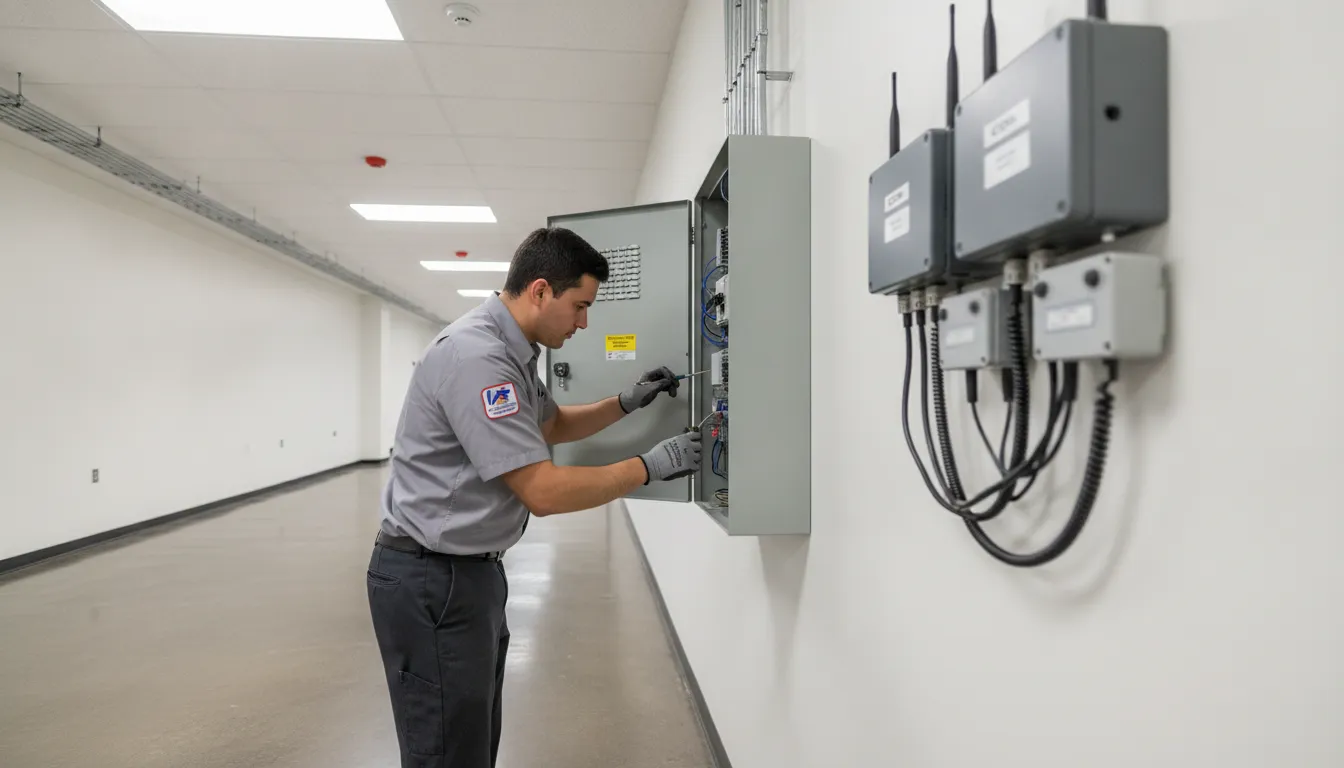
Start with an inventory of the installed system. Identify the control panel, connected devices, communicator, power supplies, backup paths, and any fire or security functions that share equipment. Ask the provider to confirm compatibility in writing, rather than assuming an older panel can transfer without changes. The right review should also account for the building’s occupancy, entry points, and operational needs.
Check the signal path and changeover plan
Ask how signals will travel from the property to the monitoring center, what connectivity the communicator requires, and what happens if the primary connection fails. Confirm whether testing, programming, permitting, or equipment replacement is needed. A changeover should include a documented test plan, account records, contact lists, and a clear handoff time. Those details help prevent a gap between the previous provider stopping service and the new provider accepting signals.
Compatibility also includes the operational details behind the signal. Verify which fire, burglary, panic, supervisory, and trouble signals are received, how each is classified, and which instructions apply. For a broader look at commercial security system options, compare how hardwired and wireless configurations affect connectivity, maintenance, and future expansion.
Separate monitoring from maintenance
Monitoring and system maintenance are related but not identical. The monitoring provider may receive and process alarm signals, while installation, repairs, inspections, testing, documentation, and equipment upkeep may remain with the property owner or a contracted technician. Confirm who owns each responsibility, who receives trouble notifications, and how service records are updated.
If you are changing providers, review the compatibility and coverage questions in this guide to switching alarm monitoring providers. The goal is a verified transition, not simply a new account number.
What Service, Testing, and Records Are Included?
A dependable monitoring arrangement should define who maintains the system, how outages are handled, and what documentation you receive after testing or an incident.
Monitoring is only one part of a functioning commercial alarm program. Ask the provider to separate signal monitoring from installation, preventive maintenance, repairs, testing, and account administration. American Alarm describes its scope as system design, installation, monitoring, and maintenance for homes and businesses. Review its commercial alarm service in Atlanta to understand the broader service relationship rather than assuming every task is included in monitoring fees.
Define testing and maintenance responsibilities
Regular maintenance should identify defects before they undermine reliability. The Cybersecurity and Infrastructure Security Agency recommends written procedures that specify each inspection, test, calibration, or repair, the person responsible, the frequency, and the required documents. It also recommends maintaining records with the date and time, the equipment involved, and the technician’s name and qualifications. CISA’s monitoring guidance provides a useful standard for evaluating the provider’s documentation process.
Confirm whether testing is scheduled by the provider, initiated by your team, or required by a separate inspection program. Ask what happens when a test identifies a failed communicator, sensor, battery, or other component. The provider may diagnose or repair equipment under the service agreement, but the customer remains responsible for granting access, approving work where required, and keeping the premises and system available for testing. As UC San Diego explains, monitoring responsibilities can remain distinct from the subscriber’s responsibility to install and maintain the alarm system.
Plan for outages and preserve incident records
Do not accept a vague answer about connectivity or equipment failure. Ask what temporary security measures or notification procedures apply during planned maintenance, non-routine outages, or equipment failures. CISA specifically recommends temporary measures for these periods. After an alarm or unusual event, request a record showing the signal, contacts notified, instructions followed, and any dispatch or service activity. CISA also recommends documenting non-routine incidents and promptly reporting them to the appropriate personnel.
Finally, confirm where testing reports, service tickets, account changes, and incident records are stored, who can access them, and how long they remain available. Current system documentation should be maintained by both parties, with the provider recording its work and the customer updating contacts, access details, and site information when conditions change.
Review Contracts, Fees, and Account Ownership
A clear agreement should explain the monitoring service, the account holder’s responsibilities, every charge category, and what happens when the relationship changes. Read the contract for operational details, not just the recurring service description.
Before signing, ask how long the initial term lasts, whether it renews automatically, and what notice is required to cancel. Confirm whether cancellation terms differ during the initial term and after renewal. If your business changes locations, ownership, or operating hours, ask whether the agreement can be transferred, amended, or ended without creating an avoidable service gap.
Separate one-time charges from recurring monitoring fees. One-time categories may include system design, installation, equipment, programming, permits, takeover work, or account changes. Recurring categories may include monitoring, communications, or optional support. Request a written schedule of charges and ask which events can trigger a change order. Do not rely on an informal estimate or an old price sheet. Current fees and contract terms should be confirmed in the proposal and final agreement.
Account ownership also deserves a direct answer. Ask who owns the panel, communicators, sensors, software access, account records, and monitoring account after installation. Confirm what happens to equipment and data if you switch providers, sell the property, or move to a new system. A provider should identify the steps needed to preserve coverage during a transition; this is especially important when switching alarm monitoring providers.
Finally, define the service boundary. Ask who handles maintenance, testing, repairs, false-alarm coordination, permits, emergency contact updates, and documentation. Your agreement should identify what the provider does, what remains your responsibility, and how requests are authorized. Those answers make it easier to manage the account long after the contract is signed.
Compare Monitoring Questions Before You Sign
Use the same questions with every provider. The clearest comparison covers alarm coverage, signal handling, system fit, account records, and the boundaries between monitoring, maintenance, and customer responsibilities.
| Area | Ask the provider | Evidence to request | Why it matters |
|---|---|---|---|
| Hours and alarm types | Is monitoring available 24/7, and which fire, burglary, panic, or other alarm signals are covered? | Written scope of monitored signals and service availability. | “24/7” should describe the service you actually need, not a vague general statement. |
| Central station and dispatch | Where are signals received, and what happens after an alarm is confirmed? | Central-station details, dispatch procedures, and account-specific instructions. | You can evaluate how receipt, verification, and dispatch responsibilities connect. |
| Signal compatibility | Will the provider support your panel, communicator, signal path, and required connectivity? | Compatibility review and any changeover requirements. | Unverified equipment or connectivity assumptions can create coverage gaps. |
| Call list | How are contacts updated, called, and replaced when personnel or procedures change? | Current call-down list format and update process. | Accurate contacts and special instructions support consistent escalation. |
| Maintenance and records | Who tests and maintains the system, and what incident or service records will we receive? | Maintenance responsibilities, testing records, technician qualifications, and outage procedures. | Monitoring does not automatically transfer responsibility for installation or maintenance. |
| Contract and fees | What are the term, cancellation rules, ownership terms, service boundaries, and one-time or recurring charges? | Complete agreement, fee schedule, and change-order process. | Written details prevent surprises when equipment, service, or account needs change. |
Ask for answers in writing and keep them with your system documentation. That record makes future contact changes, maintenance decisions, and provider transitions easier to manage.
Why Local Technical Experience Matters in Metro Atlanta
A monitoring provider should be able to explain its service area, technical scope, monitoring structure, and compliance experience in terms your business can verify.
Local experience is more useful when it is documented rather than implied. American Alarm identifies itself as an Atlanta-based company providing system design, installation, monitoring, and maintenance for homes and businesses. Its stated service area includes Metro Atlanta and North Georgia, so a business can ask directly whether its property, equipment, and service needs fall within that scope.
Ask how the provider’s central-station monitoring operates, which alarm types it accepts, and what support is available when the system requires service. American Alarm’s company information describes its central-station monitoring as 24/7 and UL-certified. Those claims should be confirmed in the proposal and account documents, along with the specific monitoring and maintenance responsibilities included.
Technical leadership also matters when a system involves fire alarm requirements, inspection questions, or coordination with local authorities. The company identifies Scott Gilkey as NICET IV certified and cites NFPA 72 expertise and relationships with Atlanta-area jurisdictions. That does not mean every technician or operator holds the same credential. It does mean the provider should be able to identify who handles design, compliance questions, inspections, and field service. Review the provider’s NFPA fire alarm compliance expertise and ask what documentation your site will receive.
A transparent provider will distinguish documented capabilities from assumptions, explain service boundaries, and avoid promising a response outcome it cannot guarantee. That conversation is especially important for businesses with different operating schedules, life-safety systems, or multiple locations.
Call (770) 645-0061 or contact American Alarm to discuss your Metro Atlanta monitoring requirements.
Frequently Asked Questions
These answers cover the operational questions Atlanta business owners should resolve before selecting a commercial monitoring provider.
What does 24/7 commercial alarm monitoring include?
Confirm that the service operates continuously and identify which signals it handles, such as burglary, fire, panic, or supervisory alarms. Ask whether signals route to a central station, what information operators receive, and how the provider contacts your designated list. Do not assume every alarm type or location is included without seeing it in your account documentation.
What should I ask about dispatch and escalation?
Ask how the provider verifies an alarm, follows your call-down list, uses special instructions, and documents the event. Confirm who can update contacts and instructions, how changes are authorized, and what happens if a listed contact cannot be reached. A public facility-monitoring specification similarly calls for facility-specific call-down lists and special dispatch instructions: see the documented example.
Who is responsible for maintaining the alarm system?
Monitoring and system maintenance are related but separate responsibilities. Confirm whether the provider installs, tests, repairs, and maintains the equipment or whether those duties remain with your business or another contractor. CISA recommends regular maintenance and written procedures identifying the task, responsible person, frequency, and required records: review its monitoring guidance.
What records should a business request?
Request current equipment and account details, contact lists, test results, service tickets, alarm-event reports, and outage or restoration notes. Maintenance and testing records should identify the date, time, technician qualifications, and equipment involved, according to CISA guidance. Also confirm how you access records and how long they remain available.
How can I confirm the system will work with a new provider?
Ask for a documented compatibility review before changing service. Confirm the communicator, signal path, alarm panel, fire or life-safety equipment, testing process, and any required upgrades. Establish who coordinates testing and when the existing service ends so the transition does not create an avoidable coverage gap.
Schedule a Commercial Monitoring Conversation
A focused conversation can help you compare monitoring coverage, signal compatibility, escalation procedures, and account responsibilities before you make a decision. Bring your current system details and the questions from this guide so the discussion stays practical and specific to your Atlanta business.
Call American Alarm at (770) 645-0061 to discuss commercial alarm monitoring.

Leave a Reply
Want to join the discussion?Feel free to contribute!