Switching Fire Alarm Monitoring Companies in Atlanta
Switching fire alarm monitoring companies is a serious business decision, but it does not have to create a gap in life-safety coverage. Atlanta business owners can evaluate a new monitoring provider, confirm equipment compatibility, coordinate the changeover, and protect the records their property needs without treating the process like a routine account cancellation.
Schedule a fire alarm monitoring consultation. Call (770) 645-0061 or contact American Alarm online.
What changes when a business switches fire alarm monitoring companies?
Answer: A monitoring change transfers responsibility for receiving and responding to alarm signals, but the fire alarm system itself may remain in place when the panel, communicator, notification appliances, and related equipment are compatible and in suitable condition. The change should be planned as a documented cutover with testing, communication among providers, and confirmation that the new monitoring path is active before the old one is released.
The safest transition separates the business decision from the technical change. First confirm why the monitoring service is changing and what the new provider will evaluate. Then schedule the work so testing and documentation are completed before the account is considered active.
Why Atlanta businesses change fire alarm monitoring providers
A business may consider a new provider because its service model, response process, technical support, or local coverage no longer fits the property. The reason for changing matters because it helps define what must be checked during the transition.
Common reasons include a change in property ownership, an unsatisfactory service experience, difficulty getting technical answers, a national account structure that does not fit a local facility, or a need for more direct support with testing and records. A monitoring change can also be part of a broader facility upgrade, but switching providers does not automatically mean replacing a functioning fire alarm system.
Before requesting proposals, identify the problem you want the new relationship to solve. Ask whether the provider can support the property’s type of fire alarm system, communicate clearly with the responsible parties, and coordinate with the authority having jurisdiction when the project requires it. A provider should explain what it knows, what it needs to inspect, and what still depends on an onsite review.
For Atlanta businesses, local technical knowledge can be especially useful when a property has inspection history, prior modifications, or records that must be reconciled. American Alarm has served Metro Atlanta since 1995, with NICET IV leadership and an operating focus on commercial security and fire alarm systems.
Step 1: Review the current fire alarm monitoring agreement
Start with the current account and contract before scheduling technical work. The agreement, service records, and contact list can reveal notice periods, responsibilities, and information the new provider will need.
Collect the current monitoring agreement, recent invoices, service tickets, inspection and testing reports, deficiency notices, permit records, and the names of the people who receive account notifications. Also note the current account number, site address, panel manufacturer and model, communicator type, and any central-station account details that appear in the records.
Read the agreement for its notice and cancellation process. Do not ask the existing provider to terminate monitoring until the replacement plan has a defined schedule and the new provider has confirmed that it can accept the account. If there is a required notice period, use that time to complete the compatibility review and gather missing documents.
- Account ownership: Confirm who is authorized to approve the change and who will be the responsible contact after the transition.
- Site information: Verify the address, building name, suite or floor details, emergency contacts, and access instructions.
- Service history: Look for unresolved trouble signals, recurring deficiencies, recent repairs, and open inspection items.
- Contract timing: Record notice requirements and the earliest safe date for a cutover.
Step 2: Ask the new provider for a compatibility review
Compatibility is a system-specific question, not a promise that every existing panel will transfer. A qualified provider should review the equipment and communication path before recommending reactivation, a communicator change, repairs, or replacement components.
Provide the new provider with clear photos or records of the fire alarm control panel, communicator, annunciators, notification appliances, and any connected systems. The review should consider the panel model, programming access, signal format, available communication paths, power condition, batteries, system age, and known trouble conditions.
A monitoring provider may be able to reactivate or take over an existing system, but the final recommendation depends on what is installed and what the inspection shows. Some systems need a compatible communicator, updated programming, repairs, or additional documentation before the new monitoring service can be activated. If a component is proprietary or unsupported, the provider should identify that limitation rather than assume a full replacement is necessary.
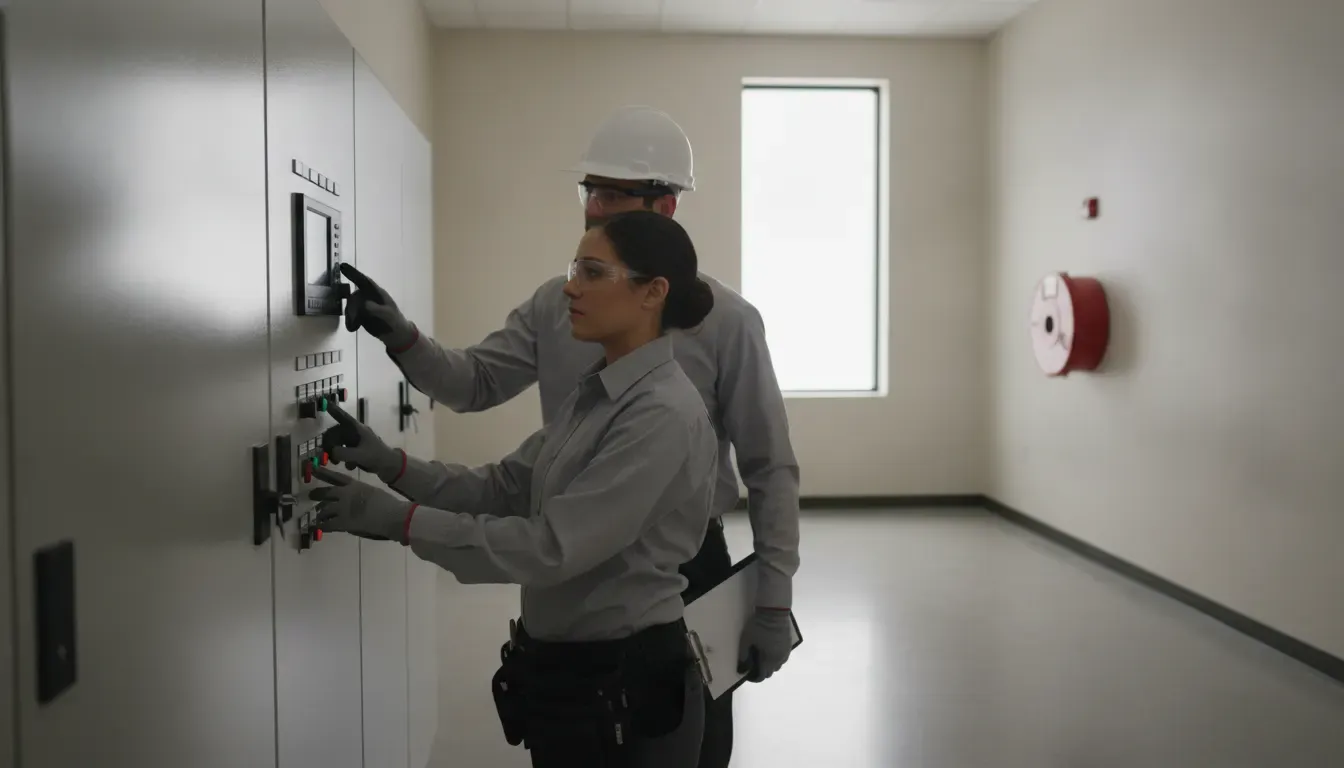
Ask for the compatibility review in writing. It should identify the equipment reviewed, the assumptions made, the work that is recommended, and the items that still need onsite confirmation. This gives the business a clear basis for comparing providers without committing to a solution that has not been verified.
Step 3: Confirm the monitoring and communication path
The communication path connects the onsite fire alarm system to the monitoring center. A provider change is incomplete until the new path, account programming, and signal routing have been tested and documented.
Ask the new provider how the panel will communicate with its monitoring center and whether the existing communicator can be used. The answer may depend on the panel, the communicator, the available cellular or other communication service, and the requirements that apply to the property. Do not assume that changing the monitoring company automatically changes every part of the signal path.
It is also useful to separate fire alarm monitoring from general security alarm monitoring when discussing the transition. A commercial fire alarm account has life-safety responsibilities, notification procedures, and documentation needs that deserve specific attention. The provider should explain how fire alarm signals, supervisory signals, trouble signals, and restoration signals will be identified and handled.
For background on communication choices, see American Alarm’s cellular versus landline alarm monitoring guide. That comparison is useful context, but the correct path for a particular fire alarm system still requires a review of the installed equipment and site requirements.
Step 4: Build a no-gap changeover schedule
The cutover schedule should keep responsibility clear from the last confirmed test with the current provider through the first confirmed test with the new provider. Avoid any period in which the business assumes the new service is active without evidence.
Coordinate the schedule among the business contact, current monitoring provider, new monitoring provider, service technician, and any other party responsible for the building. The exact sequence varies by system, but a controlled changeover commonly includes these checkpoints:
- Pre-change confirmation: Verify the site, equipment, account information, contact list, and planned work with the new provider.
- Testing notification: Place the account on the appropriate test status with the responsible monitoring center before signals are generated.
- Technical work: Reprogram or replace the communication component only as needed, then confirm that the panel is ready to report.
- Signal tests: Test the required alarm, supervisory, and trouble signals with the monitoring center and confirm that the correct account and site information appear.
- Restoration: Clear the test condition, restore the system to normal, and confirm that the monitoring center recognizes the restored state.
- Release: End the old monitoring service only after the new monitoring path and documentation have been confirmed.
Do not rely on a phone call that says the change is complete. Request written confirmation of the activation date, the account identifier, the signals tested, any open deficiencies, and the person who can answer questions after the cutover.
Step 5: Preserve NFPA and authority records
A monitoring-provider change should preserve the record of how the fire alarm system is configured, tested, serviced, and communicated to the responsible authority. The exact documentation depends on the property and its authority having jurisdiction.
Keep the system description, device and zone information, inspection and testing history, service records, deficiency corrections, monitoring account information, emergency contact list, and available as-built or sequence-of-operations documents together. If the business has certificates, permits, or correspondence from the local fire marshal or other authority, include those records in the transition file.
American Alarm’s Atlanta NFPA 72 compliance guide explains why commercial fire alarm work involves more than a panel and a phone connection. NFPA requirements, local amendments, property use, system design, and AHJ expectations can affect what must be inspected, tested, submitted, or updated. A new provider should help identify the records needed for the specific property, not make a blanket claim about what every site requires.
Ask who will maintain future inspection and testing records, how deficiencies will be communicated, and how changes to the system will be documented. Clear ownership prevents a common transition problem: the monitoring account changes while the business loses track of which records are current.

What should a business ask before selecting a new provider?
The right questions test technical fit, changeover discipline, documentation, and ongoing support. A low-friction sales conversation is not a substitute for a documented plan.
- Technical fit: Which panel, communicator, and signal formats does the provider support, and what must be confirmed onsite?
- Cutover control: Who schedules testing, who places the account on test, and who confirms the system is restored?
- Coverage continuity: What specific evidence will show that the new monitoring path is active before the old service ends?
- Recordkeeping: Which inspection, testing, deficiency, permit, and account records will the provider maintain?
- Local coordination: Who handles communication with the responsible contact and coordinates with the AHJ when the property requires it?
- Service after activation: How are trouble signals, repairs, inspections, and future system changes handled?
Be cautious with promises that are not tied to a system review. A provider should be confident about its process while being precise about what depends on the existing panel, communicator, wiring, programming, site conditions, and local requirements.
How American Alarm supports a monitoring transition
American Alarm approaches a monitoring change as a technical and operational handoff, not simply a billing change. The team can review the existing system, discuss reactivation or takeover options, coordinate testing, and identify the documentation needed for the property.
American Alarm serves Metro Atlanta businesses with security and fire alarm expertise backed by more than 30 years in the local market. Founder Scott Gilkey holds NICET IV certification, and the company maintains unlimited Georgia low-voltage credentials. That background supports a consultative review of commercial fire alarm systems, while the exact transition plan remains specific to the equipment and property.
Learn more about alarm reactivation and monitoring services or review commercial alarm systems in Atlanta before scheduling a conversation. The goal is to understand what can remain, what needs attention, and how to move monitoring responsibility without leaving the business uncertain about its coverage.
Frequently asked questions
These answers provide a starting point, but a fire alarm monitoring change should be finalized only after the specific system and property requirements are reviewed.
Can a business keep its existing fire alarm equipment when changing providers?
Sometimes. A compatibility review should examine the panel, communicator, programming access, signal format, system condition, and any proprietary limitations. The result may be a straightforward takeover, a communicator or programming change, repairs, or a recommendation for additional equipment. No provider should promise compatibility without reviewing the system.
Will switching monitoring companies interrupt fire alarm coverage?
The goal of a controlled cutover is to avoid an unplanned interruption. The business and providers should coordinate test status, technical work, signal testing, restoration, and written activation confirmation. Do not end the existing service based only on an anticipated activation date.
Does the business need new fire alarm records after a monitoring change?
The records needed depend on the system, work performed, property, and authority having jurisdiction. Preserve existing inspection, testing, service, permit, contact, and system records, then ask the new provider what must be updated or submitted. Keeping one organized transition file makes future service and inspections easier to manage.
Can American Alarm evaluate a system before the business switches?
American Alarm can discuss the existing system and the possible reactivation or takeover path. The final recommendation depends on the equipment and an appropriate technical review. A consultation can identify the information needed to plan testing, documentation, and the changeover schedule.

Leave a Reply
Want to join the discussion?Feel free to contribute!