Commercial Security Alarm Service Atlanta Guide
For an Atlanta business, an alarm system is only one part of a dependable protection plan. The provider also needs to help you choose the right equipment, connect it to monitoring, keep it tested, and respond when something needs attention.
Commercial security alarm service covers the full lifecycle of a business system, from planning and installation through 24/7 monitoring, maintenance, emergency support, repairs, and reactivation. American Alarm has served Metro Atlanta and North Georgia since 1995, with local expertise focused on practical, long-term support.
Schedule a free consultation with American Alarm.
The details matter because monitoring, technician response, preventive maintenance, and system repairs each serve a different purpose. Understanding how those pieces work together makes it easier to evaluate a service plan that fits your property, operations, and responsibilities.
What Does Commercial Security Alarm Service Include?
Commercial security alarm service is more than a monitoring connection. It is the ongoing lifecycle that helps a business choose an appropriate system, put it into operation, keep it reliable, and receive support when conditions change. A complete program can cover design, installation, monitoring, maintenance, repairs, reactivation, and practical customer support.
For an overview of equipment and options, see Atlanta commercial alarm systems. The right service plan depends on the property, operating schedule, access points, communication needs, and the type of protection the business requires.
Planning and installation
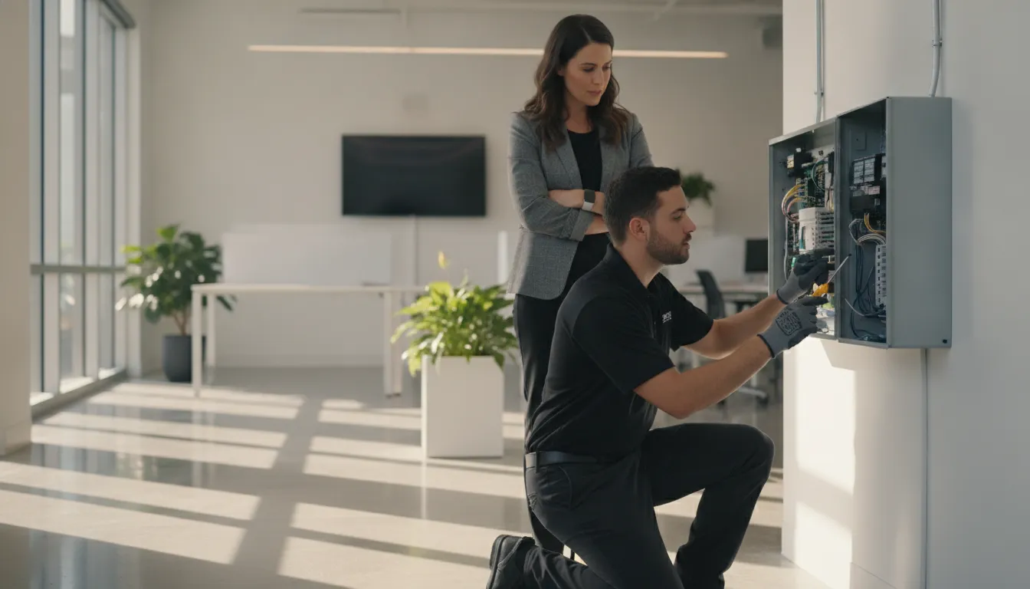
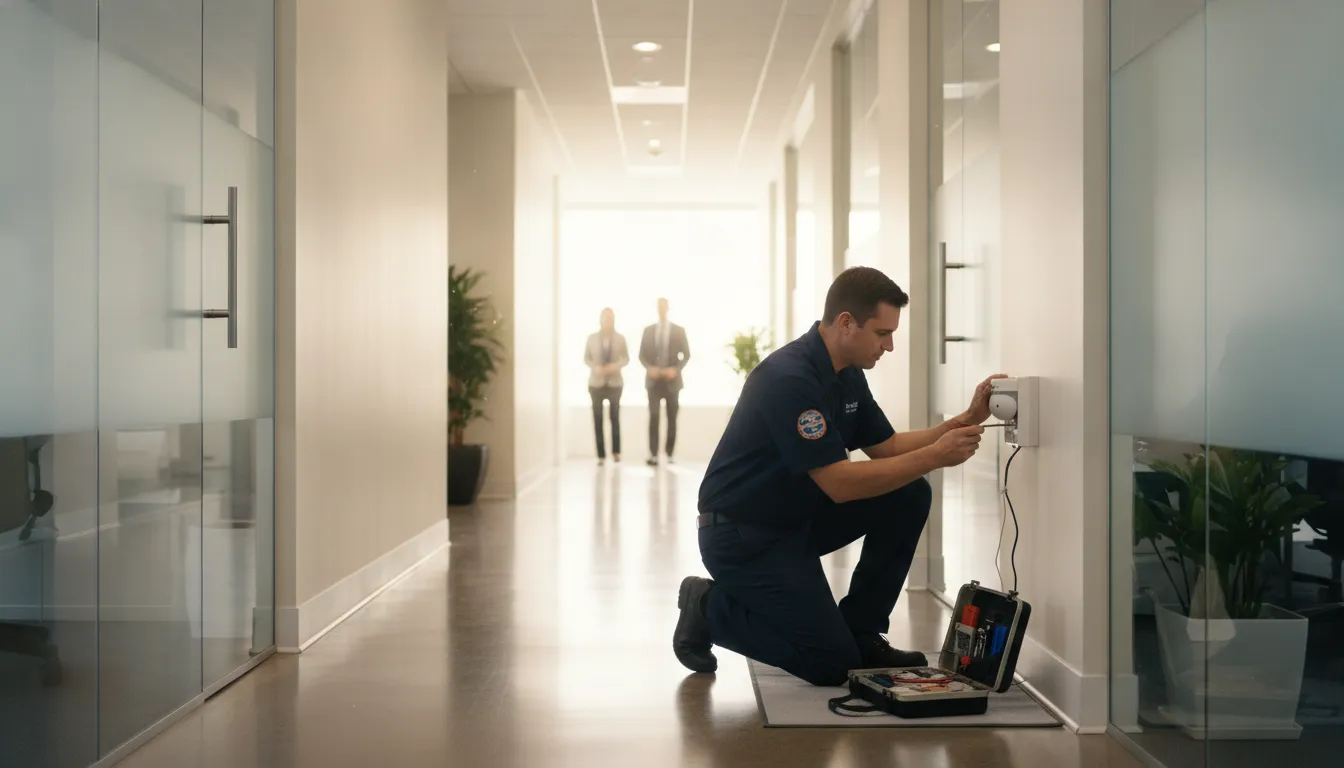
The lifecycle begins with a consultation and property-specific design. A provider evaluates vulnerabilities, identifies useful detection zones, selects compatible equipment, and plans how signals will reach the monitoring center. Professional installation includes system programming, monitoring-center integration, customer training, and full testing so users understand normal operation and alarm procedures.
Monitoring and support
Once the system is active, monitoring provides an ongoing connection between the alarm and a central station. American Alarm offers 24/7 UL-certified central station monitoring. When an issue occurs, phone troubleshooting may be appropriate before dispatch, which can resolve some problems without an unnecessary visit. Monitoring and technician service are related, but they are not the same: monitoring handles incoming alarm signals, while service support addresses equipment, programming, or site needs.
Maintenance, repairs, and reactivation
Routine maintenance helps identify conditions that can affect dependable operation. Depending on the system, work may include inspections, battery replacement, component cleaning, testing, and maintenance documentation. Repairs address failed or damaged equipment, communication problems, wiring concerns, and other issues that require technical attention. A service provider can also evaluate an existing system for reactivation or takeover when a business needs to bring an inactive system back into service.
- System continuity: Maintenance and testing help keep the installed equipment aligned with the business’s current needs.
- Technical troubleshooting: Phone support can clarify an alarm condition, while an on-site visit may be arranged when the issue requires hands-on work.
- Operational changes: Reconfiguration or reactivation can support changes in occupancy, access procedures, equipment, or monitoring arrangements.
- Clear expectations: Good service explains what monitoring covers, what technician support covers, and what the customer should do when an alarm or system issue occurs.
For Atlanta businesses, this lifecycle approach creates one connected service relationship instead of treating installation, monitoring, and repairs as isolated purchases. It also gives decision-makers a clearer way to plan support as the property and its security requirements evolve.
How Should an Atlanta Business Plan Its Alarm Service?
A well-planned alarm service approach starts with the property and the way people use it, not with a standard equipment package. An Atlanta business should map the building, identify meaningful risks, and define how the system will support daily operations as well as unusual events. That planning gives technicians a practical basis for system design, programming, testing, maintenance, and future service.
- Start with the property layout: Review entrances, exits, loading areas, interior workspaces, storage rooms, equipment areas, and other points where access or activity needs to be recognized. Consider how a signal from each area will be interpreted after business hours.
- Identify risk points: Document locations that warrant extra attention, such as vulnerable doors, restricted rooms, valuable inventory, critical infrastructure, and areas with limited visibility. The goal is a property-specific design that reflects the business’s actual exposure.
- Define authorized users: List the employees, managers, vendors, and other approved users who may arm, disarm, or manage the system. Establish clear responsibilities for opening, closing, temporary access, credential changes, and reporting unusual activity.
- Build useful zones: Divide the system into logical zones that make signals easier to understand and respond to. Separate areas with different schedules or access rules instead of treating the entire property as one undifferentiated space. Zone names and descriptions should be documented in plain language.
- Review communication paths: Confirm how alarm signals, system notifications, and service communications will travel from the premises to the monitoring center and designated contacts. A service plan should account for equipment condition, supported communications, backup considerations, and who receives operational updates.
- Plan for expansion: Discuss likely changes, including a new entrance, remodeled space, additional employees, altered operating hours, or a second location. Leaving room for appropriate expansion can reduce disruption when the business changes.
- Document the system: Keep current records of device locations, zone assignments, user permissions, contact lists, testing, service visits, and approved changes. Good documentation helps future technicians troubleshoot accurately and helps business operators make informed decisions.
Technical review matters when these details must align with equipment, programming, monitoring, and applicable requirements. Scott Gilkey’s NICET IV certification represents high-level technical certification and design and compliance expertise. It should be understood as technical expertise, not as a promise of licensing or permit approval. For businesses comparing a commercial alarm system and service plan, a thorough site discussion should clarify the design assumptions, operating procedures, testing expectations, and support available after installation.
What Happens When a Commercial Alarm Signal Is Received?
Monitoring is one layer of commercial security alarm service, not the entire service relationship. American Alarm’s commercial alarm monitoring guide explains the signal, verification, and escalation process in detail. This article focuses on the work around monitoring: keeping account instructions current, coordinating service after an event, and maintaining the equipment and site so the system remains dependable.
- Keep account information current: Review contacts, business hours, access instructions, and response procedures whenever operations or responsible personnel change.
- Coordinate technical follow-up: A signal may call for testing, troubleshooting, a service visit, or documentation after the immediate event is handled.
- Separate monitoring from technician service: The central station handles alarm communications, while a service technician addresses equipment, programming, wiring, or site issues when hands-on work is appropriate.
- Set realistic response expectations: American Alarm advertises on-call technicians 24/7 for emergency service calls and less-than-24-hour response for non-emergency service calls. These are published service commitments, not a universal guarantee of a specific arrival time or outcome. Actual response depends on the event, access, account instructions, location, and conditions at the time.
Regular testing, accurate records, and a clear service contact help an Atlanta business move from an alarm event to the right next action without confusing monitoring responsibilities with repair or maintenance responsibilities.
How Do Maintenance and Commercial Alarm Repairs Protect Continuity?
A commercial alarm system supports daily operations only when its devices, communication paths, programming, and power sources work together. Preventive maintenance helps identify small issues before they interrupt protection, while organized repair service restores dependable operation when a fault, damaged component, or configuration problem appears.
A practical maintenance plan should be based on the property, the system design, and the way employees use the facility. Routine inspections can include testing alarm signals, checking batteries and power supplies, cleaning applicable components, reviewing connections, and confirming that programmed zones still match the building. Testing should be coordinated with the monitoring process so the business understands when a test is active and when normal monitoring resumes.
What preventive maintenance should document
- System condition: Record tested devices, observed trouble signals, battery condition, communication status, and any components that need attention.
- Operational changes: Update authorized users, schedules, zones, and contact information when the business changes its layout, staffing, hours, or operating procedures.
- Compliance and accountability: Keep maintenance records available for internal reviews, insurance questions, and applicable regulatory documentation.
When an alarm issue occurs, troubleshooting should start with a clear description of the symptom. A recurring trouble signal, failed communication path, false alarm pattern, or device that no longer responds may point to different causes. Phone troubleshooting can resolve some issues without an unnecessary visit. When on-site work is needed, the technician can use the system history and the customer’s description to focus the inspection and limit disruption to business activity.
Repair planning should also distinguish urgent service from routine correction. American Alarm advertises on-call technicians 24/7 for emergency service calls and less-than-24-hour response for non-emergency service calls. These are published service commitments, not a guarantee of a specific outcome in every situation. Clear expectations help operators decide what to do next while a repair is being coordinated. Review commercial alarm repair and maintenance options for help with troubleshooting, system repairs, and ongoing support.
Reactivating an existing system
Reactivation can be useful when a business takes responsibility for an existing alarm system or returns a previously inactive system to service. The provider should inspect the equipment, verify its condition and programming, confirm communication with the monitoring center, test the system, and explain any limitations before normal operation begins. This lifecycle approach protects continuity by treating maintenance and repairs as part of the commercial security alarm service, not as an afterthought after installation.
How Do Fire Alarms and Access Control Fit the Service Plan?
A commercial security alarm service plan works best when each system has a defined purpose and the provider understands how the pieces interact. Commercial alarms help detect unauthorized activity, fire alarms address life-safety events, and access control manages entry to protected areas. Integrated support keeps planning, testing, maintenance, and repairs from becoming disconnected responsibilities.
The right service conversation should cover more than equipment. Ask how signals are monitored, who maintains each system, how system changes are documented, and what happens when one issue affects another. This comparison provides a practical starting point.
| Service layer | Primary purpose | Planning and service questions |
|---|---|---|
| Commercial security alarms | Detect intrusion, unauthorized activity, and alarm conditions at the business. | Which areas need protection? How will signals be communicated and monitored? Who updates users, codes, and call lists when operations change? |
| Commercial fire alarms | Support life-safety notification and required fire alarm system functions. | Is the design appropriate for the property? How are testing, inspections, documentation, and ongoing maintenance handled for commercial fire alarm systems? |
| Access control | Manage and record authorized entry through selected doors or areas. | Who needs access, at what times, and to which locations? How are credentials added, removed, or changed? Who supports the system when a door or reader fails? |
| Integrated support | Coordinate system design, monitoring, service records, troubleshooting, and repairs. | Is there one accountable service partner? Are changes tested across connected systems? Can the provider support both business access control installation and ongoing alarm service? |
Keep responsibilities clear
Integration does not mean every system should perform the same job. A fire alarm system should be planned and maintained as a life-safety system, while access control should reflect the business’s operating hours, permissions, and circulation patterns. Commercial security alarms add another layer of detection and notification. Clear boundaries help technicians test the right functions and help business operators know which issue to report.
For Metro Atlanta businesses, a coordinated provider can also preserve useful service history across design changes, inspections, repairs, and reactivation work. American Alarm describes its commercial support as a lifecycle service that includes design, installation, monitoring, maintenance, repair, and reactivation. That continuity makes it easier to plan responsible updates without losing track of the systems already serving the property.
Schedule commercial alarm service with American Alarm.
What Should Atlanta Businesses Ask a Service Provider?
Choosing a commercial security alarm service provider is about more than selecting equipment. Atlanta businesses should look for a partner that can understand the property, support the system after installation, and communicate clearly when conditions change. A provider familiar with Metro Atlanta can also bring practical knowledge of local service needs and jurisdiction expectations.
Before signing an agreement, ask questions that reveal how the company handles the full service lifecycle. The answers should be specific enough for you to understand who will design, monitor, maintain, repair, and document your system.
- Who will assess the property? Ask whether a qualified professional will review entrances, restricted areas, high-value assets, employee access, operating hours, and likely alarm conditions before recommending equipment. A property-specific plan is more useful than a standard package.
- Who provides local service? Confirm where technicians are based, which parts of Metro Atlanta they cover, and how emergency and routine service requests are handled. Ask whether phone troubleshooting may be used when it can resolve an issue without an unnecessary visit.
- What does monitoring include? Clarify how alarm signals reach the monitoring center, how operators verify or escalate events, and how your listed contacts are maintained. If around-the-clock monitoring matters to your operation, ask the provider to explain its monitoring standard and procedures in plain language.
- What technical credentials support the work? Ask who oversees design, programming, testing, and compliance-related decisions. Scott Gilkey is NICET IV certified, which represents a high-level technical certification in fire alarm engineering and related design expertise. It should be described accurately as certification, not as a license or automatic permit approval.
- How are expectations documented? Request written details about system scope, communication pathways, training, testing, maintenance responsibilities, service contacts, and any published response commitments. Clear documentation reduces confusion when staff or property responsibilities change.
- Can the provider repair and support the system over time? Ask about troubleshooting, replacement components, inspections, maintenance records, and support for existing systems. A provider that handles only the initial installation may leave you searching for help later. Review the available commercial alarm repair and maintenance process before choosing.
Finally, ask how the provider supports changes such as a remodel, new tenant area, updated access needs, or a system reactivation. The strongest relationship is transparent about what the system can do, what requires additional planning, and who remains accountable after the work is complete.
Frequently Asked Questions
How much does a commercial security system cost?
Commercial system cost depends on the property layout, number of protected zones, equipment selected, communication needs, installation requirements, and ongoing monitoring or service scope. A useful proposal should separate one-time work from recurring services and explain what maintenance, repairs, and support include. Ask for a site-specific evaluation rather than relying on a generic price range.
What is the best commercial alarm system?
The best system is the one that matches the business’s risks, operating hours, users, building layout, and response plan. Look beyond equipment names and evaluate design quality, 24/7 monitoring, maintenance, repair support, and the provider’s ability to support the system over its full service life. Fire alarm, access control, and other systems may also need to work together.
How much does ADT cost for a business?
ADT business pricing varies with the facility, equipment, installation scope, monitoring plan, and contract terms. The most useful comparison is not a single advertised figure. Request a written proposal that identifies equipment ownership, recurring monitoring fees, service coverage, repair terms, and any charges that could affect the total cost.
Is there a cheaper alternative to ADT?
There may be providers with different pricing and service models, but lower cost should not be the only selection criterion. Compare monitoring coverage, local technical support, emergency and non-emergency service expectations, maintenance, repair capability, and contract flexibility. A less expensive plan that leaves gaps in support may not deliver the best business value.
Schedule Commercial Alarm Service for Your Atlanta Business
A clear service plan can help your business keep monitoring, maintenance, repairs, emergency response, and ongoing support aligned with daily operations. Discuss your property, system needs, and the right next steps with American Alarm.


Leave a Reply
Want to join the discussion?Feel free to contribute!