Emergency Business Alarm Repair Service in Atlanta
A failed business alarm can create uncertainty at the worst possible time. Start by noting the exact alert, checking whether the system is communicating with the monitoring provider, and keeping staff away from exposed equipment. Many issues can begin with phone-first troubleshooting, while faults involving power, communication, sensors, or repeated false alarms may require professional evaluation.
When a business alarm fails, contact your monitoring provider, describe the alert or system status, and follow safe troubleshooting instructions before attempting any repair. An emergency business alarm repair service can assess whether the problem requires on-site attention while helping protect monitoring continuity.
American Alarm has served Metro Atlanta businesses since 1995 and supports commercial alarm repair, monitoring, emergency service, and routine maintenance. The right response depends on what the system is reporting and whether it can still communicate. Begin with the safest first steps, then determine when professional repair is needed.
What to Do First When a Business Alarm Fails
Start with safe triage, not guesswork. Identify what the system is reporting, contact the monitoring provider or alarm company, and protect essential operations while the issue is assessed. Many faults can begin with phone troubleshooting, while equipment that needs repair should be handled by a qualified technician.
- Identify the alert or status. Note the exact message, trouble light, tone, zone, door, motion device, or communication warning shown on the keypad or app. Record when the problem began and whether it followed a power interruption, network change, access event, or other known incident. This information helps the provider distinguish a communication fault from a device or power concern.
- Contact monitoring support promptly. Call the monitoring provider or alarm company and describe the alert exactly as displayed. American Alarm offers phone-first troubleshooting and 24/7 support for suitable issues, so a specialist can help determine whether the system can be safely assessed remotely or needs service. Keep the account information and site contact details available.
- Follow only approved phone guidance. A support specialist may ask about power, recent changes, system status, or basic user-level steps that do not expose the equipment. Do not improvise beyond those instructions. If a reset or acknowledgment is recommended, confirm what it does and whether monitoring remains active before proceeding.
- Protect business operations. Assign a responsible contact to observe the site, secure doors and sensitive areas using normal business procedures, and communicate the alarm status to authorized managers. If the system is not reporting normally, treat that as a continuity concern and document any temporary measures until monitoring and protection are restored.
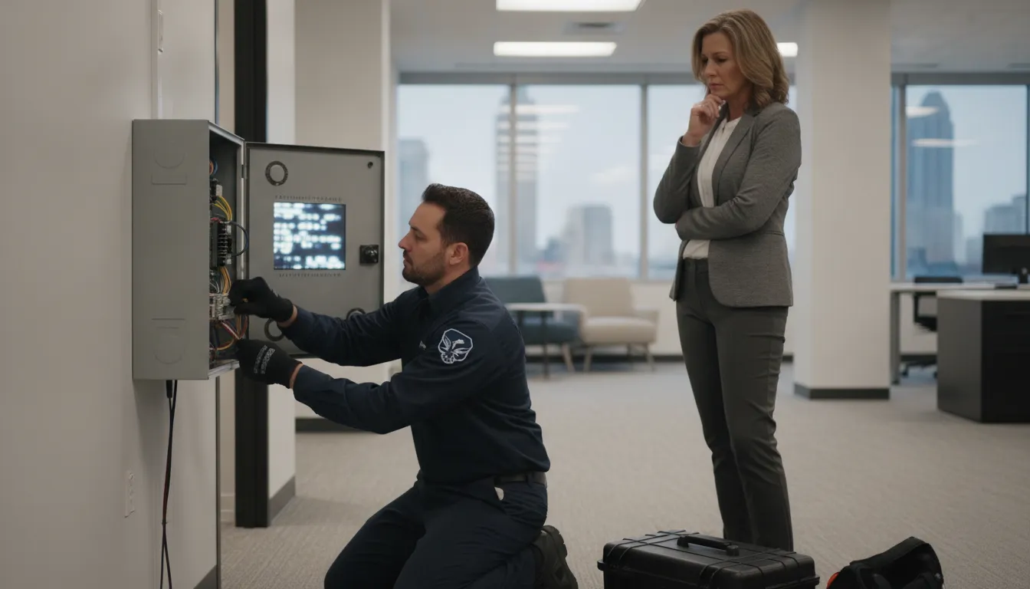
- Keep the enclosure and wiring closed. Do not open the control panel, remove batteries, bypass a sensor, disconnect communications equipment, or rewire anything. These actions can create a safety risk, erase useful diagnostic information, or leave the business without reliable protection. For commercial alarm repair, provide the alert details and let the technician diagnose the system safely.
When Does Emergency Business Alarm Repair Service Become Urgent?
A business alarm problem deserves prompt professional attention when it leaves the site unprotected, prevents reliable communication with the monitoring provider, or keeps producing faults that staff cannot safely resolve. An emergency business alarm repair service can begin with phone assessment, then determine whether on-site diagnosis is appropriate.
Signs the problem is more than a routine alert
Repeated false alarms are a warning that the system is not operating predictably. The cause may involve a sensor, power issue, equipment fault, or another condition that requires proper diagnosis. Do not keep resetting the system without documenting the alert and contacting the alarm company.
A communication failure also deserves prompt attention. If the panel reports a communication fault, the monitoring provider cannot confirm that signals are reaching the appropriate destination. Record the exact message or indicator and ask for phone troubleshooting. American Alarm provides support before dispatch when the issue may be assessed remotely. Learn more about alarm system communication faults.
Service is also appropriate when the system is unavailable, will not arm, repeatedly loses power, or has a recurring fault that returns after a reset. Outdated equipment can create reliability concerns as components age or become harder to support. A professional can evaluate the system and recommend repair, replacement, or a maintenance plan based on its condition rather than guessing from one symptom.
When phone assessment may be the right first step
Not every alert requires an immediate site visit. A phone assessment may be suitable when the system is still operating, the status is clear, and there is no indication that monitoring or protection has been lost. Have the panel message, recent alarm history, and any changes to power, doors, or access procedures available when calling. This information helps the technician determine the next step and can avoid an unnecessary visit.
Escalate the issue promptly if the system cannot arm, cannot communicate, remains in a fault state, or has repeated failures affecting normal business operations. Avoid opening equipment, bypassing protections, or rewiring components while troubleshooting. For businesses in Metro Atlanta and North Georgia, commercial alarm repair can address malfunctioning systems, false alarms, communication failures, and outdated equipment with the scope determined after assessment.
What Are Common Problems With Business Alarm Systems?
Business alarm problems usually fall into a few practical categories: communication faults, recurring false alarms, power or aging-equipment concerns, and failures involving doors or motion devices. A clear description of the symptom helps the monitoring provider or repair technician determine whether phone-first troubleshooting is appropriate or whether the system needs professional service.
- Communication faults: A panel may show a communication error when it cannot reliably connect with the monitoring center. Network changes, damaged communication paths, or aging components can contribute to this condition. If the display identifies an FC error, review this guide to an alarm system communication fault and contact your alarm provider for a proper assessment. A communication problem deserves prompt attention because it can affect how event signals are transmitted.
- False alarms: Repeated alarms without a confirmed security event can interrupt employees, concern customers, and create avoidable calls to the monitoring center. Common contributing categories include a misaligned device, an environmental change, a failing sensor, or an issue with how users operate the system. Keep a record of when the alarms occur and which area or device is identified. That information gives the service provider a useful starting point without requiring business staff to open equipment.
- Power or equipment age: A low-power condition, intermittent panel behavior, or repeated trouble message may point to a power-related concern or components that are reaching the end of their service life. Older equipment can also become harder to support when replacement parts or compatible communication options change. A qualified technician can evaluate the system as a whole and recommend repair, replacement, or maintenance based on the actual condition rather than a single alert.
- Door and motion-device faults: A door contact that reports open, or a motion device that repeatedly signals trouble, can result from physical wear, alignment changes, obstruction, environmental conditions, or a device failure. Note the affected zone and whether the problem occurs consistently or intermittently. Do not remove covers, bypass protections, or rewire devices. Professional testing helps preserve the intended protection while identifying the underlying fault.
When a problem affects monitoring, access to a protected area, or reliable arming, contact the alarm company promptly. An emergency business alarm repair service can assess the alert, guide safe next steps, and determine whether on-site repair is necessary.
How Professional Repair Helps Protect Business Continuity
Professional alarm repair is not only about restoring a keypad or replacing a failed component. It is about understanding what caused the problem, correcting it safely, and confirming that the system can support the business again. A qualified technician can help reduce avoidable disruption without assuming that every alert requires an immediate on-site visit.
Summary: Careful diagnosis, safe repairs, system testing, and monitoring coordination help businesses address alarm failures while keeping security operations as consistent as possible.
Diagnosis before repair
A phone-first assessment helps identify the system status, the type of alert, and whether monitoring communication is affected. This initial information can separate a temporary condition from a fault that needs field service. It also gives the technician useful context before arriving, which can make the eventual repair more focused. For businesses managing multiple entrances, valuable equipment, or after-hours operations, that clarity matters.
Safe repair and verification
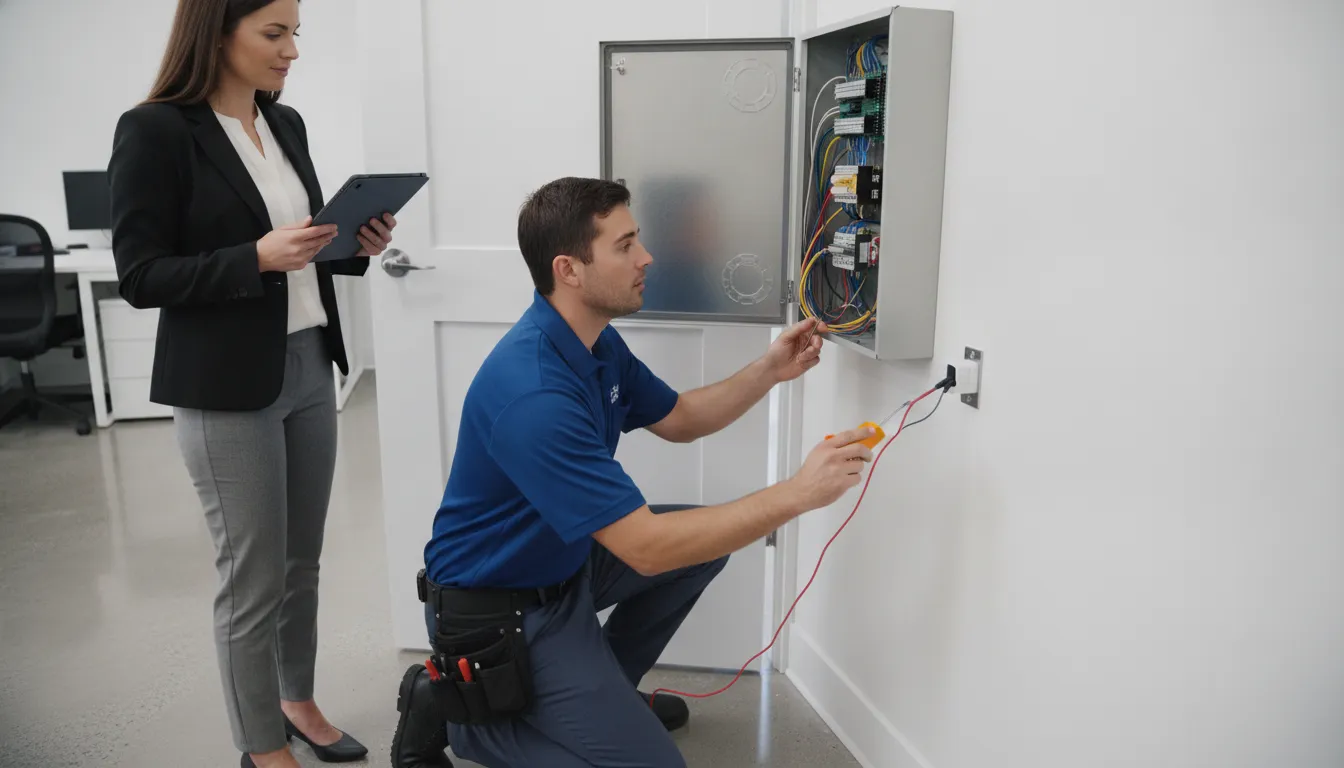
Qualified service avoids guesswork, unapproved rewiring, and changes that could create a second problem. The technician can inspect relevant equipment, connections, power conditions, and devices, then repair or replace components within the system’s intended design. After the work, testing should confirm that detection, signaling, arming, and communication functions operate as expected. The goal is not simply to silence an alert. It is to restore dependable performance and identify any remaining concern that needs attention.
Maintaining monitoring continuity
Repair planning should account for the monitoring relationship as well as the equipment at the property. Communication failures, outdated components, or changes in service can affect how signals are received and handled. Businesses can review broader commercial security alarm service options when they need coordinated repair, monitoring, and ongoing support. If a system has been inactive or needs service re-established, alarm monitoring support can help clarify the next steps.
Use this decision guide to choose the next step. The table below separates situations that may begin with phone support from conditions that deserve professional assessment. It is a triage aid, not a reason to open equipment or bypass a protection.
| Situation | Useful first step | When to escalate |
|---|---|---|
| Clear alert and system still operating. | Call monitoring support and follow approved phone guidance. | Escalate if the fault returns or affects arming. |
| Communication fault or system unavailable. | Record the exact message and contact the alarm provider. | Request professional assessment because signal continuity may be affected. |
| Repeated false alarms or recurring device trouble. | Document timing, zones, and recent changes. | Arrange diagnosis instead of repeatedly resetting the system. |
Planned maintenance reduces surprises
Emergency service addresses an active problem, while scheduled maintenance helps uncover wear, aging equipment, recurring false alarms, or communication concerns earlier. A practical maintenance plan gives business decision-makers a way to track system condition and address issues before they interfere with opening, closing, staffing, or daily operations. It does not eliminate every failure, but it can make alarm support more predictable and easier to manage.
Business Security Alarm Repair vs Fire Alarm Service
Business security alarm repair and fire alarm service can both involve alarms, technicians, and testing, but they address different operational needs. Security repair focuses on intrusion detection, communication, access points, user devices, and monitoring continuity. Fire alarm service focuses on the life-safety system’s inspection, certification, testing records, and correction of documented deficiencies.
Summary: If a business security system is not arming, reporting, or communicating correctly, contact an alarm provider for diagnosis and repair. If the issue involves fire-alarm inspection records, certification, testing, or a marshal deficiency, use a provider equipped for that separate scope.
What business security alarm repair covers
An emergency business alarm repair service may address a malfunctioning intrusion system, repeated false alarms, communication failures, outdated equipment, or a problem with a door or motion device. The first step may be phone troubleshooting to identify the system status and determine whether a technician visit is needed. Qualified service can then focus on safe diagnosis, appropriate repair, system testing, and restoration of monitoring communication.
These needs are distinct from broad system planning or routine upgrades. For context on ongoing coverage, monitoring, maintenance, and support, see our commercial security alarm service guide.
What fire alarm service covers
Fire alarm work has its own inspection, certification, documentation, and testing requirements. Service may also involve correcting deficiencies identified during an inspection or review. Those records and corrective actions should not be treated as ordinary intrusion-alarm troubleshooting. This article does not replace advice from the authority having jurisdiction or a qualified fire-alarm professional. Learn more about NFPA fire alarm service for that dedicated scope.
Keeping the two categories separate helps a business describe the failure accurately when calling for support. Share the alert or status shown, explain what changed, and identify whether the affected system is the security system or the fire alarm system. That information helps the provider route the request without guessing.
Schedule business alarm service. Call (770) 645-0061 or contact American Alarm online.
Frequently Asked Questions
What are the common problems with business alarm systems?
Common issues include communication faults, false alarms, power concerns, aging equipment, and problems with doors or motion devices. The right repair depends on the system status, recent changes, and what the monitoring provider or alarm company can identify during troubleshooting.
What should a business do when its alarm system fails?
Note the alert or status shown by the system and contact your monitoring provider or alarm company for guidance. Avoid opening equipment, bypassing protections, or rewiring devices. Phone-first troubleshooting may resolve suitable issues safely, while a technician can assess failures that require on-site repair.
Can a business use an alarm system without monitoring service?
An alarm may still sound locally without monitoring, but monitoring provides an important communication path when an alarm or system fault occurs. Businesses should confirm how their system communicates, what notifications are available, and whether monitoring support is active before relying on the system for continuity.
How much does emergency business alarm repair cost?
Commercial repair pricing depends on the system, the diagnosis, parts or equipment required, and the scope of service. For monitored residential customers, American Alarm’s documented flat $69 service-call rate applies where the eligible service-call policy and scope qualify. Parts, replacement equipment, or work beyond the service call may be quoted separately, and the rate is not a blanket commercial repair price. Confirm the rate and service scope when you call so the recommended work is clear before repair proceeds.
Schedule the Next Step for Your Business Alarm
When a business alarm is unreliable, a phone assessment can help clarify the alert, identify safe next steps, and determine whether repair support is appropriate. Share what your system is reporting so the issue can be evaluated without guessing or bypassing protective equipment.
Call American Alarm at (770) 645-0061 for business alarm repair guidance.

Leave a Reply
Want to join the discussion?Feel free to contribute!