Business Security System Requirements by Industry
A retail storefront, medical office, warehouse, and school may operate in the same Atlanta market, but they do not face the same security decisions. The right starting point is not a list of devices. It is a clear view of how people enter, where valuable assets are located, when the property is occupied, and what support is needed after an alarm.
Business security system requirements by industry should reflect each facility’s access points, operating hours, employee and visitor flow, assets, and response needs. A tailored plan may combine intrusion detection, access control, video surveillance, fire alarm capability, monitoring, and ongoing maintenance.
American Alarm has helped Metro Atlanta businesses plan and support these systems since 1995, with design, installation, maintenance, and 24/7 UL-certified central-station monitoring. Schedule a consultation with American Alarm. The first step is to connect your daily operations to the security functions that matter most, starting with the requirements every industry plan should address.
What Business Security System Requirements by Industry Should Address
Summary: Effective planning starts with the way a business operates, not with a list of equipment. The right design accounts for access points, operating hours, assets, people flow, and the type of response the property needs when an alarm or unusual event occurs.
| Business setting. | Planning priorities. | Common system categories. |
|---|---|---|
| Retail. | Entrances, checkout, merchandise, opening and closing. | Video surveillance, intrusion detection, monitored response. |
| Office. | Employee and visitor flow, sensitive rooms, after-hours access. | Access control, video surveillance, intrusion detection. |
| Warehouse. | Perimeter, loading zones, inventory, multiple shifts. | Access control, video surveillance, intrusion detection. |
| Healthcare, education, and institutions. | Controlled access, visitors, privacy, communication. | Access control, monitoring, video surveillance. |
Use this comparison as a starting point, then confirm the priorities during a site survey.
Every facility has a different risk profile. A storefront may need strong coverage around entrances, sales areas, and closing procedures, while a warehouse may require protection across loading zones, exterior doors, and a large perimeter. An office, medical facility, or school may place greater emphasis on controlled access, visitor movement, privacy, and safe after-hours operation. Treating these properties alike can leave important gaps or add features that do not support the way the business actually functions.
Start with the property and its daily operation
Begin the planning conversation with a walk-through and an operating review. Identify where people enter, which doors require controlled access, and where valuable or sensitive assets are located. Then review how the site changes between opening, business hours, closing, and overnight periods. Include employee and visitor flow, delivery routes, shared areas, remote spaces, and any locations that need restricted access.
- Use and occupancy: Define how the property is used, who is present, and which activities create the greatest security exposure.
- Access points: Review exterior doors, interior restricted areas, loading entrances, gates, and other routes that may need access control or intrusion detection.
- Assets and activity: Note merchandise, equipment, records, inventory, cash-handling areas, and other locations that may benefit from video coverage or additional sensors.
- Hours and staffing: Plan for opening and closing, shift changes, weekends, holidays, and periods when the facility is empty.
- Response needs: Decide how alerts should be monitored, who needs notification, and what level of local service and support is appropriate.
Match system categories to the identified risks
A complete commercial design may combine intrusion detection, access control, video surveillance, fire alarm capability, professional maintenance, and 24/7 UL-certified central-station monitoring. These components should work together rather than operate as disconnected purchases. For example, access events and video can provide useful context, while monitored alarms support a response process when the business is closed.
Scalability also matters. Businesses change locations, staffing, hours, and technology over time, so ask whether the system can support additional doors, video-surveillance devices, users, or buildings without requiring a complete redesign. American Alarm has served Metro Atlanta businesses since 1995, with commercial planning and support available across the region. Reviewing your needs with a local provider can help turn an industry-specific risk assessment into a practical commercial security system.
Retail and Customer-Facing Businesses
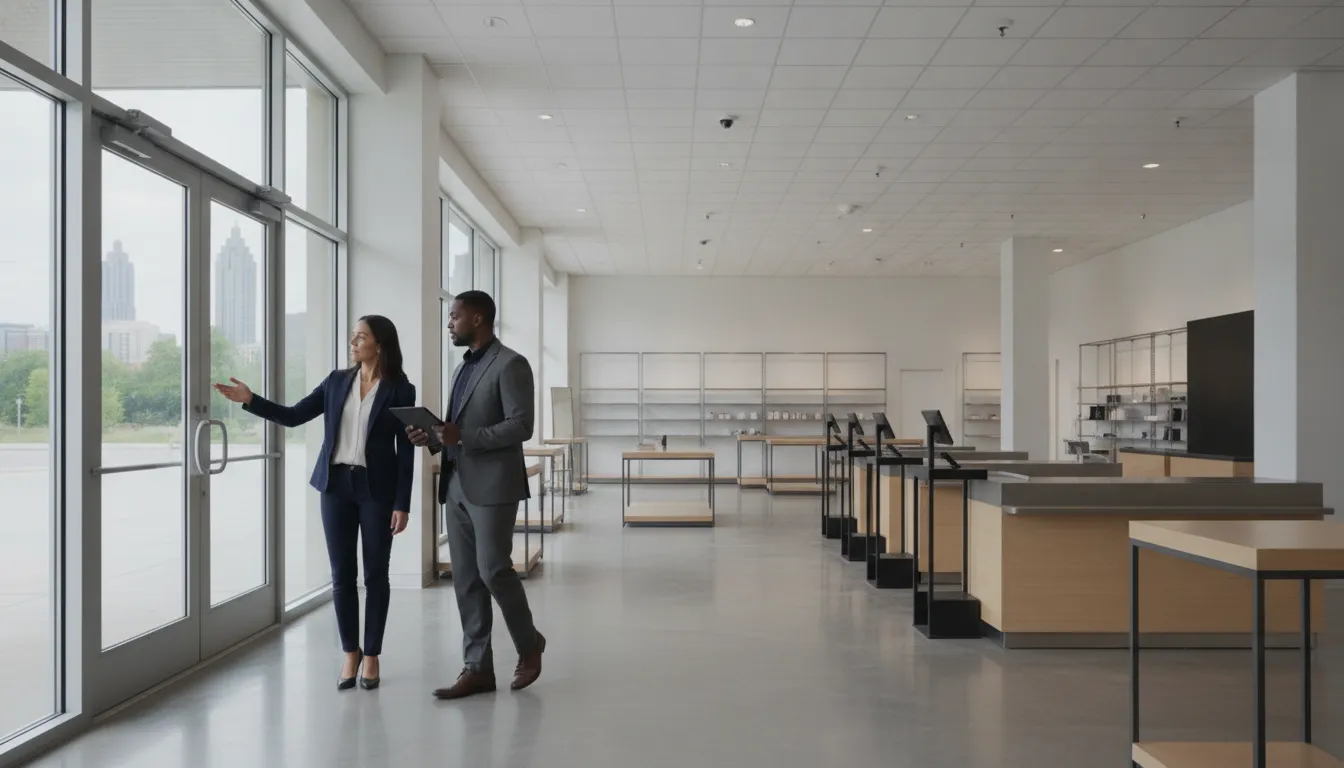
Retail security works best when it follows the customer journey and the staff workflow. Entrances, checkout points, merchandise areas, storage rooms, and closing procedures each create different security needs. A practical plan combines video surveillance, intrusion detection, controlled access, and monitored response without disrupting a welcoming shopping environment.
Protect the points where activity changes
- Entrances and exits: Video coverage can document activity at public doors, employee entrances, and receiving doors. The placement should support useful visibility while respecting customer and employee privacy.
- Checkout and high-value areas: Video-surveillance devices positioned around registers, service counters, safes, and high-value merchandise can help managers review events and investigate concerns. Coverage should avoid blind spots without creating an overly intrusive experience.
- Staff-only access: Business access control systems can help limit access to offices, stockrooms, cash-handling areas, and other restricted spaces. Permissions should reflect job responsibilities and be updated when roles change.
Account for opening, closing, and staff safety
Opening and closing periods deserve specific attention because fewer people are present and normal customer activity has ended. The system should make it clear who can disarm or arm the premises, which doors must be secured, and how exceptions are handled. A documented routine can reduce avoidable errors while giving employees a consistent process.
Retail operators should also consider staff safety during late shifts, deliveries, cash handling, and unexpected activity at a door. Panic or emergency communication features may be appropriate in some locations. The design should be based on the site layout and operating procedures rather than a generic package.
Connect detection with a response plan
Intrusion detection can monitor perimeter doors, interior zones, glass openings, and other vulnerable points when the business is closed. Video surveillance adds visual context, while 24/7 alarm monitoring provides a path for reviewing alarm signals and coordinating the next step. Monitoring does not guarantee that an incident will be prevented, so the provider should document contact procedures, authorized users, escalation instructions, and local response considerations.
For an Atlanta retailer, the final design should account for the property type, surrounding activity, hours, delivery patterns, and the needs of nearby locations. A local provider can help align equipment, maintenance, and monitoring with how the business actually operates across Metro Atlanta.
Offices, Professional Services, and Multi-Tenant Workplaces
Summary: Office security should support the way employees, visitors, vendors, and building staff move through the property while protecting sensitive rooms and maintaining visibility after hours.
Office environments often have a predictable public-facing entrance. The rest of the property may include multiple suites, shared corridors, reception areas, conference rooms, records storage, server rooms, and executive offices. A useful design begins with the daily movement of people. Identify which doors visitors can reach, where employees need regular access, and which areas should remain restricted even during normal business hours.
- Manage employee and visitor flow: Reception should be able to distinguish expected visitors from people who need an escort or additional authorization. Access permissions can be organized around roles, doors, schedules, and tenant responsibilities rather than relying on one credential for every area.
- Control after-hours access: Cleaning crews, maintenance personnel, early arrivals, and late-working employees may need access at different times. Business access control systems can help establish time-based permissions and provide a record of credential activity for follow-up when needed.
- Protect sensitive areas: Focus additional controls on records rooms, information technology spaces, medication or equipment storage where applicable, cash-handling areas, and executive offices. The exact priorities depend on the business and the information or assets it holds.
- Place video coverage thoughtfully: Commercial video surveillance is most useful when it shows meaningful activity at exterior doors, reception, loading or delivery points, parking approaches, and entrances to restricted areas. Video-surveillance placement should support operational awareness while respecting reasonable privacy expectations inside workspaces.
- Cover intrusion risks: Door contacts, motion detection, glass-break detection, and alarm notification can help identify unauthorized entry when the office is closed. The system should account for employees who work late, alarm arming responsibilities, and normal movement during opening and closing routines.
Multi-tenant workplaces add coordination requirements. Property management may control common entrances and shared systems, while individual businesses control suite doors and internal spaces. Documenting who can authorize credentials, respond to an alarm, review video, and request service prevents gaps between the building and its occupants. It also makes future tenant changes easier to manage.
For a deeper look at credential types, permissions, and deployment considerations, review these business access control systems. A local assessment can then align access control, video surveillance, and intrusion detection with the building’s hours, layout, and operating practices.
Warehouses, Industrial Sites, and Distribution Facilities
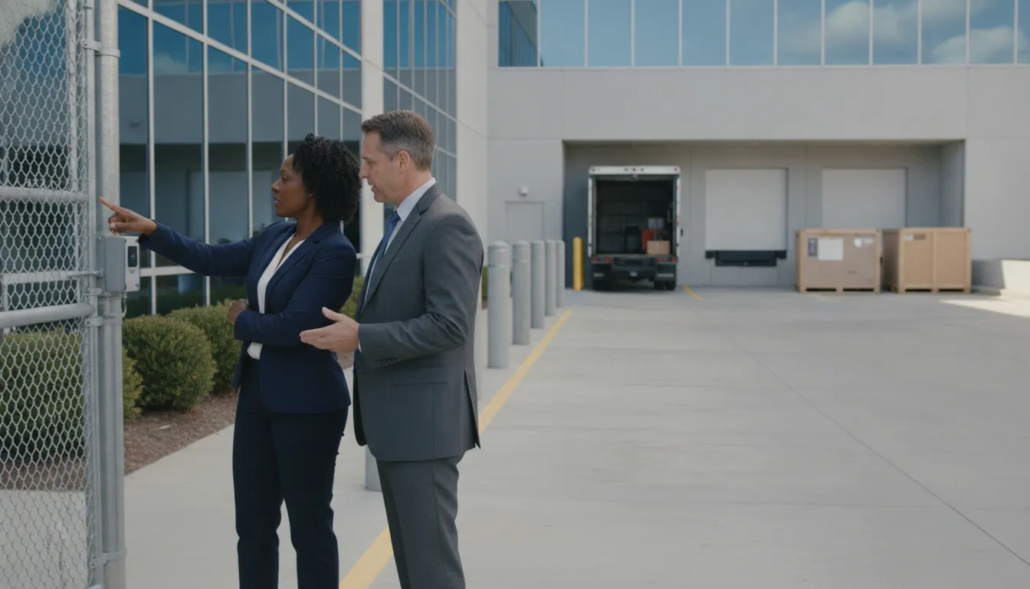
Warehouses and industrial facilities need security planning that follows the movement of people, vehicles, inventory, and equipment across the entire property. Protection should extend beyond the main entrance to the perimeter, loading areas, storage zones, employee doors, and outdoor yards.
- Start with the property perimeter. Fencing, gates, remote corners, and vehicle approaches can create blind spots or unauthorized entry points. A site review should identify where intrusion detection and video coverage can provide useful awareness, especially outside normal operating hours.
- Secure loading and receiving areas. Dock doors may stay active across multiple shifts, making it important to distinguish routine deliveries from unexpected access. Video surveillance can help document activity around docks, while door contacts and intrusion detection can alert monitoring personnel when protected areas open at unusual times.
- Protect employee and service doors. Secondary doors are often essential to daily operations but can be difficult to supervise from a central office. Access control can limit entry by credential, schedule, or authorized area. It can also provide a record of access activity when managers need to review who entered a location.
- Match coverage to inventory risk. High-value products, controlled materials, tools, and equipment may require different protection from general storage space. Combining access control, intrusion detection, and strategically placed video helps connect an alarm event with the location and activity involved.
- Plan for every shift. A facility operating around the clock has a different security profile from one that closes overnight. System schedules, user permissions, lighting conditions, and monitoring procedures should reflect shift changes, contractors, cleaning crews, and periods when only a small number of authorized employees remain onsite.
- Support remote visibility. Managers may not be present when an alarm occurs or when activity needs review. Commercial video surveillance can provide operational visibility at entrances, docks, yards, and other priority areas, subject to appropriate privacy and access controls.
The goal is not to place identical equipment everywhere. It is to design a coordinated system around the facility’s layout, operating hours, assets, and response needs. A professional review can also identify where maintenance, connectivity, and future expansion should be considered before equipment is installed.
For a deeper look at facility-specific planning, review this guide to warehouse security planning. Ongoing monitoring is especially important for large sites where an alert may occur far from the office or during a shift change. American Alarm provides commercial system design, installation, maintenance, and 24/7 UL-certified central-station monitoring for businesses in Metro Atlanta and North Georgia.
Healthcare, Education, and Institutional Properties
Healthcare, education, and institutional properties often need security planning that balances controlled access, welcoming visitor flow, privacy, and rapid communication. The right design should reflect how people move through the facility, which areas require added control, and how staff respond during routine and urgent situations.
Control access without disrupting daily operations
Start by separating public, staff-only, restricted, and service areas. A main entrance may need a different access approach than a medication room, records area, classroom wing, administrative office, or mechanical space. Business access control systems can help authorized personnel enter designated areas while supporting a clear process for credentials, access changes, and visitor movement.
- Controlled entry points: Identify which doors need scheduled access, credentialed entry, or staff oversight. Include secondary entrances, delivery doors, and areas used after normal hours.
- Visitor management: Plan where visitors check in, which routes they may use, and how staff can distinguish approved visitors from people who should not proceed further into the property.
- Operational continuity: Make sure access procedures support shift changes, school activities, appointments, deliveries, and emergency access instead of creating unnecessary bottlenecks.
Coordinate communication and privacy
Emergency communication should be considered alongside intrusion detection, access control, monitoring, and existing facility procedures. The goal is not to promise one system will solve every emergency. Instead, the design should clarify how alerts reach the appropriate responders, who can authorize changes, and how the facility handles events outside normal operating hours.
Video surveillance can add useful awareness at entrances, parking approaches, corridors, and other operationally appropriate locations. Video-surveillance placement should be privacy-aware, with particular care around treatment spaces, restrooms, changing areas, counseling rooms, and other sensitive locations. Define viewing permissions, retention practices, and review responsibilities as part of the planning discussion.
Coordinate compliance at a high level
Healthcare, education, and institutional projects may involve owners, administrators, facility managers, insurers, authorities having jurisdiction, and other stakeholders. A qualified provider can help coordinate documentation, system design, permitting or inspection questions when applicable, and integration with related fire alarm or life-safety work. Requirements vary by facility and jurisdiction, so a planning guide cannot replace an AHJ review or project-specific compliance determination.
For Atlanta-area properties, bring the facility’s use, access points, visitor patterns, privacy considerations, and response procedures to the site survey. That gives the provider a practical basis for recommending security categories and documenting how they support the property’s daily operation.
How to Evaluate a Commercial Security Provider in Atlanta
A strong provider should do more than recommend equipment. The right partner connects your facility’s risks, daily operations, monitoring needs, and long-term plans into a system that can be supported after installation.
- Start with a site survey. Ask the provider to review entrances, sensitive rooms, loading areas, perimeter conditions, utilities, network availability, operating hours, and employee and visitor flow. A site-specific survey is more useful than a package selected from a distance.
- Request clear documentation. The proposal should identify equipment locations, zones, user permissions, monitoring arrangements, service responsibilities, and any assumptions. Ask how changes will be documented when doors, departments, tenants, or operating schedules change.
- Check integration. Intrusion detection, access control, video surveillance, and fire-alarm functions may need to work together without creating confusing alerts or unnecessary duplication. Review how events are presented to authorized users and how the system can connect with your existing platforms. Explore commercial security systems for an overview of available capabilities.
- Verify licensing and technical credentials. Confirm that the provider is properly licensed for the work required in Georgia. American Alarm maintains an unlimited Georgia low-voltage license. And founder Scott Gilkey holds NICET IV certification with more than 30 years of experience in fire alarm engineering and design.
- Understand monitoring. Ask where signals are received, how authorized contacts are handled, what happens when communication paths fail, and how emergency escalation is managed. American Alarm provides 24/7 UL-certified central-station monitoring. UL certification can support certain commercial, insurance, or operational requirements, but it is not automatically mandatory for every business.
- Evaluate service and maintenance. Find out who handles troubleshooting, repairs, inspections, user changes, testing, and system expansions. A maintenance plan should address the equipment that protects your actual business, not just the initial installation. Review the provider’s 24/7 alarm monitoring and ongoing support options.
- Ask about local coordination. Atlanta-area projects can involve local authorities having jurisdiction, permitting, plan submittals, inspections, and site-specific interpretations. American Alarm can assist with jurisdiction coordination when applicable, while the final requirements remain specific to the property and its authorities.
- Plan for growth. Discuss how the system will handle additional doors, video-surveillance devices, users, locations, departments, or changing hours. Scalability should be part of the design conversation, especially for businesses adding facilities across Metro Atlanta and North Georgia.
American Alarm has served Metro Atlanta since 1995, combining local service knowledge with design, monitoring, maintenance, access control, video surveillance, and fire-alarm capabilities. Compare the provider’s process, credentials, documentation, and support model before choosing based on equipment alone.
Schedule a commercial security consultation. Call (770) 645-0061 or contact American Alarm online.
Frequently Asked Questions
What is the best security system for a business?
The best system matches the property’s layout, operating hours, access points, assets, employee and visitor flow, and response needs. Depending on the industry, that may include intrusion detection, access control, video surveillance, fire alarm capability, and 24/7 central-station monitoring. A site survey helps determine which combination fits the business instead of relying on a standard package.
What are the four main types of business security systems?
Businesses commonly use intrusion alarms, access control, video surveillance, and fire alarm systems. These categories address different needs: detecting unauthorized entry, managing who can enter, documenting activity, and identifying fire or life-safety conditions. They can be planned as coordinated systems when the facility and operations call for it.
How do security requirements differ between industries?
Retail locations often prioritize entrances, checkout areas, opening and closing procedures, and monitored response. Offices may need controlled access for employees and visitors, after-hours protection, and coverage of sensitive areas. Warehouses typically require protection for loading zones, perimeter areas, inventory, and multiple shifts. While healthcare, education, and institutional properties may need more controlled access, visitor management, and privacy-aware surveillance.
What should a business ask a security provider before moving forward?
Ask how the provider will document the site survey, recommend equipment, support future expansion, handle maintenance, and coordinate with local jurisdictions when applicable. Confirm the provider’s licensing, monitoring structure, service coverage, and experience with similar facilities. American Alarm provides 24/7 UL-certified central-station monitoring and serves Metro Atlanta businesses.
Schedule an Atlanta Business Security Consultation
Every industry has different access patterns, operating hours, assets, and response needs. A focused consultation can help you turn those requirements into a practical security plan for your Atlanta property. Schedule a consultation with American Alarm. to review your business security requirements with American Alarm and identify the system categories that best fit your operation.

Leave a Reply
Want to join the discussion?Feel free to contribute!