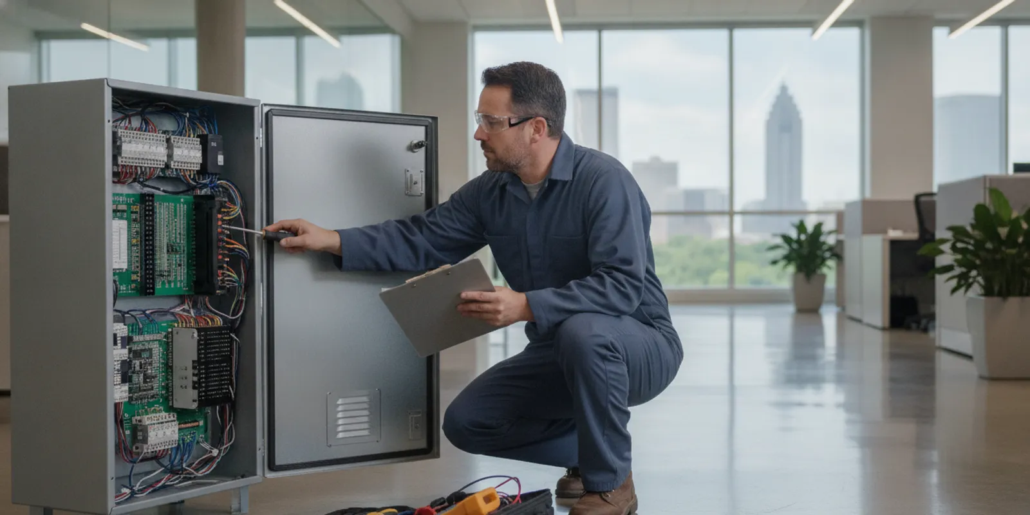
Best Commercial Fire Alarm Repair Company
Choosing the best commercial fire alarm repair company means looking beyond who can clear a panel message fastest. Atlanta businesses need a provider that can investigate the actual fault, explain the proposed work, and show what was checked before the system is returned to normal operation. A consistent comparison helps you choose on evidence and service process, not a vague promise or an incomplete quote.
Call American Alarm to discuss your commercial fire alarm repair needs.
What makes a commercial fire alarm repair provider a strong fit?
Answer capsule: Compare providers on commercial troubleshooting ability, code awareness, a clear written scope, appropriate post-repair testing, usable records, and communication about any remaining impairment or follow-up.
The right choice is the provider whose process fits your building, equipment, and reported condition. A service visit should connect the symptom to a reasoned diagnosis and a verifiable outcome. Before you compare prices, establish what each provider will investigate and what evidence you will receive when the work is complete.
- Diagnose the symptom: Ask how the technician will examine the trouble or alarm condition and narrow down its source before proposing parts.
- Explain the recommendation: The provider should distinguish necessary corrective work from an optional improvement and explain the reason for each.
- Plan testing and handoff: Clarify how operation will be checked after the repair and what service notes or test records you will receive.
- Communicate system status: Ask what the condition means for the site while the issue is open and what procedures to follow under your facility plan and applicable authority guidance.
How should you compare provider options?
Start by comparing the type of support each option can actually provide. A fire-alarm-focused service provider may have a different scope from a general building-maintenance contractor or a company whose role is limited to monitoring. These categories are not automatic quality rankings; the important question is whether the provider can take responsibility for the diagnosis, repair, testing, and documentation you need.
Use the same questions with every candidate. Ask for details tied to your panel, reported condition, building access, and any inspection report. A useful comparison should make differences visible rather than relying on labels such as “full service” or “fast response.”
| Comparison area | What a complete process should show | Question to ask |
|---|---|---|
| Diagnosis | Investigation tied to the reported symptom and system configuration | How will you isolate the cause before recommending parts? |
| Scope and approval | Written tasks, assumptions, exclusions, and approval for added work | What is included, and when will you request approval for a change? |
| Qualifications | Relevant experience and qualified oversight for the specific work | Who is responsible for the assessment and any code-related question? |
| Testing and closeout | Checks appropriate to the repair and a clear written service record | What checks will you complete and document? |
| Service coordination | A defined contact, access plan, status updates, and follow-up path | Who will update us if the diagnosis or schedule changes? |
A table like this can also help explain why quotes differ. One proposal might include only a visit and initial diagnosis; another might include the corrective task, post-repair checks, and closeout records. Ask each provider to clarify the gap before treating the totals as comparable.
Why do qualifications and code awareness matter?
A commercial fire alarm is a life-safety system, so repair decisions can affect more than whether a warning light goes out. The work may relate to an inspection finding, an existing design, a device or circuit, or coordination with monitoring and site procedures. The provider should recognize when a repair question needs review against the applicable requirements and when the authority having jurisdiction or another project professional should be consulted.
The National Fire Protection Association publishes fire and life-safety standards and resources. Its fire protection resources offer a starting point for understanding the standards landscape; a website overview is not a substitute for determining which adopted requirements apply to a particular building. Ask a prospective provider how it handles code-related questions and documents the basis for recommendations.
Ask who will oversee the work and what qualifications or training are relevant to the assignment. American Alarm identifies NICET IV-certified leadership and expertise in NFPA-compliant commercial fire alarm systems. You can review its information about fire alarm design expertise and its NFPA 72 compliance guidance. Credentials matter, but they do not replace a site-specific assessment or a clear repair scope.
Ask whether the assigned technician has experience with the equipment’s make, model, and configuration. For a complex or older system, ask who can provide technical oversight if the first assessment does not resolve the issue. An answer should describe a real process, such as escalation to a qualified reviewer, rather than simply promising that every issue is routine.
How can you judge whether a diagnosis is thorough?
A control panel display is a useful clue, but it may not identify the underlying cause by itself. A careful assessment considers the exact message, when it occurs, related events, affected areas, recent work, and system history. The technician should explain what was checked and what evidence supports the conclusion.
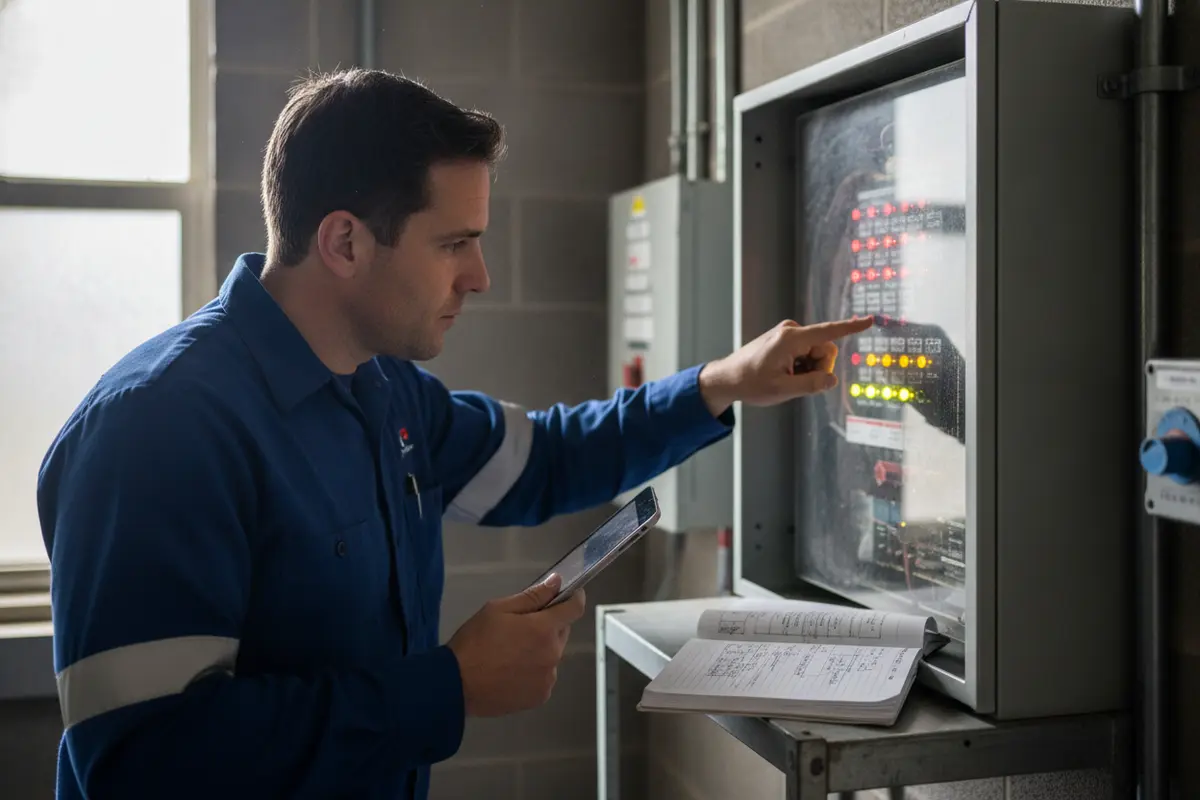
Before the visit, collect information that makes the problem easier to reproduce and understand. Do not reset, disconnect, or alter equipment to try to clear a persistent condition. Share the details with the service provider and follow your site procedures while waiting for qualified guidance.
- Record the exact indication: Write down the panel message or indicator as shown, along with the date and time. If the condition changes, note that sequence too.
- Describe the pattern: Explain whether it is continuous, intermittent, limited to a particular zone, or associated with a recent event or work activity.
- Gather system records: Provide the panel make and model if known, prior service notes, relevant inspection findings, and details of recent renovations or device changes.
- Ask what was verified: Request a plain-language account of the checks performed and how they relate to the fault reported.
- Clarify what remains: If the cause is not confirmed, ask what further investigation is needed and whether any limitations remain.
Panel type and architecture can affect the information available during troubleshooting. The overview of commercial fire alarm panel types can help you identify why make, model, and system details are useful in a service conversation. It is not a way to diagnose or repair equipment without a qualified professional.
What should a repair proposal and closeout include?
A strong proposal connects the reported condition to the work being recommended. It should make clear what is known, what remains uncertain, what the price covers, and how the provider will handle additional findings. If a proposal recommends replacing a component or expanding the work, ask what observation led to that recommendation and whether another option is appropriate.
- Reported issue: State the original symptom, service request, or inspection finding in terms your facility can recognize.
- Diagnostic result: Describe the cause identified, or identify the next steps if the source remains uncertain.
- Repair tasks: Name the work, affected areas, parts if known, access needs, and any schedule constraints.
- Estimate assumptions: Spell out what is included and excluded, and specify that added work requires discussion and approval.
- Post-work checks: Describe the checks to be made after correction and any limitations on what can be confirmed during the visit.
- Records and next steps: Identify the service documentation, unresolved items, recommendations, and follow-up responsibility.
At closeout, the service note should help someone who was not present understand what happened. It can record the initial condition, findings, corrective work, parts changed, checks completed, and any open item. Ask for clear wording rather than a note that only says “repaired” or “tested.” Keep the record with the building’s system documents so future technicians can see the history.
Price is only meaningful when scope is comparable. For example, if one quote includes diagnosis and a repair while another includes diagnosis only, the lower amount does not represent the same work. Ask whether travel, access coordination, after-hours scheduling, parts, testing, and follow-up are included or subject to separate approval. Do not assume a specific price or turnaround before a provider reviews the conditions at your site.
How should you assess communication and business continuity?
Repair work can require access to occupied spaces, coordination with facility operations, and communication with the people responsible for monitoring or compliance. Before authorizing work, agree on who can approve changes, who will receive status updates, and how the provider will communicate if the system condition changes during diagnosis.
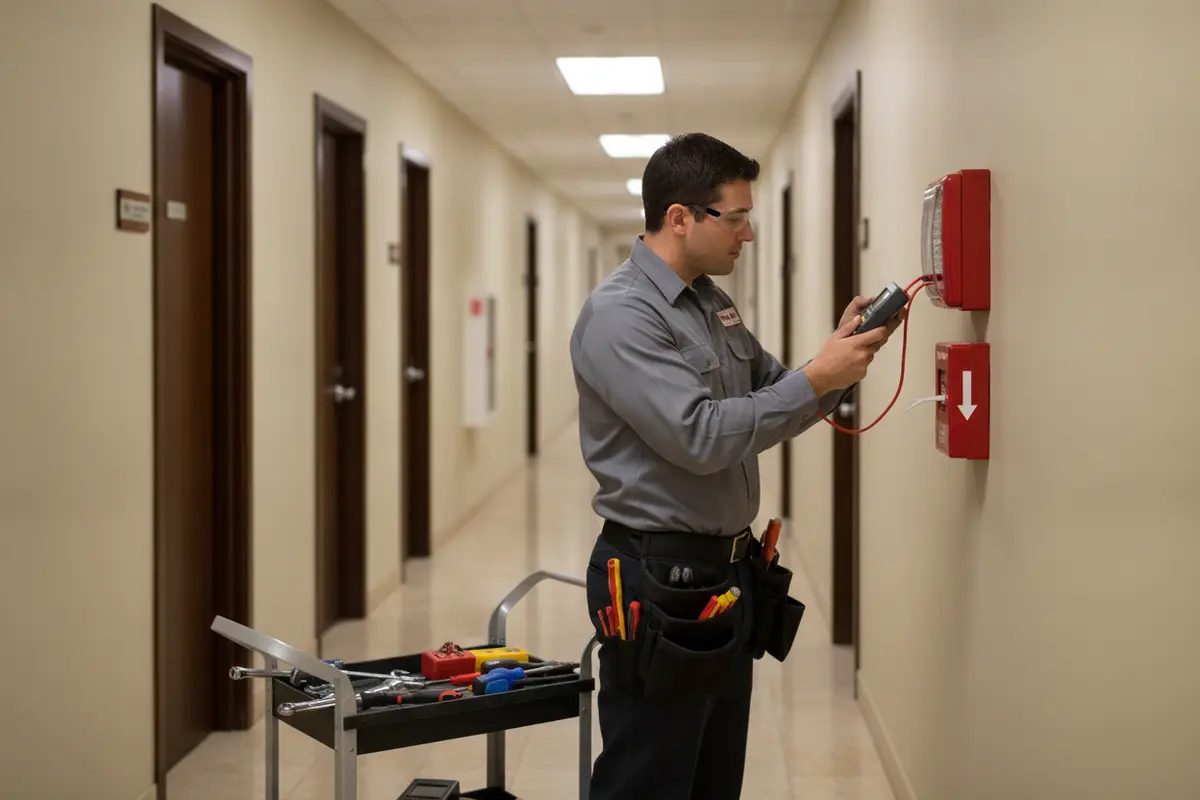
Ask how the provider coordinates with your existing monitoring arrangement and what notifications or site procedures may be relevant during an impairment. The provider should not make a broad promise that a system is safe or compliant without assessing the actual condition. Your facility should follow its established impairment procedures and directions from the authority having jurisdiction. Review the company’s fire alarm monitoring information as a starting point for questions about how service and monitoring responsibilities fit together, then confirm the details for your system.
Plan a practical handoff before the technician leaves. Identify who will receive the service report, who will keep it with inspection and maintenance records, and who will track any open recommendation. If the work affects an area used by staff or visitors, agree on how operational updates will reach the right facility contacts. This simple closeout step reduces confusion later, especially when a different person manages the next service request.
American Alarm describes its work as including design, installation, monitoring, and maintenance for security and fire alarm systems. Its services overview and commercial fire alarm repair information can help you understand the available service context. For a broader overview of the company, see about American Alarm.
Coverage is another practical consideration for a business with multiple sites or a location outside central Atlanta. Review the company’s Metro Atlanta service area information, then ask whether your facility and requested work fit the provider’s service process. An area page alone cannot confirm availability for a specific appointment, equipment, or repair.
Which questions should you ask before selecting a provider?
A short, consistent interview can reveal whether a candidate understands the issue and can communicate the work clearly. Ask for specific examples related to your site rather than accepting broad claims about experience or response.
- Who will assess the issue? Ask who is responsible for the diagnosis, what experience applies to your system, and what technical oversight is available if the problem is complex.
- What details do you need from us? A useful answer may include the exact panel message, system model, service history, inspection notes, access requirements, and a contact authorized to approve work.
- How will you explain the recommendation? Ask how the provider will connect the observed condition to the repair, and how it will distinguish immediate correction from a separate improvement.
- How do changes get approved? Confirm that the provider will explain added tasks and costs before proceeding, except where your agreed procedures specify otherwise.
- What testing and records are included? Ask for the planned post-repair checks and a written record that describes findings, work, results, and remaining concerns.
- What happens if the issue returns? Clarify whom to contact, what information to report, and how the provider will review a recurring condition.
- How will the work be coordinated? Discuss access, business hours, system status, relevant monitoring contacts, and the person who will receive progress updates.
American Alarm’s guide to choosing an alarm company offers additional questions for comparing providers. Use it as a prompt for discussion, then evaluate each answer against your own system, documents, and business requirements.
Review American Alarm’s commercial fire alarm repair services.
Frequently asked questions
These answers address common questions that arise when a commercial fire alarm needs service. Site-specific decisions should be based on the equipment, condition, applicable requirements, and qualified assessment.
Should I choose the lowest repair quote?
Compare the actual scope before deciding. Check whether each quote includes diagnosis, labor, parts, testing, documentation, and follow-up, and ask about assumptions or exclusions. A lower price may cover less work, so request clarification before comparing totals.
Does a recurring trouble indication mean the system must be replaced?
No. A repeated indication needs evaluation, but it can have different causes and does not by itself establish that replacement is necessary. A decision should consider the equipment’s age and condition, manufacturer information, applicable requirements, inspection findings, parts availability, and professional assessment.
What should we do while a fire alarm issue is unresolved?
Contact the service provider promptly, share the exact indication and relevant history, and follow your facility’s procedures and instructions from the authority having jurisdiction. Do not assume that silencing an audible signal corrects the cause or restores normal system operation.
What information should I have ready when requesting service?
Provide the site address, panel make and model if available, exact display message, when the condition began, any pattern you have observed, recent work, and relevant service or inspection records. Also identify the facility contact who can arrange access and discuss scope approval.
Call American Alarm to discuss a commercial fire alarm concern.
The best commercial fire alarm repair company for your business is the one that can explain its diagnosis, scope, testing, records, and follow-up in terms you can verify. Compare those details before approving work so the decision reflects your building’s needs and the condition of its system.

Leave a Reply
Want to join the discussion?Feel free to contribute!