Warehouse Security Atlanta: A Guide for Industrial Facility Managers
A single unlocked loading dock can cost an Atlanta warehouse thousands of dollars in lost cargo overnight. Sprawling industrial sites face constant theft and safety risks that standard commercial alarms cannot handle. For Metro Atlanta distribution centers operating around the clock, warehouse security Atlanta systems must match the scale of the operation itself.
Effective warehouse security Atlanta systems protect large distribution hubs by combining 24/7 UL central station monitoring, NFPA 72 compliant fire detection, and electronic access control for loading docks and inventory zones. A layered design links physical perimeter sensors with real-time alerting to stop theft before goods leave the building.
This guide explains why warehouses need a different security approach than typical commercial buildings and how Atlanta facility managers can build a protection strategy that matches their operational scale. We cover perimeter security, access control, fire alarm compliance, and monitoring options with clear pricing.
Schedule a free warehouse security consultation. Call (770) 645-0061 or contact American Alarm online.
Why Warehouse Security Demands a Different Approach in Atlanta
Standard retail stores and office buildings focus on simple entry-point protection. But large warehouses face fundamentally different risks that basic alarm systems cannot address. For strong warehouse security Atlanta facility managers must look past standard business systems and build for their facility’s unique scale. Unlike a retail store that locks a single front door, a warehouse must secure miles of fence line. Dozens of dock doors, and hundreds of thousands of square feet of storage space.
Vast perimeters and multiple entry points
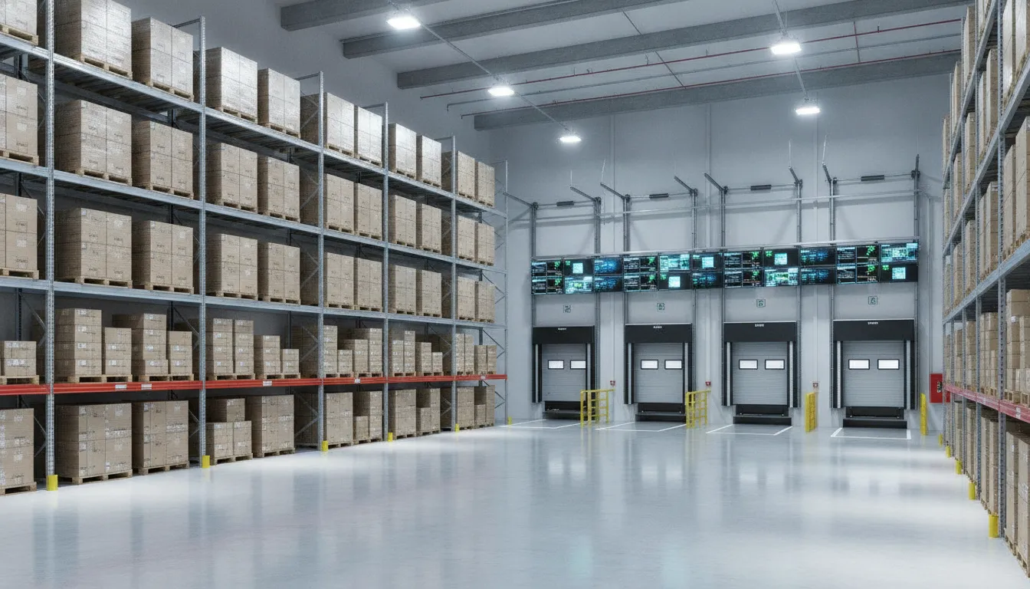
A typical Atlanta distribution center can cover hundreds of thousands of square feet. Long fence lines, dark terminal yards, and dozens of loading bays create weak spots that need active monitoring. Outdoor perimeter sensors, photoelectric beam detectors, and integrated lighting work together to watch these boundaries around the clock. Without them, a breach at a far fence can go unnoticed for hours. Terminal yards also face high traffic from heavy trucks and workers, and safety hazards in these zones require both security and operational awareness. Distribution centers along the I-285 perimeter and I-75/I-85 corridors that operate 24-hour shifts are particularly vulnerable to overnight inventory theft, making integrated perimeter detection and zone-based access control essential for protecting high-value stock during all hours of operation.
Atlanta freight routes and theft risk
Atlanta sits at the crossroads of major interstate highways, making it a prime hub for cargo theft. The Metro Atlanta region ranks among the top U.S. markets for warehouse and logistics activity. Thieves target these facilities because high-value inventory sits in storage before shipping, and stolen goods can be on a highway in minutes. Active perimeter defense and access control are critical for any facility handling valuable stock. Without the right systems, your site faces constant threat from organized theft rings that specifically target logistics hubs.
High-value inventory protection
Warehouses hold goods worth millions of dollars in concentrated spaces. A single theft incident can wipe out weeks of profit. Unlike retail stores where inventory is behind counters, warehouses often have open shelving and accessible pallets. Industrial-grade access control limits who can enter each zone, and electronic audit trails track every door opening to deter internal theft. Each zone needs its own level of protection to prevent theft from both outside and inside the organization.
Securing Loading Docks, Perimeters, and Inventory Areas
A strong warehouse security Atlanta plan must protect the points where goods enter and leave the building. Loading docks, perimeter fences, and inventory aisles each need their own layer of protection. A complete approach links outdoor sensors, door control, and visual monitoring into one coordinated system. Loading dock security shares similarities with back-of-house restaurant protection, which we cover in our restaurant security Atlanta guide.
Electronic access control for dock doors
Shipping and receiving docks are the most vulnerable points in any warehouse. These high-traffic zones see constant movement of goods and personnel, making it easy for unauthorized inventory removal to go unnoticed. Standard key-and-lock systems provide no accountability when goods go missing.
Electronic access control solves this problem. Keycard readers or PIN pads at every dock door restrict entry to authorized personnel only. Each use creates a timestamped audit trail showing who entered and when. Modern access control systems Atlanta warehouse managers choose also support remote lockdown and instant credential revocation if a card is lost or an employee departs. You can also set time-based rules so that only certain employees can access the dock area during specific shifts.
Perimeter sensors and intrusion detection
A strong perimeter defense serves as the first line of protection for any industrial site. Photoelectric beam sensors create invisible detection lines along fence perimeters. If someone crosses the beam, the system triggers an immediate alert. Industrial-grade motion detectors inside the facility monitor storage aisles while ignoring forklift movement to reduce false alarms.
An effective perimeter defense uses several integrated components:
- Photoelectric beam sensors: These devices project a detection line along fence perimeters to spot intruders before they reach the building. They cover long stretches of fence without requiring buried cabling.
- Integrated outdoor lighting: Motion-activated floodlights illuminate dark yard areas the moment a sensor is tripped, deterring intruders and improving video visibility for security teams.
- Industrial motion detectors: Rugged indoor sensors monitor large warehouse spaces while filtering out background activity like machinery movement and temperature changes.
Video surveillance integration
Visual coverage is essential for modern warehouse security. High-definition video feeds placed at loading bays, main gates, and high-value storage lanes give facility managers real-time visibility into every zone. Choosing the right commercial CCTV Atlanta setup means positioning cameras to cover egress points without creating blind spots.
The real power comes from integration. When a perimeter sensor triggers, the system can automatically pull up the live feed from that zone. This integration lets security teams assess threats in seconds and dispatch the right response, whether that means alerting local police or contacting the facility manager directly. Operating these devices together ensures your inventory remains safe night and day.
Fire Alarm Compliance for Industrial Warehouses
Large distribution centers face unique fire hazards that require specialized detection and suppression systems. Georgia law mandates strict compliance with state fire safety codes for all commercial and industrial buildings. Failing to meet these standards can result in fines, forced closures, and increased liability. Commercial tenants and facility managers should also review our commercial tenant security checklist for fire alarm compliance during warehouse build-outs and lease transitions.
Georgia fire safety standards
The State of Georgia enforces fire safety standards under GAC 120-3-3, which adopts the Life Safety Code (NFPA 101) and the National Fire Alarm and Signaling Code (NFPA 72). These codes require fire alarm systems in most distribution centers and warehouses. Systems must be designed, installed, and maintained by licensed low-voltage contractors who understand industrial environments and the unique challenges they present.
High-piled storage detection challenges
Warehouses with high-piled storage create unique detection challenges. Standard ceiling-mounted smoke detectors may not reach a fire quickly when inventory is stacked 20 feet high. Beam-type smoke detectors solve this by projecting a light path across ceiling bays to detect smoke over large areas. In-rack sprinklers and draft stops further contain fires before they spread, giving staff more time to evacuate and first responders more time to arrive.
The cost of these specialized systems varies by facility size and layout. Atlanta facility managers can review typical warehouse fire alarm system cost expectations to budget for compliant installations. Regular testing per NFPA 72 schedules keeps systems operational and code-compliant. Understanding the fire alarm testing frequency required by code helps facility managers avoid compliance gaps and fire marshal penalties.
NICET IV certified design and installation
Designing an industrial fire alarm system requires deep technical expertise. American Alarm founder Scott Gilkey holds NICET IV certification, the highest engineering level in the fire alarm industry. Fewer than 10 percent of fire alarm professionals achieve this level, which requires over 10 years of progressive experience. This credential means American Alarm designs systems that meet the strictest fire codes, pass inspections, and protect both staff and inventory.
A well-designed fire plan integrates with your overall warehouse security strategy. Fire panels connected to access control systems can unlock exit doors during an emergency, while the monitoring center receives instant alerts to dispatch first responders. Our flat $69 service call rate makes regular maintenance simple and affordable for facility budgets.
24/7 Monitoring: The Backbone of Warehouse Security
Many warehouses operate with minimal staff during nights and weekends, making them prime targets for theft. Continuous monitoring is essential for maintaining security when no one is on site. A robust monitoring plan ensures every alarm signal is received and acted on regardless of the time of day.
Constant watch for off-hours protection
UL-certified central station monitoring ensures that every alarm signal is received and acted on around the clock. When a sensor triggers after hours, the monitoring center verifies the alert and dispatches the appropriate response. This active layer of protection never sleeps and covers every dock door, gate, and storage aisle. Without this constant watch, a break-in at 2 AM could go unnoticed until morning.
Redundant communication paths
A security system that relies on a single phone line can be disabled by cutting wires outside the building. Modern systems use dual-path monitoring that combines an internet connection with a cellular backup. If the primary network goes down, the cellular path takes over in seconds to maintain constant alarm reporting. This dual-path approach ensures that even sophisticated thieves cannot disable your alarm by cutting external lines.
American Alarm offers two monitoring options to fit different budgets.
| Feature | Landline Monitoring | Cellular Monitoring |
|---|---|---|
| Monthly cost | $18.95 | $29.95 |
| Communication path | Standard phone line | Internet + cellular backup |
| Redundant backup | No | Yes (automatic failover) |
| Best for | Budget-conscious facilities | High-value inventory sites |
| Tamper resistance | Low (line can be cut) | High (dual-path) |
Review the complete alarm monitoring pricing details online.
Rapid response for loss prevention
In large warehouses, every minute counts when an alarm triggers. Fast response from the monitoring center helps stop theft before it escalates. Key monitoring features include:
- Instant mobile alerts: Notifications reach facility managers immediately when an alarm activates, so you are always aware of events on site.
- Dock door monitoring: Sensors detect when a loading door stays open too long, preventing extended exposure and unauthorized access.
- Zone-based arming: Different warehouse zones can be armed independently, keeping sensitive areas secure while allowing work in other sections.
Integrating Security for Streamlined Facility Management
Managing a large facility means coordinating many systems. Integrated security platforms bring everything under a single dashboard, making daily oversight simpler and response faster. Rather than watching multiple screens, facility managers can assess their entire site from one location. Warehouses in build-out phases can also learn from our construction site security systems Atlanta guide for temporary perimeter protection and mobile surveillance during active construction periods.
Unified control platforms
A unified security platform connects fire alarms, access control, video surveillance, and intrusion detection into one view. Facility managers can check their entire site from a single screen instead of monitoring multiple separate systems. When an alarm triggers, the platform shows live video from that zone, the access log for that door, and the alarm history all in one place. This lets the team assess the situation quickly rather than hunting through separate applications.
This level of integration is standard for modern commercial security systems Atlanta businesses rely on. Benefits include:
- Single dashboard view: Intrusion alerts, access logs, and fire system status on one screen for quick assessment.
- Faster incident response: Video feeds link to sensor triggers so threats are visible in real time without manual searching.
- Reduced operator error: Guards do not need to switch between systems to assess an alert, reducing the chance of missing critical information.
System zoning and daily operations
Modern security platforms support flexible zoning. Facility managers can arm the shipping dock for the night while the office area stays accessible for late workers. This keeps sensitive areas secure without slowing down daily operations. Zone-based control also reduces false alarms: active work zones are disarmed while storage areas remain protected.
Scalability is equally important. As your facility grows or your layout changes, modular security systems let you add new sensors, readers, and zones without replacing the core platform. With over 30 years of local trust, American Alarm designs systems that grow with your business and adapt to changing operational needs.
Schedule a free warehouse security consultation. Call (770) 645-0061 or contact American Alarm online.
Frequently Asked Questions About Warehouse Security in Atlanta
What does a warehouse security system include?
A complete warehouse security system combines intrusion detection on all perimeter doors and loading docks, electronic access control for sensitive zones. Video surveillance covering shipping and storage areas, and a fire alarm system compliant with Georgia state fire codes. Most systems are monitored 24/7 by a UL central station for rapid response.
How much does warehouse security monitoring cost in Atlanta?
American Alarm offers landline monitoring starting at $18.95 per month and cellular monitoring at $29.95 per month. Cellular monitoring provides redundant communication that keeps your system connected even if phone lines are cut. For warehouses with high-value inventory, the investment in professional monitoring is minimal compared to the cost of a single theft incident.
Are fire alarm systems required for warehouses in Georgia?
Yes. Georgia State Minimum Fire Safety Standards (GAC 120-3-3) require fire alarm systems in most distribution centers and warehouses. Systems must be designed, installed, and maintained per NFPA 72 and NFPA 101 by licensed low-voltage contractors. American Alarm’s NICET IV certified engineers ensure your system meets every code requirement.
What is the most vulnerable area in a warehouse?
Shipping and receiving docks are the most frequently exploited entry points. These high-traffic zones see constant movement, making it easy for unauthorized inventory removal to go unnoticed. Industrial-grade access control, video surveillance, and dock door monitoring are essential for protecting these areas.
Can warehouse security integrate with existing operations?
Modern security platforms integrate alarm, access control, and fire systems into a single dashboard that facility managers can monitor remotely. Systems can be zoned so different areas operate on independent schedules, and scalable design allows adding new components as the facility grows.
Schedule a free warehouse security consultation. Call (770) 645-0061 or contact American Alarm online.


Leave a Reply
Want to join the discussion?Feel free to contribute!