NFPA 72 Compliance Atlanta: Essential Guide for Commercial Properties
A surprise check by an Atlanta fire marshal can shut your business doors in minutes. Keeping your systems up to code protects your building and keeps you open.
Meeting NFPA 72 compliance Atlanta standards means that local commercial property owners must run regular visual checks, functional tests, and necessary repairs on all fire safety systems. Under the National Fire Alarm and Signaling Code, commercial building owners bear the legal duty for keeping all safety systems in perfect working order at all times.
Required maintenance must include functional testing of horns, strobes, and smoke detectors, along with expert sensitivity tests every two years to ensure each device works exactly when needed. By working with local fire safety experts to complete these key duties, Atlanta businesses can easily avoid heavy safety fines and keep their buildings fully safe for everyone.
Managing local fire codes can feel complex for any business owner. To protect your property, you must know what the law needs and how it affects your daily work. Let’s look at What Is NFPA 72 Compliance and Why It Matters for Atlanta Businesses to see how the path begins.
Schedule a free consultation. Call (770) 645-0061 or contact American Alarm online.
NFPA 72 Compliance Atlanta: What Is NFPA 72 Compliance and Why It Matters for Atlanta Businesses
To protect lives and commercial assets, local businesses must follow strict fire safety rules. The primary standard for this is the National Fire Alarm and Signaling Code, known as NFPA 72. This standard governs the inspection, testing, and maintenance of all fire alarm and signaling systems. It covers initiating devices, notification systems, and emergency communications.
But NFPA 72 is not a federal law on its own. Instead, it becomes law when a state or city adopts the International Fire Code. This model code references NFPA 72 as the technical standard for fire alarm safety. When a city adopts the model code, the national standard becomes a legal requirement. To meet NFPA 72 compliance in commercial properties, business owners must keep systems fully operational.
Defining the national code standard
The code is a comprehensive guide that outlines how systems must be designed, placed, and maintained. It helps build a strong line of defense against fire hazards. By keeping systems in top shape, owners can make sure that occupants receive early warnings. This helps people leave buildings safely during an emergency.
Visual checks versus functional testing
Under NFPA 72, you must know the difference between inspection and testing. Many property owners confuse these terms, but they mean different things. An inspection is a simple visual check. You look at the devices to confirm they are present, undamaged, and free of blockages.
Testing is much more active. It needs functional verification, which means you must activate each device to prove it works as designed. National standards set by the federal government emphasize these routine checks. For example, the NIST fire safety guidelines highlight how complete programs protect public facilities and ensure life safety. Your building must have both visual checks and functional tests to remain safe and compliant.
A proper compliance program must include several steps:
- Visual inspections: Technicians look at smoke detectors, pull stations, and horns to make sure they are clean and free of physical damage.
- Functional tests: Experts test the electronic circuits and signals to confirm that every device triggers the main control panel.
- System maintenance: Certified teams clean and repair any parts that fail to work during the regular tests.
Retroactive laws and local amendments
Many commercial building owners believe their old fire systems are exempt from new rules. But Chapter 14 of NFPA 72 applies retroactively to all installed systems. This means you must maintain and test your system to the current standard, no matter when it was put in.
Also, local fire authorities have the power to change these national rules. For NFPA 72 compliance Atlanta has local fire marshals who act as the Authority Having Jurisdiction. These local officials can add extra rules or make standard codes stricter. For example, Atlanta plans must be stamped by a licensed engineer, and technicians must hold proper low-voltage licenses. Because local rules can change, you should work with experienced local partners. A local firm understands both the national code and the specific local amendments.
When local codes change, your business can face sudden inspection failures. Meeting these rules is not a simple task that you can handle without training. Working with a trusted partner makes sure that your commercial systems stay compliant with the latest local codes.
NFPA 72 Inspection and Testing Frequencies: What Commercial Property Owners Must Know
Summary: Local codes require regular commercial fire alarm testing vs. inspection fire alarm inspection costs in Atlanta fire alarm inspections to protect lives and maintain business compliance. Knowing how often to test smoke detectors, horns, and voice systems helps building owners avoid fines and keep people safe.
Commercial fire systems must undergo regular inspections per national standards and local guidelines. Following the proper NFPA 72 code requirements ensures that all parts work during a crisis. Regular testing ensures your building meets the standards for NFPA 72 compliance Atlanta requires. These checks also help property owners meet local safety codes and pass annual marshal reviews. Rules from the National Institute of Standards and Technology show that a solid plan keeps your systems ready.
Required fire alarm inspection schedules
Fire alarm systems must be inspected on regular schedules per national codes. Property owners must follow a set schedule to keep systems working. Techs must inspect and test the entire system once a year to ensure safety. Every commercial property needs a certified inspection team to run these checks. Regular audits protect your business assets and keep you compliant with local fire marshals.
- Annual inspection: A trained tech must test the entire system once a year. This check covers control panels, backup power, and smoke sensors.
- Ten-year replacement: Smoke detectors should be replaced every ten years. This follows maker rules to prevent device failure.
Smoke detector sensitivity testing
Sensitivity testing is the most commonly missed requirement in fire protection. Many building owners assume a basic test is enough. But a detector can fail to sense smoke even if it turns on. To maintain NFPA 72 compliance standards, you must test detector sensitivity on a strict cycle. If a device drifts outside its listed range, it may not trigger the alarm in a fire.
| Inspection Type | Frequency | What It Covers |
|---|---|---|
| Visual inspection | Monthly to annual | Physical check that devices are present, undamaged, and unobstructed |
| Functional testing | Annual | Full system activation test confirming each device works as designed |
| Sensitivity testing | Every 2 years (semi-annual for select devices) | Verifies smoke detectors respond within their listed sensitivity range |
| Full sensitivity testing | Every 3 years | Tests all smoke detectors on the property for correct range |
| Device replacement | Every 10 years | Replace all smoke detectors per manufacturer recommendations |
According to the national code, sensitivity testing must occur every second year. This is the most commonly missed step in business fire safety. A device might pass a basic test but still fail to detect smoke if its sensitivity drifts. Dust, dirt, and age can cause a detector to become too slow or too sensitive. Routine checks prevent false alarms and ensure fast response times.
- Semi-annual checks: Techs must run sensitivity tests on select devices twice a year. This helps find dirty or drifting sensors early.
- Three-year testing: All smoke sensors on the property must undergo full sensitivity testing every three years. This step confirms each device reacts within its correct range.
Notification and emergency communications systems
Chapter 18 of the code covers notification appliances like horns, speakers, and strobes. These devices must be tested to ensure they are loud and bright enough to alert everyone. Regular testing ensures that these signals work when they are needed most. Keeping these alarms in top shape is crucial for safe exits. If an alarm sounds but people cannot hear it, the system has failed. This is why testing Chapter 18 devices is just as important as checking the control panel.
For large buildings and high-rises, Chapter 24 sets rules for emergency communications systems. These include mass notification systems and two-way voice communication. Property owners must make sure that these voice systems remain clear and functional. Regular checks help ensure that people receive clear instructions during an emergency.
Common NFPA 72 Violations Atlanta Fire Marshals Look For
Atlanta fire marshals inspect local commercial buildings to make sure they follow life safety rules. During these checks, some issues come up more than others. Failing to meet these rules can lead to big fines and safety risks. Business owners must know what local inspectors look for to keep their sites safe.

Overlooked detector sensitivity testing
The most common mistake that local building owners make is skipping regular sensitivity tests for smoke detectors. Many people think that a basic functional test is enough. But a detector can pass a simple test and still fail to work when a fire starts. Under NFPA 72 compliance standards, you must run sensitivity tests every other year. If a detector drifts outside its safe range, it may not trigger when smoke is in the air.
If you do not test your systems, you could face heavy fines. For example, federal rules from OSHA carry penalties of up to $16,550 per serious violation for poor fire alarm care. These fines can hurt a small business. Regular maintenance is not just a safety goal. According to the NIST fire safety standards, a solid program is vital to meet federal and local life safety codes.
Contaminated devices and aged systems
Another issue that Atlanta fire marshals find is dirty or dusty alarm devices. Dust and dirt can build up inside detectors over time. This buildup often leads to false alarms or system failures. In addition, detectors have a fixed life of ten years. Many property managers forget to swap out old units that have passed this date. Keeping clean, new sensors in place is needed to protect your property.
Ignoring these small units can lead to tragic outcomes. Based on NFPA Research 2024, about 59% of fire deaths occur in properties with no working smoke alarms. This high number shows how vital it is to test and care for your devices. A system that does not work cannot warn people of a hazard. Regular checks can find these issues before they lead to a disaster.
Ignored panel signals and missing paperwork
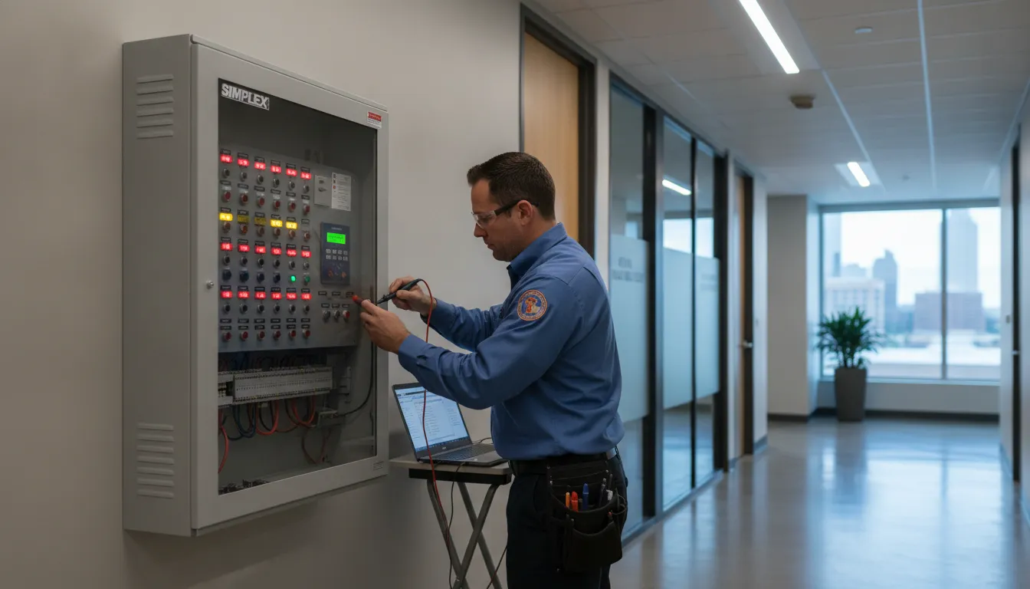
Fire marshals also look closely at your fire alarm control panel. A common violation is leaving trouble or supervisory signals active on the screen. These yellow lights show that a part of your system has an error or is offline. If you ignore these warnings, your alarms may fail during a crisis. Along with panel issues, inspectors often check notification appliances like horns and strobes to make sure they work.
Lastly, you must keep clear records of all tests on your site. If you cannot show your reports to the marshal, you will fail the check. Having NFPA 72 compliant fire alarm systems means keeping logs of all repairs and checks. A professional partner can help you manage this paperwork. Working with an expert makes it easy to keep up with NFPA 72 compliance Atlanta rules.
Documentation Requirements for NFPA 72 Compliance
Keeping clear records is a key part of NFPA 72 compliance Atlanta commercial property owners must maintain. Under local laws, building owners hold the legal duty for fire alarm inspection, testing, and maintenance. This is true even if you hire an outside team to do the work. National guidelines from the National Institute of Standards and Technology (NIST) show that complete records are vital. If you do not have proof of proper testing, your business can face fines and legal issues.
The Legal Burden of Fire Safety Records
Building owners bear the full legal burden for system upkeep. According to local fire safety rules and NFPA 72 code requirements, you must keep all safety records on site. You cannot pass this legal duty to a hired contractor. If a fire occurs and your records are missing, your firm could face civil lawsuits or insurance denials.
Proper records also protect your firm from federal safety audits. The federal government sets strict safety rules for workplace fire protection. Failing to maintain your fire systems can lead to large OSHA fines. Under federal safety standards, these serious errors can cost your business up to $16,550 for each failure. Keeping a complete fire log is the easiest way to prevent these costly fines.
Essential Records for Your Atlanta Fire File
Fire marshals in the Atlanta area expect to see a neat, complete file of your system’s history. Local Authorities Having Jurisdiction (AHJs) require these files to prove your building is safe. Atlanta-area property owners often rely on certified partners to meet these strict record rules. Working with a certified expert helps you prepare a thorough file to maintain NFPA 72 compliant fire alarm systems when local marshals visit.
Your compliant fire safety file must contain several key documents:
- Inspection and testing reports: Written proof showing that every smoke sensor, horn, strobe, and control panel was tested and works as designed.
- Deficiency tracking logs: A clear list of any system errors or device failures, including the dates they were found and when they were fixed.
- Historical maintenance records: A long-term history of system repairs, component cleanings, battery replacements, and software updates.
- AHJ submittal packages: Official plans, permits, and design sheets approved by local fire marshals for any system changes.
- Sensitivity test records: Records of smoke detector sensitivity checks, which must occur every alternate year to comply with local code.
- Device replacement schedules: Planned dates for replacing aging backup batteries and smoke sensors before they fail.
Keeping these files in order keeps your building safe and avoids code fines. When you work with a trusted partner, you can rest easy knowing your fire records are always ready for an inspection. This proactive step protects your team, your property, and your business.
Why NICET IV Certification Matters for Fire Alarm Compliance
Fire safety codes protect lives and property. National groups like the National Institute of Standards and Technology stress the value of comprehensive fire system ITM programs to meet local laws. To achieve this, your system needs deep technical skill. Building design is complex. One small error can lead to a system failure. This is why credentials are so key when you select a commercial partner.
The highest standard of fire alarm engineering
NICET IV is the highest level of certification in the fire alarm field. It is not an easy badge to earn. A designer needs ten or more years of hands-on work to get this grade. They must show deep knowledge of system design, safety codes, and project management. They must also pass tough tests and meet peer checks.
Our founder, Scott Gilkey, holds this NICET IV credential. This expertise makes NICET certified NFPA 72 design a core strength for American Alarm in the Metro Atlanta area. We do not guess when we plan a system. We know the rules. Our deep experience means we design your setup right the first time.
Why local fire marshals trust NICET design
When you submit plans to local fire marshals, or Authorities Having Jurisdiction, they look for certified work. A NICET IV signature shows the design is correct. It shows that the plan meets all national standards. This trust helps you in three key ways:
- Expedited permit approvals: Local offices can review and approve certified plans much faster because they trust the source. This prevents long delays for your construction or building updates.
- Reduced project risk: Certified designs prevent layout errors that can lead to failed checks or costly rebuilds. You avoid fines and keep your project on schedule.
- Code-compliant layouts: You get a system built to meet the exact codes for your building type. This is vital for complex commercial spaces in Metro Atlanta.
This process makes it much easier to secure your permits in Metro Atlanta. Local inspectors know that our designs are solid and safe.
Complete fire system monitoring and service
Achieving NFPA 72 compliance Atlanta property owners need goes beyond design. A compliant plan must also include constant monitoring. This ensures that any alarm signal goes to emergency teams right away.
We provide 24/7 UL-certified central station monitoring to watch your building day and night. If a device has a fault, our team offers same-day service to fix the issue fast. We also offer routine checks to keep your system in top shape. This full care keeps your building safe and compliant at all times.
NFPA 72 Compliance Checklist for Atlanta Commercial Properties
Commercial building owners in Georgia face strict standards for life safety. Achieving NFPA 72 compliance Atlanta demands a clear plan for your fire alarm. National standards from the National Institute of Standards and Technology emphasize why you must inspect, test, and maintain these systems. These rules apply retroactively to all existing fire alarms in commercial buildings, regardless of when they were put in. This checklist helps you stay on track and avoid major fines.
Essential steps for local compliance
Building owners bear legal responsibility for life safety systems in their properties. Setting up a routine schedule is the best way to keep your building safe. Use this checklist to track your fire safety program.
Failing to meet these rules can put lives at risk and lead to failed local inspections. Atlanta fire marshals check records closely during annual building reviews. Following a clear set of steps protects your business and keeps your property safe year-round.
- Local code checks: Georgia adopts the state fire code, but you must know your city rules. These local laws decide which NFPA 72 edition applies to your building.
- Annual inspection schedule: Systems need yearly checks and functional tests. Keeping this schedule ensures your alarm is always ready for fire marshal reviews.
- Semi-annual detector testing: Test the sensitivity of your smoke detectors every other year. This common need checks if a device works within its safe range.
- Complete record keeping: Keep logs of all checks, repairs, and fire marshal notes. Building owners must keep these files on site by law.
- Notification system checks: Test horns, strobes, and voice systems to make sure they work. Clear alerts are vital to guide people safely out of a building.
- Detector swap plan: Plan to swap smoke detectors ten years from their make date. Old devices can fail when you need them most.
- Certified partner support: Work with an expert to manage your fire safety. This ensures your property uses NFPA 72 compliant fire alarm systems that meet local laws.
Inspection and testing differences
You must know the difference between visual checks and functional tests. A visual check ensures that devices are present, undamaged, and unobstructed. A functional test verifies that each device works as intended. Regular maintenance like cleaning and recalibration must also occur alongside these tests. Skipping these tasks can lead to serious OSHA fines up to $16,550 per violation.
Value of expert engineering
Atlanta business owners rely on certified partners to design and install fire systems. Compliance is a core competency for American Alarm in the Metro area. Our firm is led by a NICET IV certified engineer to give you top-level technical skills. We also offer UL-certified central station monitoring to watch your property all day and night. Partnering with local experts keeps your business compliant and safe.
Our team is locally owned and has protected Metro Atlanta since 1995. We build strong bonds with local fire departments and marshals to ease the review process. We help you handle code changes so your system works when it matters most.
Schedule a free consultation. Call (770) 645-0061 or contact American Alarm online.
Frequently Asked Questions
Can a building owner perform their own NFPA 72 fire alarm inspections in Atlanta?
According to the fire code details on UpToCode, certified experts must run these checks. Business owners cannot do this work themselves. Property owners must hire licensed low-voltage technicians to inspect, test, and repair their systems. This ensures the alarm works when needed and passes local fire marshal reviews.
What happens if a business misses its regular NFPA 72 fire alarm testing?
According to the safety rules on UpToCode, OSHA can fine businesses up to $16,550 per serious violation for poor fire alarm care. Local fire marshals can also issue fines or shut down your building. More importantly, a missed test means your system might fail to save lives during a real fire.
How does the local fire marshal in Atlanta verify NFPA 72 compliance?
Atlanta fire marshals verify compliance by checking your system’s inspection records during annual site visits. According to the compliance guide on Forbel, these reports must prove you meet all required testing schedules. Your low-voltage partner must provide these signed documents to show your system is safe and fully operational.
Is 24/7 central station monitoring required for NFPA 72 compliance in Atlanta?
Yes, most commercial buildings must have active system monitoring to meet fire codes. Under the safety rules tracked by NIST, your system must send quick alerts to a central station during a fire. This ensures that local fire crews are called immediately if your alarm goes off.
Are You Ready to Secure Your NFPA 72 Compliance in Atlanta?
Putting off your needed commercial fire alarm testing can easily lead to failed local inspections, heavy city fines, and unsafe conditions for your people. Taking prompt action today ensures your safety systems function properly, giving you peace of mind and keeping your Atlanta business safe. Our low voltage experts make the entire process easy by doing complete fire alarm inspections and giving you the reports your local marshal requires.
Do not let a broken fire alarm system stop your daily work and lead to high emergency repair costs. Ready to protect your commercial property? Call (770) 645-0061 to speak with our local low voltage technicians and schedule a free consultation today.
Schedule a free consultation. Call (770) 645-0061 or contact American Alarm online.


Leave a Reply
Want to join the discussion?Feel free to contribute!