Medical Office Security and Fire Alarm Requirements Atlanta
Georgia law requires Atlanta medical offices to meet strict fire alarm and security standards to protect patients and staff. These rules ensure that every facility is ready for an emergency before it happens.
Medical Office Security And Fire Alarm Requirements Atlanta: What Are the Security and Fire Alarm Requirements for Atlanta Medical Offices?
The medical office security and fire alarm requirements Atlanta facilities must follow are based on O.C.G.A. Section 25-2-4 and NFPA 72 standards. Clinics and care sites must install life safety systems including 24/7 fire alarm monitoring and intrusion detection. These systems must be designed and installed by licensed professionals to pass fire marshal inspections and federal audits. American Alarm offers NICET IV-certified fire alarm design and security systems for healthcare facilities. With flat monitoring rates from $18.95 per month for landline and $29.95 for cellular service.
Navigating these requirements is essential for every facility manager in the Metro Atlanta area. Whether you are opening a new clinic or preparing for a yearly inspection. Knowing which codes apply to your specific building type is the first step toward full compliance.
Medical Office Compliance Standards and Enforcement
Summary: Atlanta medical offices must follow strict fire safety codes enforced by the Georgia State Fire Marshal. These rules cover everything from alarm monitoring to occupancy classification.
Medical office security and fire alarm requirements in Atlanta are substantially stricter than those for standard retail or office spaces. The Georgia Safety Fire Commissioner sets the state minimum fire safety standards under O.C.G.A. Section 25-2-4. For healthcare sites, these codes ensure that staff can assist patients who may not be able to evacuate on their own during a fire emergency.
State fire safety standards and enforcement
The Georgia Office of the State Fire Marshal oversees fire safety for healthcare sites. They conduct Life Safety Code (LSC) inspections to verify that clinics and surgical centers meet federal and state requirements. These inspections are mandatory for facilities participating in the Centers for Medicare and Medicaid Services (CMS) program. The state performs approximately 956 annual inspections to keep healthcare facilities safe and compliant.
Local fire marshals in the Metro Atlanta area also enforce these standards during new construction and annual reviews. Following an established fire alarm compliance requirements guide helps you prepare for these inspections and ensures your system meets the specific needs of your medical practice. For a comprehensive overview of the code framework, see our guide to NFPA 72 compliance standards for medical facilities.
Types of medical offices that must comply
Compliance applies to a wide range of healthcare sites, including dental offices, therapy centers, urgent care clinics, and outpatient surgical centers. Any building where four or more patients receive care simultaneously and cannot self-evacuate is classified as an ambulatory health care occupancy. These sites must meet higher safety standards than standard commercial spaces because patient safety is the top priority. Using a medical office security and fire alarm checklist can help identify gaps in your current system.
Specialized equipment such as voice evacuation systems and advanced smoke detection are often required in these settings. High-risk areas like laboratories and medical records rooms also need specific fire suppression and access control measures to protect critical assets.
Georgia Fire Safety Codes Every Medical Office Must Follow
Summary: Georgia’s State Minimum Fire Safety Standards (120-3-3) and CMS Life Safety Code inspections set the baseline. Ambulatory health care occupancies face additional requirements.
State Minimum Fire Safety Standards (120-3-3)
Georgia law establishes strict fire safety requirements for all commercial buildings. The Safety Fire Commissioner enforces these rules under O.C.G.A. Section 25-2-4 through the State Minimum Fire Safety Standards. These regulations apply to nearly every building in the state, including medical clinics and larger healthcare facilities. Medical offices in Atlanta must meet these standards to maintain their operating license. These codes address egress pathways, fire alarm functionality, and emergency notification systems. When planning a new facility, compliance with the 120-3-3 code must be integrated from the initial design phase.
CMS Life Safety Code Inspections
Medical offices that receive Medicare or Medicaid reimbursement must follow CMS Life Safety Code requirements. The Office of the State Fire Marshal conducts these inspections using the National Fire Protection Association (NFPA) 101 Life Safety Code. These inspections verify that every aspect of your facility is safe for patients and staff. Common inspection items include:
- Exit paths: Keeping all hallways and doors unobstructed for rapid evacuation.
- Fire alarms: Testing smoke detectors and notification appliances for proper operation.
- Fire doors: Verifying that doors close and latch automatically.
- Sprinkler systems: Confirming water supply and flow are ready to suppress a fire.
Ambulatory Health Care Occupancy Rules
If your office treats four or more patients simultaneously who cannot evacuate without assistance, it falls under the ambulatory health care occupancy classification. This designation triggers stricter fire safety requirements, including advanced detection systems and enhanced notification. Understanding whether your facility meets this threshold helps you plan the right level of fire protection.
Steps to Prepare for a Fire Marshal Inspection
- Review your occupancy classification. Confirm whether your office meets the ambulatory health care threshold.
- Schedule annual fire alarm testing. NFPA 72 Chapter 14 requires functional testing of all devices on a regular schedule.
- Check exit paths and fire doors. Ensure all hallways are clear and fire doors close and latch automatically.
- Verify monitoring is active. Confirm your 24/7 central station connection is operational and your account is current.
- Document everything. Maintain detailed logs of all inspections, tests, and maintenance for fire marshal review.
What Do NFPA 72 and NFPA 101 Require for Healthcare Facilities?
Summary: NFPA 72 governs fire alarm system design and testing, while NFPA 101 sets life safety requirements. Both standards impose stricter rules for ambulatory health care occupancies.
Healthcare providers in Georgia must comply with both NFPA 72 (National Fire Alarm and Signaling Code) and NFPA 101 (Life Safety Code). These standards work together to protect patients who may not be able to evacuate independently. In Atlanta, the city construction codes also incorporate these requirements.
Ambulatory Health Care Occupancy Classification
Under NFPA 101, the ambulatory health care occupancy threshold applies when a clinic serves four or more patients simultaneously who cannot self-evacuate. This classification triggers enhanced life safety requirements beyond standard commercial occupancy. Your fire alarm system must include advanced detection and notification capabilities to ensure adequate time for assisted evacuation.
Voice Evacuation and Pathway Survivability
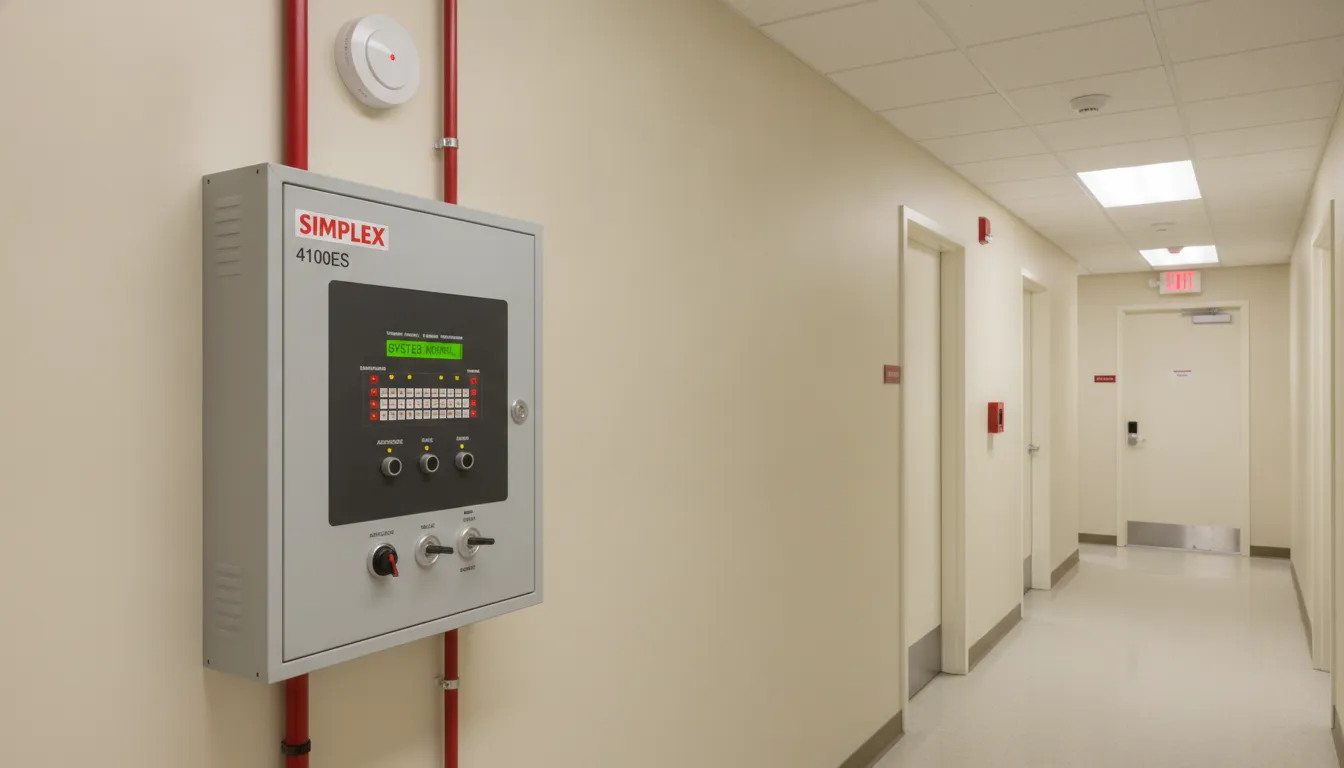
Standard audible alarms are often insufficient for medical facilities. Many clinics require voice evacuation systems that deliver clear verbal instructions. These systems are critical for guiding staff through assisted evacuation procedures for non-ambulatory patients. Pathway survivability is another requirement of NFPA 72, ensuring fire alarm wiring remains operational during a fire event through protected cabling and appropriate circuit design.
NICET IV Design and Code Compliance
Designing compliant fire alarm systems requires deep knowledge of NFPA standards and local Atlanta codes. Scott Gilkey at American Alarm holds a NICET IV certification, the highest level of fire alarm engineering credential. Fewer than ten percent of fire alarm professionals reach this level. A NICET IV designer ensures your system meets every applicable code requirement from the initial design phase, preventing failed inspections and costly retrofits. When evaluating equipment options for your facility, see our choosing the right fire alarm equipment for your facility guide.
Essential Security Components for Medical Offices
Summary: Atlanta medical offices need access control, video monitoring, and central station security to meet HIPAA physical safeguards and protect patients, staff, and sensitive data.
Access control and HIPAA physical safeguards
Access control is a fundamental requirement for healthcare facilities. You must restrict entry to areas containing patient records, medications, and sensitive equipment. Keyless entry systems and badge readers provide granular control over every door in your facility. You can set specific access schedules and maintain audit logs showing who entered each area and when.
These measures support HIPAA physical safeguard requirements. By securing server rooms, record storage, and pharmaceutical storage areas, you prevent unauthorized data access and theft. Many commercial security systems in Atlanta now include cloud-based management platforms that allow remote access control from any device.
Advanced security monitoring and alarm sensors
Electronic security monitoring provides continuous coverage of waiting rooms, hallways, parking areas, and building perimeters. Modern systems offer remote viewing from smartphones and tablets, enabling facility managers to check on their property from any location. Recorded monitoring footage also provides valuable evidence in the event of an incident or liability claim. Additional sensors such as glass break detectors, door contacts, and motion detectors create a comprehensive security perimeter.
Central station monitoring and integrated fire safety
Your security and fire alarm systems should report to a single central monitoring station. American Alarm provides medical office security and fire alarm monitoring with transparent monthly rates. A 24/7 central station watches your facility around the clock, dispatching police or fire services immediately when an alarm activates. Integrating your security and fire alarm systems ensures coordinated emergency response. Our NICET IV team designs these integrated systems to meet 24/7 fire alarm monitoring requirements that comply with Life Safety Code standards enforced by the Georgia State Fire Marshal.
What Medical Office Fire Alarm Compliance Costs
Summary: Fire alarm compliance costs include one-time installation expenses and monthly monitoring fees. Landline monitoring starts at $18.95 per month; cellular monitoring at $29.95 per month.
Monthly Monitoring Service Rates
Monthly monitoring is the ongoing foundation of your fire safety plan. Landline monitoring starts at $18.95 per month, providing a budget-friendly option for smaller practices. Many Atlanta medical offices now choose cellular monitoring at $29.95 per month for its higher reliability. Since cellular signals are not vulnerable to cut phone lines or storm damage.
| Feature | Landline Monitoring | Cellular Monitoring |
|---|---|---|
| Monthly cost | $18.95 | $29.95 |
| Connection type | Phone line | 4G cellular |
| Vulnerable to cut wires | Yes | No |
| Storm reliability | Moderate | High |
| Best for | Budget-focused offices | High-reliability needs |
When evaluating alarm monitoring service rates, ask about startup fees and contract terms. American Alarm offers free reactivation for returning customers, making it easy to restore service without upfront costs.
Installation and System Design Costs
Installation costs vary based on facility size, occupancy classification, and system complexity. A small dental office will require a less extensive system than a multi-provider surgical center. The most cost-effective approach is getting the design right on the first attempt. A NICET IV-engineered design ensures your system passes fire marshal inspection without costly last-minute modifications.
The ROI of Proper Fire Alarm Compliance
Investing in code-compliant fire alarm systems delivers measurable returns through lower insurance premiums, reduced inspection failure risk, and enhanced patient confidence. Insurance carriers view professionally monitored, code-compliant systems as reduced risk, which can lower your annual premium. With approximately 956 annual healthcare facility inspections in Georgia, having a properly designed and maintained system is far more cost-effective than addressing violations after a failed inspection.
Schedule a free consultation for your Atlanta medical office. Call (770) 645-0061 or contact American Alarm online to discuss your specific compliance needs.
Frequently Asked Questions
What fire alarm standards apply to Atlanta medical offices?
Medical offices in Atlanta must follow the Georgia State Minimum Fire Safety Standards established under O.C.G.A. Section 25-2-4, along with NFPA 72 and NFPA 101. Local building codes adopted by the City of Atlanta also apply. Working with a NICET IV-certified designer ensures your system meets all applicable codes.
How many patients make a medical office an ambulatory care site?
Under Georgia law, a facility is classified as an ambulatory health care occupancy if it serves four or more patients simultaneously who cannot self-evacuate during an emergency. This classification triggers additional fire safety requirements including enhanced detection and notification systems.
Who handles fire alarm inspections for Georgia healthcare facilities?
The Georgia Office of the State Fire Marshal conducts Life Safety Code inspections for healthcare facilities participating in the CMS program. Local fire marshals in Metro Atlanta also perform inspections during new construction and routine renewals.
What is NICET IV certification and why does it matter?
NICET IV is the highest level of fire alarm engineering certification. Fewer than ten percent of fire alarm professionals achieve this credential. A NICET IV-certified designer ensures your fire alarm system meets every applicable code requirement, reducing the risk of inspection failures and costly redesigns.
Can I use the same provider for both security and fire alarm systems?
Yes. American Alarm designs and maintains integrated security and fire alarm systems for Atlanta medical offices. A single provider for both systems ensures coordinated monitoring, streamlined maintenance, and consistent code compliance.
Ready to protect your medical office? Call (770) 645-0061 or contact American Alarm online for a free consultation and system assessment.


Leave a Reply
Want to join the discussion?Feel free to contribute!