Fire Marshal Inspection Fire Alarm Guide
Fire Marshal Inspection Fire Alarm Guide
A fire marshal inspection fire alarm review can determine whether a commercial property opens on schedule, passes a required life safety inspection, or faces another round of corrections. Fire alarm design is not only about choosing devices and installing wire. It is about satisfying the authority having jurisdiction, meeting NFPA 72 expectations, documenting every choice, and proving the system works under inspection conditions. review required fire alarm testing frequencies.
Schedule a free consultation. Call (770) 645-0061 or contact American Alarm online.
Need help preparing a commercial fire alarm system for inspection? Contact American Alarm to discuss code-compliant fire alarm design, testing, and monitoring for your Atlanta-area property.
For business owners, builders, property managers, and facility leaders, the fire marshal can feel like the final hurdle at the end of a project. In reality, fire marshal requirements should shape the project from the first design conversation. When those requirements are considered early, the final inspection becomes a confirmation of good planning instead of a scramble to fix deficiencies.
What Does a Fire Marshal Look For During a Fire Alarm Inspection?
A fire marshal inspection reviews whether the fire alarm system protects the building occupants, communicates emergency conditions properly, and complies with the adopted fire code, local amendments, approved plans, and applicable standards such as NFPA 72. The specific requirements can vary by city, county, occupancy type, building use, and the authority having jurisdiction, often called the AHJ.
Learn more about inspection cost expectations.
Most commercial inspections focus on several core questions:
- Was the fire alarm system designed according to the approved plans?
- Are initiating devices, notification appliances, control equipment, and power supplies installed in the right locations?
- Do signals transmit correctly to the monitoring center or other required receiving point?
- Does the system activate notification appliances as designed?
- Are batteries, circuits, wiring methods, and device labels compliant?
- Is the required documentation complete and available for review?
- Have any deficiencies from earlier reviews been corrected?
The fire marshal is not simply checking whether devices make noise. The inspection verifies that the system matches the approved intent, works reliably, and supports safe evacuation and emergency response.
Why Fire Marshal Requirements Should Shape the Design Before Installation
The most expensive fire alarm problems often begin before the first device is installed. If a design does not reflect local inspection expectations, the contractor may discover the issue during plan review, rough inspection, functional testing, or final acceptance. Each delay can affect occupancy, construction schedules, tenant move-ins, and operating costs.
Strong fire alarm design starts by answering practical AHJ questions early:
- What occupancy classification applies to this building or tenant space?
- Which code edition and local amendments are being enforced?
- Is the work a new system, modification, tenant buildout, upgrade, or replacement?
- Are there special requirements for notification, monitoring, elevators, suppression interfaces, duct detectors, or emergency control functions?
- What documents must be submitted before permit approval?
- What testing steps will the inspector expect before final approval?
When these questions are addressed before installation, the fire alarm contractor can design for approval instead of designing first and defending the design later.
Plan Review Sets the Inspection Baseline
For many commercial projects, the fire marshal or fire prevention office reviews the fire alarm plans before field work begins. Approved plans become the baseline for future inspections. If the installed system does not match those plans, even a technically sound installation may fail inspection until the discrepancy is corrected or formally approved.

A strong plan package typically includes information such as device locations, panel details, riser diagrams, wiring information, battery calculations, voltage drop calculations, sequence of operation, equipment data sheets, and contractor licensing information. Exact requirements vary by jurisdiction, but the purpose is consistent: the AHJ needs enough detail to confirm the system can perform as required.
This is where experienced design matters. A design professional who understands NFPA 72 and local Atlanta-area expectations can anticipate questions before they become review comments. American Alarm’s fire alarm work is led by Scott Gilkey, whose NICET IV certification represents the highest level of fire alarm engineering expertise. That level of technical knowledge helps reduce project risk when NFPA 72 compliance essentials compliance details matter.
Common Fire Alarm Items That Affect Fire Marshal Approval
Every property is different, but several fire alarm elements regularly influence inspection outcomes. These details deserve attention during design, installation, and pre-test.
Device Placement and Coverage
Initiating devices and notification appliances must be placed according to the applicable code, manufacturer instructions, and approved drawings. Smoke detectors, heat detectors, manual pull stations, horns, strobes, speakers, and other devices must serve the intended areas without creating avoidable coverage gaps.
Device placement can be affected by ceiling height, obstructions, ambient conditions, wall layout, use of the space, and accessibility requirements. A location that looks reasonable in the field may still fail if it does not match spacing, mounting, or visibility requirements.
Notification Appliance Performance
The system must alert occupants effectively. Inspectors may review audible and visible notification coverage, appliance locations, synchronization, candela settings, and whether the installation matches the approved design. In some buildings, voice evacuation or special notification requirements may apply.
Monitoring and Signal Transmission
Commercial fire alarm systems often need monitoring through a qualified central station. During inspection, the technician may need to place the system on test, activate devices, and confirm that alarm, supervisory, and trouble signals transmit correctly. Signal descriptions must be clear enough for emergency response and ongoing service.
Power Supply and Battery Calculations
Secondary power is a key part of fire alarm reliability. Battery capacity, charger performance, voltage drop, and standby calculations can all affect approval. Inspectors may ask to confirm that the system can operate through required standby and alarm periods.
Interfaces With Other Building Systems
Fire alarm systems may interface with elevators, sprinkler supervision, duct detection, smoke control, access control, door release, HVAC shutdown, or other life safety functions. These interfaces must operate as described in the sequence of operation. If the fire alarm system is supposed to trigger another building function, the inspection must prove it works.
Planning a commercial fire alarm upgrade or tenant buildout? Review American Alarm’s NFPA fire alarm services for design, inspection, testing, and compliance support.
What Happens During Pre-Testing?
Pre-testing is the contractor’s opportunity to find problems before the fire marshal does. It is one of the most important steps in a successful inspection process. A disciplined pre-test checks the system against the approved drawings, sequence of operation, monitoring requirements, device list, labeling, and documentation. read our guide on fire alarm testing vs. inspection.
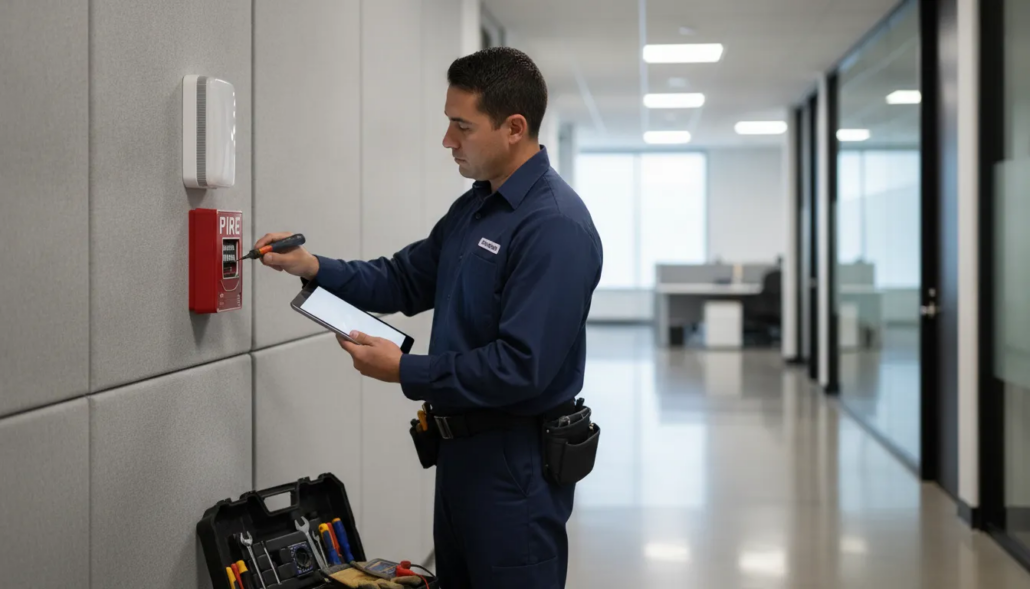
During pre-testing, the contractor should verify each device and function that the inspector is likely to review. That may include manual pull stations, smoke detectors, heat detectors, duct detectors, waterflow switches, tamper switches, notification appliances, panel trouble conditions, battery status, monitoring signals, and required building interfaces.
Pre-testing also helps coordinate people. The fire alarm technician, general contractor, building representative, sprinkler contractor, elevator contractor, and other trades may need to be present depending on the system scope. If the right people are not available during inspection, the project can stall even when the fire alarm equipment is installed correctly.
Documentation Can Make or Break the Inspection
Documentation is not an afterthought. Fire marshal approval often depends on whether the right records are complete, accurate, and available at the right time. Missing paperwork can delay approval just as quickly as a failed device test.
Important fire alarm documents may include:
- Approved fire alarm plans
- Equipment data sheets and listing information
- Battery calculations
- Voltage drop calculations
- Sequence of operation
- Record of completion
- Inspection and testing reports
- Deficiency records and correction notes
- Central station monitoring information
- Permit and licensing details
Accurate documentation also matters after the inspection. It supports future service, annual testing, insurance requests, tenant improvements, and future AHJ reviews. A system with poor records may become more expensive to maintain and harder to modify later.
How Local AHJ Expectations Affect Atlanta Fire Alarm Projects
National standards provide the foundation, but local interpretation matters. Metro Atlanta includes multiple jurisdictions, and each AHJ may have its own review process, preferred documentation format, inspection scheduling procedure, or code emphasis. A project in Roswell may not move through the same process as one in Atlanta, Alpharetta, Marietta, Sandy Springs, Decatur, or another nearby community.
Local experience helps because the contractor understands how different jurisdictions review plans, schedule inspections, and resolve comments. American Alarm has served Metro Atlanta since 1995 and has experience working with Atlanta-area authorities on fire alarm design, permitting, testing, and code approval.
That local familiarity does not replace the code. It helps translate code requirements into a practical approval path for the specific building and jurisdiction.
How to Reduce the Risk of a Failed Fire Marshal Inspection
No contractor can guarantee an inspector’s decision, but a strong process can reduce avoidable failures. Commercial property stakeholders should focus on preparation, communication, and verification.
Start With the AHJ in Mind
Design for the inspection from the beginning. Confirm the applicable code edition, building use, scope of work, submittal requirements, and acceptance testing expectations before installation begins.
Use Qualified Fire Alarm Design Expertise
Fire alarm systems are life safety systems. Work with a qualified provider that understands NFPA 72, device layout, calculations, documentation, and local inspection expectations. NICET-level expertise is especially valuable on complex commercial projects.
Keep the Approved Plans Current
Field conditions change. If the installation changes from the approved plans, make sure revisions are documented and submitted when required. Inspectors compare what they see in the building to what was approved.
Schedule a Complete Pre-Test
Do not wait for the official inspection to discover basic issues. Pre-test devices, signals, notification, trouble conditions, battery status, and required interfaces before the fire marshal arrives.
Have the Right People and Documents On Site
Make sure the technician, building contact, required trades, approved plans, reports, and monitoring information are ready. Inspection time is limited. Missing coordination can lead to rescheduling.
When Should a Business Call a Fire Alarm Professional?
A business should involve a fire alarm professional before submitting plans, starting a buildout, changing occupancy, expanding a space, replacing a panel, adding notification appliances, correcting deficiencies, or preparing for a required inspection. Early involvement is almost always less expensive than late correction.
It is also wise to call a professional when a fire marshal has already issued comments or deficiencies. A qualified contractor can review the report, identify the root cause, prepare corrections, and help document the work for reinspection.
If your property needs fire alarm design, testing, monitoring, or inspection support, explore American Alarm’s security and fire alarm services or request help from the local team.
Why American Alarm Is Built for Fire Alarm Compliance Work
American Alarm combines local Atlanta service with high-level fire alarm expertise. The company has protected homes and businesses since 1995 and provides fire alarm design, installation, monitoring, inspection, testing, maintenance, and NFPA compliance support.
For commercial fire alarm projects, the company’s authority comes from more than years in business. Founder Scott Gilkey holds NICET IV certification, the highest level for fire alarm engineers, along with unlimited low voltage licenses in Georgia, Alabama, and North Carolina. American Alarm also emphasizes service quality, transparent pricing, and long-term customer relationships instead of high-pressure sales tactics.
For property owners and businesses, that means one local provider can help connect the design, documentation, installation, testing, monitoring, and service pieces that shape fire marshal approval.
Schedule a free consultation. Call (770) 645-0061 or contact American Alarm online.
Schedule a free consultation. Call (770) 645-0061 or contact American Alarm online.
Frequently Asked Questions
What is a fire marshal inspection for a fire alarm system?
It is an AHJ review that confirms the fire alarm system was designed, installed, documented, and tested according to approved plans and applicable code requirements. The inspection often includes device testing, signal verification, notification testing, documentation review, and confirmation that required building interfaces work correctly.
Can a fire alarm system fail inspection even if it works?
Yes. A system may activate but still fail if it does not match approved plans, lacks documentation, has incorrect device placement, misses required monitoring signals, fails a battery or voltage calculation, or does not perform required emergency control functions.
What should be completed before the fire marshal arrives?
The system should be installed according to the approved plans, fully pre-tested, connected to required monitoring, labeled as needed, supported by complete documentation, and coordinated with any other trades needed for functional testing.
Who decides whether the fire alarm system passes?
The authority having jurisdiction makes the approval decision. The contractor’s role is to design and install the system correctly, prepare the required records, perform pre-testing, support inspection, and correct any deficiencies identified by the AHJ.
Prepare for Approval Before Inspection Day
A successful fire marshal inspection starts long before the appointment. It starts with code-aware design, local AHJ knowledge, clear documentation, careful installation, and complete pre-testing. When those pieces are handled correctly, inspection day becomes a structured verification process instead of a costly surprise.
American Alarm helps Atlanta-area businesses plan, install, monitor, test, and maintain commercial fire alarm systems with compliance in mind. To discuss your next project or prepare for an upcoming inspection, contact American Alarm.
Schedule a free consultation. Call (770) 645-0061 or contact American Alarm online.


Leave a Reply
Want to join the discussion?Feel free to contribute!