Fire Alarm Testing vs. Inspection in Atlanta
Fire alarm testing is the hands-on process of activating devices, confirming signals, and documenting results so a commercial fire alarm system is ready for an emergency. A fire alarm inspection is different. It is a visual review that checks whether parts look damaged, blocked, or out of place. Atlanta businesses usually need both to satisfy NFPA 72 expectations, local fire marshal requirements, insurance documentation needs, and basic life safety responsibilities. Learn more about commercial fire alarm inspection pricing and review our fire marshal inspection preparation guide.
Schedule a free consultation. Call (770) 645-0061 or contact American Alarm online.
Need fire alarm testing in Atlanta? Contact American Alarm to schedule a code-ready review with a local fire alarm team led by NICET IV expertise.
That difference matters because a system can look fine and still fail when tested. A clean panel, visible pull station, or mounted smoke detector does not prove the signal path works. Testing closes that gap. It confirms whether smoke detectors, heat detectors, pull stations, strobes, horns, panels, batteries, relays, and monitoring connections respond the way they should.
American Alarm has served Metro Atlanta businesses since 1995 with NFPA-compliant fire alarm systems, 24/7 UL-listed monitoring, repair support, inspections, testing, and certification help. Founder Scott Gilkey holds NICET IV certification, the highest level for fire alarm engineering expertise, which gives local businesses a stronger technical partner for compliance-sensitive work.
Fire alarm testing vs. inspection: what is the difference?
Fire alarm inspection is a visual condition check. Fire alarm testing is a functional performance check. The inspection asks, “Does the system appear installed, accessible, and intact?” The test asks, “Will the system actually detect a fire condition, alert occupants, communicate the event, and create a usable record?”
Both steps belong in a complete inspection, testing, and maintenance plan. Skipping inspection can let visible problems go unnoticed. Skipping testing can leave hidden failures in place until a real emergency or fire marshal visit exposes them.
What a fire alarm inspection checks
An inspection reviews the visible condition of your fire alarm system. A technician may look for obstructed pull stations, damaged notification appliances, dirty detectors, trouble lights, missing labels, loose parts, panel issues, expired batteries, blocked access, or obvious wiring concerns. The goal is to catch clear defects before they become safety or compliance failures.
For Atlanta businesses, this visual step also helps prepare for a fire marshal review. If devices are blocked, records are missing, or the panel shows unresolved trouble, the visit can become more expensive and time-consuming than it needed to be. American Alarm explains that local review process in its guide to fire marshal inspection and fire alarm service.
What fire alarm testing proves
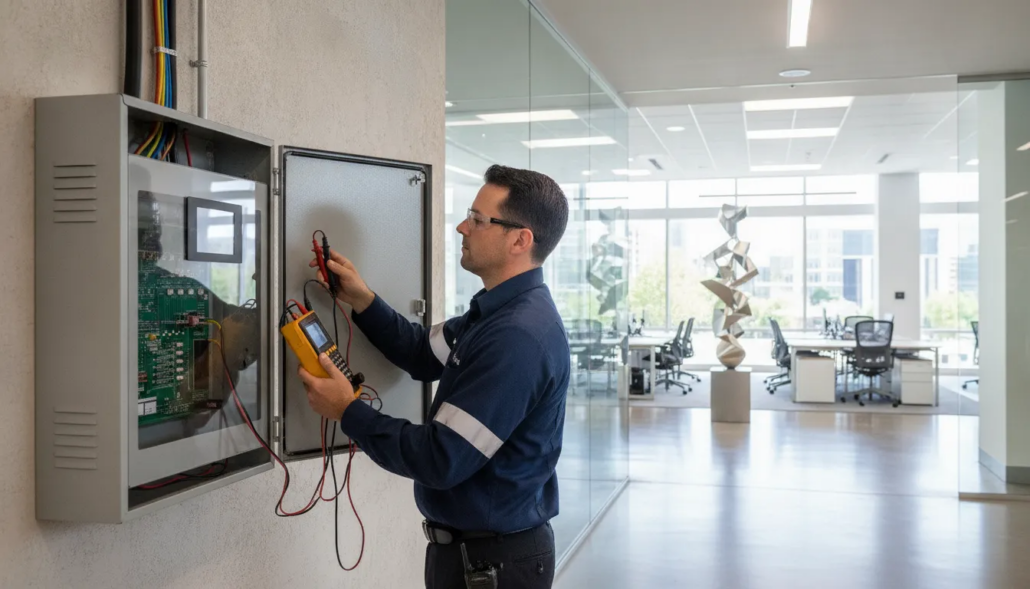
Testing goes beyond looking. A trained technician activates devices and confirms the system response. That can include testing smoke detectors, heat detectors, manual pull stations, horns, strobes, relays, control panel signals, backup batteries, monitoring communication, and any connected life safety functions.
This is the part that proves readiness. If a device fails, the panel reports the wrong location, the signal does not transmit, or an appliance does not activate, the system may not protect people the way the building owner expects. That is why commercial fire alarm systems in Atlanta need more than a visual review.
Quick comparison
| Category | Inspection | Testing |
|---|---|---|
| Main purpose | Find visible problems | Confirm system performance |
| Typical method | Visual review of devices, panel, access, and records | Functional activation of devices and signal paths |
| System activity | Usually remains in standby | Devices are intentionally activated under controlled conditions |
| Primary output | Condition notes and observed deficiencies | Pass or fail results, response records, and repair needs |
| Compliance role | Shows the system is maintained and accessible | Shows the system works as required |
Why fire alarm testing matters for Atlanta code compliance
Fire alarm testing matters because Atlanta-area businesses must be able to show that their life safety systems are maintained, functional, and documented. Testing creates evidence for the fire marshal, the Authority Having Jurisdiction, insurance review, and internal safety records. It also protects people by finding failures before an emergency.
NFPA 72 is the main national framework for fire alarm inspection, testing, and maintenance. Local authorities can add requirements, interpret schedules, and request documentation based on building use, system type, and risk. A business in Fulton County, Cobb County, DeKalb County, Gwinnett County, or another Metro Atlanta jurisdiction should not assume a generic schedule is enough.
American Alarm’s fire alarm work is built around local code knowledge, NFPA 72 expertise, and long-standing relationships with Atlanta-area jurisdictions. That matters when a business needs a practical plan, not just a checklist. Learn more about American Alarm’s NFPA certificates and fire alarm compliance services.
What happens during a professional fire alarm test?
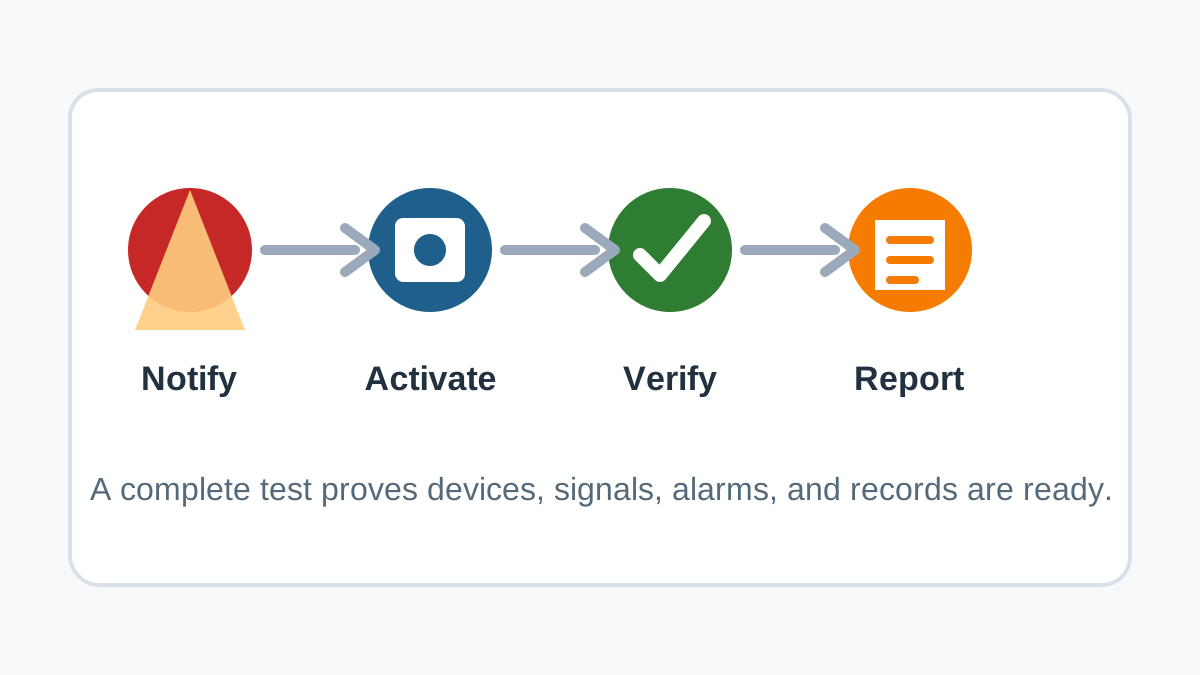
A professional fire alarm test follows a controlled sequence. The technician prepares the building, coordinates with monitoring, activates devices, verifies system responses, records results, and identifies deficiencies that need repair. The process should be organized enough to reduce false dispatch risk while still testing the system under meaningful conditions.
Step 1: Notice and preparation
Before devices are activated, the technician should coordinate with the monitoring center and appropriate building contacts. This helps prevent false emergency dispatches, unnecessary disruption, and confusion for employees or occupants. Depending on the site, the team may also coordinate with the local fire marshal or property contact.
Step 2: Device activation
The technician tests individual initiating devices such as smoke detectors, heat detectors, and pull stations. The goal is to confirm that each device can send the right signal to the control panel. Testing may also verify notification appliances such as horns, strobes, and voice evacuation equipment where installed.
Step 3: Panel, signal, and backup checks
Functional testing should confirm that the panel identifies the right device or zone, that required outputs activate, and that communication paths work. Battery and backup power checks are also important because a fire alarm system must remain reliable when normal power fails.
Step 4: Documentation and repair planning
The final report should list what was tested, what passed, what failed, and what needs attention. Clear records are not just paperwork. They are often the proof a business needs during a fire marshal visit, insurance review, or future maintenance call. If a deficiency is found, American Alarm can help with Atlanta alarm repair so the issue is not left unresolved.
Need help preparing for a fire marshal visit? Request service from American Alarm and get local support for testing, documentation, and repairs.
How often should commercial fire alarm systems be tested?
Commercial fire alarm testing frequency depends on your system, building use, device types, local code requirements, and the Authority Having Jurisdiction. Many systems require annual functional testing, while certain components may need monthly, quarterly, or semiannual attention. The safest answer is to build a site-specific schedule based on NFPA 72 and local expectations. commercial fire alarm testing frequency requirements under NFPA 72.
Building owners should avoid treating testing as a once-a-year scramble. A better plan spreads inspection, testing, maintenance, and documentation across the year so issues are found early. This is especially important for larger facilities, multi-building campuses, warehouses, healthcare environments, schools, and properties with older equipment.
If your system is aging, expanding, or showing recurring trouble conditions, it may need more attention than a newer system in a simpler building. American Alarm also helps businesses evaluate upgrade needs, including commercial fire alarm installation costs for warehouse spaces and other complex properties.
Common fire alarm testing issues that delay approval
The most common testing problems are not always dramatic. Missing records, dirty detectors, failed batteries, trouble signals, weak communication paths, blocked devices, and delayed repairs can all create problems during a fire marshal review. Fire alarm testing helps identify these issues before they become failed inspections, fines, or emergency risks.
Failed devices
A smoke detector, heat detector, pull station, horn, strobe, or relay can look normal and still fail during activation. Device failures can come from age, dust, wiring problems, environmental conditions, physical damage, or missed maintenance. Testing is the only way to confirm whether the device works in the system, not just on the wall.
Communication problems
The alarm signal must reach the monitoring path and be handled correctly. If communication fails, an alarm event may not produce the response the building owner expects. American Alarm provides 24/7 UL-listed monitoring, which supports reliable response when a properly connected system sends an alarm signal.
Weak documentation
Incomplete records can turn a routine review into a compliance problem. A business should be able to show inspection dates, testing dates, deficiencies, repairs, retests, and system changes. Clear documentation is one reason to work with a professional fire alarm provider instead of treating testing as an informal maintenance task.
Why choose a NICET IV-led Atlanta fire alarm company?
A NICET IV-led fire alarm company gives Atlanta businesses stronger technical depth for code-sensitive work. American Alarm is led by founder Scott Gilkey, who holds NICET IV certification, the highest level for fire alarm engineering expertise. That background supports proper design, testing, documentation, troubleshooting, and communication with local authorities.
Schedule a free consultation. Call (770) 645-0061 or contact American Alarm online.
What fire alarm system components require annual testing?
NFPA 72 specifies that all initiating devices must undergo annual functional testing. This includes every smoke detector, heat detector, manual pull station, duct detector, and flame detector on the property. Notification appliances such as horns, strobes, speakers, and visual indicators also require annual verification. Battery capacity tests must demonstrate that backup power supports the system for the required duration, typically 24 hours of standby followed by five minutes of alarm for commercial occupancies. Control equipment, including the fire alarm control panel and remote annunciators, must be tested to confirm proper communication with all system components.
How does NFPA 72 define inspection vs. testing?
NFPA 72 Chapter 14 draws a clear distinction between inspection and testing. An inspection is a visual examination of system components to confirm they are present, properly installed, and free of physical damage or obstructions. Testing goes further by requiring functional verification through actual device activation. The code mandates both activities on different schedules. Monthly visual inspections of control panels and quarterly functional testing of select components create a layered maintenance program that catches minor issues before they become costly failures. Understanding this distinction helps Atlanta property managers allocate the right resources to each activity, ensuring compliance without over-testing or under-inspecting their fire alarm systems.
Why do Atlanta businesses need both testing and inspections?
Atlanta commercial property owners face unique compliance pressure from local fire marshals who actively enforce NFPA 72 standards. A visual inspection alone cannot verify that a smoke detector still responds within its listed sensitivity range, and functional testing alone cannot identify a cracked housing or corroded wire connection that an inspector would catch visually. Together, inspection and testing create a complete picture of system health. Building owners who skip one or the other leave gaps in their compliance program that can surface during an official fire marshal review, potentially resulting in citations or business interruption.
American Alarm has served Metro Atlanta since 1995. The company focuses on smart, affordable security, NFPA-compliant fire alarm services, commercial alarm solutions, access control, alarm monitoring, and responsive service. For fire alarm testing, that combination matters because compliance is both technical and local.
Working with a local team also helps when requirements vary by jurisdiction. American Alarm understands the needs of Atlanta-area businesses and works with customers across communities including Roswell, Alpharetta, Cumming, Johns Creek, Buckhead, Midtown, Downtown Atlanta, Marietta, Decatur, Sandy Springs, Dunwoody, Peachtree City, Newnan, and nearby North Georgia markets.
Schedule a free consultation. Call (770) 645-0061 or contact American Alarm online.
Can a fire alarm inspection replace annual testing?
No. A fire alarm inspection cannot replace annual testing because the two processes verify different aspects of system readiness. An inspection confirms that devices are present, properly mounted, and free of visible damage or obstruction. Testing proves that those same devices actually function when activated. NFPA 72 requires both activities on separate schedules, and Atlanta fire marshals expect to see documentation for each. Property managers who rely on inspections alone leave critical gaps in their compliance programs that can surface during an official review, leading to citations or required system shutdowns.
What documentation is required for fire alarm testing compliance?
NFPA 72 mandates that every testing event be recorded with the date of test, the name of the testing company and technician, the specific devices tested, the results of each test, and any deficiencies found along with corrective actions taken. This documentation must be maintained on-site and available for review by the local authority having jurisdiction. For Atlanta businesses, keeping organized testing records is essential because fire marshals routinely request multi-year testing histories during inspections. Digital record-keeping systems that timestamp each test event can simplify this requirement and reduce the administrative burden on facility management teams.
Frequently Asked Questions
What is the difference between fire alarm testing and fire alarm inspection?
A fire alarm inspection is a visual check of devices, panels, access, and visible condition. Fire alarm testing is the functional process of activating devices and confirming that the system responds correctly. Inspection finds visible problems. Testing proves performance.
How often does a business need fire alarm testing?
The schedule depends on the building, system type, device type, and local Authority Having Jurisdiction. Many commercial systems need annual functional testing, while some components require monthly, quarterly, or semiannual checks. A qualified fire alarm provider can build the right schedule for your site.
Does my business need to follow NFPA 72 for fire alarm testing?
Most Atlanta-area commercial fire alarm programs use NFPA 72 as the core framework for inspection, testing, and maintenance. Local fire marshals may add or interpret requirements based on the building and system. Businesses should keep clear records showing that testing was completed.
Who is qualified to perform commercial fire alarm testing in Atlanta?
Commercial fire alarm testing should be handled by trained fire alarm professionals with licensing, code knowledge, documentation experience, and familiarity with local authorities. American Alarm is led by NICET IV fire alarm expertise and supports businesses across Metro Atlanta.
Schedule fire alarm testing in Atlanta
Fire alarm testing is not just a compliance task. It is the proof that your system can detect a fire condition, alert people, communicate the event, and support the records your business may need during a fire marshal review. A visual inspection is important, but functional testing is what shows whether the system is ready.
Ready to schedule fire alarm testing or review your commercial fire alarm service plan? Contact American Alarm online to talk with a local Atlanta fire alarm expert and request a quote.
Schedule a free consultation. Call (770) 645-0061 or contact American Alarm online.


Leave a Reply
Want to join the discussion?Feel free to contribute!