Commercial Alarm System Troubleshooting: Common Issues Atlanta Businesses Face
A chirping alarm panel in a busy Atlanta retail store can disrupt an entire business day. It creates unnecessary noise, distracts your employees, and makes customers feel uneasy about their safety.
Schedule a free consultation. Call (770) 645-0061 or contact American Alarm online.
Smart commercial alarm system troubleshooting helps business owners find and fix security issues before they disrupt daily work or trigger costly city fines. According to public safety training data published by Oklahoma.gov, battery failure stands as the most common cause of false alarm triggers in commercial systems. Local business staff can fix many panel and sensor faults on their own by checking backup power levels, testing system signals, and cleaning dust from sensors. Taking a phone-first approach to check these basic system parts keeps your staff safe, avoids false dispatches, and ensures your building remains compliant with local codes. Regular hardware care and quick system checks will save your company money on service calls while keeping your commercial property safe.
When a warning light flashes on your keypad, you need to know if you can resolve the issue yourself or if you must call for help. Understanding the root causes of common faults is the first step toward resolving these issues. Let’s look at what causes these problems and how you can manage them.
Commercial Alarm System Troubleshooting: What Causes Systems to Act Up in Atlanta Buildings?
Summary: Most commercial alarm issues stem from three causes: weak backup batteries, environmental debris (dust/insects) in sensors, and poorly placed motion sensors near HVAC vents or moving objects.
Summary: Most commercial alarm system issues in Metro Atlanta stem from three root causes: weak backup batteries. Environmental debris such as dust or insect intrusion, and poorly placed motion sensors. Identifying which of these three categories your fault falls into is the first step in effective commercial alarm system troubleshooting. Each cause has a distinct set of symptoms, so matching your panel’s error codes or trouble lights to the right category saves time and avoids unnecessary service calls.
Every business owner in Atlanta wants a safe workplace. But when a commercial alarm system troubleshooting issue pops up, it can disrupt your whole day. Knowing why these systems fail helps you find the right fix fast and keep your team safe.
Power and Battery Failures
Battery failure is the most common cause of false alarm triggers in commercial systems. Over time, backup batteries lose their charge. When a battery gets weak, the main control panel will sound a warning. This trouble signal can happen at any time of night or day. Atlanta businesses must test their backup power sources to prevent these sudden system faults.
Dust and Insect Problems
Environmental factors also play a big role in system faults. False alarms often stem from environmental factors like dust or insect intrusion. Fine dust can settle inside the sensing chamber of a smoke detector. When dust or a small bug blocks the light path, the device thinks there is real smoke. This triggers a false alarm. To prevent this, you should keep your sensors clean. In dusty areas such as warehouses or restaurant kitchens, heat detectors are less susceptible to environmental interference than smoke detectors, making them a great alternative choice.
Motion Sensor Placement Mistakes
Poor placement of sensors is another main reason systems act up. Motion sensor placement is critical to avoid false alarms in high-traffic areas. If you place a sensor near a heating vent, a draft can trip the alarm. Hanging signs, banners, or balloons near sensors will also trigger false alarms when the air moves. When you set up commercial security systems in Atlanta, you must map out the traffic flow of your space. This ensures each sensor only spots real security threats.
Schedule a free consultation. Call (770) 645-0061 or contact American Alarm online.
<h
Schedule a free consultation. Call (770) 645-0061 or contact American Alarm online.
>How to Reduce False Alarms in Your Commercial Security System
Summary: False alarms waste time and trigger fines. The most effective reduction strategy combines staff education on keypad codes, proper sensor adjustment, and routine cleaning of detectors.
Summary: False alarms waste time, strain emergency services, and trigger costly fines from Metro Atlanta public safety agencies. The most effective reduction strategy combines staff education, proper sensor adjustment, and routine cleaning. With over 80 percent of false alarms tied to human error. Training your employees on keypad codes and disarm procedures is the single highest-impact step you can take at no cost.
False alarms disrupt your daily business operations and strain local emergency services. In Metro Atlanta, public safety agencies charge steep fines for repeated false dispatch calls. Data shows that human error or poor training causes more than 80 percent of all false alarms, making staff education your first line of defense. By taking a few practical steps, you can keep your system reliable and avoid costly city penalties.
Understand Your Sensors
Modern alarm systems use different sensor types to protect your commercial space. Understanding how these parts work is the first step in commercial alarm system troubleshooting. Some sensors are highly sensitive to sudden air drafts or shifting temperatures, while others react only to physical entry.
- Keep your smoke detectors clean: Clean your smoke detectors every six months to prevent dust from building up. Environmental dirt is a primary trigger for false alarms, as documented by Oklahoma CareerTech training materials. A quick vacuum around the sensor vents removes particles before they cause trouble.
- Adjust your sensor sensitivity: Set sensor sensitivity levels to fit your daily work environment. Rooms with heavy machinery or drafty vents can trigger sensitive equipment. Adjust your sensors to ignore these small changes while still keeping your business safe.
- Plan your motion sensor paths: Place motion sensors away from high-traffic zones or moving objects. Do not point them at vents, hanging signs, or windows where outdoor movement might trigger them. Proper placement keeps the system quiet during non-work hours.
- Train your team members: Teach every employee how to use the keypad and how to cancel an accidental alarm. Share the correct codes and practice the disarm steps during staff meetings. Most false alarms happen when employees do not know how to turn off the system quickly.
Maintain Your System Regularly
Regular maintenance keeps your hardware in top shape and stops unexpected troubles before they start. A well-kept system rarely fails or sounds without a real cause. Review our commercial tenant security checklist for a full maintenance schedule you can follow each quarter to keep your Atlanta facility fully protected.
Panel Communication Errors: What They Mean and How to Fix Them
Summary: A comm failure message on your keypad means your alarm panel cannot reach the central monitoring station. Common causes include network changes after switching internet providers, loose ethernet cables, or blocked cellular signals near the panel. Most communication errors can be diagnosed by checking your router connections, running a manual signal test from your keypad menu, and reviewing the event log history for patterns.
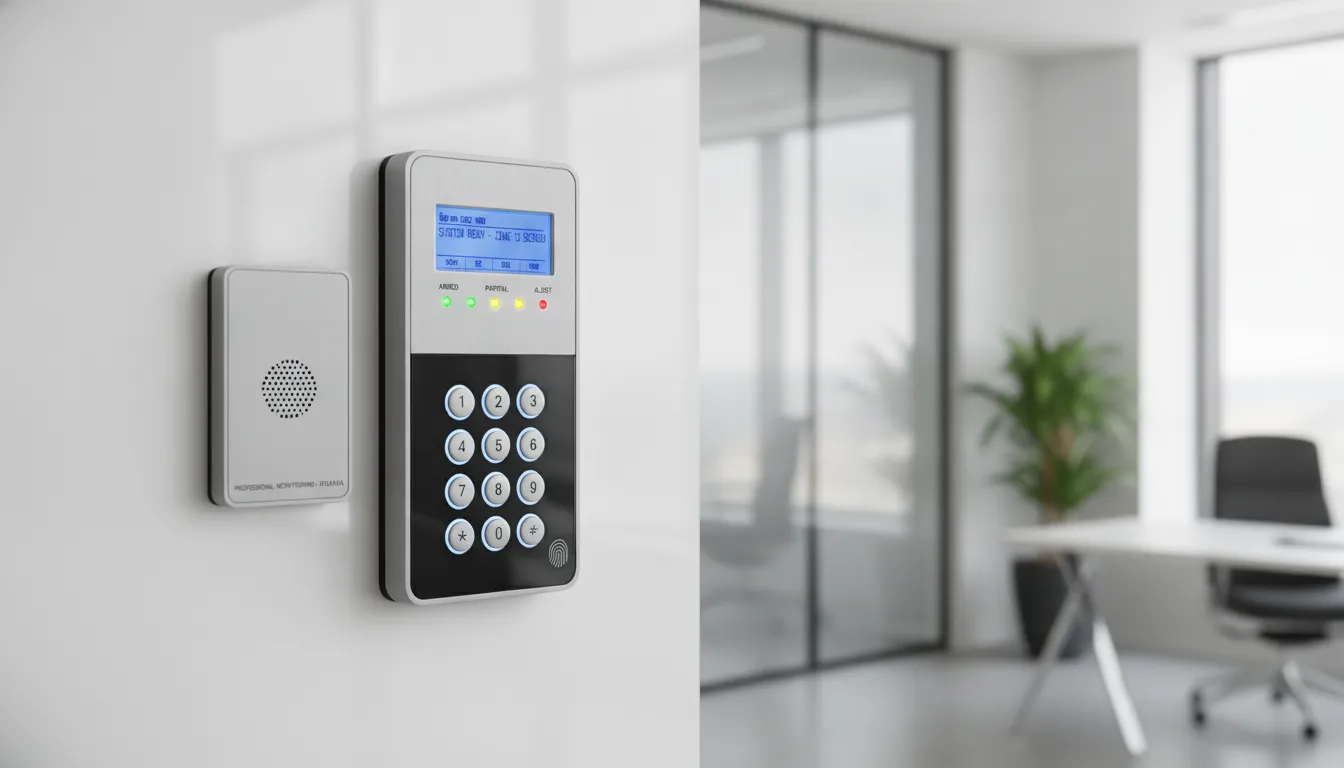
A flashing yellow light or a clear error text on your keypad can quickly disrupt your workday. When your system shows a comm failure, it means the main box cannot talk to the central monitoring hub. Learning how to check these faults is a core part of commercial alarm system troubleshooting for any local business. To find the source of the problem, you should check your network paths, test key system parts, and review the event logs.
Understand the Comm Failure Message
A communication path failure often starts when you make simple network changes. If your business switches to a new internet provider, updates local router settings, or shifts IT rules, your alarm may lose its link. This path disruption, often marked as F018, blocks vital alert signals from leaving your building. You can resolve some path blocks by checking your ethernet cables or restarting your network router. For cellular backups, make sure no new metal shelves or large assets block the local cellular signal near the panel.
Resolve Lockouts and Keypad Blocks
Too many wrong code entries can trigger a fast keypad lockout, which is often labeled as code F022. This safety lock blocks all input for a set time to stop unauthorized staff or guests from guessing your master code. When this block occurs, you must wait for the panel timer to reset before you try to enter a clean code. Clear zone labeling in your control panel speeds up diagnostics by showing you exactly where the issue lies.
Test Your Digital Communicators
Your digital communicators need periodic testing to make sure they can reach the central monitoring station. Regular signal tests verify that your backup paths are ready to send data in an emergency. You can run a manual communication test directly from your keypad menu to verify the link. If the test fails, you may have a loose wire or a broken dialer card that needs professional care. Security system monitoring redundancy depends on these backup paths working, so do not skip this quarterly check.
Use Panel Event Logs for Diagnostics
Modern panels offer event logs to track the exact time and type of alarm events that occur on your property. This system log acts as a digital diary of every arm, disarm, power drop, and sensor fault. If you face a recurrent error, opening this history menu can help you pin down the precise second the link went down. Reviewing these logged event details helps you find out if your network drops out at the same time every day. This log data gives your alarm technician the exact details they need to fix the issue on their next service visit.
How Do I Handle Battery Replacement and Power Issues?
Summary: Weak backup batteries cause more false alarms than any other single factor. The warning signs include random beeps from the keypad, intermittent zone faults, and trouble lights that will not clear. Testing backup batteries annually, inspecting for swollen casings or corrosion, and scheduling proactive replacements every three to five years keeps your system reliable and avoids emergency service fees.
Your commercial alarm system needs a steady stream of clean electricity to guard your property. When building power fluctuates or a backup battery weakens, your entire security network is put at risk. Performing battery checks is the single most impactful step in commercial alarm system troubleshooting to keep your business safe and secure.
Spot the Signs of a Low Battery
A weak battery does more than trigger low power alerts on your system keypad. Battery failure stands as the most common cause of false alarm triggers in commercial systems, according to a security study by the Oklahoma Department of Career and Technology Education. When the charge drops below a set level, the sensors may send erratic signals to the main panel, which leads to false sirens and central station dispatches. Watching for keypad beeps, random zone faults, or trouble lights will help you find a failing battery before it causes a major disruption.
Step-by-Step Battery Replacement and Power Care
- Test backup power supplies annually: You must test your backup power systems every year to check for battery degradation. This regular check ensures your building remains fully protected during local blackout events or severe weather storms.
- Inspect the physical battery: Open your main control cabinet to check the standby battery for swollen casing, corrosion, or white powder around the wire terminals. If you notice any physical damage, replace the unit immediately to prevent damage to the panel circuit board.
- Verify the secondary backup path: Traditional phone lines can lose power during a storm or physical wire cut. For enhanced reliability over standard copper landlines, consider setting up cellular backup monitoring that stays online even when local power grids fail.
- Schedule battery swaps before failure: Lead-acid standby batteries typically last between three to five years. Track the install date on a sticker inside your panel, and schedule a swap before the battery drops below its required power levels.
Keep Standby Power Ready
Maintaining a fresh backup battery is a simple yet crucial part of your overall building security plan. Regular tests and timely swaps shield your team and assets from unexpected downtime. If your system continues to show low power alerts after a swap, you may have a deeper wiring issue or a faulty charging circuit. In these cases, professional alarm repair in Atlanta ensures your facility remains compliant with local fire and safety codes. Ready to secure your business? Call (770) 645-0061 or contact American Alarm online.
Keeping Sensors Clean and Functional: A Maintenance Guide for Atlanta Businesses
Summary: Routine sensor maintenance prevents the majority of false alarms and system faults. Smoke detectors need cleaning every six months to remove dust buildup. Wiring connections should be checked for looseness at junction boxes, and tamper switches should be tested to confirm they trigger when someone tries to access equipment. Labeling every wire in your control panel makes future diagnostics significantly faster.
Every commercial alarm system relies on a network of sensors to detect threats. Over time, dust, grime, and physical wear can degrade these devices. Routine care prevents system failures and keeps your building secure. Following simple maintenance steps helps you avoid the need for urgent commercial alarm system troubleshooting.
Smoke Detector and Wiring Care
Smoke detectors are vital for life safety, but they accumulate dust and dirt from daily business operations. Under national safety standards, smoke detectors require cleaning every 6 months to maintain optimal sensitivity, as noted in Oklahoma government training guides. Keeping sensors clear prevents false alarms and guarantees quick response during a fire.
Wiring issues also cause common sensor failures. Loose wiring at junction boxes can cause intermittent signal failure in alarm circuits. To stop signal drops before they occur, low-voltage cabling should be properly secured to prevent signal attenuation. During inspections, check that all connections are tight and that cables do not sag or pull.
Wire Labeling and Tamper Switches
Managing the physical setup of your security system is another crucial task. Unlabeled wires in a control panel make system diagnostics significantly slower. When your team labels every wire clearly, they can find and fix connection problems in minutes. This simple step keeps troubleshooting simple and fast.
You must also verify that your physical hardware is secure from interference. Tamper switches alert the control panel to unauthorized access to alarm equipment. If an intruder tries to open a sensor housing or cut a wire, the tamper switch triggers a warning instantly. Testing these switches regularly ensures that your system remains fully protected. For more advice on facility security, check our guide on commercial security best practices.
Wireless Sensor Security
Many modern offices in Metro Atlanta use wireless sensors for quick installation. These devices offer excellent security because wireless alarm sensors use encrypted signals to prevent spoofing. Encryption stops outsiders from copying your sensor signals or blocking communications. Check your wireless devices monthly to ensure their batteries are strong and their signals are clear. For integrated commercial fire alarm systems, wireless sensors also provide flexible placement without running new conduit.
When to Troubleshoot vs. When to Call a Professional for Commercial Alarm Repair
Summary: Know which issues you can safely handle yourself and which require a licensed technician. Simple fixes such as replacing backup batteries, cleaning dust from sensors, and resetting keypads after false triggers are safe for in-house staff. Complex issues such as circuit shorts, control panel failures, and mandatory annual fire inspections require a NICET IV certified technician to maintain code compliance and safety.
Know your limits: Solving minor issues on your own saves time, but complex safety risks require an expert technician.
Managing commercial security means keeping your team safe and your property secure. Some simple system checks are safe to handle in-house. However, trying to fix complex wiring or safety equipment can lead to local code violations. Finding the right balance ensures your business stays protected without unnecessary downtime.
Simple Fixes You Can Do In-House
Many basic alerts stem from minor issues that do not require professional tools. Battery failure is the most common cause of false alarm triggers in commercial systems, as shown in Oklahoma CareerTech research. You can often swap out low-voltage backup batteries or gently clean dust from dirty sensors. Basic commercial alarm system troubleshooting includes checking power connections, replacing user batteries, and resetting keypads after an accidental trigger.
Complex Issues That Need an Expert
You should never attempt to repair complex electrical shorts, major wiring faults, or broken control panels. Expert alarm repair services must always prioritize safety and code compliance. Local regulations mandate annual fire inspections for commercial properties to ensure life-safety systems work during an emergency. Messing with these systems can lead to fines, failed inspections, or complete system failure when you need it most.
The Value of NICET IV Certified Technicians
Working with qualified pros gives you peace of mind and keeps your building up to code. A NICET IV certification is the industry benchmark for high-level fire alarm expertise, representing the highest tier of engineering trust. For monitored accounts, choosing a team with flat-rate support makes maintenance simple and budget-friendly. Regular service calls help find small wiring problems before they turn into costly system failures. Learn more about alarm monitoring costs and how professional service plans keep your Atlanta business protected year-round.
| System Issue | Troubleshooting Steps | When to Call a Professional |
|---|---|---|
| Low battery alerts | Check panel power, swap simple user batteries, or test low-voltage backups. | System fails to hold charge or shows deep power system faults. |
| False alarms from dust | Gently clean smoke detectors or clear cobwebs near motion sensors. | Sensors remain triggered or need deep sensitivity recalibration. |
| Keypad lockouts | Wait for lockout timer to expire or perform a standard system reset. | Keypad does not respond at all or shows permanent circuit errors. |
| Wiring or circuit shorts | Visually inspect exposed low-voltage cabling for obvious physical breaks. | Complex electrical shorts occur in hidden walls or conduits. |
| Annual compliance | Keep logs of daily system status and clean accessible devices. | Official annual fire inspections required by local safety codes. |
If you need expert assistance, alarm reactivation and repair services can restore your system quickly. Our technicians can also integrate your security with commercial access control to provide comprehensive protection across your entire Atlanta facility. American Alarm offers flat $69 service calls for monitored customers to keep your essential safety systems running smoothly year-round.
For systems needing component repair, schedule commercial fire alarm repair services. For new system design, consult fire alarm system design companies.
Frequently Asked Questions
Why does my commercial alarm keep going off?
False alarms in business systems are usually caused by one of three things: a weak backup battery sending erratic signals. Dust buildup inside smoke detector sensors, or motion sensors that are placed too close to vents or moving objects. Start by checking each of these three causes in order. If the problem persists after cleaning sensors and replacing batteries, contact a licensed technician to inspect the control panel for deeper wiring issues.
How often should commercial fire alarms be inspected?
National Fire Protection Association (NFPA) standards require annual inspections for commercial fire alarm systems in Atlanta. These mandatory checks verify that smoke detectors, pull stations, horns, and strobes function correctly and that the system communicates with the monitoring station. Licensed technicians should handle these inspections to maintain compliance with local fire safety codes and insurance requirements.
Can I troubleshoot my own commercial alarm system?
Yes, you can safely handle basic tasks such as replacing backup batteries, cleaning sensor vents with compressed air. Resetting the keypad after an accidental trigger, and running manual communicator tests from the panel menu. Leave complex work such as fixing circuit shorts, replacing control panel boards, or repairing internal wiring to a licensed technician. Attempting advanced repairs without certification can void your monitoring contract and trigger code violations.
What does a comm failure code mean on my alarm keypad?
A comm failure code, often displayed as F018 or F024 depending on your panel brand, means your alarm system cannot reach the central monitoring station. Common causes include a loose ethernet cable, an internet service outage, a blocked cellular antenna, or a broken phone line. Restart your router and run a manual signal test from the keypad. If the error returns, you likely need a technician to check the panel communicator board.
How can I prevent false alarm fines in Metro Atlanta?
Many Metro Atlanta cities charge escalating fines for repeated false alarm dispatches. Register your security system with your local police department’s alarm permit office, train every employee on proper keypad operation. And schedule annual maintenance to catch sensor sensitivity issues before they trigger false calls. Installing video verification can also help dispatchers confirm whether an alarm is genuine before sending emergency services.
What is the difference between commercial and residential alarm troubleshooting?
Commercial alarm systems use heavier-duty panels, more sensor zones, and more complex communication paths compared to residential systems. They must comply with stricter NFPA and local fire code requirements. Commercial troubleshooting often involves checking cellular and IP communication redundancy, balancing multiple motion sensor zones to avoid overlap, and maintaining inspection logs for insurance audits. Residential systems are generally simpler and lack the same code compliance requirements.
Schedule a Free Security Consultation Today
A reliable commercial alarm system is essential for protecting your Atlanta business, employees, and assets. American Alarm brings over 30 years of experience, NICET IV certified expertise, and unlimited Georgia low-voltage credentials to every service call. Our flat $69 service rate for monitored customers means no surprise fees when you need us most. Call (770) 645-0061 or contact American Alarm online to schedule your free consultation. Our team responds within 24 hours to restore your security and give you peace of mind.


Leave a Reply
Want to join the discussion?Feel free to contribute!