Why Fire Alarms Need to Be Replaced: Aging Panels
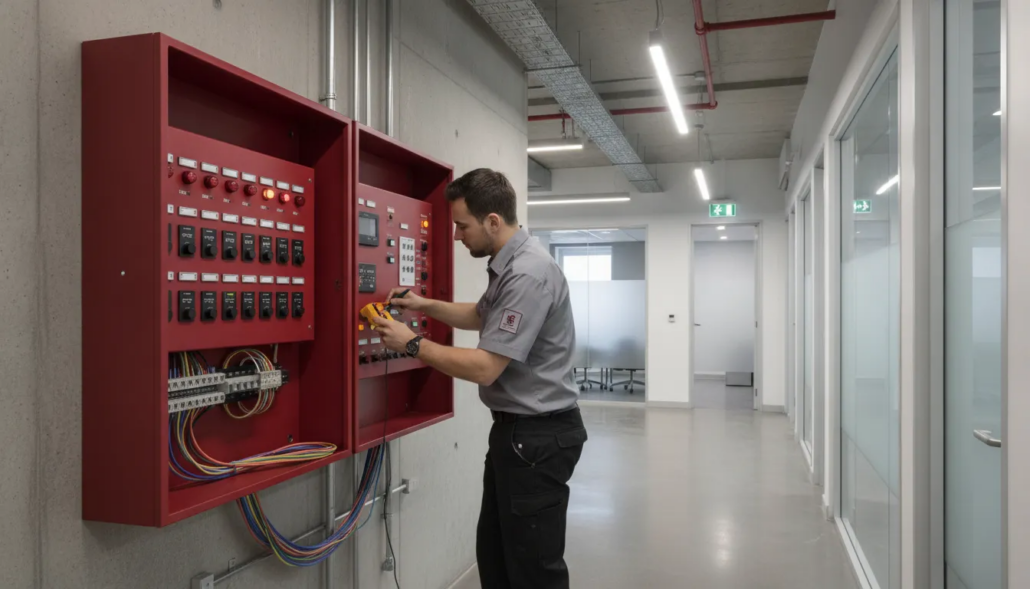
An aging fire alarm panel can keep running while its reliability quietly declines. Repeated trouble signals, false alarms, failed tests, and unavailable replacement parts show that continued repairs may no longer protect a property.
Contact American Alarm to schedule a professional fire alarm system assessment.
Why fire alarms need to be replaced comes down to reliability. Sensors lose sensitivity, panels become obsolete, and unsupported parts make repairs harder. Replacement should be considered after repeated errors, false alarms, failed inspections, or recurring repairs. Smoke alarms should generally be replaced at 10 years, while panel decisions depend on testing, service history, and parts availability.
Property owners often need to decide whether another repair is reasonable or whether replacement is the safer long-term choice. Understanding Why fire alarms need to be replaced as they age makes that decision clearer by connecting visible warning signs to the risks behind them. The path begins with
Why fire alarms need to be replaced as they age
Fire alarms need replacement when age starts to weaken reliable detection, clear alerts, or system support. In a commercial building, the issue extends beyond one detector. The control panel, detection devices, notification devices, power supplies, and wiring must work together during an emergency.
Reliable detection and alerts
Smoke, dust, heat, moisture, and normal wear can affect equipment over time. An aging device may still appear active yet respond poorly during inspection. It may also cause repeated trouble signals or unwanted alarms that staff begin to ignore.
That pattern creates an operational risk. NIST notes that people may disable devices after repeated nuisance alarms, which prevents those devices from providing a real warning. A commercial system needs dependable signals that occupants and staff can trust.
Service needs versus replacement signs
Routine service can correct many isolated faults. A technician may clean a device, repair wiring, replace a backup battery, or fix a loose connection. These actions support a working system and do not mean the full system has reached the end of its useful life.
Replacement becomes a stronger option when faults keep returning or several devices fail close together. Other warning signs include an unsupported panel, scarce replacement parts, and limited test or diagnostic features. A review of the service history and a commercial fire alarm testing checklist can show whether continued service remains practical.
- Frequent trouble signals return after repair.
- Parts or manufacturer support are no longer available.
- Testing finds slow, inconsistent, or failed responses.
- The panel cannot support needed building changes.
No single age limit for every commercial system
A building owner should not replace a full commercial system based on age alone. Equipment type, manufacturer guidance, inspection results, code needs, and repair history all shape the decision. Changes to the building or its use may also reveal gaps that the old system cannot address.
Newer technology can improve system function, but each upgrade should solve a clear need. For example, the U.S. Fire Administration describes microprocessor alarms as faster to alert with fewer false alarms. A qualified fire alarm professional should assess the whole system. That review can support repair, partial replacement, or a planned upgrade.
Signs an aging fire alarm panel may need replacement
An old panel does not always fail all at once. It often gives small warnings before reliability, service access, or code compliance becomes a larger concern. These signs explain why fire alarms need to be replaced based on condition, not age alone.
Recurring trouble signals and false alarms
A trouble signal that returns after service deserves closer review. The cause may be field wiring, a failing device, a weak power supply, or the panel itself. When several faults keep returning, repeated repairs may no longer be the sound choice.
Frequent false alarms are another warning sign, especially when technicians cannot find one clear cause. They disrupt business and can weaken trust in the system. NIST notes that repeated nuisance alarms may lead people to disable alarms, which prevents them from giving a real fire alert.
- Trouble lights or error codes return soon after repair.
- The panel resets, freezes, or loses settings without a clear cause.
- False alarms continue after devices and wiring are checked.
- Backup power faults appear during routine tests.
Keep a log of each alert, reset, repair, and replaced part. A clear pattern helps a qualified technician judge whether another repair is sensible or replacement is safer.
Unavailable parts and inspection problems
A panel may still operate while its service path is closing. Warning signs include discontinued control boards, scarce replacement modules, or software that current service tools cannot support. Long repair delays can leave a building exposed to avoidable risk.
Inspection findings also matter. Repeated failed tests, devices that will not report correctly, or incomplete event records point to a system that needs a full review. American Alarm’s guide to NFPA 72 inspection requirements can help owners understand why recurring deficiencies deserve attention.
Do not treat a passed inspection as proof that an old panel can support future needs. Ask whether parts remain available and whether trained technicians can still service the model. Also confirm that prior deficiencies were fixed rather than cleared by a reset.
Expansion and communication limits
A building change can expose limits that daily operation does not show. The panel may lack spare device capacity, support for added notification circuits, or room for new zones. If every change needs a workaround, replacement may offer a cleaner path.
Communication compatibility is just as important. A panel that cannot send dependable signals through the building’s current connection should be evaluated before that link fails. Modern alarm technology can support faster alerts and fewer false alarms, according to the U.S. Fire Administration.
Ask the service provider to test alarm transmission, fault reporting, backup power, and connection recovery. The review should also cover planned renovations and added devices. Together, these checks show whether the panel can keep serving the building or has reached a practical limit.
Should you repair or replace an older fire alarm panel?
Repair may be sensible when a panel has an isolated fault, supported parts, and a strong service record. Replacement becomes the safer path when faults return, parts are scarce, or the system cannot support planned building changes.
The decision should follow a full system review, not the panel’s age alone. A qualified provider can review inspection records, trouble signals, device support, and current needs before recommending the next step.
Signs that repair still makes sense
A repair can restore dependable service when the fault is clear and limited. The panel should still have manufacturer support, available parts, and enough capacity for the building’s devices.
Recent inspection results and service records add useful context. If issues are rare and repairs hold, continued service may control disruption without hiding a larger reliability problem. American Alarm’s guide to commercial fire alarm repair services can help owners understand common repair needs.
Repair and replacement tradeoffs
The table below frames the questions that matter most. It does not replace an on-site review, because panel condition and building needs vary.
| Decision factor | Repair an older panel | Replace the panel |
|---|---|---|
| Repair frequency | Fits isolated, uncommon faults | Fits recurring faults or trouble signals |
| Parts | Works when approved parts remain available | Avoids dependence on scarce or unsupported parts |
| Compliance | May work if the system still meets current needs | Supports a fresh review of system requirements |
| Expansion | Limited by existing panel capacity | Can provide room for added devices and zones |
| Downtime risk | May lead to repeated service interruptions | Requires planned installation downtime |
| Lifecycle cost | Lower immediate scope, but repeat work can add up | Larger immediate scope, with fewer obsolete-part concerns |
Technology also matters when reviewing the full system. The U.S. Fire Administration notes that microprocessor smoke alarms can alert faster and reduce false alarms. While commercial panels differ from household alarms, newer detection options can still shape a replacement plan.
When replacement becomes the practical choice
Replacement deserves serious review when the manufacturer no longer supports the panel or approved parts are hard to source. Frequent trouble signals, repeated service visits, and failed repairs also point toward a wider system problem.
Future needs can settle a close decision. An older panel may work today but lack space for added devices, new zones, or better diagnostics. Planning those needs through designing reliable fire safety systems can reduce the chance of another major change soon.
Owners should compare the full service history with the likely downtime and scope of replacement. A planned upgrade is often easier to manage than an urgent response after another fault.
Ask American Alarm about an NFPA-compliant fire alarm assessment for your Atlanta property.
How a professional fire alarm replacement assessment works
A professional replacement assessment starts with the building, not a product list. The assessor studies the existing system, the property’s use, and the work needed to keep protection active. This process explains why fire alarms need to be replaced and separates urgent faults from planned upgrades.
Records, condition, and compatibility
Service records show recurring faults, failed tests, past repairs, and changes made since installation. Repeated nuisance alarms deserve review because NIST warns that people may disable devices after recurring unwanted alerts. The assessor then checks whether the panel and field devices still work as one system.
- Review drawings, inspection reports, permits, monitoring records, and repair history. Note missing records and any spaces that have changed use.
- Inspect the control panel, power supplies, wiring paths, batteries, initiating devices, and notification appliances. Check fault logs and signs of damage or wear.
- Map every existing device to its circuit and panel function. Confirm which devices can remain and which require replacement or added interface modules.
- Compare the proposed design with current code and local authority requirements. Record required permits, reviews, inspections, and acceptance tests before work begins.
- Meet with the building team and monitoring provider to plan the transition. Confirm how alarms, signals, and emergency contacts will transfer without confusion.
- Build a phased scope with test points, shutdown windows, temporary measures, training, and closeout records. Define who approves each phase before the next begins.
Phasing and monitoring transition
A replacement plan should state how the old and new systems will operate during each work phase. Busy Atlanta commercial buildings may need work split by floor, area, or scheduled shutdown window. The plan also assigns responsibility for temporary measures and communication with occupants.
Monitoring transition needs its own checklist. Account details, signal formats, contact lists, and dispatch instructions must be confirmed before final cutover. Reviewing fire alarm monitoring services also helps owners plan a reliable transfer to the new panel.
Testing and final documentation
The final scope lists how each input, output, notification function, and monitoring signal will be tested. Device type matters during this review. The U.S. Fire Administration describes ionization and photoelectric sensors as the two basic smoke alarm technologies.
After testing, the building should receive updated drawings, device lists, test results, permits, warranties, training records, and monitoring confirmation. These records give future technicians a clear baseline. They also help the owner plan maintenance without guessing which parts, circuits, or approvals apply.
Planning panel replacement without unnecessary disruption
A fire alarm panel replacement should begin with a written plan, not an unexpected shutdown. The plan should map each device, notification circuit, power source, monitoring connection, and area served. It should also name the people who can approve changes and respond when work affects daily operations.
Scope, permits, and schedule
Start with a site review and the panel’s service history. This review can show whether repair remains practical or replacement is the safer path. A provider experienced in maintaining commercial fire alarm systems can help separate isolated faults from wider signs of an aging system.
Next, confirm permit, inspection, and documentation needs with the authority having jurisdiction. Build those steps into the schedule before ordering equipment or setting a shutdown date. Plan noisy work, access needs, and short service pauses around business hours when possible.
Phased work and temporary measures
For a large property, phased work can limit the number of areas affected at one time. The installer may move circuits in planned groups, then test each group before continuing. This approach also makes faults easier to trace if a device or circuit does not respond as expected.
Any period without full alarm coverage needs a clear safety plan approved by the proper authorities. Temporary measures must follow their direction and remain in place until the affected system is restored. This matters because NIST explains that a disabled alarm cannot alert people to a real fire.
- Set the work sequence, shutdown windows, and stop points.
- Confirm temporary measures and who is responsible for them.
- Tell staff which areas are affected and how to report a concern.
- Keep emergency contacts and site access details current.
Testing, monitoring, and final records
Testing should cover every migrated device, audible and visual notification, power condition, and required control function. The team should also confirm that signals reach the monitoring provider and that account details remain correct. Staff should know when testing begins, what sounds to expect, and when normal service returns.
Before closeout, collect permits, inspection results, test records, device lists, panel settings, and updated drawings. Record any open items and assign a due date for each one. These records give future technicians a sound baseline for professional fire alarm repair services and routine maintenance.
Does every fire alarm have the same replacement timeline?
No. A standalone smoke alarm and a commercial fire alarm control panel serve different roles. Their replacement decisions should not follow one simple calendar rule.
Standalone alarm timelines
A standalone smoke alarm is a complete warning device with a built-in sensor and sounder. Its sensor can lose reliability as the unit ages. The date on the alarm and its test results help show when replacement is due.
Power type also affects routine care, but changing a battery does not reset the alarm’s age. The U.S. Fire Administration explains smoke alarm power options, including replaceable batteries and nonreplaceable 10-year lithium batteries. Replace a unit sooner if it fails a test or shows damage.
Commercial panel decisions
A commercial fire alarm control panel manages detectors, notification devices, and other connected parts. Panel age matters, but age alone does not set one universal replacement deadline. Inspectors and service technicians also review how the full system performs.
Frequent trouble signals, failed tests, and recurring faults can point to a growing reliability problem. Parts availability matters too. When a maker stops supporting a panel, even a small fault may become hard or costly to repair.
Code needs can also change as a building’s use, layout, or system design changes. A qualified provider can compare repair limits with replacement needs using American Alarm’s commercial fire alarm system guide. That review should cover the panel and every connected device.
- Inspection findings and test records
- Fault history and system performance
- Manufacturer support and replacement-part supply
- Current code and building requirements
A condition-based review
The clearest answer comes from reviewing each system by type and condition. For standalone alarms, check the unit date, test response, power source, and visible damage. For a commercial panel, study inspection results, repair history, support status, and code needs.
This approach explains why fire alarms need to be replaced without treating every device the same. It also helps owners plan work before an unsupported part or repeated fault creates an urgent problem. A planned review gives technicians time to confirm whether repair remains safe and practical.
What can a modern replacement panel improve?
Replacing an obsolete commercial fire alarm panel can solve more than a current fault. A modern panel can make the whole system easier to inspect, service, and plan around. It also gives owners a sound base for future changes instead of forcing each repair onto aging equipment.
Clearer faults and faster service
Older panels may show broad trouble signals that leave a technician searching for the source. Modern addressable panels can provide clearer information about the device or circuit that needs attention. This detail helps guide testing and may reduce time spent tracing a fault.
Serviceability also depends on access to parts, tools, and product support. A supported panel gives technicians a more practical path for routine work and future repairs. Owners should still keep inspections current and review Atlanta commercial fire alarm services as part of a planned maintenance program.
Room for system and communication changes
A replacement project lets the fire alarm company review how the panel communicates with devices and the monitoring service. The new setup may support more useful event details and current communication methods. It can also leave capacity for later building changes, when the chosen panel and design allow them.
Newer technology can improve some alarm functions without removing the need for testing. For example, the U.S. Fire Administration notes that microprocessor smoke alarms can alert faster with fewer false alarms. Panel features and connected devices vary, so each upgrade should match the building’s approved system design.
Better records and predictable upkeep
A modern panel can make event history easier to review during inspections, service calls, and planning. Clear records help the service provider see repeat faults, recent work, and devices that may need closer testing. They also give property managers a stronger basis for setting maintenance priorities.
- More useful fault and event details for service visits
- A supported platform with available parts and service tools
- Capacity planning for additions or building changes
- Current paths for monitoring communication
- Cleaner records for inspections and repair history
Replacement does not guarantee that faults will stop or that maintenance costs will fall every year. It can make upkeep more planned and less tied to scarce parts or unclear alerts. A qualified provider can compare replacement needs with professional fire alarm repair services before work begins.
Explore American Alarm’s Atlanta fire alarm systems and request guidance for your building.
Ready to assess your aging fire alarm panel? Call (770) 645-0061 or contact American Alarm online for a professional evaluation.
Frequently Asked Questions
Why do fire alarms need to be replaced?
Fire alarms need replacement because sensors and electronic components become less reliable as they age. An older system may also lack manufacturer support, available parts, or useful diagnostic features. Replacement helps restore dependable detection and clear alerts. The NFPA advises replacing all smoke alarms when they are 10 years old.
Is it really necessary to replace smoke detectors?
Yes. A smoke detector can sound during a button test yet still have an aging sensor that is less dependable during a fire. Replacement is especially important when a unit reaches its listed service life or fails a test. Monthly testing remains essential, but it does not extend the detector’s intended lifespan.
Should 25 year old smoke detectors be replaced?
Yes. A 25-year-old smoke detector is well beyond the NFPA recommendation to replace smoke alarms at 10 years. Replace the devices promptly and have the wider system assessed for obsolete parts, wiring concerns, and compatibility. A professional can confirm that every new device works correctly with the alarm panel and other connected equipment.
Do I need an electrician to replace hardwired smoke detectors?
A qualified electrician or fire alarm professional is the safer choice for replacing hardwired smoke detectors. The work may involve electrical power, interconnected devices, panel compatibility, and local code requirements. Professional replacement also allows the complete system to be tested after installation. Commercial systems and aging fire alarm panels should be evaluated by a trained fire alarm provider.
{“@context”:”https://schema.org”,”@type”:”FAQPage”,”mainEntity”:[{“@type”:”Question”,”name”:”Why do fire alarms need to be replaced?”,”acceptedAnswer”:{“@type”:”Answer”,”text”:”Fire alarms need replacement because sensors and electronic components become less reliable as they age. Older systems may also lack manufacturer support, available parts, or useful diagnostic features.”}},{“@type”:”Question”,”name”:”Is it really necessary to replace smoke detectors?”,”acceptedAnswer”:{“@type”:”Answer”,”text”:”Yes. A smoke detector can sound during a button test yet still have an aging sensor that is less dependable during a fire. Replace it at its listed service life or sooner if it fails a test.”}},{“@type”:”Question”,”name”:”Should 25 year old smoke detectors be replaced?”,”acceptedAnswer”:{“@type”:”Answer”,”text”:”Yes. A 25-year-old smoke detector is well beyond the NFPA recommendation to replace smoke alarms at 10 years.”}},{“@type”:”Question”,”name”:”Do I need an electrician to replace hardwired smoke detectors?”,”acceptedAnswer”:{“@type”:”Answer”,”text”:”A qualified electrician or fire alarm professional is the safer choice because the work may involve electrical power, interconnected devices, panel compatibility, and local code requirements.”}}]}


Leave a Reply
Want to join the discussion?Feel free to contribute!