Fire Alarm System Brookhaven: Commercial Planning Guide
.
For a Brookhaven business, a fire alarm project is more than selecting devices and mounting them. The plan must connect the property layout, occupancy, notification needs, monitoring, records, and communication with the authority having jurisdiction (AHJ).
A well-planned fire alarm system Brookhaven project starts with a site-specific design. Continues through documented installation and testing, and stays coordinated with the AHJ as project conditions determine exact requirements.
American Alarm provides design, installation, monitoring, and inspection support for Metro Atlanta businesses, backed by NICET IV expertise and unlimited Georgia low-voltage credentials. Schedule a free consultation. Call (770) 645-0061 or contact American Alarm online. The first step is understanding what a complete plan should address before work begins.
What Should a Fire Alarm System Brookhaven Plan Include?
A strong commercial fire alarm plan connects the site’s actual use and layout to detection, notification, monitoring, documentation, and authority having jurisdiction (AHJ) coordination. The exact requirements for a fire alarm system Brookhaven project depend on the occupancy, project scope, system design, and the AHJ’s review process. The plan should make those variables clear rather than rely on a generic template.
Site and occupancy context
Start with a site review that documents how the property is used, who occupies it, and how people move through it. The plan should identify occupied areas, storage or mechanical spaces, common circulation routes, areas with unusual environmental conditions, and locations where fire or smoke could be detected differently. Renovations, changes in use, phased work, and connections to existing systems also belong in this review.
This context affects device selection and placement. It also helps the designer consider notification coverage, access for service personnel, electrical and communications pathways, and how the system will function during normal operations. A site-specific approach is more useful than simply listing equipment because it explains why each part of the system is needed.
Initiating devices and notification
The plan should identify the initiating devices that detect a fire-related condition or allow someone to activate an alarm. Depending on the site and design, that may include smoke detection, heat detection, manual activation points, supervisory devices, or monitoring of related fire protection equipment. Each device should have a defined location and purpose.
Notification should be addressed just as carefully. The plan should show how occupants will receive an alarm through appropriate audible, visible, or combined notification appliances for the spaces involved. Layout, ambient conditions, accessibility considerations, and operational needs all matter. A clear device schedule and floor plan make installation, testing, future service, and AHJ review easier.
Monitoring, records, and coordination
A complete plan explains how alarm, supervisory, and trouble signals will be handled after activation. If the project includes 24-hour fire alarm monitoring, the documentation should identify the monitoring arrangement, responsible contacts, and escalation procedures. Those details should align with the site’s operating procedures, including who can respond when a signal is received.
Keep current drawings, device and zone information, equipment details, testing records, service history, contact lists, and records of system changes together. American Alarm supports the design, installation, monitoring, inspection, and AHJ documentation process. Its NICET IV expertise and unlimited Georgia low-voltage credentials provide a strong technical foundation for projects across Metro Atlanta, including Brookhaven.
| Planning area | Questions to answer | Record to keep |
|---|---|---|
| Detection and notification | What conditions must the system detect and how will occupants be notified? | Device schedule and current floor plan |
| Monitoring | Which signals are communicated and who receives them? | Monitoring account and contact list |
| Inspection readiness | What does the AHJ need to review for this project? | Test reports, service history, and project correspondence |
Finally, identify the questions that need confirmation from the AHJ before work begins. Do not assume a permit, inspection interval, code edition, or approval path. A coordinated discussion among the property representative, designer, installer, and AHJ helps resolve those questions early and keeps the final plan aligned with the project.
How Commercial Installation Moves From Design to Activation
A reliable fire alarm project is a coordinated process, not simply a matter of mounting devices and connecting wires. For a Brookhaven business, the work should connect the site conditions, system design, installation plan, testing, staff handoff, and records into one clear workflow. Exact requirements depend on the property, the planned use, and the authority having jurisdiction (AHJ), so those details should be confirmed before work begins.
The sequence below shows how a qualified provider can move a project from an initial review to an operating system that the facility team can understand and maintain.
- Review the site and operating conditions. The process starts with an on-site review of the property’s layout, occupancy, access points, existing equipment, electrical conditions, notification needs, and operational constraints. The designer also considers how people use the space throughout the day and what could interfere with installation or future service. This review creates a practical starting point instead of relying on incomplete drawings or assumptions. It is also the right time to identify renovation areas, equipment that may need replacement, and questions that should be raised with the AHJ.
- Coordinate the system design. The design translates site findings into a system plan, including initiating devices, notification appliances, control equipment, power requirements, monitoring connections, and pathways for cabling. Design coordination should account for the property’s actual conditions and align with the applicable standards and local review process. When other trades are involved, the fire alarm plan must be coordinated with electrical, mechanical, access, and construction schedules. American Alarm’s NICET IV expertise and unlimited Georgia low-voltage credentials support careful technical planning for Metro Atlanta commercial projects.
- Install the equipment and infrastructure. Once the plan is coordinated, technicians install the control equipment, initiating devices, notification appliances, wiring, power components, and related connections. A disciplined installation protects device placement, labeling, cable routing, and service access. The work should be organized around the business’s operating schedule where possible, with clear communication about outages, access needs, and work areas. For a closer look at this phase, review American Alarm’s guide to commercial fire alarm installation.
- Test the complete system. Testing evaluates whether devices communicate correctly with the control panel, notification appliances operate as intended, supervisory and trouble signals are identified, and monitoring communication functions properly. Technicians should document results, resolve deficiencies, and repeat affected tests after corrections. Testing is not limited to the individual parts. It should demonstrate that the system functions as an integrated whole under the conditions relevant to the site.
- Complete the handoff. Activation includes more than placing the system in service. The provider should explain normal operation, alarm and trouble indications, silencing and reset procedures, escalation contacts, and what the facility’s designated personnel should do when a signal occurs. Any monitoring arrangements should be reviewed with the responsible contacts so the response path is understood. A practical handoff reduces confusion when the system produces a real alarm or requires attention.
- Deliver and maintain the documentation. Closeout records should reflect the installed system, test results, equipment information, monitoring details, and relevant service contacts. Keeping these materials together gives the business a reliable reference for future service, system changes, and AHJ questions. American Alarm also supports the documentation side of commercial fire alarm work, helping connect installation records with ongoing inspection and maintenance needs.
When each phase is documented and coordinated, activation becomes a controlled transition from design intent to daily operation. That continuity helps facility operators know what was installed, how it works, and where to turn when the system or property changes.
Why Monitoring Is Part of the Brookhaven Fire Alarm Workflow
Extractable summary: Monitoring connects a Brookhaven fire alarm system to a defined communication and escalation process when an alarm or system trouble signal occurs. It also gives the business a clear way to coordinate testing, maintenance, records, and follow-up without treating installation as the end of the project.
A fire alarm system has to do more than detect a possible emergency. The signal must reach the right destination, and the people responsible for the site must know what happens next. That is why monitoring belongs in the workflow from the planning stage, rather than being added after installation.
24-hour monitoring supports continuous oversight
Business operations do not stop when staff leave for the day. A monitored system provides a communication path for alarm and trouble signals during staffed and unstaffed periods. American Alarm provides 24-hour fire alarm monitoring for Atlanta-area businesses, including organizations in Brookhaven.
Monitoring does not replace sound system design, routine service, or coordination with the appropriate authority. Instead, it connects those parts of the plan. The monitoring arrangement should be reviewed alongside the system scope so the signals, account information, and escalation procedures reflect how the business actually operates.
Signal and escalation contacts need to be clear
A useful monitoring plan identifies the contacts who should receive notifications and the order in which they should be reached. Those contacts may include responsible business representatives, facility operators, and other authorized stakeholders. The list should be current, readable, and aligned with the site. Old contact information can create confusion at the exact moment a decision is needed.
During planning, ask which signals are being communicated, who maintains the contact list, and how changes are submitted. Clarify how alarm signals differ from system trouble conditions, and make sure the designated contacts understand their role. Exact communication procedures depend on the monitoring arrangement and project conditions, so they should be confirmed with the service provider rather than assumed.
Monitoring helps protect business continuity
Fire protection is also an operational responsibility. A recurring trouble signal, planned service visit, renovation, or change in site management can affect how the system is supervised. Coordinating these events with the monitoring provider helps reduce avoidable gaps in communication. It also gives the business a documented handoff when responsibility moves from the installer to the people operating the site.
Testing and maintenance should be scheduled with the same discipline as other facility work. The business should know when testing is planned, who is coordinating it, what notifications are expected, and where the resulting records will be kept. This approach helps the owner, facility operator, service provider. And authority having jurisdiction work from the same information without claiming a response time or requirement that has not been verified.
American Alarm supports fire alarm design, installation, monitoring, and inspection for Metro Atlanta customers. With NICET IV expertise and unlimited Georgia low-voltage credentials. Its team can help connect the technical system to a practical Brookhaven workflow, including clear contacts, testing coordination, and final handoff.
What Documentation Should a Business Keep for Inspection?
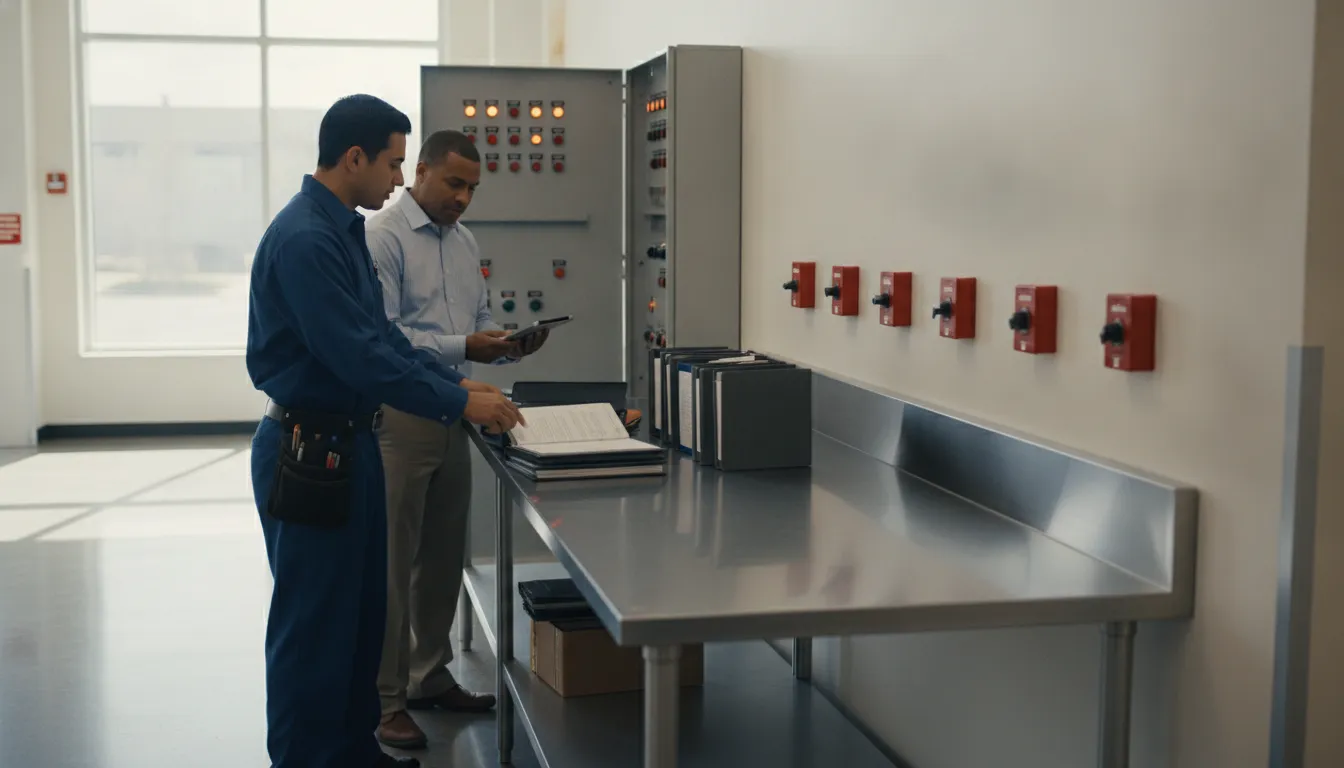
Extractable summary: A Brookhaven business should keep current system records, test and service history, change documentation, responsible-party contacts, and questions prepared for the Authority Having Jurisdiction (AHJ). Well-organized records help the AHJ and service professionals understand what is installed, how it has been maintained, and what changed over time.
Inspection readiness is easier when documentation is treated as part of the fire alarm system, not as paperwork assembled at the last minute. For a business planning or maintaining a fire alarm system Brookhaven project, the record set should tell a clear story from design through ongoing service. Exact documentation expectations can depend on the building, occupancy, project scope, and AHJ, so businesses should confirm local requirements rather than rely on a generic checklist.
Keep the current system record set together
Start with the most current drawings and system records available. These may include floor plans showing device locations, zones, notification appliances, control equipment, monitoring interfaces, and other components relevant to the installation. Keep the approved design information and final installed condition together when possible. If the drawings no longer match the building, flag that discrepancy before an inspection instead of allowing an outdated plan to create confusion.
Record the equipment information that helps a qualified technician identify the system accurately. Include the control panel and major components, relevant manufacturer and model details, available programming or configuration records, and the location of system documentation. American Alarm’s fire alarm documentation resource provides additional context for organizing records that support Georgia inspection and occupancy processes.
Document testing, service, and system changes
Maintain a dated history of testing, inspections, service calls, repairs, alarms, supervisory signals, and trouble conditions. The record should identify what was checked, what was found, what corrective action was taken, and who performed the work. Do not discard older records simply because a newer report exists. A consistent history can help explain recurring issues and show how the system has been managed.
- System changes: Record renovations, additions, removed devices, relocated devices, software or programming changes, changes in monitoring, and work that affects protected areas.
- Corrective actions: Keep invoices, service reports, testing results, parts information, and notes showing whether identified conditions were resolved or remain open.
- Current condition: Update drawings, device lists, and contact records when the system or facility changes.
Maintain contacts and prepare AHJ questions
Keep a current contact list for the property owner, facility or operations manager, alarm monitoring provider, service company, emergency contacts, and any person authorized to approve work. Clarify who receives notifications, who can provide building access, and who can answer questions about renovations or occupancy. A contact list is only useful if it is reviewed when personnel or responsibilities change.
Before meeting with the AHJ, write down questions about the documents to provide. The review path for planned changes, any site-specific concerns, and how unresolved items should be addressed. The fire marshal inspection guide can help frame that preparation. American Alarm supports design, installation, monitoring, and inspection documentation. With NICET IV technical expertise and unlimited Georgia low-voltage credentials for businesses that need help bringing their records into alignment with the installed system.
How to Coordinate With Brookhaven’s Authority Having Jurisdiction
Early, organized communication with Brookhaven’s Authority Having Jurisdiction, or AHJ, helps a fire alarm project stay aligned with the applicable local review process. The AHJ and the specific project determine which requirements apply, so the safest approach is to confirm details rather than rely on assumptions from another property or jurisdiction.
Start the conversation before work begins
Bring the AHJ into the planning conversation as early as practical. This gives the project team an opportunity to identify questions about the proposed use, site conditions, system scope, and review expectations before design decisions become difficult to change. Early communication is especially valuable when a business is renovating, changing its use, expanding an occupied area, or taking over an existing fire alarm system.
Do not treat a general online checklist or a prior project as a substitute for project-specific guidance. A requirement that applied to one property may not apply to another. Ask the AHJ which information should be submitted, who should receive it, and whether the project has special circumstances that need to be addressed during review. Keep the responses with the project records so the designer, installer, owner, and future service contacts are working from the same information.
Prepare focused questions and reliable records
Before contacting the AHJ, assemble a concise project brief. Include the property address, current and proposed use, areas affected by the work, a description of the existing fire alarm system, and the reason for the change. If available, gather prior plans, system documentation, service records, test results, equipment information, and notes about known troubles. Missing records should be identified openly instead of being filled with guesses.
Useful questions may include: Which project details does the AHJ want reviewed? What documentation should accompany the submission? Are there site conditions, phasing concerns, or operational constraints the team should discuss? Who should be contacted when a question arises during installation or testing? These questions do not assume a permit, inspection interval, code edition, fee, or deadline. They create a clear record of what must be confirmed for this particular project.
Keep every project participant aligned
Coordination should continue after the initial conversation. The designer needs the confirmed scope and review direction. The installer needs the approved design information and any field conditions that could affect device placement or system operation. The monitoring provider needs accurate account, contact, and escalation information. The owner or facility operator needs to understand decisions, open questions, planned testing, and any effect on normal operations. The AHJ should receive the information through the channel and format it specifies.
Assign one person to maintain the question log and distribute updates. Record dates, participants, decisions, requested revisions, and items still awaiting confirmation. If the field conditions differ from the design, pause to determine whether the change needs review before proceeding. American Alarm supports design, installation, monitoring, and inspection documentation, with NICET IV expertise and unlimited Georgia low-voltage credentials. That full-project perspective can help keep technical work and AHJ communication connected without claiming to replace the AHJ’s authority.
When Is It Time to Review an Existing Fire Alarm System?
Summary: A Brookhaven business should review its existing fire alarm system whenever the use of the property, its layout, its management, or its system performance changes. Renovations, recurring trouble signals, and missing records are practical warning signs that deserve prompt professional attention.
A fire alarm system can continue operating while no longer matching the way a business uses its space. A review helps confirm that detection, notification, monitoring, and documentation still align with current conditions. It also gives the designer or service provider an opportunity to identify changes that may need to be discussed with the Authority Having Jurisdiction (AHJ).
Renovations and changes to the space
Review the system before or during a renovation, especially when walls move, ceilings change, rooms are added, or mechanical equipment is relocated. Construction can affect detector placement, notification coverage, access to equipment, wiring pathways, and the location of control equipment. Even a project that seems limited to interior finishes can change the conditions the system was designed to address.
Share the renovation scope with a qualified fire alarm professional early. A site review can identify coordination needs before work makes devices inaccessible or leaves the system documentation out of date.
Occupancy, operations, or management changes
A change in occupancy or business use is another strong reason to reassess the system. New processes, different stored materials, altered hours, or a larger customer or employee presence may change the risks and response procedures. The same applies when a business moves into a space with an inherited system and does not have a clear record of its design. Service history, or monitoring contacts.
Management changes deserve attention as well. Confirm who receives alarm signals, who can authorize service, who meets responders, and which contacts should be removed or added. Clear escalation information is part of dependable alarm operations.
Recurring trouble signals and aging equipment
Repeated trouble signals, unexplained alarms, communication failures, damaged devices, or frequent service calls should not be treated as normal background noise. A pattern may point to a power issue, wiring problem, environmental condition, failed component, or a system that needs a more comprehensive evaluation. Keep a record of the signal, when it occurred, and what action followed.
System age alone does not establish that replacement is necessary. However, older equipment, unavailable parts, incomplete records, or difficulty obtaining reliable service can make a review especially valuable. American Alarm supports fire alarm design, installation, monitoring, and inspection for Metro Atlanta businesses, including Brookhaven, with NICET IV expertise and unlimited Georgia low-voltage credentials. The review should end with clear next steps based on the system condition and the business’s current needs, not on an automatic replacement assumption.
When records are missing or conditions have changed substantially, ask the provider to document the current installation and identify questions for the AHJ. Exact requirements depend on the project and jurisdiction, so confirm those details before making construction or system changes.
Frequently Asked Questions
Does a Brookhaven business need professional fire alarm design?
Professional design helps align the system with the property’s occupancy, layout, notification needs, monitoring plan, and documentation. The exact scope depends on project conditions and the authority having jurisdiction (AHJ), so confirm local requirements before work begins.
What should I prepare before discussing a fire alarm project with the AHJ?
Gather the proposed system design, site and occupancy information, monitoring details, responsible contacts, and any records for an existing system. Sharing a complete package early gives the AHJ and your fire alarm provider a clearer basis for questions, revisions, and approvals.
What records should a business keep for fire alarm inspections?
Keep the current system documentation, inspection and test reports, service records, descriptions of system changes, monitoring contacts, and corrective-action details. Organized records make it easier to answer AHJ questions and show how the system has been maintained over time.
When should an existing fire alarm system be reviewed?
Schedule a review after renovations, a change in occupancy or use, recurring trouble signals, changes in ownership or facility contacts, or the discovery of missing records. A qualified provider can compare the installed system with current operating needs and identify documentation or service gaps.
Can one provider support design, installation, monitoring, and inspections?
Yes. American Alarm provides full-service fire alarm support for Metro Atlanta businesses, including Brookhaven. Its team offers NICET IV expertise, unlimited Georgia low-voltage credentials, 24-hour monitoring, installation, and inspection documentation support.
Schedule a Brookhaven Fire Alarm Consultation
A clear plan can help your business align system design, monitoring, records, and AHJ coordination before work begins. American Alarm can review your needs and help identify the right next steps for your property. Schedule a free fire alarm consultation. Call (770) 645-0061 or contact American Alarm online.


Leave a Reply
Want to join the discussion?Feel free to contribute!