Non Proprietary Fire Alarm Systems for Atlanta Facilities
Choosing non proprietary fire alarm systems Atlanta businesses can maintain over time involves more than comparing equipment brands. The key question is whether qualified professionals can inspect, service, and support the installed system without being locked into one manufacturer or provider. This guide explains what that can mean, what to confirm before a project, and how to plan a practical conversation with a fire alarm professional.
Discuss your fire alarm project with American Alarm.
What does a non-proprietary fire alarm system mean?
Answer capsule: For a facility owner, the practical test is whether qualified alternate professionals can obtain the documentation, parts, and access needed to inspect and service the system, subject to applicable codes, manufacturer terms, and qualifications.
A non-proprietary system is generally designed so that its equipment, programming, documentation, or service access is not restricted to one exclusive provider. The phrase can describe several aspects of a system, however, so ask exactly what is open and what remains specific to a manufacturer or installer.
The label alone does not promise that every part from every brand will work together. Compatibility depends on the control panel, initiating devices, notification appliances, software, configuration, and system listing. A well-planned project identifies those boundaries in writing rather than relying on a broad sales description.
It also helps to separate three questions that are often blended together. First, can an alternate qualified contractor get the information and tools needed to inspect the system? Second, can the owner obtain compatible replacement devices from more than one source? Third, can changes be made without relying on the original installer? The answer may differ for each question. Clear answers are more useful than a label by itself.
Why does service flexibility matter to Atlanta facilities?
Fire alarm systems are long-term life safety infrastructure. A facility may change use, add rooms, renovate, or need service after the original project team is no longer available. A system with clear documentation and a defined service path can make those transitions easier to manage.
Flexibility does not mean that every technician can make every change. Work must be completed by people with the right training and authorizations, and a modification may require review by the authority having jurisdiction (AHJ), permits, testing, or updated records. But owners benefit when they can understand the service options and are not left guessing which party has access to essential system information.
- Continuity: A clear path to qualified service can help when a preferred provider is unavailable or a facility changes contractors.
- Planning: Documented equipment and interfaces make it easier to scope an addition or renovation before work begins.
- Accountability: Clear access rules show who can program, test, and approve changes.
- Lifecycle insight: Owners can ask about support status and replacement planning for installed equipment.
For a broader look at the questions involved in choosing a provider, see this guide to evaluating an alarm company. A provider should be able to explain the system in plain language, not only name the product family.
Consider a business planning a renovation several years after installation. The owner may need to move a notification appliance, add detection to a remodeled area, or replace a device that is no longer supported. If the original drawings, device schedule, and programming access process are available, a qualified professional can begin with a clearer picture. Without them, the first task may be to identify what is installed and how the system was configured before anyone can scope the change.
Which parts of a system should you compare?
Ask about the entire installed system, not just the control panel. A control panel may accept specific listed devices and software, while notification circuits, communication pathways, power supplies, and programming practices also affect service. The design and the approved equipment list matter.
The table below is a starting point for a project conversation. It does not establish that a particular product is approved for a building; confirm compatibility and code acceptance for the actual design.
| Item to review | What to clarify | Why it matters |
|---|---|---|
| Control panel | Manufacturer, model, software access, support status, and who may make programming changes | The panel is the hub for system logic, device communication, and event reporting. |
| Field devices | Approved detector and notification appliance models, compatibility limits, and replacement choices | Devices must be suitable for the panel and the approved system design. |
| Documentation | As-built drawings, device list, sequence of operations, test records, and passwords or access process | Accurate records help qualified technicians diagnose and maintain the installed system. |
| Communications | Signal path, supervising station details, and responsibility for account updates | Monitoring arrangements and signal transmission should remain understood after a project handoff. |
| Service access | Who can inspect, program, repair, and obtain replacement parts | Written access terms reduce uncertainty when service needs arise. |
When reviewing a proposed device list, ask for exact model numbers rather than a general statement that the design uses open equipment. Verify whether the listed models are intended for the proposed panel and configuration, and ask how substitutions will be handled if a specific model is unavailable. Any substitute still needs to fit the approved design; owners should not treat a similar-looking device as automatically interchangeable.
For a mixed system, ask the designer to identify each interface. For example, a building may have a panel, remote power supplies, notification appliances, and a supervising station connection. Ask which party supports each portion, how faults will be traced across those interfaces, and where the handoff occurs if separate vendors are involved.
What should you ask before choosing a system?
Ask for specific answers while the design is still being planned. If the response is simply “open” or “non-proprietary,” ask what that means for your building, installed equipment, and likely service needs.
- Parts and compatibility: Which manufacturers and models are approved for the proposed panel, and where are the boundaries?
- Programming: Who has the credentials and software needed to configure the system, and how can an authorized service provider gain access?
- Service and repairs: Can another qualified contractor inspect or service it? Are there manufacturer or licensing conditions?
- Records at handoff: Which drawings, device schedules, programming files, test reports, and operating instructions will the owner receive?
- Future additions: What review, design, testing, or AHJ approval may apply if the facility expands or changes use?
- Support lifecycle: How will you learn that a product is nearing the end of manufacturer support, and what replacement planning is available?
Ask the provider to distinguish an equipment choice from a service-access promise. A manufacturer may permit broad service access while still limiting which listed devices work with a specific panel. Another system may use components from multiple manufacturers but require a trained professional with specific tools or credentials. Written answers help set sound expectations.
Request that the proposal state who owns or retains the system records and how the owner can retrieve them later. “Access available on request” is less informative than a stated process, named file types, and a clear list of closeout materials. If passwords or programming files are subject to security controls, ask how authorized access is granted and documented rather than asking for sensitive credentials to be distributed without safeguards.
It can also help to ask what happens if the facility changes providers. Does the incoming contractor receive drawings and device schedules from the owner, or must the outgoing provider transfer them? Is there a manufacturer authorization step? Are there service conditions that affect programming, inspection, or parts ordering? These questions turn a general flexibility claim into practical expectations.
How do codes, design, and approvals shape the choice?
Fire alarm design is not simply a brand selection. Building use, layout, applicable codes, local amendments, the AHJ, and the approved project documents influence what equipment and system functions are appropriate. The project may also include permitting, acceptance testing, monitoring coordination, and records for the owner.
In Georgia, local officials and project conditions determine applicable review and approval steps. Do not assume a system meets a particular requirement solely because it is described as non-proprietary. Confirm the design with a qualified fire alarm professional and the AHJ responsible for the site.
American Alarm works on NFPA-compliant commercial fire alarm systems. Owners preparing a project can review the company’s NFPA 72 compliance guide for Atlanta and learn more about fire alarm design expertise. These resources can help frame project questions, but the AHJ makes determinations for a specific site.
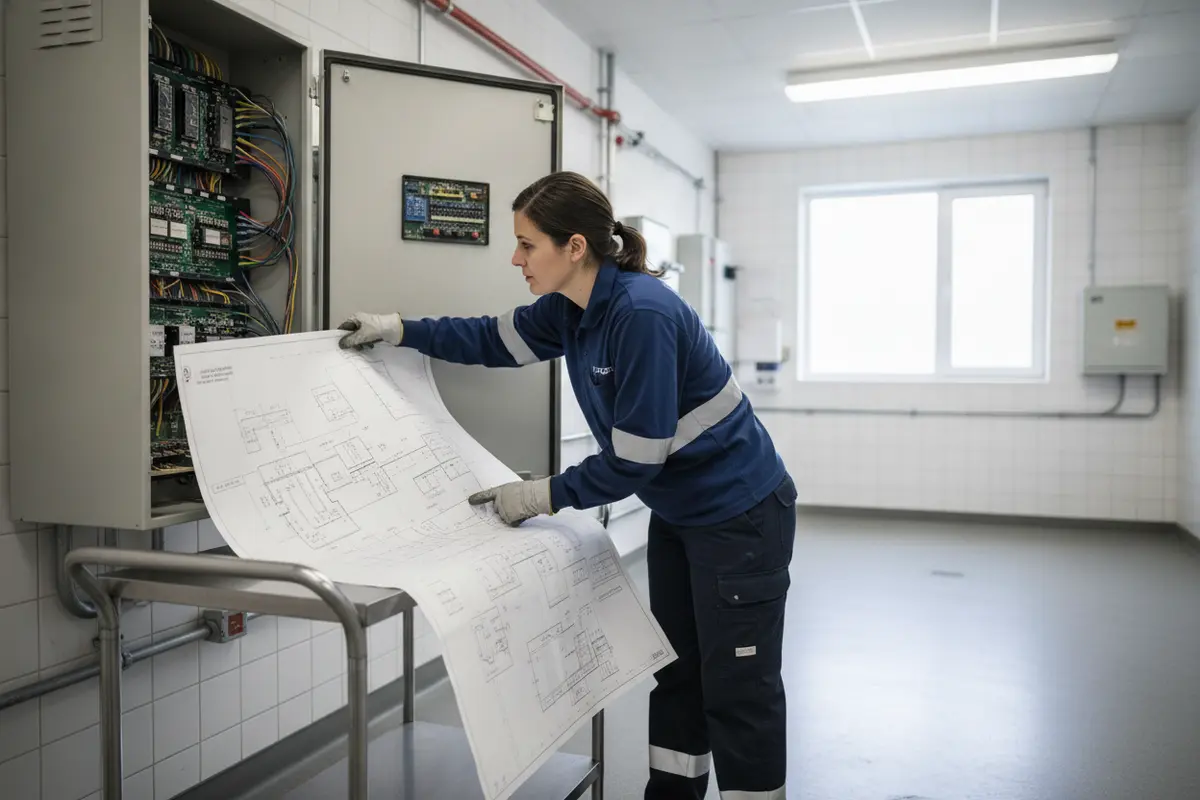
Before a proposal is finalized, gather the building address, occupancy or use, approximate floor area, existing panel details, available drawings, known trouble conditions, and planned construction changes. This information helps a designer understand the project scope. It does not replace a site assessment or formal review.
For example, a facility with a planned interior reconfiguration should tell the designer which rooms or pathways will change and whether the work affects areas served by existing devices. A new use or changed layout may prompt a closer review of coverage, notification, or interfaces. Do not wait until construction is complete to raise those details; early coordination can help identify design questions before they become closeout issues.
The available citation candidate, the International Code Council’s Georgia code chapter, provides a useful reference for fire protection and life safety system requirements: Georgia building code, Chapter 9. Applicability depends on the project and local review, so use the adopted code and AHJ direction for the specific property.
What should owners expect during installation and handoff?
A solid project plan sets out the work sequence and what the owner will receive. The installation process can vary by facility and scope, but owners can use these checkpoints to keep decisions and records organized.
- Document the existing system: Record panel details, visible device information, monitoring arrangements, past service notes, and available drawings.
- Define the project scope: Identify the spaces, functions, renovations, and operational needs that the system must address.
- Review the design: Ask the designer to explain equipment compatibility, expected interfaces, access limits, and approval steps.
- Coordinate the work: Agree on site access, any operational interruption, communication with building contacts, and who will coordinate required inspections.
- Test and document: Confirm the required tests and approvals, then collect updated drawings, device information, operating instructions, and service contacts.
- Set a maintenance plan: Identify who handles ongoing inspections, trouble calls, monitoring account changes, and future modifications.
Keep the handoff material where the person responsible for the building can find it. Record who is authorized to request a change and what information a service provider needs. If service access is part of the project’s value, put the practical details in the proposal or closeout documents rather than leaving them as a verbal assurance.
Make the handoff useful to someone who did not attend the design meetings. Organize records by system area or floor, label revised drawings with their date, and keep a change log that connects field work to the resulting documents. Ask the provider to explain how the owner can tell which drawings are the final set. A clear record set saves time when a later service visit or building project requires a technician to understand what was installed.
For help with repair planning or an existing system concern, see the company’s information on commercial fire alarm repair. If the system sends signals for off-site response, review how fire alarm monitoring in Atlanta fits the facility’s instructions and account records.
How can you compare proposals fairly?
Compare scope and access terms alongside the equipment list. A low initial price may omit work or documentation that another proposal includes, while a more flexible design may not be necessary for every building. Ask each bidder to answer the same questions and identify assumptions.
- Scope: Check which devices, wiring, programming, permits, tests, and closeout records are included.
- System limits: Request the compatible device list and note any functions or components restricted to a specific product family.
- Owner access: Confirm what information and credentials are provided, who retains them, and what is needed for another qualified provider to service the system.
- Ongoing service: Compare the proposed inspection, repair, and monitoring responsibilities without assuming these are bundled.
- Future work: Ask how an addition, renovation, or equipment replacement would be assessed and documented.
- Approvals: Confirm who coordinates permit and AHJ steps and what the owner must provide.
It can help to review the company’s alarm and fire services and its overview of system options while preparing questions. For commercial system planning, the Atlanta business alarm systems guide covers related considerations. Use those pages as background, then confirm the specific scope directly with a provider.
Use a simple side-by-side worksheet rather than comparing only the total price. For each proposal, note included equipment, excluded work, permitted and testing responsibilities, closeout documents, service access terms, and assumptions about existing wiring or devices. Mark unanswered items and request clarification in writing. This makes it easier to see whether two bids describe the same project at all.
Also distinguish first-project cost from ongoing obligations. A system that uses a specific software platform or requires particular authorized service may still suit a facility, but the owner should understand any associated support steps. Ask what routine service is anticipated, which party will coordinate it, and whether future work would require a separate assessment. Avoid assuming that inspection, monitoring, repairs, and system changes are automatically part of one proposal.
What warning signs should prompt a closer review?
Some problems are signals to gather records and request an assessment, not to make assumptions about the cause. A repeated trouble indication, unexplained device fault, missing drawing set, or uncertainty about who can access the panel all deserve a clear follow-up plan. Do not silence or alter a fire alarm system to address a persistent issue without qualified guidance.
When a fault appears, note the date and time, the exact display message, what was happening in the building, and whether the condition cleared or returned. Share those details with the service provider. Ask what immediate steps are appropriate, whether the system’s monitoring status is affected, and how the repair and final test will be recorded. If a renovation or occupancy change occurred, mention it, since it may affect design assumptions or device coverage.
- Recurring trouble: Request diagnosis and a record of the underlying cause, not only a cleared display.
- Unclear access: Confirm which qualified professionals can inspect or service the equipment.
- Incomplete handoff: Ask for missing drawings, device details, operating instructions, or test records.
- Planned building work: Review the impact on the alarm design before construction alters protected areas or system wiring.
Pay attention to vague assurances. If a proposal uses words such as “open,” “universal,” or “easy to service,” ask the provider to define the terms against the actual panel, devices, records, and software. Ask for a practical example: if a qualified alternate provider needed to replace a listed device or review a trouble condition, what would that provider need, and which steps would still require manufacturer or installer involvement?
Talk with American Alarm about a fire alarm assessment.
Frequently asked questions
These answers explain common terms, but a building’s approved design and service arrangement determine what applies in practice.
Does non-proprietary mean any technician can service the system?
No. Service may require relevant training, authorization, manufacturer tools, and knowledge of the approved design. Ask who can inspect and service the system, and what access a qualified alternate provider would need.
Does non-proprietary mean parts from every manufacturer will work?
No. Compatibility is specific to the panel, devices, software, listing, and system configuration. Request the approved equipment list and ask the designer to explain which combinations are supported.
Can a non-proprietary system meet fire alarm code requirements?
A system’s label does not establish code compliance. The design and equipment must fit applicable requirements and receive the necessary review and approvals for the project. Confirm the details with a qualified professional and the local AHJ.
What records should a facility keep?
Keep the latest drawings, device schedules, equipment details, operating instructions, testing and inspection records, monitoring account information, and service history. Ask the project provider what closeout documents apply to your installation.
What if our building already has an installed system?
Start by collecting the panel model, device information, available drawings, recent service records, and any monitoring details. A qualified fire alarm professional can review what is installed and explain service access, support status, and any next steps. Avoid assuming that an older system is incompatible or service-restricted based only on its label.
Call American Alarm to discuss your fire alarm system.
For an Atlanta facility, the right choice is the system whose design, support access, documentation, and approvals fit the building and its long-term operating needs. Clarify those points before committing so the owner knows how the system will be maintained after installation.

Leave a Reply
Want to join the discussion?Feel free to contribute!