Responsive security professionals in Atlanta Guide
Responsive security professionals give Atlanta homeowners and business owners a clear path when an alarm signal or system trouble notice needs attention. An urgent question should also have a clear answer. The right provider does more than answer a phone. It connects monitoring, communication, technical guidance, and local service so customers understand what is happening and what comes next.
Schedule a free consultation. Call (770) 645-0061 or contact American Alarm online.
American Alarm has served Metro Atlanta since 1995. Founder Scott Gilkey brings NICET IV fire alarm engineering certification and unlimited low-voltage licenses in Georgia, Alabama, and North Carolina. That combination of local experience and technical leadership helps customers evaluate responsiveness as a complete service standard, not as a promise based only on call speed.
What responsive security professionals do for Atlanta customers
Responsiveness starts with defined ownership. When a monitored system sends a signal, the central station follows the account’s instructions and communicates with designated contacts. When a customer has a system question, technical support helps identify the next step. When a problem requires hands-on work, local service converts the diagnosis into an appropriate visit.
This structure matters because security concerns do not all have the same urgency. A fire or intrusion signal requires an established monitoring and escalation process. A low battery, trouble signal, programming question, or device concern may call for phone guidance first. A dependable provider explains the difference without minimizing the concern or creating unnecessary alarm.
Monitoring, communication, and service should connect
- Continuous oversight: A UL central station remains available around the clock to receive monitored alarm signals and follow the account procedure.
- Plain-language updates: Customers should know who is communicating, what information is needed, and which next step is appropriate.
- Technical ownership: Support should connect a system question with someone who can troubleshoot it or arrange qualified service.
- Local follow-through: When an onsite visit is necessary, the provider should explain the reason for dispatch and the expected service path.
American Alarm’s customer-service approach is built around long-term relationships, transparent explanations, and support for both residential and commercial systems. Those qualities give Atlanta customers useful criteria for comparing providers.
How 24/7 UL central-station monitoring supports fast escalation
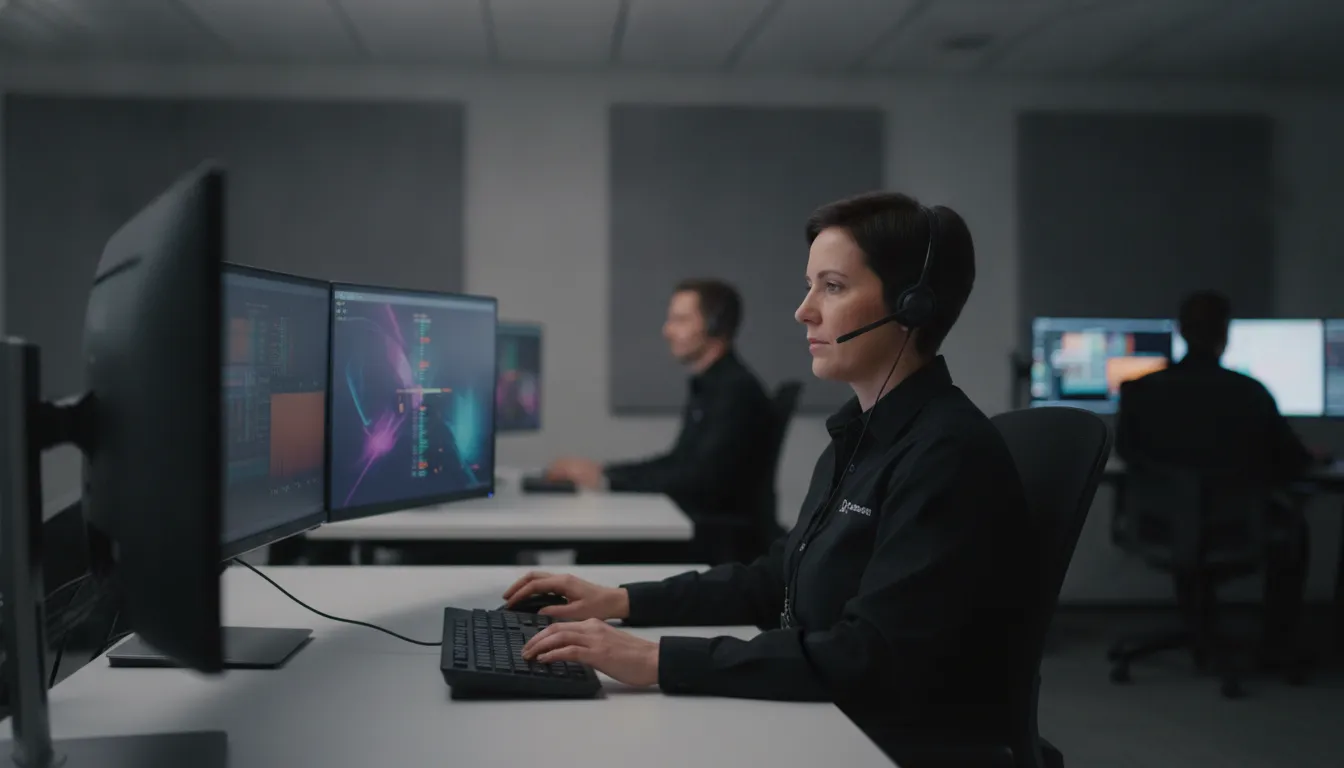
Professional monitoring is the first link in a responsive support chain. A monitored system transmits an alarm condition to a central station, where trained operators review the signal type and the account instructions. The operator then follows the appropriate communication and escalation process. This is different from leaving a property owner to interpret an alert alone.
American Alarm provides 24/7 UL central-station monitoring for Atlanta homes and businesses. The service is designed to keep alarm communication moving overnight, on weekends, and on holidays. It does not promise a specific public-safety arrival time. Police, fire, and medical response are handled by the appropriate public-safety agency under its procedures. The monitoring station manages the alarm communication and account escalation steps.
What happens after an alarm signal arrives?
- Signal transmission: The monitored system sends information about an alarm, fire, panic, supervisory, or trouble condition to the central station.
- Event review: The operator reviews the type of signal and the account instructions associated with the property.
- Contact sequence: The station communicates with designated contacts or follows the approved notification process for that account.
- Escalation: When the event cannot be resolved through the account process, the station can contact or dispatch the appropriate authorities according to the circumstances.
- Follow-through: After the immediate event, technical support or service can address equipment questions, system faults, or needed repairs.
A responsive provider also avoids overstating what monitoring can do. The central station can receive signals, communicate, and follow established procedures. It cannot control public-safety agency response times or guarantee that an alarm will prevent every loss. Clear expectations are part of trustworthy service.
Why local technicians improve security system support
Remote guidance is valuable, but some issues require a qualified technician at the property. Local availability shortens the distance between diagnosis and service while giving the provider a better understanding of Atlanta-area properties, jurisdictions, and operating conditions. The goal is not to send someone for every question. It is to make an onsite visit available when phone support cannot safely or effectively resolve the concern.
Phone-first troubleshooting avoids unnecessary dispatch
American Alarm offers 24/7 technical support and phone troubleshooting. A customer may call about a trouble signal, an arming problem, a communication issue, or uncertainty about a device. Support can ask focused questions, explain safe checks, and determine whether the issue needs a service appointment. That approach respects the customer’s time while keeping a small system concern from being overlooked.
Phone support should never encourage a customer to open equipment, bypass protection, or make an unsafe electrical change. Its role is to clarify the condition and guide the next decision. If the issue is outside the scope of remote help, a technician can evaluate the system onsite.
Local service provides continuity
When a service visit is appropriate, continuity matters. The technician should understand the reported symptom, the system history available to the provider, and the customer’s goal. Onsite work may include testing devices, checking communication paths, reviewing programming, identifying a failed component, or explaining repair options. For commercial properties, the visit may also involve documenting a condition that affects operations or compliance.
American Alarm documents a less-than-24-hour response for non-emergency service calls and on-call technicians for emergency service calls. Actual scheduling depends on the nature of the issue, property access, parts, and the circumstances at the time. The commitment gives customers a concrete service expectation without pretending that every visit has the same urgency.
For monitored customers, the company also explains service-call terms before work is scheduled. Rates and coverage can depend on the account and work requested, so customers should confirm current applicability when requesting service. This kind of upfront discussion is another useful sign of responsive support.
What should happen when you call for security support?
A useful support call is a conversation, not a transfer from one department to another. The representative should first understand the property, the system condition, and the customer’s immediate concern. The representative can then explain what information is needed and which process applies.
Questions that help support identify the issue
- What occurred? Describe the signal, message, sound, notification, or system behavior as accurately as possible.
- When did it begin? Timing can help distinguish a one-time event from a continuing trouble condition.
- Is the property occupied? This helps the provider understand immediate safety and access considerations.
- Has anything changed? Recent electrical work, internet changes, renovations, storms, or equipment adjustments may be relevant.
- What does the panel or app show? A precise message can help technical support determine whether the concern is an alarm event or a service issue.
Customers should not be expected to know technical terms before calling. A responsive professional translates the customer’s description into a practical diagnosis. If the situation is an active emergency, follow the account’s instructions and contact emergency services when appropriate. Monitoring support complements public-safety response. It does not replace it.
After the call, the customer should receive a clear outcome. That may be reassurance that the event was processed, instructions for a safe next step, a scheduled appointment, or a request for additional information. If a technician is needed, the provider should communicate the reason for the visit and any access requirements.
How technical leadership affects response quality
Responsiveness depends on more than staffing. The provider must understand how alarm, fire, communication, and access systems interact. Strong technical leadership helps the company ask better questions, identify the likely source of a problem, and separate a service concern from a life-safety event.
Scott Gilkey, American Alarm’s founder and owner, holds NICET IV certification in fire alarm systems. NICET’s fire alarm program covers system layout, equipment selection, installation, acceptance testing, troubleshooting, servicing, codes, standards, signaling, power, and occupancy considerations. A credential at this level does not guarantee a particular outcome, but it signals substantial technical preparation for complex fire alarm work.
American Alarm also maintains unlimited low-voltage licenses in Georgia, Alabama, and North Carolina. For Metro Atlanta customers, that experience supports more informed conversations about system design, service, testing, and local requirements. Commercial properties may need documentation, inspection coordination, or work aligned with applicable standards. Technical knowledge makes those conversations more precise.
Clear explanations are part of the technical service
- Diagnosis: Explain the likely source of a condition without presenting an unconfirmed guess as a final finding.
- Options: Describe whether phone guidance, repair, replacement, programming, or monitoring changes may address the issue.
- Limits: State what is known, what still needs testing, and what depends on equipment or site conditions.
- Documentation: Record the service concern and the agreed next step so the customer does not have to repeat the entire history.
This is especially important when a customer inherits an existing system or needs help with equipment from a prior provider. A responsive professional evaluates compatibility and condition before promising that a system can be reprogrammed or expanded. The result is a more useful conversation and fewer surprises during service.
How to compare responsive security support in Atlanta
When comparing responsive security professionals, look beyond a claim that someone is available 24 hours a day. Ask how monitoring, communication, troubleshooting, dispatch, and follow-up work together. The strongest comparison is based on verifiable process and customer experience.
| Support area | What to ask | Why it matters |
|---|---|---|
| Monitoring | Is a UL central station available around the clock? | Continuous monitoring creates a defined path for alarm signals. |
| Escalation | Who communicates with contacts, and what happens next? | Clear ownership reduces confusion during an event. |
| Technical help | Can a qualified person troubleshoot by phone? | Phone guidance may resolve the right issues without an unnecessary visit. |
| Local service | How are emergency and non-emergency visits scheduled? | Customers need realistic timing and a local path to onsite help. |
| Technical authority | What certifications, licenses, and system experience support the work? | Technical depth helps with complex equipment and life-safety decisions. |
| Communication | Will the provider explain findings, options, and limitations? | Plain language supports informed decisions and long-term trust. |
American Alarm’s Atlanta alarm company comparison guide offers another way to think through provider selection. A prospective customer can also ask about supported equipment, service areas, monitoring terms, warranty coverage, and how the provider handles an existing system. The right questions make a sales conversation more useful.
A local provider should be specific about its service area. American Alarm focuses on Metro Atlanta and North Georgia, including communities such as Roswell, Alpharetta, Marietta, Decatur, Sandy Springs, Dunwoody, and surrounding areas. Local coverage should be confirmed for the property address before a customer relies on a response-time commitment.
How American Alarm puts responsive support into practice
American Alarm was established in 1995 and has grown primarily through referrals and long-term customer relationships. The company supports residential and commercial security and life-safety systems, including monitoring, installation, repair, fire alarm services, and access control. Customers can discuss a new system, an existing system, a monitoring change, or a service concern with the same goal: identify the need and explain the appropriate path.
For commercial customers, responsive support can include monitoring coordination, repair, fire alarm inspection support, and system documentation. For homeowners, it may mean help with a trouble signal, a communication issue, a new monitoring arrangement, or a service appointment. The details differ by property, but the principle is consistent: listen carefully, communicate clearly, and match the response to the actual condition.
That approach also means being honest about uncertainty. A phone conversation may identify a likely issue but not confirm every component failure. A monitoring station can manage alarm communication but cannot guarantee public-safety arrival times. A technician may need to test equipment onsite before recommending a repair. Setting those boundaries protects trust.
Customers who want to evaluate their current support can begin with a few practical questions: Who receives a signal at night? Who explains the event? What happens when the system shows a trouble condition? How quickly can non-emergency service be scheduled? Which credentials and licenses support the work? The answers show whether responsiveness is an actual operating process or only a marketing phrase.
Frequently Asked Questions
What does responsive security support include?
Responsive security support includes 24/7 UL central-station monitoring, clear alarm escalation, phone troubleshooting, local technician availability, and timely scheduling for non-emergency service. American Alarm connects these steps so Atlanta customers know what is happening and what to do next.
Is alarm monitoring available 24 hours a day?
Yes. American Alarm provides 24/7 UL central-station monitoring for homes and businesses. The central station receives monitored signals and follows the account’s communication and escalation procedures at any hour. Public-safety agencies control their own response processes and arrival times.
When is a local technician dispatched?
A local technician is dispatched when a system concern needs hands-on evaluation or repair, or when the situation cannot be handled safely and effectively through phone troubleshooting. Emergency and non-emergency service follow different scheduling paths, and timing depends on the issue, access, parts, and current conditions.
How does phone troubleshooting work?
Phone troubleshooting begins with questions about the signal, system behavior, timing, and property conditions. American Alarm technical support can explain safe next steps and determine whether the concern needs service. Customers should not open equipment or make unsafe changes based only on a phone conversation.
Who can Atlanta customers call for security support?
Atlanta customers can contact American Alarm to discuss monitoring, system questions, repairs, fire alarm service, or a new security consultation. Call (770) 645-0061 or use the online contact page to start the conversation.
Get responsive security support in Metro Atlanta
The best responsive security professionals make support easier to understand before a customer needs it. Look for continuous monitoring, an established escalation process, phone troubleshooting, qualified local service, technical credentials, and plain communication about limits and next steps. Those standards help protect both safety and trust.
American Alarm has served Atlanta-area homes and businesses since 1995. Its team can discuss your property, existing equipment, monitoring needs, and service questions without assuming that every customer needs the same solution.
Schedule a free consultation with American Alarm. Call (770) 645-0061 or contact the Atlanta office online.


Leave a Reply
Want to join the discussion?Feel free to contribute!