Home Security Checklist for Atlanta Homes
A home security checklist keeps the first conversation about your house, not a package. Walk the doors you use, the windows a visitor can reach, and who should get a call at 2 a.m. Then match that list to a monitored system.
Schedule a free consultation. Call (770) 645-0061 or contact American Alarm online.
What a Home Security Checklist Should Cover First
Start with the places a person can enter, the signal path that reports an alarm, and the names on your call list. Equipment comes after those three facts.
American Alarm has designed, installed, and monitored systems for Metro Atlanta homes and businesses since 1995. The shop is at 304 Bombay Lane in Roswell, and technicians cover a North Georgia service area that includes Alpharetta, Johns Creek, Sandy Springs, Marietta, and Dunwoody. A useful home security checklist uses that local visit. It does not start with a national brand chart.
The FBI’s 2019 Uniform Crime Reporting summary still gives a clear picture of how burglaries happen. Of an estimated 1,117,696 burglaries, 55.7 percent used forcible entry. Another 37.8 percent were unlawful entry with no force. Attempts were 6.5 percent. Residential properties were 62.8 percent of those offenses. Unlocked doors and open windows are part of the problem, not a side note. Source: FBI, Crime in the United States 2019, Burglary.
Those figures are national, and they are from 2019, so they are not an Atlanta crime forecast. They still explain the order of this home security checklist. Forced entry and simple walk-ins both show up often. A checklist that only talks about brand names misses the doors and windows where either one starts.
Use the checks below before you ask for a proposal. If a box stays blank, that is the item to raise on the walkthrough. You can do the walk with a phone note. Plan on 20 minutes outside and 10 minutes at the panel, if you already have one.
Walk Every Ground-Floor Entry
Count the doors and reachable windows before you count sensors. A missed garage or side door is a gap the rest of the system cannot close.
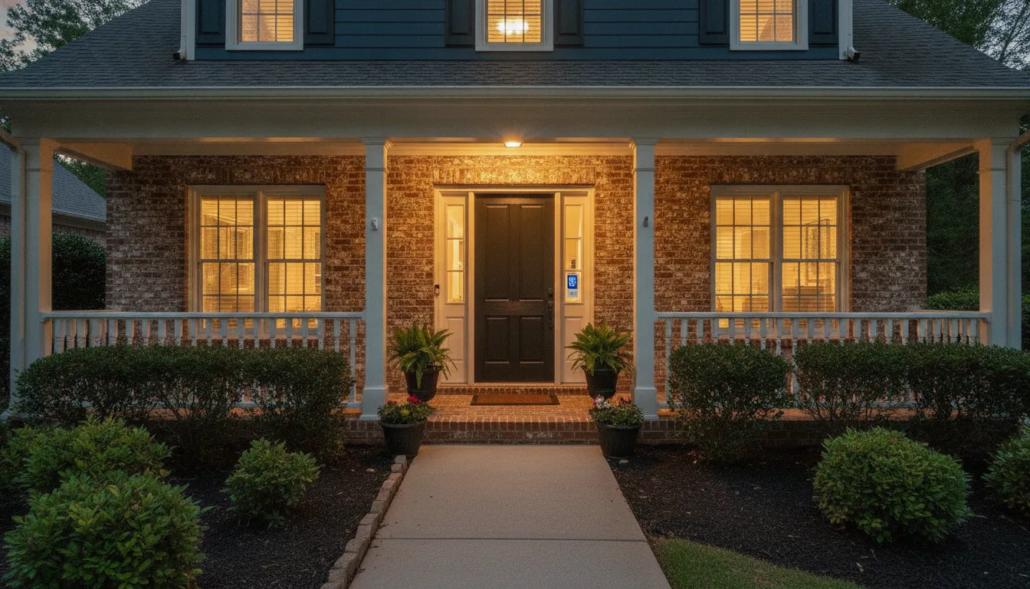
Stand outside in daylight and walk the way a visitor would. Note each door that opens to the yard, the garage, or a shared stair. Then note windows whose sill is low enough to reach from the ground, a deck, or a porch roof. Do this before sunset. A dark porch hides the side door you stopped using.
Bring a simple note with four columns: opening, floor, how it locks, and whether shrubs or a fence hide it. You do not need measurements. You do need an honest count. Homes in Sandy Springs and Johns Creek often have a basement door or a deck door that never makes the first phone call. Roswell ranches often hide the weak spot at the garage service door instead.
- Front door: Confirm the deadbolt, the strike plate, and whether the door sits tight in the frame.
- Back and side doors: Include sliders, French doors, and any door hidden by a fence or shrubs.
- Garage: Check the overhead door, the service door into the house, and whether the opener can be left in a car outside.
- Ground-floor windows: Mark double-hung, casement, and basement windows that open.
- Glass beside a lock: Sidelights and large panes next to a thumb-turn need a different sensor plan than a solid door.
Write the count down. A typical starter layout protects the doors you use every day plus one interior motion or a glass-break detector. Extra openings are additions, not surprises after install day.
Also mark the path you actually use at night. Many Atlanta households come in through the garage and almost never touch the front door. If that is you, the garage overhead, the service door, and the hallway just inside matter more than a formal foyer. A porch light and a clear view of the walk still help, but they are not a sensor.
Look up as well as down. A deck that meets a second-floor slider is a ground-floor opening for this checklist, even if the room is upstairs. The same is true of a window over a lower roof. If you can step to it from outdoor furniture, list it with the first-floor doors.
Match Sensors to How You Live
Sensors should follow the openings and the people in the house. Pets, kids, and a home office change which detector belongs in which room.
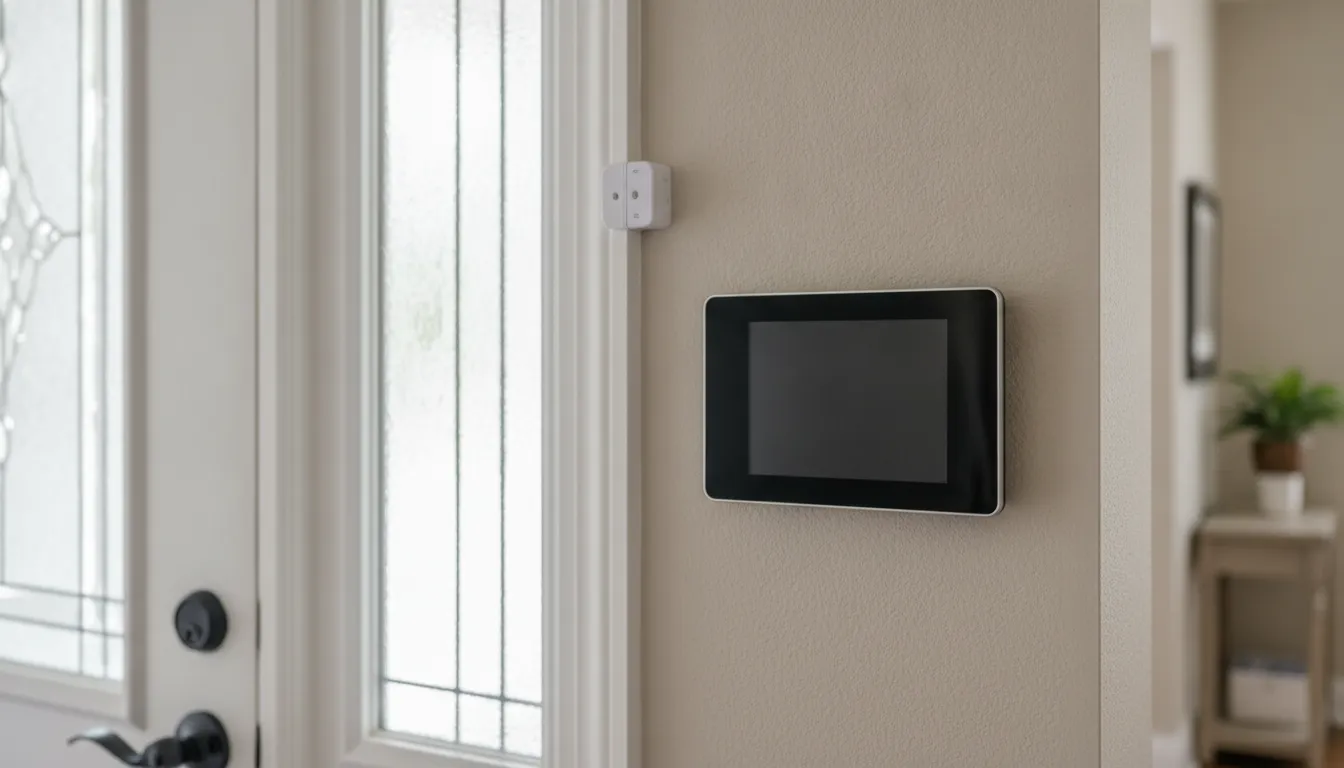
Door and window contacts tell the panel that an opening moved. A motion detector watches a room, such as a living area that holds the television. Glass-break detection listens for breaking glass. That matters when a pane is large and a contact would miss a smash. A key fob lets you arm or disarm at the driveway without standing at the keypad.
Placement is the part people skip. A motion detector aimed at a sunny window, a heating vent, or a dog’s favorite hall will cry wolf. A contact on a door you prop open for the dog will train everyone to ignore the chime. Say how the house works on a normal Tuesday, not how it looks in a listing photo.
If more than one adult needs control, ask for separate codes on day one. A shared code feels simple until a sitter, a painter, or a former roommate still knows it. Removing one user should not force a new code on everyone else. The same list should name who receives phone alerts and who does not.
American Alarm’s published $295 installation offer is one concrete example of that starter set. It includes a touchscreen talking keypad with a siren and backup battery, a cellular communicator. Three door or window contacts, one motion or glass-break detector, and a key fob. Interactive phone alerts are part of that offer. It is a starting layout, not a rule for every floor plan. A house with six exterior doors needs more contacts than a ranch with two.
Five checks decide the layout. Read each one as a yes or no before the visit.
- Exterior doors: List each door you want armed at night, because that list sets the contact count.
- Reachable windows: Include ground-floor, basement, and deck windows that open, because they add contacts or glass-break coverage.
- Pets: Note dogs or cats that roam while you are out, because that changes where a motion detector can sit.
- Who gets alerts: Name the adults who should see phone notices, because that sets users, codes, and the call order.
- Signal path: Say whether a landline is still in service or the house is cellular only, because that decides how the alarm reaches the center if a line is cut.
| Checklist item | What to confirm | Why it changes the design |
|---|---|---|
| Exterior doors. | Each door you want armed at night. | Sets the contact count. |
| Reachable windows. | Ground floor, basement, and deck windows that open. | Adds contacts or glass-break coverage. |
| Pets. | Dogs or cats that roam while you are out. | Changes motion placement so a pet does not trip the alarm. |
| Who gets alerts. | Adults who should see app notices. | Sets users, codes, and the call order. |
| Signal path. | Landline still in service, or cellular only. | Decides how the alarm reaches the center if a line is cut. |
Choose the Path That Reaches the Monitoring Center
The panel only helps if the signal gets out. The communicator is the piece that calls the monitoring center when a door opens after the system is armed.
American Alarm publishes two home monitoring rates on its alarm monitoring cost guide. Landline reactivation monitoring is $18.95 per month. Cellular monitoring is $29.95 per month. The $295 cellular package on the published installation offer is $33.95 per month on a three-year agreement. Phone-app interactive service can add $5 per month. A landline is the lower monthly rate. It fails if the phone line is cut or out. Cellular uses the wireless network, so it does not depend on the house phone.
Confirm which path the proposal uses. Then ask what happens during a power cut. The keypad in that starter package includes a 24-hour backup battery. Ask how long your battery is specified to last, and whether the communicator has its own backup. A panel that stays lit while the signal path dies has not really reported the alarm.
Test the idea against your block. If the house no longer has a copper phone line, do not let a quote assume one. If a storm often knocks out internet in your neighborhood, say so. Internet-based phone service is not the same path as a traditional landline, and it drops when the modem loses power. Put the path in writing next to the monthly fee so the two cannot drift apart later.
Atlanta residential alarm monitoring is the service behind those signals. American Alarm’s monitoring pages describe 24/7 UL-certified central station monitoring. That is different from an app that only pings your phone. If you are comparing monthly fees in depth, use the alarm monitoring cost guide instead of turning this checklist into a price sheet.
Also name the people the center should call, in order. Outdated numbers slow a real response even when the operator acts quickly. If you already have a panel from another company, ask about reactivation before you replace hardware. American Alarm reactivates many existing systems at no reprogramming charge and can move monitoring without a full rip-out.
Check Daily Use Before You Sign
A system you will not arm is not protection. The checklist should include the habits that cause false alarms and the words that must appear in the proposal.
Most false alarms come from routine, not from hardware failure. Someone leaves a window cracked. A guest does not know the code. A dog sets off a motion detector in a hall. Ask how you will arm the doors at night while people are home. Ask for separate user codes so you can remove a sitter or a contractor later. Ask who gets the app login.
Practice the exit once in your head. If you leave for work through the garage, the delay on that door has to reach the car. It also has to be short enough that a stranger cannot wander the house. If you walk the dog after dark, you need a way to open one door without disarming the rest. Those are programming choices. They belong on the checklist beside the sensor count.
City rules sit next to those habits. Atlanta and nearby counties have run false-alarm programs for years, and fines can follow repeat trips. This page is not legal advice, and the ordinance that applies is the one for your address, not a general Metro Atlanta rule. Ask the monitoring company how you will update your call list and passcode so a real alarm is not delayed by an old number. Confirm any permit or registration with the agency that answers alarms at your house.
Then read the paper. Separate installation, monitoring, and later service. Installation is design, devices, programming, and the test on the day of the visit. Monitoring is the monthly signal path and the operator response. Service is the later repair or a change when you add a door. For the contract questions themselves, use the guide to questions to ask security companies in Atlanta. This checklist stops at the house and the scope.
Bring this order to the appointment:
- Entries: List every exterior door and reachable window.
- People: Name who needs a code and who is called first.
- Pets and schedules: Note animals and the hours the house is empty.
- Signal path: Say whether you still have a working landline.
- Existing gear: Photograph any current panel so reactivation can be discussed.
- Written scope: Ask for contacts, detectors, communicator, fees, and term in the proposal.
If a quote skips the walkthrough and offers one box count for every house, treat that as incomplete. Layouts in Roswell, a two-story in Sandy Springs, and a ranch in Marietta do not share the same openings.
Keep brand rankings and long price studies off this pass. American Alarm already publishes a comparison of professional home security systems and separate guides for installation cost and monthly monitoring cost. Use those when you want a market view. Use this home security checklist when you want to know what to point at on your own floor plan.
On the visit, walk the same loop with the technician. Show the door you prop for pets, the window over the kitchen sink, and the keypad location that guests can see. A design made from that walk is the one worth pricing. A design made from a phone description of a normal house is how contacts end up on the wrong openings.
Schedule a free consultation. Call (770) 645-0061 or contact American Alarm online.
Frequently Asked Questions
What should a home security checklist include?
Include every exterior door, ground-floor and deck windows that open, the garage service door, pets. Who needs a code, and whether the alarm will use a landline or cellular communicator. Add the call list the monitoring center should use.
Do I need a contact on every window?
Not always. Doors you use are the first contacts. A large reachable window may need its own contact or glass-break detection. A second-story window over open yard is a lower priority than a basement window behind a bush. The walkthrough decides the count.
Is an app the same as professional monitoring?
No. An app tells your phone that a door opened. Professional monitoring means a UL-certified center receives the signal and follows your call list, including police or fire when the event calls for it. American Alarm offers that monitored service for homes.
Can I keep the alarm system I already have?
Often yes. If the panel and sensors are in working order, American Alarm can reactivate the system and take over monitoring, including a free reprogram on many existing alarms. A technician still needs to test the communicator and the zones.
How much does home monitoring cost at American Alarm?
Published home rates start at $18.95 per month for landline reactivation and $29.95 per month for cellular monitoring. The $295 installation offer is $33.95 per month for cellular monitoring on a three-year agreement. Your proposal should list the rate that matches the communicator you choose.
Schedule a free consultation. Call (770) 645-0061 or contact American Alarm online.



Leave a Reply
Want to join the discussion?Feel free to contribute!