Security Companies in Atlanta: 10 Questions to Ask Before Signing
Comparing security companies in Atlanta is not simply a matter of choosing the lowest monthly quote. The monitoring agreement defines how alerts are handled, what support is included, who owns the equipment, and what happens if your needs change. Ten focused questions can reveal the practical differences before you make a long-term commitment.
Schedule a free consultation. Call (770) 645-0061 or contact American Alarm online.
The best security companies in Atlanta provide written agreements covering total costs, contract length, equipment ownership, response protocols, and service obligations – without hidden fees or pressure tactics.
This guide gives home and business owners a practical framework for evaluating proposals. It also explains why local expertise, technical qualifications, and ongoing service matter as much as the system installed on day one.
What should security companies in Atlanta include in a monitoring agreement?
A monitoring agreement should clearly state the services, equipment, fees, term, and response process. It should also define service responsibilities and cancellation rules. If a proposal leaves any of those points open to interpretation, ask the provider to revise it before signing.
Begin by separating installation work from ongoing monitoring and service. Installation covers the initial design, equipment, wiring, programming, and testing. Monitoring covers how alarm signals are received and acted upon. Service covers troubleshooting, repairs, inspections, and future changes. These responsibilities may appear in one proposal, but each should have its own scope and cost.
Ask for a property-specific scope
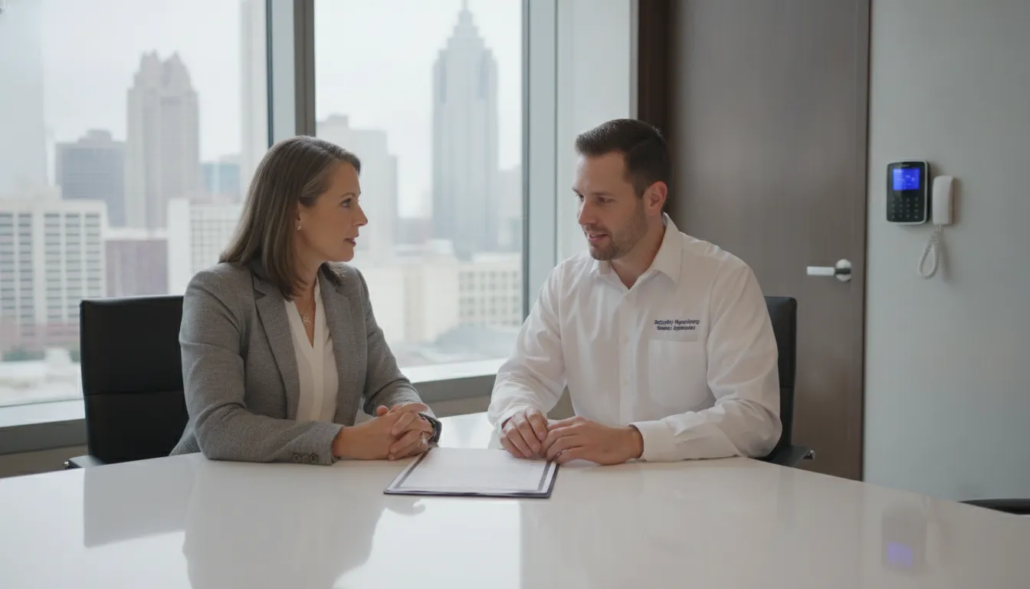
A reliable proposal starts with an on-site assessment. The provider should review entry points, operating hours, occupancy, life-safety needs, and any existing system that may remain in use. For a business, that conversation may also include access control, fire alarm requirements, and procedures for opening and closing the property.
Be cautious when a provider recommends a fixed package without first understanding the building. A short visit can uncover practical needs that are easy to miss during a phone conversation. It also gives you a chance to judge whether the representative is solving a problem or simply pushing a standard package.
Separate included services from optional work
Ask which support services are included and which trigger a separate charge. The agreement should address service calls, replacement parts, system changes, testing, and support outside normal business hours. This is especially important when comparing proposals that use different pricing structures.
Which contract terms and fees require a closer look?
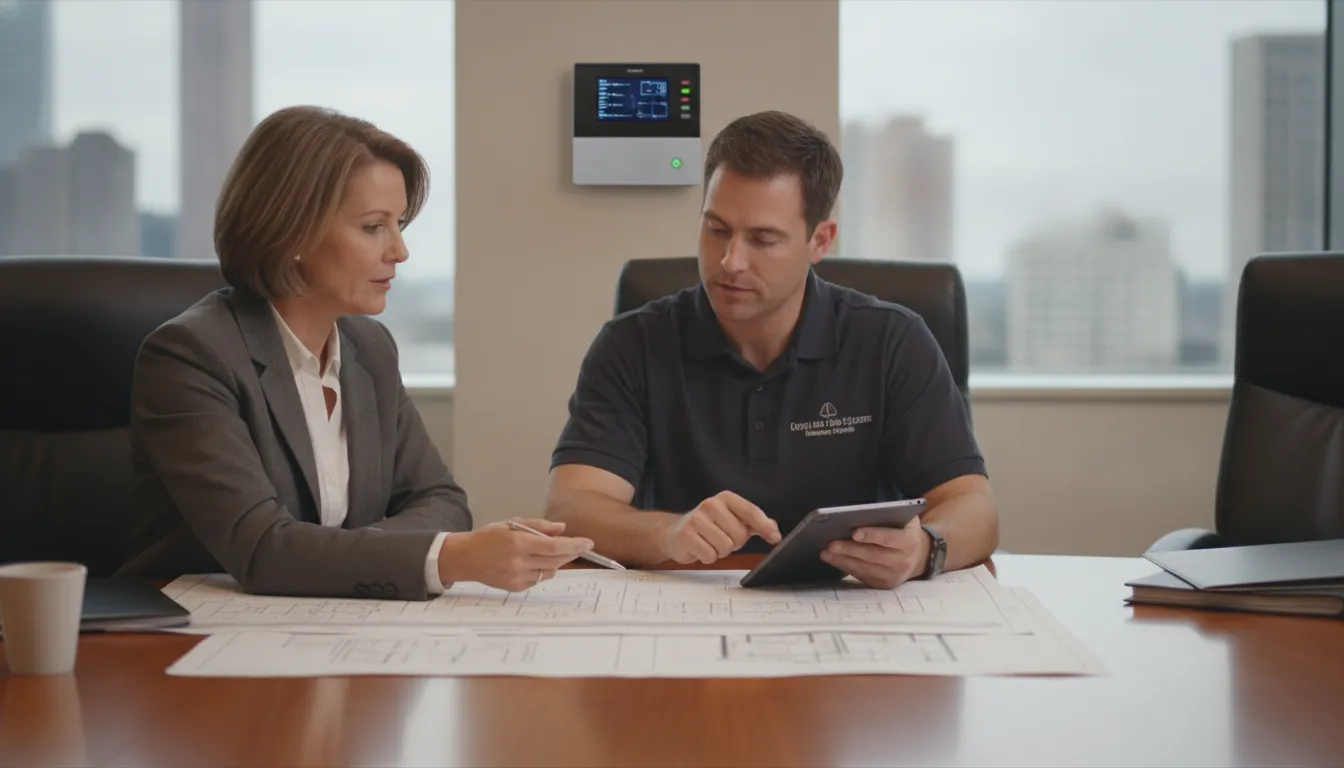
Focus on the total cost over the full term, not only the advertised monthly rate. A useful comparison includes installation, activation, monitoring, service, equipment, future rate changes, renewal, and early termination.
Ask every provider to present costs in the same format. A low initial quote can become a more expensive option when activation, service, or equipment charges are added later. Conversely, a proposal with a higher initial investment may include more equipment ownership or ongoing support.
Agreement length, renewal, and cancellation
Confirm the initial term and the exact process for ending the agreement. Ask whether it renews month to month or for another fixed period, how much notice is required, and where cancellation must be sent. The answers should appear in the written agreement rather than relying on a conversation with a sales representative.
Also ask what happens if you move, sell the property, expand the business, or no longer need the same level of service. These events are common, and the agreement should explain the available options.
Equipment ownership and compatibility
Find out whether you are buying, financing, or using provider-owned equipment. Ownership affects what you may keep at the end of the agreement and whether another provider can service the system later. Ask whether the equipment uses widely supported technology or depends on one provider’s platform.
For more context on system selection, review American Alarm Corp’s guide to choosing a monitored alarm system.
How does professional monitoring respond to an alarm?
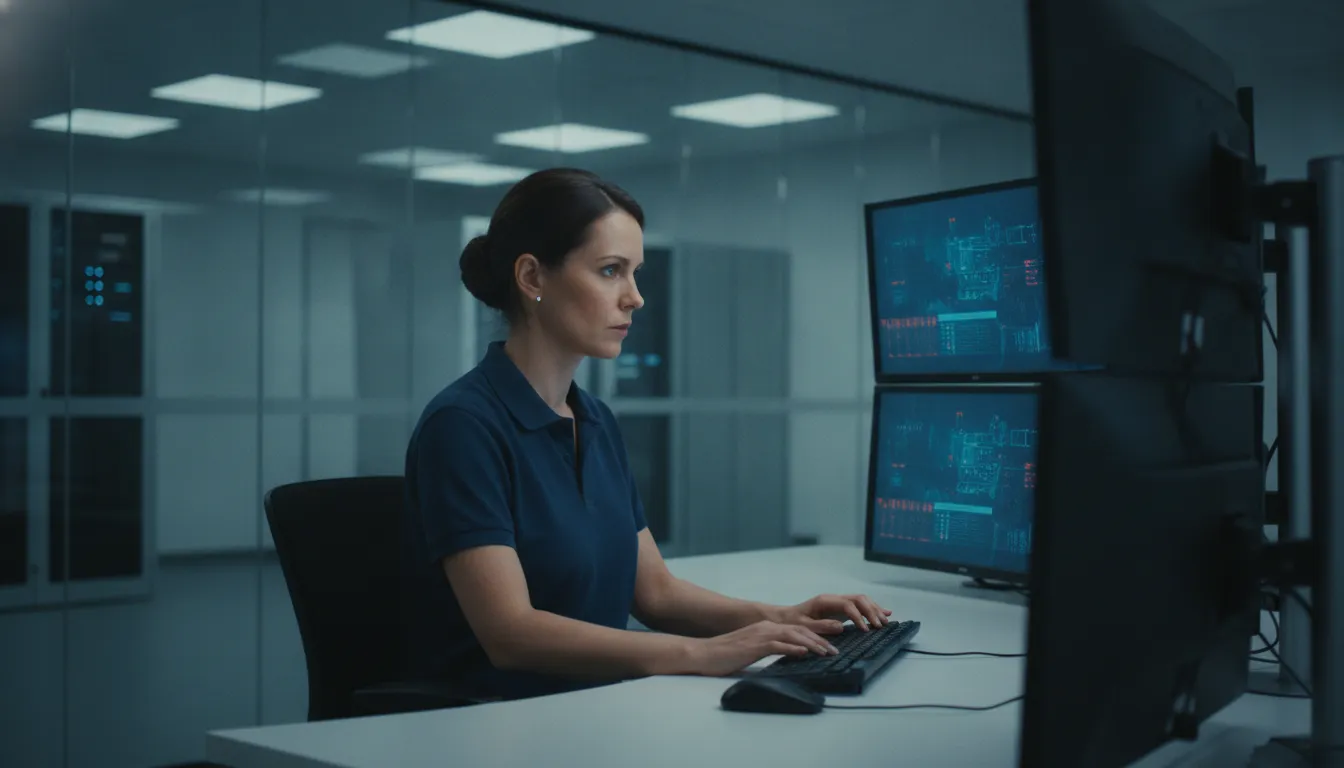
Professional monitoring connects alarm signals to trained operators who follow an established verification and notification plan. The provider should be able to explain the path from the initial signal to contacting the people and public agencies listed in your response instructions.
Ask what information reaches the monitoring center, how operators distinguish different signal types, and how they follow your call list. Fire, intrusion, hold-up, and supervisory signals can require different procedures. Understanding those procedures is more useful than accepting a vague promise of a fast response.
Verification and escalation procedures
Discuss how the provider verifies an event and when it contacts your designated people or local agencies. Ask how you update contact information, passcodes, schedules, and special instructions. Outdated information can delay communication even when the monitoring center acts promptly.
You should also understand your local alarm registration responsibilities and false-alarm rules. Requirements differ by jurisdiction, so confirm them directly with the agency serving the property.
Resilience and operator standards
Ask whether the monitoring center is UL-listed and how it remains operational during outages or severe weather. A serious provider should be prepared to discuss backup power, communication redundancy, staffing, and documented procedures without relying on broad marketing claims.
A practical comparison checklist for security companies in Atlanta
Use the same checklist for every provider so that differences in scope, cost, and service become easier to see. Strong answers are specific, documented, and connected to your property. Vague answers usually signal a point that needs more investigation.
| Question | What a strong answer includes | Reason to ask more |
|---|---|---|
| Will you assess the property? | An on-site review before the final proposal | A fixed package offered without seeing the site |
| What is the full cost? | Installation, monitoring, service, and equipment listed separately | Important fees omitted or described only verbally |
| How does the agreement end? | Clear term, notice period, renewal, and cancellation steps | Unclear renewal language or no written cancellation process |
| Who owns the equipment? | Ownership and end-of-term options stated in writing | No clear answer about equipment after cancellation |
| How are alarms handled? | A defined verification, notification, and escalation workflow | General claims without an explained procedure |
| Who provides ongoing service? | Named support process and realistic service expectations | No clear path for troubleshooting or repairs |
| What credentials apply? | Relevant licenses, training, and fire alarm qualifications | Credentials that cannot be explained or verified |
Do not treat this as a contest to find the provider with the longest feature list. The best fit is the company that can explain how its design, monitoring, and service processes address your actual risks while keeping the agreement understandable.
What monitoring fees should you expect in Atlanta?
Atlanta-area monitoring fees typically range from $18.95 to $29.95 per month depending on communication type, with landline monitoring at the lower end and cellular monitoring at the higher end. Understanding these costs helps you compare proposals on equal terms and avoid overpaying for features you do not need.
American Alarm Corp offers straightforward pricing with two primary options:
- Landline monitoring: $18.95 per month – uses your existing phone line to communicate alarm signals
- Cellular monitoring: $29.95 per month – uses wireless communication for faster, more reliable signal transmission
- Service call rate: Flat $69 per visit – no hidden trip charges or escalating service fees
For existing customers returning to monitoring, American Alarm offers free reactivation with no reinstatement fee. New customers pay a one-time installation that covers design, equipment, wiring, and programming. For a full breakdown of what affects your monthly rate, visit the alarm monitoring cost guide.
How do contract terms affect your switching options?
Contract terms determine whether you can switch providers without losing your equipment investment or incurring early termination penalties. Before signing, understand what happens if you want to change providers, relocate, or adjust your level of service.
Key switching considerations include:
- Early termination fees: Ask whether the agreement includes a penalty for ending service before the term expires. Some providers require payment of remaining months or a flat cancellation fee.
- Equipment compatibility: Find out whether your system uses industry-standard protocols or proprietary technology that locks you into one provider. Compatible equipment makes future switches simpler and less expensive.
- Reactivation eligibility: Confirm whether the provider offers a free reactivation option if you move and want to resume service later. American Alarm Corp offers free reactivation for returning customers with compatible equipment.
- Auto-renewal terms: Check whether the agreement renews month to month or for another full term. Understand how much notice you must give before the renewal date.
What sets local Atlanta security companies apart from national providers?
Local Atlanta security companies bring on-site service, faster response, deeper code knowledge, and direct accountability that national call centers cannot match. When comparing local versus national providers, consider these factors:
- NICET IV certification: American Alarm Corp founder Scott Gilkey holds NICET Level IV certification, the highest level for fire alarm engineers and designers. This level of technical qualification is rare among both local and national providers.
- Local licensing: Unlimited low-voltage licenses in Georgia, Alabama, and North Carolina ensure the provider can design, install, and service any system type without subcontracting.
- A+ BBB rating: American Alarm Corp has maintained an A+ rating with the Better Business Bureau for more than 20 years, reflecting consistent service quality and customer satisfaction.
- 30 years of local service: Serving Metro Atlanta since 1995 means the team knows local jurisdictions, alarm registration requirements, false alarm ordinances, and common building types across the area.
- UL-listed monitoring: The monitoring center meets UL standards for facilities, operations, redundancy, and staffing. Ask whether a national provider’s monitoring center carries the same certification.
- Local dispatch vs. outsourced call centers: A local provider typically dispatches its own technicians for service and repairs. National providers often contract with third-party service companies, which can delay response times.
Get a customized monitoring plan for your Atlanta property. Call (770) 645-0061 or contact American Alarm online.
Which provider qualifications matter most?
Relevant licensing, technical expertise, local code knowledge, monitoring standards, and an established service record are the qualifications that matter most. These factors indicate whether a provider can support the system after the installation is complete.
Technical and fire alarm expertise
Ask who designs and approves the system, which licenses apply, and whether the provider has the right expertise for fire alarm work. American Alarm Corp founder Scott Gilkey holds NICET IV certification, the highest NICET level for fire alarm systems. He also holds unlimited low-voltage licenses in Georgia, Alabama, and North Carolina. That depth of knowledge is particularly valuable for businesses with code-driven life-safety requirements.
Credentials should connect directly to the work being proposed. A provider should be willing to explain which qualifications are relevant, who holds them, and how they affect design, testing, and service.
Local experience and support
Local experience helps a provider understand Atlanta-area jurisdictions, service logistics, and common property needs. American Alarm Corp has served Metro Atlanta homes and businesses since 1995. Its long operating history offers a useful benchmark when evaluating whether a company is prepared to support a system for years rather than only complete the initial sale.
Learn more about the company’s approach to commercial alarm monitoring and its broader commercial security systems guidance.
What support should follow installation?
Post-installation support should include user training, system testing, a documented service process, and a plan for future changes. Installation day is the beginning of the provider relationship, not the end.
Ask who will train the people using the system and how new users can be added later. A well-designed system can still create frustration when users do not understand normal operation, alert procedures, or who to call for help.
Testing, maintenance, and troubleshooting
Confirm how to test the system and notify the monitoring center before a test. Ask how trouble signals are handled and what support is available when part of the system stops working. For a business, document who has authority to request service or change response instructions.
Also discuss how the system can adapt if the property changes. A growing business may add entrances, alter operating hours, or require new access permissions. A provider that keeps accurate system records can make those changes more efficiently.
Service expectations in writing
Terms such as “priority service” mean little unless the provider explains them. Ask how service requests are triaged, when remote troubleshooting is used, and what conditions require an on-site visit. Clear expectations help prevent misunderstandings during an urgent situation.
How can you choose an Atlanta security provider with confidence?
Choose with confidence by comparing written proposals, verifying qualifications, checking reputation, and speaking with the provider about real service scenarios. The conversation should feel consultative, not rushed.
- Define your priorities. List the events, areas, and operating needs the system must address.
- Invite an on-site assessment. Give each provider the same information and access to the property.
- Request itemized proposals. Compare scope and total cost on equal terms.
- Review the monitoring workflow. Ask how specific alarm signals will be handled.
- Verify qualifications. Confirm relevant licenses, certifications, and monitoring standards.
- Read the complete agreement. Resolve every unclear term before signing.
- Evaluate ongoing service. Make sure help remains available after installation.
Reputation research should include recent customer feedback and independent sources. If you want to review a provider’s complaint history, use the official Better Business Bureau website rather than relying on an unrelated third-party page.
Frequently asked questions
What should I ask security companies in Atlanta before signing?
Ask about the complete cost, agreement term, renewal and cancellation, equipment ownership, monitoring workflow, service response, credentials, and support after installation. Get every material promise in writing.
Why is an on-site assessment important?
An on-site assessment allows the provider to understand the property’s layout, use, existing equipment, and life-safety needs. It leads to a proposal based on the building rather than a generic package.
What does UL-listed monitoring mean?
A UL-listed monitoring center has been evaluated against established requirements for facilities, operations, redundancy, and procedures. Ask the provider which listing applies and how the center handles your alarm signals.
How do I compare monitoring proposals fairly?
Ask every provider to itemize installation, equipment, monitoring, and service costs. Then compare agreement terms, response procedures, qualifications, and ongoing support using the same checklist.
What monitoring fees should I expect to pay in Atlanta?
Atlanta monitoring fees typically range from $18.95 per month for landline monitoring to $29.95 per month for cellular monitoring. Some providers also charge activation or reinstatement fees. American Alarm Corp offers free reactivation for returning customers and a flat $69 service call rate.
Can I switch security companies in Atlanta without losing my equipment?
It depends on whether the equipment uses industry-standard protocols or proprietary technology. Ask before signing whether the system can be taken over by another provider. For businesses planning a switch, a commercial security system takeover keeps compatible hardware while upgrading monitoring. Smart, compatible equipment gives you more options when circumstances change.
Talk with a local Atlanta alarm expert
American Alarm Corp has protected Metro Atlanta homes and businesses since 1995. The team combines local service with deep technical expertise, including NICET IV fire alarm knowledge, to develop monitoring plans around each property’s needs.
Schedule a free consultation. Call (770) 645-0061 or contact American Alarm online.


Leave a Reply
Want to join the discussion?Feel free to contribute!