Restaurant Security Atlanta: Guide to After-Hours Protection
When the last employee locks the door, a restaurant or retail store still has valuable inventory, equipment, and life-safety responsibilities inside. Empty buildings can be exposed to burglary, vandalism, fire, and unauthorized access long before the morning opening team arrives.
Is Your Home or Business Properly Protected?
We protect homes and businesses across Atlanta and North Georgia with locally installed and monitored alarm systems.
A practical restaurant security Atlanta plan combines intrusion detection, commercial fire alarm compliance, controlled access to back-of-house areas, and professional monitoring so the right response can begin even when no one is onsite.
Effective protection is not one device or one policy. It is a coordinated system designed around the property, kitchen hazards, employee access, delivery routines, and the response needs of the business. American Alarm has protected Metro Atlanta businesses since 1995, with technical leadership from NICET IV-certified founder Scott Gilkey. Start by examining why these properties can be especially exposed after closing and which weaknesses deserve attention first.
Schedule a free consultation. Call (770) 645-0061 or contact American Alarm online.
Why Atlanta Restaurants and Retail Stores Are Vulnerable After Hours
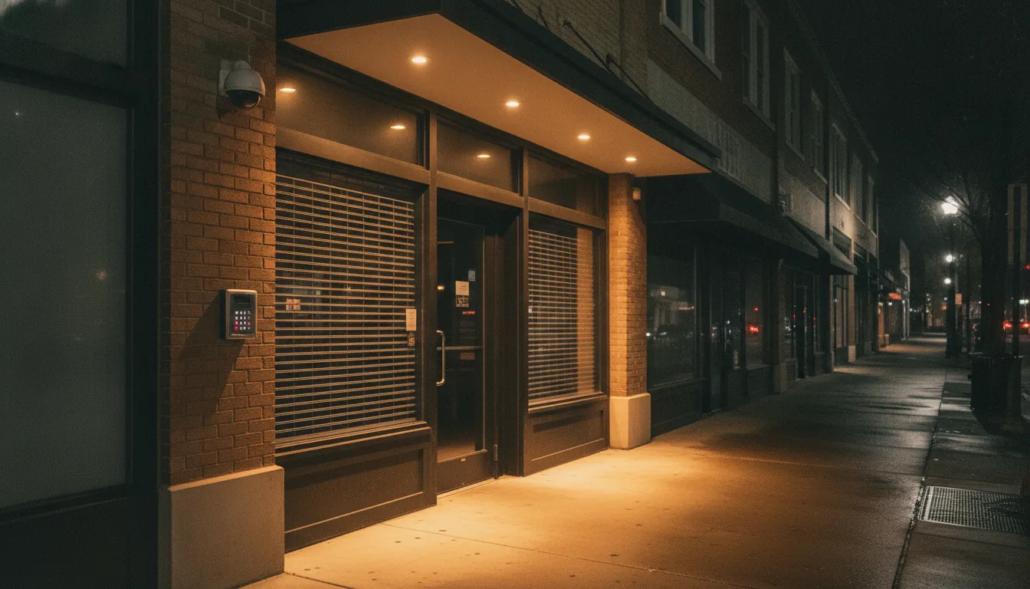
Restaurants and retail stores often become easier targets once the last customers leave. Atlanta’s high-traffic downtown districts, busy corridors, and commercial zones can draw unwanted attention, while a quiet storefront may offer fewer witnesses and less immediate accountability. Research on Atlanta businesses identifies elevated exposure to burglary, vandalism, theft, and other criminal activity, especially for operations in high-risk sectors or areas. Restaurants and retail stores are frequently identified among those higher-risk sectors.
After-hours staffing gaps: A restaurant may have only a closing employee on site, and a retail store may be empty for many hours overnight. That gap matters when an alarm event, forced entry, or suspicious activity requires a fast, coordinated response. Employees who are present should not be expected to investigate a threat alone, and business owners may not learn about a problem until the next morning.
Why location and operating hours matter
Downtown Atlanta districts and other high-traffic areas can experience activity long after normal business hours. A restaurant with late-night operations may have frequent turnover between closing tasks, deliveries, and final staff departures. Retail properties can face similar exposure when valuable inventory remains inside after the doors are locked. These conditions create opportunities for unauthorized entry and make a property assessment more complicated than simply checking whether the front door is secure.
Passive measures are not enough by themselves
Locks, lighting, signage, and other passive measures remain useful, but many Atlanta businesses lack enough layered protection to address changing threats. One industry assessment describes a gap between traditional passive methods and the complexity of risks facing local businesses. That gap can leave a property more vulnerable after hours. A practical plan combines properly configured alarm protection, controlled access to sensitive areas, and professional monitoring so an event can receive attention even when the building is closed. Atlanta restaurants along the Buford Highway dining corridor and in the Buckhead late-night district face especially concentrated risk, where busy evening foot traffic can mask after-hours vulnerabilities that a layered, monitored approach addresses. Compare solutions for different commercial building types in our commercial security systems Atlanta comparison guide.
American Alarm has protected Metro Atlanta homes and businesses since 1995. As an Atlanta-based company, it brings local familiarity to the design and maintenance of commercial security and life-safety systems. The goal is not to add unnecessary equipment. It is to identify the weak points created by location, layout, inventory, and staffing, then build a clear response plan around them.
Fire Alarm Code Compliance for Commercial Kitchens
Commercial kitchens combine open flames, cooking equipment, grease, heat, and constantly changing air conditions. A compliant fire alarm design must account for those conditions instead of treating the kitchen like an ordinary office or storage area. NFPA 72, the National Fire Alarm and Signaling Code, provides the baseline framework for fire alarm system design, installation, testing, and maintenance in restaurant environments. Tenants moving into restaurant spaces should also review the commercial tenant security checklist for fire alarm compliance during build-outs. Local requirements may add to that baseline, so the final design should be reviewed before work begins.
Coordinate hood suppression with the building alarm
A commercial kitchen hood suppression system and the building fire alarm system should operate as a coordinated life-safety system. When suppression activates, the signaling sequence may include an alarm condition, equipment shutdowns, interlocks, and notification to the appropriate response parties. The exact sequence depends on the system design and the requirements accepted by the local Authority Having Jurisdiction, or AHJ.
That coordination requires more than installing separate devices. The design team should review the hood suppression documentation, confirm detection zones, and verify how an activation is communicated throughout the property. Dining areas, kitchens, employee spaces, and other occupied areas need notification that is clear and appropriate for the environment. Proper integration can help limit fire growth and support faster emergency response. For existing restaurants, a professional fire alarm repair evaluation can identify failed devices, outdated programming, or an interlock that no longer performs as intended.
Place detection for the kitchen environment
Detector selection and placement are especially important around cooking equipment. Standard smoke detection in a location exposed to steam, grease, and normal cooking byproducts can create nuisance alarms or fail to provide the right response. Commercial kitchen areas may require specialized smoke, heat, or combination detection, with placement selected for the equipment and airflow conditions. Devices should remain sensitive to an actual fire while avoiding unnecessary alarms during normal operations.
Detection zones should be planned so responders can identify the affected area quickly. A zone covering the hood, adjacent kitchen equipment, dining space, and storage area may provide less useful information than a design that reflects the building’s actual layout and hazards. Testing and maintenance records should also remain traceable, supporting ongoing readiness and compliance reviews.
Confirm Atlanta requirements with the AHJ
NFPA 72 is a starting point, not a substitute for local review. Atlanta-area projects may be subject to city, county, or state amendments, along with site-specific interpretations from the AHJ. Confirm the accepted NFPA edition and local requirements before finalizing plans, then document the equipment, detection zones, signaling sequences, and suppression interlocks. An integrated approach to detection, notification, suppression, testing, and maintenance gives restaurant owners a clearer path to reliable protection and code compliance.
Access Control for Back-of-House and Storage Areas
Controlled entry protects the parts of a restaurant or retail store where inventory, supplies, and operational systems are most vulnerable. A properly planned access control system limits who can enter storage rooms, offices, stock areas, receiving doors, and other back-of-house spaces while preserving a practical workflow for authorized staff.
Use keypad entry to control sensitive areas
Keypad entry can replace shared physical keys at doors that need additional oversight. Each employee or approved supervisor can receive an assigned code, allowing management to change access when roles change or employment ends. Codes can also be limited by schedule, so a team member who needs access during operating hours does not automatically retain entry late at night.
This approach helps protect high-value inventory and reduces the risk of unrestricted movement through employee-only areas. It also creates a clearer process for granting access to managers, vendors, and delivery personnel without giving every person the same credentials.
Manage deliveries and vendor access
Receiving doors often require a balance between security and speed. A restricted schedule can allow deliveries during approved windows while preventing access at other times. Managers should define who may authorize a vendor, which doors they may use, and when temporary access expires. These controls help keep delivery activity separate from inventory rooms and other restricted areas.
Effective commercial security can deter criminal activity by making unauthorized entry more difficult and by reducing opportunities for opportunistic theft. Access control is one layer of that strategy, working alongside alarm protection and clear operating procedures.
Review fire suppression and alarm interlocks
In restaurants, access planning should also account for life-safety equipment. The kitchen hood suppression system documentation and its interlock logic with the building fire alarm should be reviewed during system planning and service. When suppression activates, the related alarm signals and safety responses must work as intended. Confirming this relationship supports a coordinated response rather than treating each system as an isolated installation. Review suppression and alarm interlock guidance before finalizing a restaurant security plan.
24/7 Monitoring That Protects Your Business Around the Clock
Restaurants and retail stores do not stop facing risk when the last customer leaves. A kitchen issue, forced entry, or alarm signal after closing can develop while owners and managers are off-site. 24/7 monitoring gives your business a consistent response process during overnight hours, weekends, holidays, and staff transitions. For restaurants in particular, continuous monitoring is essential because an after-hours emergency can cause significant damage before anyone notices it.
Monitoring also supports the way Atlanta businesses actually operate. A restaurant may close its dining room while kitchen equipment, refrigeration, and back-of-house systems remain active. A retailer may have scheduled deliveries, inventory work, or early-morning opening procedures. A monitored alarm system helps distinguish an active alarm event from a routine change in operating hours, so the appropriate contacts can be notified without relying on someone to discover the problem personally.
Choose a monitoring connection that fits the property
American Alarm offers professional monitoring at $18.95 per month for landline monitoring and $29.95 per month for cellular monitoring. The best connection depends on the property, existing infrastructure, and how the system should communicate during an outage. Review the differences between Atlanta business monitoring options before selecting a path for a restaurant, storefront, or multi-location operation.
Clear pricing makes planning easier. American Alarm provides transparent pricing without high-pressure sales, so business owners can compare monitoring fees against their operating requirements and choose a practical level of service. If equipment needs attention, the standard service call rate is $69, helping you understand the potential maintenance cost before authorizing work.
Pair monitoring with dependable service
Monitoring is most useful when the system is maintained and service concerns are addressed promptly. American Alarm provides 24/7 monitoring and a less than 24-hour response guarantee for non-emergency issues. That expectation matters when a restaurant needs a faulty component corrected before the next service period or a retailer needs an alarm issue resolved before opening.
For a broader explanation of how this process supports commercial properties, review the guide to commercial alarm monitoring. A professional assessment can then align monitoring, business hours, emergency contacts, and service priorities with the way your Atlanta operation functions every day.
Building a Layered Security Plan for Your Atlanta Restaurant or Retail Store
A layered plan connects fire safety, controlled access, monitoring, and maintenance into one operating strategy. For Atlanta businesses, the goal is not to install isolated components. It is to understand how each layer supports the next, then improve the system in manageable phases. Different building types require different approaches: see our warehouse security Atlanta guide for industrial facilities and construction site security systems for active job sites.
- Assess the existing infrastructure: Begin with a documented review of the fire alarm panel, initiating devices, notification appliances, kitchen suppression equipment, doors, access points, and current access permissions. Note missing documentation, outdated equipment, recurring trouble signals, and areas where staff or delivery access is not appropriately restricted. This assessment should also consider how the current business security system cost aligns with operational priorities.
- Create a compliance matrix: Map each existing component against NFPA 72 requirements, accepted local amendments, inspection records, and the Authority Having Jurisdiction’s expectations. A compliance matrix makes upgrade needs visible instead of leaving them scattered across service reports. It can also help prioritize improvements before a renovation, ownership change, or permit review.
- Integrate kitchen suppression and alarm signaling: Review the hood suppression documentation and interlock logic with the building fire alarm system. Properly integrated systems can trigger alarms or interlocks and may automatically initiate fire department dispatch when suppression activates. This coordination supports faster notification and a more complete life-safety response. The design should include detection, signaling, documentation, and maintenance, not suppression equipment alone. Review the supporting fire alarm compliance guidance.
- Control key areas: Apply access control to offices, storage rooms, electrical rooms, liquor storage, and other sensitive spaces according to job responsibilities. Establish a process for issuing, changing, and removing credentials as staffing changes. Access control should support daily operations without creating confusion during an emergency.
- Schedule inspections and maintenance: Establish recurring testing, service, and documentation schedules for every layer. Keep traceable records for inspections and insurance compliance, and address trouble conditions promptly. A phased approach allows the business to correct urgent gaps first, complete detailed design and documentation next, and maintain the finished system over time.
Scott Gilkey’s NICET IV certification, the highest level for fire alarm system professionals, adds technical depth when commercial permitting, system design, and compliance decisions intersect. Learn more about why Atlanta businesses choose American Alarm for coordinated life-safety planning.
Schedule a free consultation. Call (770) 645-0061 or contact American Alarm online.
Frequently Asked Questions
How can I improve security at my restaurant in Atlanta?
Start with a site review that covers exterior doors, employee entrances, storage areas, loading access, alarm coverage, and after-hours response. Layer monitored intrusion detection with controlled back-of-house access, reliable lighting, and clear opening and closing procedures. Restaurants and retail stores in high-traffic areas or with minimal nighttime staffing can face increased burglary, vandalism, and theft risk, so the plan should reflect the property layout and operating schedule.
What are the benefits of restaurant access control?
Access control helps limit entry to kitchens, offices, liquor storage, inventory rooms, and other sensitive areas. It can distinguish authorized employees from delivery personnel, reduce unauthorized access, and support accountability when staffing or permissions change. A properly planned system protects inventory while allowing daily operations to continue without giving every worker access to every part of the business.
What fire alarm requirements apply to a commercial kitchen?
NFPA 72 provides a baseline framework for fire alarm design, installation, testing, and maintenance, but Atlanta-area requirements can also include local amendments and approval by the Authority Having Jurisdiction. Kitchen suppression and fire alarm systems should be reviewed together, including detector placement, notification audibility, and interlock logic. Source: commercial kitchen fire alarm compliance guidance.
Why is 24/7 monitoring important for restaurants?
Monitoring provides a response path when a burglary, fire, or other alarm occurs after staff have left. It reduces reliance on an employee noticing a problem and calling for help, which is especially important during overnight hours, weekends, and holiday closures. Ask for a plan that clearly explains alarm verification, emergency notification, testing, and service response expectations.
Ready to Schedule a Free Consultation?
A focused review can help you identify practical next steps for your Atlanta restaurant or retail business, from after-hours protection to fire alarm and access control needs. Schedule a free consultation by calling (770) 645-0061. American Alarm can discuss your property, operating hours, and priorities so you can move forward with a security plan that fits your business.


Leave a Reply
Want to join the discussion?Feel free to contribute!