Low Voltage Contractor Atlanta: Who Should You Hire?
A security system can fail long after neat wiring passes its first inspection. The right Atlanta provider must handle installation, code compliance, monitoring, testing, and service after the job.
Schedule a free consultation. Call (770) 645-0061 or contact American Alarm online.
A low voltage contractor Atlanta property owners hire can install cabling and building technology. An alarm company is often the better choice when a project also requires specialized security design, code-compliant fire alarm work, monitoring, testing, and responsive service. Choose the provider whose licensing, credentials, and service plan cover the system after installation.
The choice comes down to who will own each requirement before, during, and after installation. Our next section, “What does a low voltage contractor in Atlanta handle?”, defines that scope before comparing it with the safeguards your project needs. The comparison starts here.
What does an Atlanta low voltage contractor handle?
An Atlanta low voltage contractor may plan, wire, install, test, and service building systems that carry power, data, or signals. The exact scope varies widely, so buyers should confirm whether the provider handles only installation or also specialized alarm design, monitoring, compliance, and long-term support.
A low voltage contractor in Atlanta installs and supports systems that carry power, data, or signals for a building. The role can span planning, wiring, device setup, testing, and later service. It often connects several building needs under one project scope.
Common low voltage project types
Common projects include network cabling, access control, intrusion alarms, fire alarms, video surveillance, intercoms, and audio-visual systems. Contractors may work during new construction or update systems in an existing site. Early commercial security project planning can help teams align wiring routes, device locations, and future service access.
- Data and communication: structured cabling, network drops, and intercom connections.
- Building access: door readers, locks, credentials, and related control panels.
- Alarm and life safety: intrusion detection, fire alarm equipment, signals, and monitoring connections.
- Media and observation: audio-visual equipment and video surveillance systems.
The exact scope depends on the site and the contractor’s focus. Some firms mainly pull cable, while others design, install, test, monitor, and maintain complete systems. Buyers should confirm which parts of the work are included before comparing proposals.
The contractor’s role from plan to service
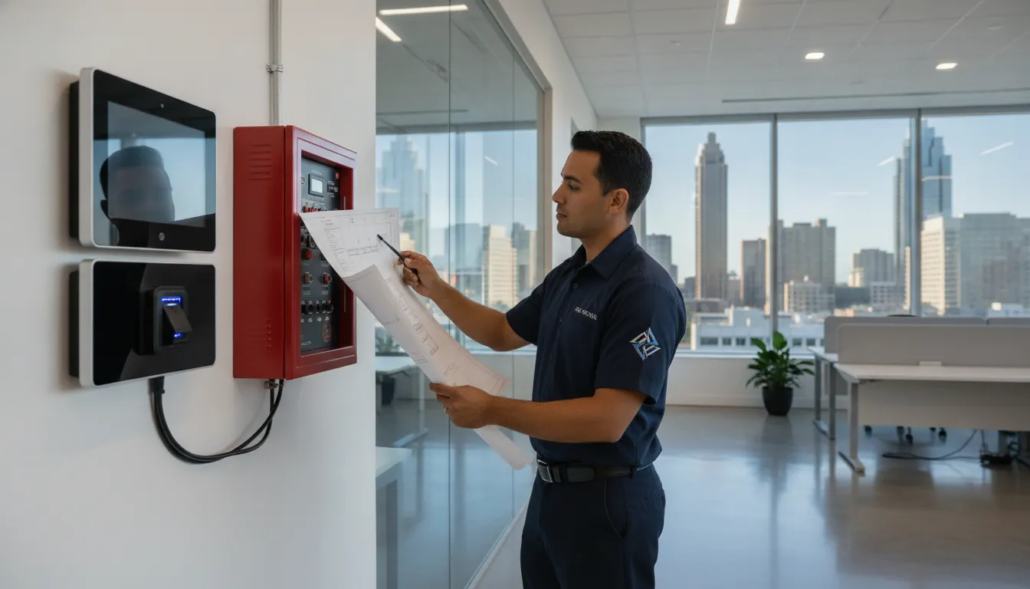
A broad project may start with a site review and system design. The contractor can then coordinate cable paths, install equipment, test operation, train users, and plan service. For fire alarm work, the scope may also include layout, equipment choice, testing, troubleshooting, and servicing.
That full-service role matters when several systems must work together. A contractor should document what it will install, who will test it, and who will respond after handoff. For alarm projects, buyers can also compare the contractor’s scope with professional commercial security services.
What Atlanta buyers should confirm
Start by checking whether the contractor’s credentials match the planned work. Georgia states that a contractor may not legally perform low voltage services until it holds an active low voltage license. Buyers should verify the license type and ask who will oversee specialized alarm or fire alarm tasks.
Next, compare the full project scope instead of only the installation price. Ask about design ownership, permits, testing records, monitoring, service response, warranties, and support for future changes. Clear answers help reveal whether one firm can manage the full system or whether several trades must coordinate.
Low voltage contractor Atlanta vs. alarm company
A broad low voltage contractor can handle cabling and many building technologies. A specialized alarm company centers its work on security, life safety, monitoring, and ongoing service. For integrated alarms, access control, or fire systems, compare each provider’s credentials and responsibility after installation.
A low voltage contractor and an alarm company can both work on low voltage systems, but their roles are not the same. A contractor often covers a broad mix of wiring and technology projects. An alarm company focuses on systems that protect people, property, and daily operations.
Licensing is the first point to check. Georgia states that contractors may not legally perform low voltage services until they hold an active low voltage license. Yet a license alone does not show deep skill in alarm design, monitoring, or fire alarm work.
Differences at a glance
| Area. | Broad low voltage contractor. | Specialized alarm company. |
|---|---|---|
| Typical scope. | Data cabling, audio-visual, network wiring, and building controls. | Intrusion alarms, fire alarms, access control, and monitoring. |
| System design. | May design across many technology types. | Design centers on life safety, security, and alarm response. |
| Monitoring. | May install devices without providing monitoring. | Can connect, test, and support monitored alarm systems. |
| Ongoing service. | Often tied to the installation project. | Includes testing, repairs, maintenance, and account support. |
| Fire alarm work. | Skill level varies by contractor. | Special training supports fire alarm design and service. |
| Accountability. | Several vendors may share responsibility. | One provider can own design, installation, monitoring, and service. |
The table does not mean one provider type is always better. The right fit depends on the work. A broad contractor may suit structured wiring or audio-visual needs. A specialized alarm company is often the clearer choice when a project includes alarms, access control, monitoring, or fire systems.
Design, fire alarm, and access control
Alarm design starts with more than device placement. The provider must plan how alerts travel, who receives them, and what happens during a fault. Good commercial security project planning also accounts for construction phases, door use, future growth, and service access.
Fire alarm work adds another layer of care. NFPA 72 covers design, installation, testing, inspection, and maintenance for fire alarm systems. A provider should understand each stage and explain who remains responsible after the installation ends.
Access control also needs a long-term plan. Door schedules, user permissions, event records, and system changes all require support after launch. Ask whether the installer will handle those needs or pass them to another vendor.
Monitoring, service, and accountability
A completed installation is only the start of an alarm system’s working life. Devices need tests, faults need repair, and monitored signals need clear response steps. Before hiring a low voltage contractor in Atlanta, confirm who handles each task and how quickly help is available.
One accountable provider can reduce gaps between design, installation, monitoring, and repairs. When comparing professional commercial security services, ask for a written scope that names the responsible party at every stage. That document makes bids easier to compare and helps prevent service disputes later.
When should you choose an alarm company?
Choose an alarm company when the system requires integrated intrusion detection, fire alarms, access control, monitoring, repair, and ongoing service. A specialized provider can coordinate these needs under one accountable plan and support the system long after the installation crew leaves.
Choose an alarm company when the project must protect people and property after installation day. This is often the better fit for integrated intrusion detection, fire alarms, access control, monitoring, repair, and ongoing service. The company should understand how each part works together and who will support it later.
Integrated security and fire protection
When comparing an alarm company with a low voltage contractor in Atlanta, start with the project’s main goal. General low voltage work may focus on wiring and device installation. An alarm company is the stronger fit when the system must detect threats, send alerts, manage entry, and support fire protection.
This matters most for businesses with several linked needs. One provider can plan intrusion detection, fire alarms, access control, and monitoring as one operating system. That approach can reduce gaps between separate installers and make future service calls easier to manage. American Alarm outlines these connected options in its guide to professional commercial security services.
Licensing, monitoring, and compliance needs
Choose an alarm company when permits, inspections, or fire alarm rules shape the job. Ask who will design the system, test it, document the work, and address issues found during inspection. In Georgia, contractors may not legally perform low voltage services until they hold an active license. The Georgia Secretary of State’s low voltage contractor guide explains that requirement.
Monitoring also changes the scope. A working alarm is only one part of the service; signals must reach the right response point when an event occurs. A full-service alarm company can also help with account changes, system takeovers, and ongoing testing. Review the available alarm reactivation and monitoring services before choosing a provider.
Long-term repair and service
An alarm company is usually the better choice when the system will need regular testing, repairs, updates, or added access points. Ask whether the provider services its own work and supports equipment installed by another company. Clear ownership helps when a fault affects several connected parts.
Before signing, confirm the service area, response process, documentation, and support terms. Ask who handles after-hours signals and who coordinates repairs during normal business hours. The right fit is not just the firm that can install the wiring. It is the firm prepared to keep the full system working over time.
How to choose the right Atlanta security project partner
Choose an Atlanta security project partner by comparing licenses, relevant credentials, integration planning, proposal clarity, references, and service after installation. The best proposal defines who owns design, permits, testing, monitoring, repairs, and future changes instead of focusing only on initial price.
The right partner should understand both the planned system and the daily service it will need. Start with a written review process instead of comparing bids by price alone. This keeps the decision tied to clear needs, qualified work, and long-term support.
A seven-step vendor review
-
Define the full scope. List each site, required system, project phase, schedule, and service need. Include new work, existing equipment, monitoring, inspections, and future growth. A detailed scope helps each bidder price the same work.
-
Verify licenses and credentials. Ask for the contractor’s active Georgia license number, insurance, and relevant technical certifications. Georgia states that contractors may not legally perform low voltage services without an active license. Confirm that certified staff will design and supervise the work.
-
Test the integration plan. Ask how the proposed systems will work with existing equipment, networks, access control, and fire alarms. The bidder should name compatibility limits and explain who handles work shared with other trades.
-
Review service after installation. Compare monitoring, emergency support, routine maintenance, inspection help, response targets, and escalation paths. Ask who answers after hours and whether service staff work locally.
-
Compare proposal clarity. Each proposal should separate equipment, labor, permits, recurring fees, exclusions, warranties, and optional work. Match these details against your commercial security project planning needs before comparing totals.
-
Call relevant references. Request Atlanta-area references with similar sites, system types, and project size. Ask whether the vendor met the schedule, managed changes clearly, and returned for service without delays.
-
Confirm single-point accountability. Name one firm and one project lead responsible for design, permits, installation, testing, training, and support. Put handoffs and final acceptance rules in writing before signing.
Questions that expose weak proposals
A capable low voltage contractor in Atlanta should answer detailed questions without vague promises. Ask who creates drawings, obtains permits, coordinates inspections, programs equipment, trains staff, and keeps system records. Also ask which duties go to subcontractors and how the lead firm checks their work.
For projects that include fire alarms, ask which staff members handle layout, testing, troubleshooting, and service. These tasks fall within the scope of NICET’s fire alarm certification program. A bidder should also explain how the installation will meet the required code and acceptance process.
A fair final comparison
Score every bidder against the same scope, credentials, integration plan, support terms, proposal detail, references, and accountability model. Review the answers with operations, facilities, and leadership before choosing. This approach supports hiring the right security experts for the project, not simply accepting the lowest initial price.
Planning a project with multiple low-voltage systems
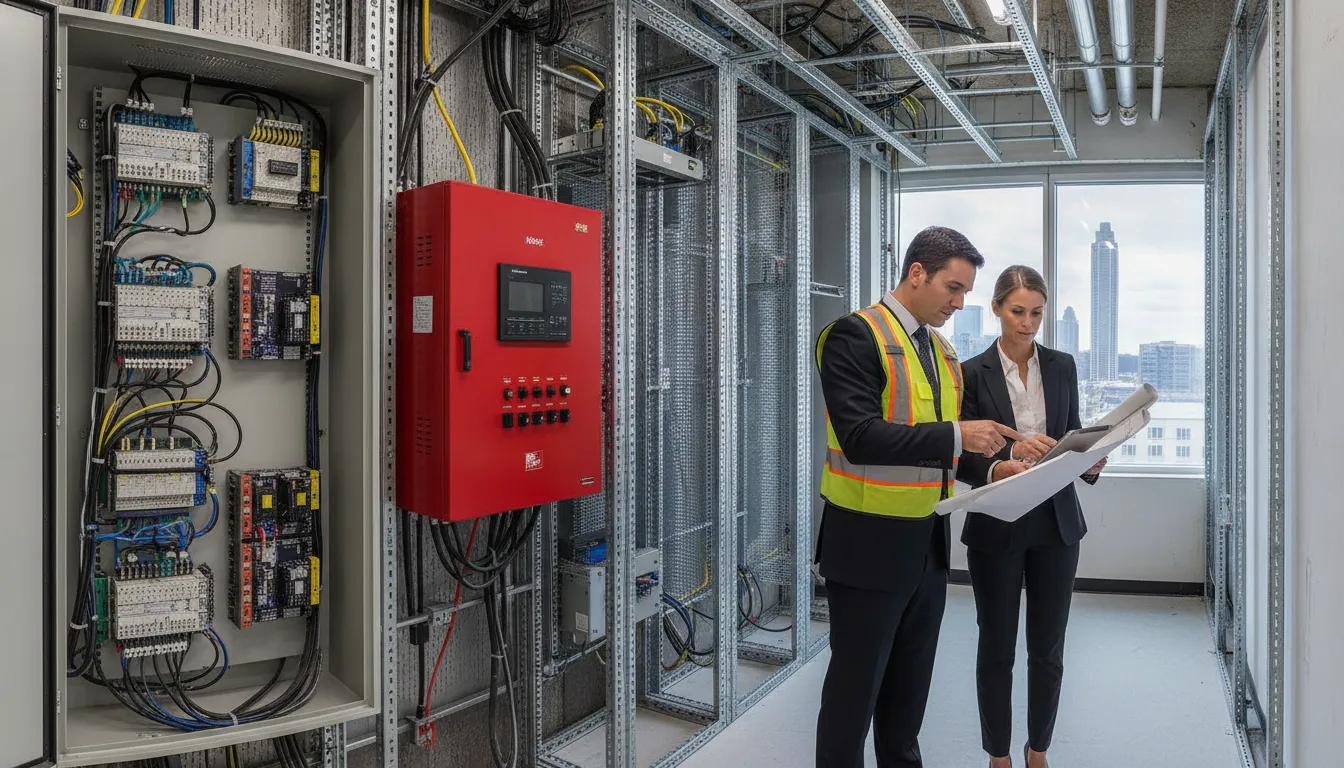
Plan a multi-system project by coordinating device locations, cable routes, power, network connections, shared pathways, schedules, inspections, and testing before installation begins. Name one project lead and document each trade’s responsibilities so system links and handoffs are tested before final acceptance.
A project may combine intrusion alarms, fire alarms, access control, data cabling, and other low-voltage work. Each system can affect shared pathways, power needs, schedules, and inspections. Early planning keeps one trade from blocking another and makes responsibility clear.
One coordinated system plan
Start with a meeting that includes the owner, general contractor, electrician, network staff, and each low-voltage provider. Name one person to manage system coordination. That person should track open questions, approved changes, deadlines, and handoffs across all trades.
Create a single drawing set that shows device locations, cable routes, equipment rooms, power sources, and network connections. Include clear labels for pathways, cable types, and who supplies each part. For new buildings, detailed commercial security project planning should begin before walls and ceilings close.
The plan should also state which systems must work together. For example, an access control door may need input from a fire alarm system. Define that link, its owner, and its test method before installation starts.
Pathways, cabling, and trade handoffs
Map cable paths before crews arrive. Confirm conduit sizes, cable tray space, ceiling access, equipment clearances, and separation from higher-voltage wiring. Reserve spare pathway room where future changes are likely.
- Set labeling rules for every cable, device, panel, and network port.
- List required rough-in dates, inspection points, and finish-work dates.
- Record who provides power, network ports, locks, doors, and permits.
- Require each trade to report changes before they affect another system.
Check licenses before assigning work. Georgia states that contractors may not legally perform low-voltage services until they hold an active license. When choosing a low voltage contractor in Atlanta, also confirm that its license scope matches every assigned system.
Testing, training, and long-term ownership
Do not wait until the final day to test. Check cables after they are pulled, then test devices, controls, and system links in stages. Keep results in one shared record, with failed items assigned to a named party and due date.
Before handoff, gather approved drawings, device lists, panel details, warranties, test reports, and service contacts. Train the people who will use and manage each system. Give them simple steps for routine checks, user changes, alarms, and service calls.
Finally, assign ongoing ownership instead of leaving support split among trades. State who handles inspections, software updates, monitoring, repairs, and future changes. A single service lead can route issues to the right specialist while keeping the full system history intact.
Common mistakes that make security projects harder
The most common security project mistakes are vague scope, unclear ownership, choosing on price alone, and installing equipment without a service plan. Prevent them with a written scope, named decision-maker, staged testing, complete handoff records, and defined responsibility for monitoring, repairs, and future changes.
A security project can go off track before work starts. Atlanta owners can avoid delays by defining the job, assigning decisions, and planning support beyond installation.
Scope and ownership gaps
A vague scope leaves room for missed devices, weak coverage, and surprise costs. The written scope should name each protected area, system feature, connection, permit, test, and final record. It should also state what existing equipment will stay and what the contractor will replace.
Unclear ownership causes another common delay. Name one person who can approve changes, answer site questions, and accept completed work. For new builds or renovations, early commercial security project planning also helps the security work fit the construction schedule.
- List the work included and excluded from the quote.
- Name who approves changes and added costs.
- Set dates for access, testing, training, and handoff.
Installation without a service plan
Installation is only the start of the system’s life. Ask who will handle monitoring, repairs, software updates, inspections, and future changes. A fragmented vendor setup can slow service because each provider may blame another part of the system.
Testing and training also need written proof. Require test results, device records, user instructions, passwords, and a clear service contact at handoff. For fire alarm work, the plan should address ongoing inspection and maintenance needs, not just initial setup.
Check credentials before the first workday. Georgia says contractors may not legally perform low voltage services until they hold an active license. Confirm that the license type matches the planned security or fire alarm work.
Choosing on price alone
The lowest quote may omit permits, testing, training, monitoring setup, or service after installation. Compare written scopes line by line instead of comparing only the final totals. A complete bid should explain equipment choices, labor, required records, warranty terms, and response expectations.
When reviewing a low voltage contractor in Atlanta, ask how the company handles problems after the job closes. Also ask whether one provider will remain accountable for the whole system. These answers show whether a lower upfront price could create higher costs and longer delays later.
- Reject bids that do not clearly define the final handoff.
- Ask for support terms and response steps in writing.
- Confirm who owns testing, training, and future service.
Why long-term service should shape your decision
Long-term service should shape your decision because security and life-safety systems need testing, monitoring, repairs, documentation, and changes after installation. A provider with clear local support and single-point accountability can resolve faults faster and protect the value of the original investment.
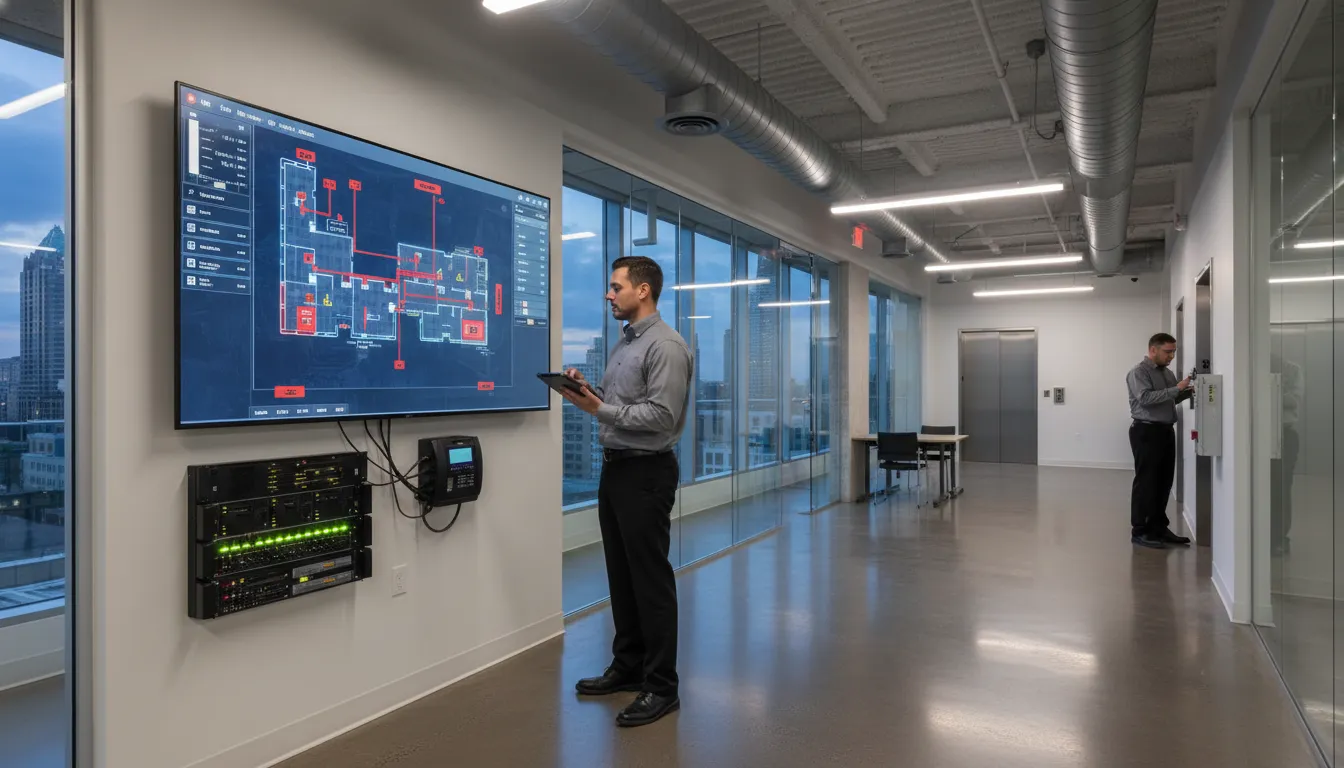
Installation is only the start of a working security or fire alarm system. Long-term value depends on who answers after a fault, failed test, or change to the building. A low voltage contractor in Atlanta should explain that service plan before work begins.
Support after installation
Ask who will monitor the system, respond to alerts, and handle repair calls. The original installer already knows the wiring, devices, and system layout. That knowledge can shorten troubleshooting and help avoid needless changes.
American Alarm provides professional monitoring, installation, and maintenance for Metro Atlanta properties. Its alarm reactivation and monitoring service also helps owners keep existing equipment in use when possible. This full-service approach gives one local company clear responsibility after installation.
Testing, repairs, and system changes
Routine testing can reveal weak batteries, damaged wiring, and devices that no longer report as planned. Fire alarm care also calls for specialized skill. NFPA 72 covers system design, installation, testing, inspection, and maintenance, so ongoing support is part of the system’s life cycle.
Licensing is another useful baseline. Georgia states that contractors may not legally perform low voltage services until they hold an active low voltage license. Still, a license alone does not show how a provider handles urgent repairs, test records, or later expansion.
- Confirm who performs scheduled tests and keeps service records.
- Ask how repair calls are ranked and when local technicians can respond.
- Find out whether the provider can add devices as rooms or business needs change.
- Check who coordinates monitoring, inspections, and future system updates.
A local partner with clear responsibility
A responsive local partner can review a site change before it creates gaps in coverage. That matters during renovations, new construction phases, and business growth. Early planning also makes future service easier because device locations and wiring routes are documented from the start.
American Alarm has served the Atlanta area since 1995 and handles security, fire alarm, access control, monitoring, and maintenance work. Its team also guarantees a response in less than 24 hours for non-emergency service calls. For larger sites, its guide to professional commercial security services explains how connected systems can support broader needs.
Before choosing a provider, compare the full service relationship, not just the installation quote. Clear ownership, local response, and ongoing technical support help the system keep working as the property changes.
Schedule a free consultation. Call (770) 645-0061 or contact American Alarm online.
Frequently Asked Questions
Atlanta property owners should verify state licensing, match credentials to the exact project scope, and confirm who owns monitoring and service after installation. These concise answers address common questions buyers ask while comparing a low voltage contractor Atlanta businesses use with a specialized alarm company.
Do I need a low voltage license in Georgia?
Yes. In Georgia, anyone performing low voltage contracting services must hold an active state license before legally doing the work. The Georgia Secretary of State’s low voltage contractor guide explains this requirement. For a security project, also verify that the provider has the specific alarm-system credentials, permits, insurance, and local experience required for the planned scope.
What is the difference between an electrician and a low voltage contractor?
An electrician generally works on higher-voltage power systems, including service panels, outlets, lighting, and building wiring. A low voltage contractor handles systems that use lower-voltage wiring, such as network cabling, access control, intercoms, and alarms. Licensing and project requirements differ, so property owners should match the contractor’s credentials to the exact system being installed.
Is a low voltage contractor the same as an alarm company?
No. Low voltage contractor is a broad designation covering several types of wired technology systems. An alarm company specializes in security and life-safety systems, including design, installation, monitoring, testing, and maintenance. Some alarm companies also hold low voltage licenses. For fire alarm work, confirm experience with NFPA 72 requirements and local approvals.
How do I choose the best low voltage contractor in Atlanta?
Start by confirming an active Georgia license, insurance, relevant permits, and experience with projects similar to yours. Ask who will design, install, test, monitor, and maintain each system after completion. For fire alarms, review technician qualifications and standards knowledge. The NICET Fire Alarm Systems program covers layout, equipment selection, installation, testing, troubleshooting, and service.
Ready to Plan Your Atlanta Security Project?
American Alarm helps Atlanta businesses plan integrated security and life-safety projects with clear ownership from design through ongoing service. Discuss your site, priorities, compliance needs, monitoring, and support expectations early so your team can compare the right scope and avoid expensive handoff gaps.
Choosing the wrong project partner can lead to design gaps, delayed approvals, and separate service providers after installation. Starting now gives your team time to define system needs, assign responsibilities, and address installation details before schedules become difficult to change. A clear plan also helps you compare qualifications and select a partner prepared to support the finished system.
Schedule a free consultation. Call (770) 645-0061 or contact American Alarm online.
Do not wait until construction deadlines or aging equipment force a rushed decision. Discuss your site, priorities, and service expectations with American Alarm today. Use those early conversations to build a practical project scope and move forward with fewer surprises. It is a simple first step toward a coordinated installation.


Leave a Reply
Want to join the discussion?Feel free to contribute!