Commercial Alarm Repair Atlanta: A Practical Service Guide
When an alarm fault disrupts a business, the next step is not always obvious. Commercial alarm repair Atlanta property managers need should start with the system’s symptoms, the risk to operations, and a clear account of what has already been checked. This guide explains how to prepare for service, what a technician may assess, and how to decide whether repair or a larger upgrade deserves consideration.
Call American Alarm to discuss a commercial alarm repair.
What should Atlanta businesses do when an alarm fails?
Short answer: Note the exact alert, check for an immediate life-safety concern, follow the building’s response procedures, and contact a qualified alarm provider when the system remains impaired. Do not bypass a device or change panel programming without authorization. A useful service request includes the panel message, affected area, recent work or outages, and a callback contact.
This first check helps a site contact separate an urgent safety concern from a service issue and give the provider useful information.
What counts as a commercial alarm repair issue?
Commercial alarm repair can cover a security system fault, a damaged or unresponsive component, communication trouble, repeated trouble signals, or an alarm that no longer behaves as expected. A visible symptom does not always identify the failed part. For example, a panel alert may relate to a device, wiring path, power supply, communicator, programming, or a broader system condition. Businesses may also report a keypad that will not accept an authorized code, a door contact that does not register, repeated communication loss, or trouble after a power interruption. These are symptoms, not diagnoses. Record what happened and what the panel shows instead of assuming a specific component has failed. Keep the distinction between an operational question and an immediate hazard in mind. If an alarm activates or there is evidence of fire, intrusion, or another emergency, follow the facility’s response plan and contact emergency services as appropriate. A service call is not a substitute for emergency response. For non-emergency trouble, use the designated provider and monitoring contact, and be clear about whether the site can still arm, disarm, or receive signals as expected.
Fire alarm issues need particular care. A trouble signal is not the same as an alarm signal, but either deserves attention under the facility’s procedures. If occupants may be at risk, follow the site’s emergency plan and contact emergency responders as appropriate. Do not treat a fire alarm impairment as routine maintenance or silence a signal without understanding what it means.
American Alarm serves Metro Atlanta homes and businesses with security and life-safety system design, installation, monitoring, and maintenance. Its team supports major equipment brands and platforms. If a fault appears on a commercial fire system, review the company’s commercial fire alarm repair service information as one relevant starting point.
This section distinguishes common trouble signals from emergencies and explains why the panel display is a symptom rather than a diagnosis.
What should you do before requesting service?
A few practical details help a technician understand the fault and plan the visit. Keep the steps simple and avoid changing system settings while gathering information.
- Record the alert: Write down the full message or trouble code, the time it appeared, and whether it is still visible. A clear description is more useful than a guess about the cause.
- Identify the affected area: Note which doors, zones, detectors, or other functions seem involved. Do not assume a quiet or unlit device is the only source of a system-wide alert.
- Describe recent changes: Tell the provider about electrical work, construction, network changes, water exposure, a power interruption, or equipment moved nearby. These details can help narrow the inspection.
- Use authorized steps only: Follow the site’s documented procedure and staff training. Do not open equipment, disconnect wiring, defeat a device, or edit programming unless that work is authorized and within your qualifications.
- Arrange access: Identify who can meet the technician and provide access to the panel, secured rooms, and affected areas. Make sure the contact can explain the site’s normal operating schedule.
- Share system records: If available, gather the system model, recent service reports, inspection records, and monitoring contact details. Old records can clarify what equipment is installed and what has already been addressed.
For an alarm that is still communicating trouble, ask the monitoring provider what signal they received and whether they need a designated contact or other action. Keep a written record of that exchange. If you need to understand how alarm signals are handled, see how professional monitoring centers respond to alarms.
A short record of the alert, recent site changes, system documents, and access arrangements can make a service request clearer without attempting unauthorized troubleshooting.
How does a technician evaluate an alarm fault?
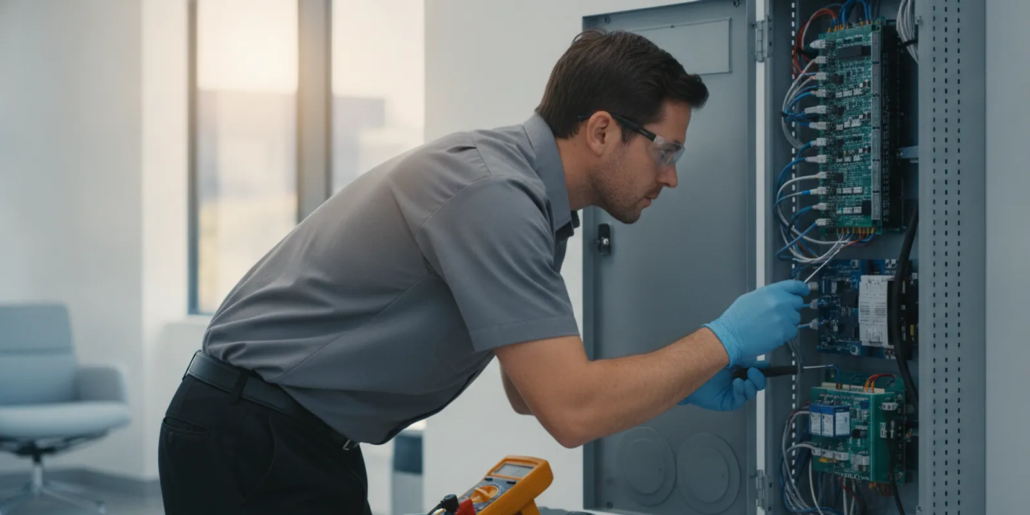
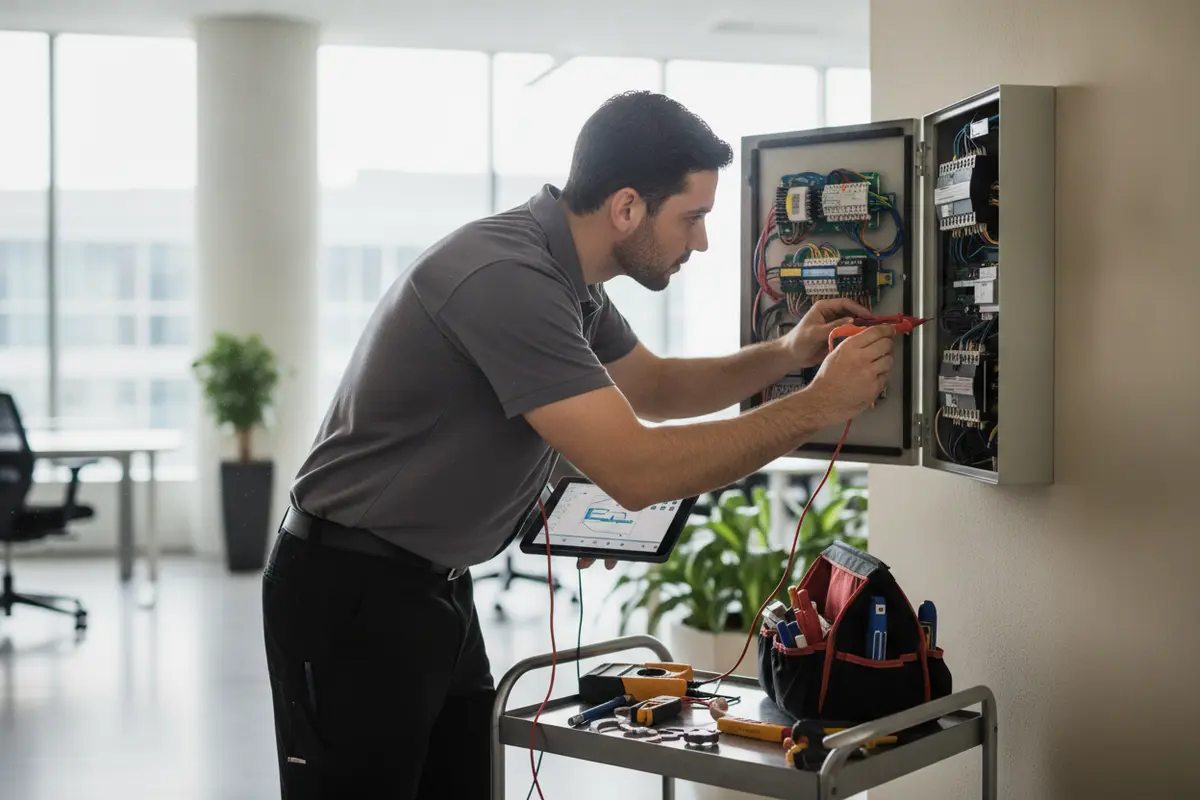
A sound repair visit begins by confirming the reported symptom and understanding what the system is expected to do. The technician may review the panel display and event history, inspect the affected components, test relevant connections, and check whether the issue relates to power, communication, wiring, device condition, or system configuration. The exact checks depend on the equipment and fault. A technician may also ask when the fault first appeared, whether it occurs at a certain time, and whether it followed a building change. Intermittent trouble can take more context to reproduce than a steady alert. Event history, earlier work orders, and a staff member’s observations can help connect the symptom to a pattern. The visit should distinguish what has been confirmed from what remains a possibility, so the site contact can make an informed decision about further work.
Access and system type shape the inspection. A security panel, a fire alarm control unit, and related communication equipment each have their own components and test procedures. A provider may need access to more than the panel itself to check an issue. Before the visit, confirm any site access rules and identify a staff contact familiar with the affected area. If testing will interrupt an alarm function, ask how the interruption will be managed and communicated, and what will confirm normal status afterward.
For commercial fire alarm work, the assessment should take account of the system’s design, equipment condition, inspection findings, manufacturer guidance, and applicable code requirements. There is no universal age that automatically means every commercial system must be replaced. A professional evaluation can help distinguish a repairable fault from broader issues that need a documented plan.
Ask the provider to explain what was tested, what the results mean, and whether any function remains unavailable. If the work affects a monitored system, ask how monitoring status and signal handling will be confirmed when service is complete. For code-related planning, American Alarm also offers information on NFPA 72 compliance in Atlanta.
A technician’s assessment should connect the reported symptoms to documented tests, describe any remaining limitations, and account for the type of system and applicable requirements.
Should you repair, replace, or upgrade the system?
The right choice depends on the fault, the condition of related equipment, the system’s intended use, and the cost and disruption of each option. A single component issue may call for a focused repair. Repeated failures, unavailable parts, changing building needs, or a system that cannot support required functions may justify a wider review. Do not decide on age alone, especially for a commercial fire alarm. Consider the consequence of each option for daily operations as well as the fault itself. A short, well-defined repair may restore a needed function with limited disruption; a wider project may require coordination, phased work, or scheduling around business hours. Ask the provider to separate urgent findings from optional improvements and explain the effect of leaving each issue unresolved. This makes it easier to plan approvals and set priorities without confusing a recommendation with an immediate need.
For a fire system, ask how the proposed scope relates to inspection results, applicable requirements, and system documentation. If a repair is not practical because a part is unavailable or the underlying issue is broader, request an explanation of what alternatives exist. A proposal should state what must be tested after work and what steps will return functions to service. The facility contact remains responsible for coordinating site procedures and any required notifications.
Use the table to structure a discussion with your provider. It is a planning aid, not a substitute for system testing or a site-specific recommendation.
| Option | May fit when | Questions to ask | What to document |
|---|---|---|---|
| Targeted repair | A defined fault is isolated and the rest of the system operates as intended. | What failed? What tests confirm the repair? Will any other issue remain? | Parts replaced, test results, affected functions, and monitoring status. |
| Additional diagnosis | The alert returns, symptoms are intermittent, or the fault has not been isolated. | What further testing is needed? What access or records would help? | Symptoms, dates, test steps, and any temporary impairment plan. |
| System upgrade or replacement planning | Equipment condition, parts availability, required functions, or repeated service needs raise wider concerns. | Which components are affected? What code, manufacturer, and authority requirements apply? | Assessment basis, proposed scope, approvals, testing, and handoff steps. |
Compare proposals by scope, not just by the bottom-line amount. A useful estimate should identify what will be inspected or changed, what is excluded, which functions will be tested, and what documentation will be provided. Ask whether any follow-up work is recommended and why. For context on how repair costs can vary by issue, see this guide to alarm system repair in Atlanta.
Repair is most suitable when a defined issue can be addressed; repeated faults, unavailable parts, or changing needs may call for more diagnosis or a documented upgrade plan.
What should a service proposal and closeout include?
Before work begins, confirm the reported issue, the expected work, and who has authority to approve it. If a commercial site has separate security and fire alarm equipment, be specific about which system is included. Ask the provider to identify any limits, such as inaccessible devices, parts that need to be ordered, or conditions that prevent full testing during the visit.
At closeout, request a plain-language summary of the findings and completed work. It should state whether the original symptom was resolved, what was tested, and whether any function remains impaired or needs follow-up. For work on a fire alarm, ask what records, test results, or notifications are appropriate for the facility and local authority having jurisdiction. Retain the service report with system records so future technicians can review the history.
Licensing and alarm rules vary by state and locality. As one example, the New York State installer licensing page describes licensing for security or fire alarm installation there; it is not a statement of Georgia requirements. For an Atlanta project, ask the provider about applicable Georgia credentials, permits, and local approvals for the specific work.
A useful proposal defines the work and its limits, while closeout records the findings, tests, remaining impairments, and any next steps.
How can a business reduce repeat alarm trouble?
Good records and a clear response process can make future service more efficient. After a repair, update the site’s equipment list and note the affected location, system model when known, work performed, and any recommended follow-up. Keep monitoring contacts and escalation steps accessible to authorized staff.
- Track recurring alerts: Note whether the same message returns, when it happens, and any conditions that seem to coincide with it.
- Plan maintenance: Follow manufacturer guidance, inspection schedules, and applicable requirements for the installed system.
- Control system changes: Route changes to wiring, network access, room layout, or secured openings through the appropriate facilities and alarm contacts.
- Review staff procedures: Make sure authorized users know whom to contact and what information to provide when a system reports trouble.
- Keep service records together: Store reports, system documents, and follow-up notes where the designated site contact can find them.
If an alarm panel is beeping, the sound alone may not identify the cause. Review the safe checks in this guide to a commercial alarm panel that is beeping, then use the panel’s manual and site procedures to determine the next authorized step. For general service options, visit American Alarm’s Atlanta alarm and security services.
Consistent records, maintenance planning, and clear staff procedures give a business a better basis for spotting repeat trouble and arranging appropriate service.
What should Atlanta businesses ask an alarm repair provider?
Use questions that make the work and its limits clear. A provider should be able to explain the diagnostic process in terms the facility contact can understand, without promising a result before inspecting the system.
- Scope: Which system and reported symptoms are included in the service visit?
- Diagnosis: What tests will help identify the cause, and what information should the site provide?
- Authorization: Who can approve work beyond the initial assessment?
- Safety and operations: If a system function is impaired, what temporary steps should the site follow while awaiting repair?
- Completion: What tests and written records will confirm the work performed?
- Follow-up: Are there open issues, recommended maintenance, or additional decisions for the owner?
These questions are useful whether the issue affects intrusion detection, access functions, or a fire alarm system. For a second perspective on evaluating providers, read what to consider when choosing an alarm company.
Questions about scope, diagnosis, authorizations, tests, and records help a business understand the proposed service before approving work.
Review commercial alarm repair service options.
Frequently asked questions
These answers cover common service planning questions for commercial alarm faults in Atlanta.
Can a business keep operating while an alarm is under repair?
That depends on the system, the affected function, and the site’s response plan. Ask the provider and monitoring contact what remains active and what procedures apply. For a possible life-safety impairment, follow the facility’s emergency and notification procedures rather than assuming normal operation is unaffected.
Should a commercial fire alarm be replaced after a set number of years?
There is no one age-based rule that fits every commercial system. Consider equipment age and condition, manufacturer guidance, inspection findings, applicable code requirements, parts availability, and a qualified professional’s assessment.
What details should I provide when calling for service?
Share the full panel message, when it began, the affected area or function, recent building or electrical work, and the best site contact. If available, provide system records and explain whether monitoring has reported a signal.
Can an alarm repair visit include fire and security systems?
Ask what systems the provider supports and state which one needs attention. The equipment and applicable work may differ, so confirm the scope before scheduling and clarify whether separate assessment or documentation is needed.
How can I compare repair estimates?
Compare the diagnostic steps, work included, testing, documentation, exclusions, and any recommended follow-up. Ask what prompted a proposed replacement or upgrade, and request the technical basis in writing.
Call (770) 645-0061 to discuss service for your Atlanta business.
A clear symptom report, a careful assessment, and written closeout notes help Atlanta businesses make informed decisions about alarm repairs and system planning.

Leave a Reply
Want to join the discussion?Feel free to contribute!