8 Key Benefits of Key Card Access for Offices
Who has access to your server room right now? What about your file storage or executive offices? With traditional keys, the honest answer is often, “I’m not entirely sure.” A lost key or an unreturned one from a past employee creates a permanent security gap you can’t see. A key card system replaces that uncertainty with absolute control. You can grant or revoke access to any door for any person in real-time, from a central dashboard. Every entry is logged, giving you a clear and detailed history of movement throughout your facility. The benefits of key card access for office building security are rooted in this powerful visibility, giving you peace of mind and complete command over your workspace.
Key Takeaways
- Replace Outdated Keys with Smart Control: A key card system gives you precise command over who enters your office. You can grant access based on roles, set time-based schedules, and instantly deactivate a lost card, which eliminates the security risks and rekeying costs associated with traditional locks.
- Streamline Your Daily Operations: Beyond security, key card access makes your office more efficient. It simplifies visitor management, provides faster entry for employees, and allows you to manage every door from a single dashboard, saving you time and reducing daily frustrations.
- Choose a Solution That Grows with You: A key card system is a flexible investment that adapts to your business’s needs. Adding new doors or integrating with other security measures is straightforward, making it a smart, long-term choice that provides lasting value and peace of mind.
What Is a Key Card Access System?
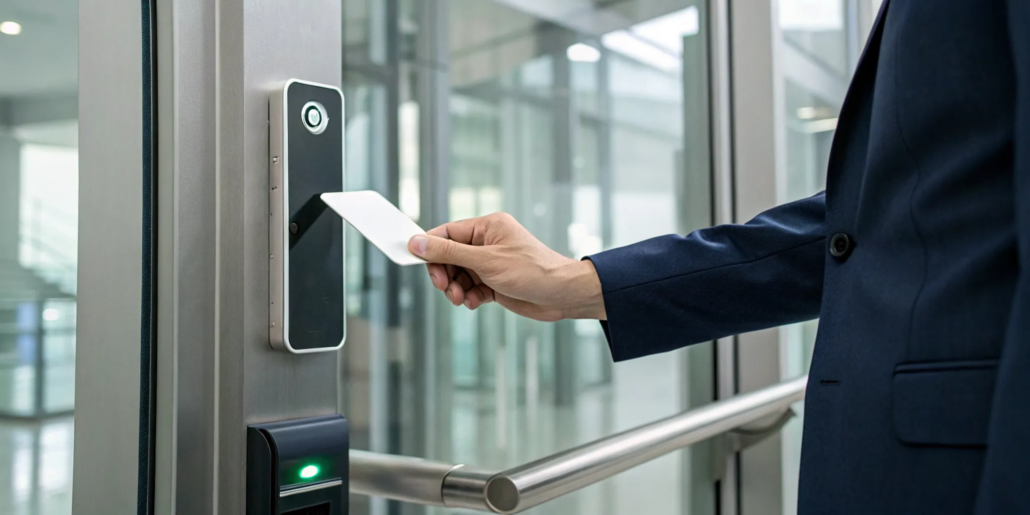
Let’s move past the days of bulky keychains and worrying about who might have a copy of a key. A key card access system is a modern solution that uses electronically programmed cards to grant or deny entry to your office building and specific areas within it. Instead of a metal key fitting into a lock, an employee simply presents their card to a reader, and the system decides whether to unlock the door. It’s a smarter, more flexible way to manage who goes where and when.
These systems are a core part of modern access control systems, giving you complete command over your office’s entry points. The main components are the key cards themselves, the readers installed at each door, and the central software that acts as the brain of the operation. This software is where you’ll set permissions, add or remove users, and review activity logs. Unlike traditional locks, which create a major headache when a key is lost, a key card system allows you to deactivate a lost card instantly. This simple action maintains the integrity of your building’s protection without the cost or hassle of changing all the locks. This gives you peace of mind and a clear record of everyone who has entered your space, which is something a simple lock and key can never offer.
How Do Key Card Systems Work?
The process is surprisingly straightforward and happens in just a few seconds. When an employee holds their card up to a reader, the reader picks up the card’s unique credential. It then sends this information to a central control panel. This panel is the decision-maker; it checks its database to see if that specific card is authorized to open that door at that particular time. If everything checks out, the panel sends a signal to unlock the door. If the card isn’t authorized, the door remains locked. Every single attempt, whether successful or denied, is recorded in the system’s log, giving you a detailed history of all activity.
Common Types of Key Card Systems
Not all key cards are created equal, and the type you choose often depends on your budget and security needs. The most common options today are smart cards and contactless credentials, which use encrypted chips to protect your data and are much harder to duplicate than older swipe-based cards. For the highest convenience, mobile credentials let employees use a smartphone as a digital key. Older magnetic stripe cards are largely obsolete because the data they store is easy to copy, so modern offices usually choose encrypted smart cards, fobs, or mobile credentials instead. You can explore different systems to find the right fit, as each offers a unique balance of convenience and protection for your office environment.
How Key Card Access Improves Office Security
Moving beyond traditional lock-and-key setups is one of the most impactful steps you can take to protect your business. While a metal key can be copied, lost, or stolen, creating immediate vulnerabilities, a modern access control system gives you dynamic control over who enters your space and when. It’s not just about locking a door; it’s about creating a smart, responsive environment that protects your team, your assets, and your sensitive information.
Key card systems transform your entry points from passive barriers into active parts of your security strategy. Instead of wondering who has a copy of a key, you have a clear, digital record of every person with access. You can grant or revoke permissions with a few clicks, tailor access to specific roles and schedules, and see a complete history of who has been where. This level of visibility and control simply isn’t possible with old-fashioned keys. It allows you to respond instantly to staffing changes or security concerns, ensuring your office remains a secure and productive place for your team to thrive.
Restrict Access to Authorized Personnel
At its core, a key card entry system is designed to control who can get into your building and specific areas within it. Instead of a universal key, employees are given a unique card or fob. To unlock a door, they simply swipe, tap, or insert their credential into a reader. This simple action confirms their authorization and grants them entry. It’s a straightforward yet powerful way to ensure that only approved individuals can access your workspace, creating a fundamental layer of protection for your entire operation from the moment someone walks up to the door.
Customize Access Levels by Role
Not every employee needs access to every room in your office. Key card systems allow you to give different people different levels of access based on their job functions. For example, your IT staff can be granted entry to the server room, while your sales team’s access is limited to the main office floor. You can even set time-based restrictions, allowing cleaning crews access only after business hours. This customization is especially useful for businesses with sensitive areas, like law firms or medical offices, ensuring that confidential information and valuable equipment are always protected.
Eliminate the Risk of Lost or Copied Keys
One of the biggest headaches with traditional keys is managing them when they are lost, stolen, or not returned by a former employee. The only solution is to rekey the locks, which is both costly and time-consuming. With a key card system, this problem disappears. If a card is lost or an employee leaves the company, you can instantly deactivate their credential in the system. This simple click makes the old card useless, completely removing the security risk without the expense or hassle of changing any hardware on your doors.
Monitor and Deactivate Access in Real-Time
A key card system does more than just open doors; it creates a detailed log of all entry activity. You can see exactly who entered a specific area and at what time, which is invaluable for tracking activity and investigating any security issues that may arise. This real-time monitoring means you are always aware of who is in your building. If a card is reported lost or stolen, you can immediately remove it from the system to prevent unauthorized use and issue a new one just as quickly, maintaining seamless security without any downtime.
How Do Key Card Systems Improve Daily Operations?
Beyond strengthening your building’s security, a key card system can make your day-to-day operations run much more smoothly. Think of it as an investment in efficiency that pays off every single day. These systems replace the clunky, manual processes of traditional keys with smart, automated solutions that save time for you, your employees, and your visitors. From the moment an employee arrives to the time a client checks in for a meeting, a key card system simplifies movement and management throughout your office, reducing daily friction and small frustrations.
Instead of just locking doors, this technology helps you manage them intelligently. It can speed up entry for your team, create a seamless experience for guests, give you the power to control access from anywhere, and automatically keep a record of who is coming and going. These small improvements add up, freeing you and your staff to focus on what really matters: running your business. It’s about creating a smarter, more professional environment where everything just works. Let’s look at how these systems can transform your daily workflow and make your office a better place to work.
Enable Faster, Touchless Entry
One of the most immediate benefits you’ll notice is how quickly people can get into the building. Employees no longer need to fumble with a ring of keys; a simple tap or wave of a card grants them access. This small change reduces friction at the start of the workday and keeps foot traffic flowing smoothly, especially during busy morning arrivals.
Many modern systems also offer a completely touchless entry, which is a fantastic perk for maintaining a cleaner, more hygienic workspace. By minimizing contact with shared surfaces like door handles, you create a healthier environment for everyone. It’s a simple, effective way to show your team you care about their well-being while making their daily routine a little bit easier.
Streamline Visitor Management
Managing visitors, from clients to delivery personnel, can be a constant interruption. A key card system brings order to this process. Instead of manually signing guests in and escorting them, you can create a more professional and secure experience. For example, you can pre-register visitors and assign them temporary access cards that are active only for the duration of their visit.
This not only makes check-ins faster but also ensures guests can only access approved areas, like the lobby or a specific conference room. When their meeting is over, the card automatically deactivates. This streamlined approach impresses visitors with your efficiency and gives you peace of mind knowing your office remains secure.
Manage Access Centrally and Remotely
Imagine being able to control every door in your office from a single dashboard. That’s the power of a centralized key card system. You can manage everything from a central computer, granting or revoking access, setting schedules, and viewing activity logs without ever leaving your desk. This is a huge time-saver compared to the hassle of rekeying locks or tracking down physical keys.
The convenience extends beyond the office walls. Many systems can be managed remotely through a mobile app. If an employee forgets their card or a contractor needs after-hours access, you can grant entry from anywhere. This remote capability gives you incredible flexibility and control, allowing you to respond to needs instantly without having to be on-site.
Automate Entry Tracking
With a key card system, you have a complete and accurate record of movement in your office. The system automatically keeps a log of all entries, noting which card was used, which door was opened, and the exact time of the event. This digital trail is invaluable for both security and operational insight.
If a door is left ajar or an unusual entry occurs after hours, you can quickly review the activity log to see what happened. This automated tracking provides a clear picture of traffic patterns and helps you identify potential issues before they become problems. It creates a layer of accountability and provides data that can help you make smarter decisions about office management and security protocols.
Key Card Access vs. Traditional Locks
Choosing between key cards and traditional metal keys might seem like a simple preference, but it’s a decision that impacts your office’s security, budget, and daily workflow. While traditional locks have been the standard for centuries, they come with limitations that modern businesses can’t afford to ignore. Key card systems offer a more dynamic and controlled approach to keeping your property secure. Instead of relying on a physical piece of metal that can be easily lost or copied, you’re using a smart credential that you can manage with the click of a button. This shift changes how you handle everything from employee turnover to after-hours access.
When you compare the two, you’ll find that key cards provide a level of control and flexibility that old-fashioned locks just can’t match. It’s about moving from a reactive security model, like changing locks after a key is lost, to a proactive one where you can prevent unauthorized access before it becomes a problem. This gives you more command over who enters your space and when, which is essential for any Atlanta business looking to protect its assets and people. The convenience of simply tapping a card to enter is just the beginning. The real value lies in the background, where you can set specific access schedules, track entry logs, and instantly revoke permissions without ever touching a lock. It’s a smarter, more efficient way to manage who comes and goes.
Comparing Costs: Upfront vs. Long-Term
At first glance, a standard lock and key seems like the more budget-friendly option. The initial hardware is inexpensive, but the long-term costs can quickly add up. Think about what happens when an employee loses a key or leaves the company. To stay secure, you have to call a locksmith to rekey the locks, a process that costs both time and money. If you have multiple doors, this expense multiplies.
Key card systems, on the other hand, are often more affordable to maintain. While the initial setup is an investment, you eliminate the need for a locksmith every time a card is lost or an employee departs. You can simply deactivate the lost card from the system, instantly removing its access privileges. Over time, these savings on maintenance and rekeying make access control systems a smarter financial choice for your business.
Reduce Maintenance and Wear
Traditional locks involve metal grinding against metal every time you use them. This constant friction leads to wear and tear, causing keys to break and locks to jam or fail over time. This means more calls for repairs and replacements, creating unexpected disruptions and costs for your business.
Key card systems sidestep this issue entirely. Since readers use proximity sensors, there are fewer moving parts and less physical contact, which means they are built to last longer with minimal upkeep. When an employee leaves, you don’t have to worry about collecting their key or wondering if they made copies. A few clicks in the management software is all it takes to disable their card. This simple action saves you the headache and expense of changing all the locks, giving you immediate peace of mind.
Simplify Management Across Multiple Entry Points
If your office has more than a few doors, managing a set of traditional keys can become a real hassle. You end up with a heavy ring of keys, and it’s easy to lose track of which key opens which door. A master key might seem like a solution, but if it gets lost or stolen, your entire building’s security is compromised.
This is where key card access truly shines. You can manage every door in your office from one central computer, even remotely. Need to grant a contractor temporary access to a specific room? You can do it from your desk or even from home. This centralized control simplifies your security operations, removing the complexity of physical keys and giving you a clear overview of who can access what areas. It’s a streamlined approach that puts you in complete command of your office’s security.
Scale Security as Your Business Grows
As your business expands, your security needs will evolve. With traditional locks, growth can be complicated. Adding a new office suite or securing a storage area means installing more locks and adding more keys to your already crowded keychain. It’s a clunky system that doesn’t adapt well to change.
A key card system is designed to grow with you. Expanding your security is as simple as installing a new reader on a new door and integrating it into your existing network. Whether you’re taking over another floor or opening a new branch across Atlanta, you can seamlessly extend your security services without overhauling your entire setup. This scalability makes key card access a future-proof investment that adapts to your business’s journey, ensuring your security is always up to the task.
What Insights Can a Key Card System Provide?
A key card system offers more than just a secure way to open a door. It’s a powerful source of information that can transform how you manage your office. By collecting data on who goes where and when, you can make smarter decisions about everything from daily operations to long-term planning. This insight helps you understand how your office truly functions, allowing you to refine workflows, improve resource allocation, and strengthen your overall security posture. Let’s explore the specific data you can get and how to use it.
Track Entry and Exit Activity
Every time a key card is used, the system creates a digital record. This log shows exactly who accessed a door, where it was, and the precise time it happened. This isn’t just for major security events; it’s incredibly useful for day-to-day management. For instance, you can easily verify employee work hours or see who was in a specific area if a piece of equipment goes missing. The system also logs failed entry attempts, giving you a heads-up on potential security concerns. This detailed activity log provides a clear, unbiased record that helps you manage your team and protect your assets with confidence.
Use Data to Improve Office Management
The data from your key card system is a goldmine for improving office efficiency. By analyzing entry and exit patterns over time, you can see which areas of your building are used most and when. This information helps you make smarter decisions about your space. For example, you might realize a conference room is underutilized or that your breakroom gets crowded at specific times. These insights can guide office layout changes, staffing adjustments, and even energy-saving initiatives like automated lighting and HVAC settings. It’s a practical way to make sure your office is working as hard as you are.
Integrate with Alarm and Surveillance Systems
A key card system becomes even more powerful when it works with your other security measures. You can integrate it with your alarm and video surveillance systems to create a unified security network. For example, you could set the system to automatically record video when a restricted door is accessed or trigger an alarm after multiple failed entry attempts. This creates a seamless response that confirms who is trying to gain access and why. Many modern systems also connect with smart building features, allowing you to manage everything from a single, easy-to-use interface, even from your phone.
What Are the Downsides of Key Card Access?
While key card systems offer a major upgrade over traditional locks, it’s smart to understand their potential challenges. Being prepared for these situations is the best way to ensure your system works smoothly for your business. The good news is that with a well-planned system and a professional partner, these downsides are completely manageable.
The main concerns usually fall into three categories: what to do when a card is lost, how to handle potential security gaps, and how to prepare for technical issues like a power outage. Let’s walk through each one so you can feel confident in your decision. Thinking about these things ahead of time ensures you choose the right system and provider, setting you up for long-term success and peace of mind. A solid plan turns these potential hiccups into minor, easily-solved issues.
Handling Lost or Stolen Cards
One of the first questions business owners ask is, “What happens if an employee loses their card or leaves the company?” With traditional keys, this scenario often means the expense and hassle of changing the locks. With a key card system, the solution is much simpler. Instead of rekeying a door, you can instantly deactivate the lost or stolen card within the system’s software. This immediately removes its access privileges, securing the entry point without any disruption.
This process saves significant time and money. You don’t have to worry about former employees holding onto keys or a lost card falling into the wrong hands. A new card can be issued to the employee just as quickly. While managing cards is a new administrative task, it’s far more efficient and secure than dealing with the risks of duplicated metal keys. Modern access control systems make this process straightforward and remote.
Addressing Security Vulnerabilities
It’s true that no system is entirely foolproof, and it’s important to be aware of potential weak points. Some older card technologies, like basic magnetic stripes, can be vulnerable to being copied. This is why it’s crucial to work with a provider who offers modern, encrypted card technology that is much more difficult to duplicate. This simple choice significantly reduces your risk.
Another potential gap comes from the human element. A security system is only as strong as the policies around it. If an employee loses a card and doesn’t report it right away, a brief window of vulnerability could exist. This is why it’s essential to have a clear policy for all staff on reporting lost or stolen cards immediately. When paired with the right technology and clear protocols, you can effectively manage these risks and maintain a secure environment with all of your security services.
Preparing for Technical Failures
Since key card systems are electronic, concerns about power outages or hardware malfunctions are valid. What happens if the power goes out? Will everyone be locked out? Professionally installed systems anticipate these issues. Most are equipped with battery backups that keep the readers and locks operational for a period of time during an outage, ensuring you can still get in and out.
Of course, hardware can sometimes fail or a card can become damaged, causing delays at an entry point. This is where having a reliable service partner makes all the difference. Regular maintenance can prevent many issues before they start, and having a responsive team for repairs minimizes any downtime. When you contact us, we can discuss the specific backup and support options that will give your Atlanta business the reliability it needs.
Modern Upgrades to Key Card Access
Key card technology has come a long way from the simple magnetic stripe cards of the past. Today’s systems offer a range of advanced features that provide even greater security, convenience, and operational intelligence. If you’re thinking about an access control system, it’s helpful to know about these modern upgrades that can take your office’s protection and efficiency to the next level. From using your smartphone as a key to integrating with your building’s other smart systems, the possibilities are more powerful than ever.
These advancements aren’t just about fancy gadgets; they’re about creating a smarter, more secure environment that works for you and your team. Imagine being able to grant visitor access from your phone or having your system automatically log entry times without any manual work. These features streamline daily operations and give you a clearer picture of who is coming and going. Exploring these options can help you find a solution that meets your specific needs without being overly complicated.
Mobile and Smartphone-Based Access
Let’s be honest, how many times have you left the house without your keys versus without your phone? Many businesses are now adopting mobile access systems that turn smartphones into digital keys. Instead of fumbling for a plastic card, employees can simply tap their phone to unlock a door. This approach is often more secure since phones are typically protected with a passcode or biometric lock. It also makes management a breeze. You can grant or revoke access remotely without ever needing to issue or collect a physical card, which saves time and hassle, especially when dealing with employee turnover.
Biometric Access Control
For areas that require the highest level of security, biometric access control is an excellent option. This technology uses unique biological traits, like a fingerprint or facial scan, to verify a person’s identity. Because these features are nearly impossible to duplicate, biometrics provide a powerful layer of protection for sensitive spaces like server rooms or executive offices. While some methods like fingerprint scanners aren’t completely “touchless,” they offer undeniable proof of identity. Integrating biometrics is a key part of building comprehensive security solutions for businesses that can’t afford any compromises.
Keypad and QR Code Access
Beyond cards and phones, other credentials can offer flexible entry options. Keypads, a classic and reliable choice, allow entry with a simple PIN. They are perfect for doors where issuing individual credentials to every user isn’t practical. A more modern alternative is QR code access. This method is fantastic for managing visitors, contractors, or temporary staff. You can generate a unique QR code that grants access for a specific time frame and send it directly to their phone. Once their visit is over, the code automatically expires, eliminating the security risk of unreturned temporary cards. We can help you find the right mix of solutions for your office.
Cloud and Smart Building Integrations
Modern access control systems don’t just operate in a silo. They can be connected to the cloud, allowing you to manage your office’s entry points from anywhere using a mobile app or web dashboard. This means you can lock or unlock doors, change access permissions, and view activity logs even when you’re not on-site. These systems can also integrate with other smart building features, automating things like lights and thermostats when a room is entered. When paired with commercial surveillance systems, you can link entry events to video records for a complete picture of activity at your facility.
Is a Key Card System Right for Your Atlanta Office?
Deciding on the right security for your Atlanta office is a big step. If you’re weighing your options, a key card system offers a modern solution that balances security with convenience. Let’s walk through a few questions to help you determine if it’s the right fit for your business.
How Sensitive Is Your Workspace?
If your office handles confidential client data, valuable equipment, or has restricted areas, a key card system is a smart move. Unlike traditional keys that can be easily copied, key cards give you precise control. You decide exactly who can enter specific rooms and when, and every entry is logged to create a clear record for security checks. This level of control is essential for businesses that need to protect sensitive information. An access control system lets you manage permissions from a central point, ensuring only authorized staff can get into critical areas.
Are You Tired of Managing Keys?
Think about the hassle of traditional keys. When an employee leaves, you have to collect their key and hope they didn’t make copies. If a key is lost, you might face the expensive task of rekeying multiple locks. Key card systems solve this problem entirely. If a card is lost or an employee departs, you can simply deactivate it from your computer in seconds. This saves you time, money, and a lot of stress. Plus, employees often appreciate the convenience of a single card or fob instead of a bulky keychain, making it an operational upgrade for any busy office.
Do You Want a System That Grows with You?
A great security solution should support your business not just today, but also in the future. Key card systems are incredibly scalable. As your team grows, you can issue new cards without changing any hardware. You can also integrate them with other security features, like alarms and video surveillance, to create a unified security network. This integration allows you to manage your entire office’s safety from one platform. By choosing a flexible system from our range of security services, you’re making a long-term investment in your company’s security and operational efficiency.
Related Articles
- Guide to Access Control for Commercial Buildings
- How an Access Control System Secures Your Business
- Choosing Door Access Control Systems for Business
- Access Control System Costs in Atlanta
- Guide to Business Access Control Systems
- Alarm & Access Control Systems for Atlanta Businesses
Schedule a free consultation. Call (770) 645-0061 or contact American Alarm online.
Frequently Asked Questions
What happens if the power goes out? Will my team be locked out of the office? That’s a great question and a common concern. Professionally installed key card systems are designed with this exact scenario in mind. They come equipped with battery backups that keep the system running during a power outage. This ensures your doors remain functional and your team can still get in and out without any interruption.
Is switching to a key card system expensive compared to just using regular locks? While a key card system has a higher initial investment than standard locks, it often proves more affordable over time. Think about the long-term costs of traditional keys: every time an employee leaves or a key is lost, you have to pay a locksmith to rekey the locks. With a key card system, you eliminate those ongoing expenses. Deactivating a card is free and instant, making it a smarter financial choice for the life of your business.
How do I handle a lost card or an employee who leaves the company? This is where key card systems really make your life easier. Instead of the stress and cost of changing locks, you simply log into the system’s software and deactivate the specific card. The process takes only a few seconds, and the card immediately becomes useless. This gives you instant peace of mind and complete control over who has access to your building.
Can I manage the system even when I’m not at the office? Yes, absolutely. Many modern access control systems are cloud-based, which means you can manage them from anywhere with an internet connection. Using a secure web portal or a mobile app on your phone, you can grant or revoke access, check activity logs, or unlock a door for a delivery, all without having to be on-site. This flexibility is a huge benefit for any busy business owner.
Are key card systems difficult for my employees to use? Not at all. For your employees, the experience is incredibly simple and convenient. Instead of fumbling with a heavy keychain, they just need to tap or wave a single card or fob near a reader. The process is quick, seamless, and much easier than finding the right key for the right door. It’s a small change that can make the start of their workday a little smoother.


Leave a Reply
Want to join the discussion?Feel free to contribute!