Access Control Systems for Small Business in Atlanta
For Atlanta small businesses, access control is about more than replacing keys. It helps you decide who can enter offices, inventory rooms, server closets, and employee-only areas, then adjust permissions quickly as your team changes. This guide will explore how access control systems for small business provide this level of detailed control, helping you protect your most valuable assets from the inside out.
Key Takeaways
- Modernize your entry management: Swap traditional keys for secure credentials like cards, fobs, or mobile apps to gain precise, real-time control over who enters your property.
- Plan for the total cost of ownership: Look beyond the initial hardware price to include installation, software, and potential maintenance fees. A scalable, cloud-based system is a smart investment that can adapt as your business grows.
- Select a security partner, not just a product: The right provider is just as important as the technology. A local expert with a proven history offers better support and can help design a complete security solution tailored to your business.
What Is an Access Control System (and Why Does Your Business Need One)?
If you’re a business owner, you’ve probably dealt with the headaches of traditional keys. An employee leaves and you have to wonder, “Did they make a copy?” A key gets lost and you’re stuck calling a locksmith to rekey the entire building. It’s a cycle that is both expensive and insecure. This is where access control comes in as a modern, streamlined solution to managing who can enter your space.
At its core, an access control system lets you manage entry to your property without metal keys. Instead, employees use credentials like a key card, a fob, or even a mobile app on their smartphone to gain access. As the administrator, you can manage everything from a central, user-friendly platform on your computer or phone. This means you can grant or revoke access in seconds, set schedules for when doors can be opened, and even see a log of who has entered and when. It’s a smarter way to handle entry for your business.
So, why does your business need one? First and foremost, it provides a significant upgrade in protection. You can secure your assets, protect sensitive data, and ensure your employees feel safe. Modern small business access control is no longer just for large corporations; it’s an affordable and essential tool for companies of any size. You get to decide exactly who has permission to be in certain areas, from the front door to the server room.
Beyond the security benefits, these systems offer incredible convenience and long-term savings. You’ll never pay for a rekey again. When an employee’s tenure ends, you simply deactivate their credential with a click. The best access control systems are also built to scale, meaning they can grow with your business. You can start with one or two doors and easily expand the system as you add more employees or locations. It’s a flexible solution that adapts to your changing needs, giving you peace of mind and total control.
Key Features for Small Business Access Control
When you start looking at access control systems, you’ll find a lot of options. To find the right fit for your business, it helps to know which features make a real difference. Not all systems are created equal, and focusing on a few key capabilities will ensure you get a solution that truly protects your property and simplifies your operations. Here are the essential features to look for in an access control system for your small business.
Scalability
Your business isn’t static, and your security system shouldn’t be either. Scalability means the system can grow with you. Think about your future needs. Will you be hiring more employees, opening a new location, or needing to secure more doors? A scalable system allows you to easily expand your coverage without having to start over from scratch. Cloud-based access control systems are often ideal for this, offering the flexibility to adapt as your business evolves. This ensures your initial investment continues to serve you well for years to come.
Cloud-Based and Remote Management
For a small business owner, being able to manage things on the go is a game-changer. Cloud-based access control gives you that power. Instead of being tied to a single computer on-site, you can manage your system from anywhere with an internet connection. This means you can instantly grant or revoke access, adjust schedules, and receive security alerts on your phone or laptop, whether you’re at home or on vacation. This level of remote control provides not only convenience but also a much faster response to any security needs that arise. Our security services are designed to give you this exact flexibility.
Mobile Credentials and Keyless Entry
Physical keys are quickly becoming a thing of the past. They can be lost, stolen, or copied, creating a security headache and replacement costs. Mobile credentials and keyless entry offer a more secure and convenient alternative. This technology turns an employee’s smartphone into their key. It’s safer because access is tied to a person’s specific device, and you can easily revoke it if an employee leaves. Need to let in a contractor or a delivery driver for a one-time visit? You can grant temporary access without ever handing over a physical key. If you’re ready to explore keyless options, contact us to discuss what would work best for your space.
Integration with Existing Security Systems
Your access control system shouldn’t operate in a silo. For the strongest protection, it needs to work together with your other security measures. Integration allows your access control to communicate with systems like your alarm monitoring and commercial video systems. For example, you can set the system to record video whenever a specific door is opened or trigger an alarm if a door is forced. This creates a unified security network where each component makes the others more effective. A well-integrated setup provides a more complete picture of what’s happening at your business, giving you greater control and peace of mind.
User Management and Access Levels
An access control system is only as good as its management. Before you install one, it’s important to decide who will be in charge of it. This person will be responsible for regularly checking the system’s activity logs, adding and removing user permissions, and ensuring everything is working correctly. A key feature to look for is the ability to set different access levels. This lets you give employees access only to the areas they need, at the times they’re supposed to be there. For instance, your cleaning crew might only have access after hours, while managers have 24/7 entry. Clear policies and diligent management are what make the technology truly effective.
How Do Access Control Technologies Compare?
Choosing the right technology for your business can feel like a big decision, but it doesn’t have to be complicated. The goal isn’t to find the most advanced system on the market; it’s about finding the one that fits your specific needs, budget, and daily operations. Each type of access control offers a different balance of convenience, cost, and protection. By understanding the pros and cons of each, you can make a confident choice that keeps your property secure and your workday running smoothly.
We can group the most common access control systems into four main categories: traditional keypads with PIN codes, key fobs and smart cards, mobile apps on your smartphone, and high-security biometrics. Let’s break down how each one works and what it could mean for your business. Thinking through these options will help you pinpoint the perfect solution for protecting your people, property, and assets.
Keypads and PIN Codes
Keypads are a straightforward and budget-friendly way to manage access. Employees and authorized personnel simply enter a numeric code to unlock a door. This method eliminates the worry of lost or copied physical keys and makes it easy to grant temporary access without having to hand anything over.
The main consideration with PIN codes is that they can be shared, forgotten, or potentially observed by an unauthorized person. Because of this, they are often best for securing low-risk, internal areas rather than main entry points. For many small businesses, a keypad is a practical first step into access control that provides more oversight than a simple lock and key.
Key Fobs and Smart Cards
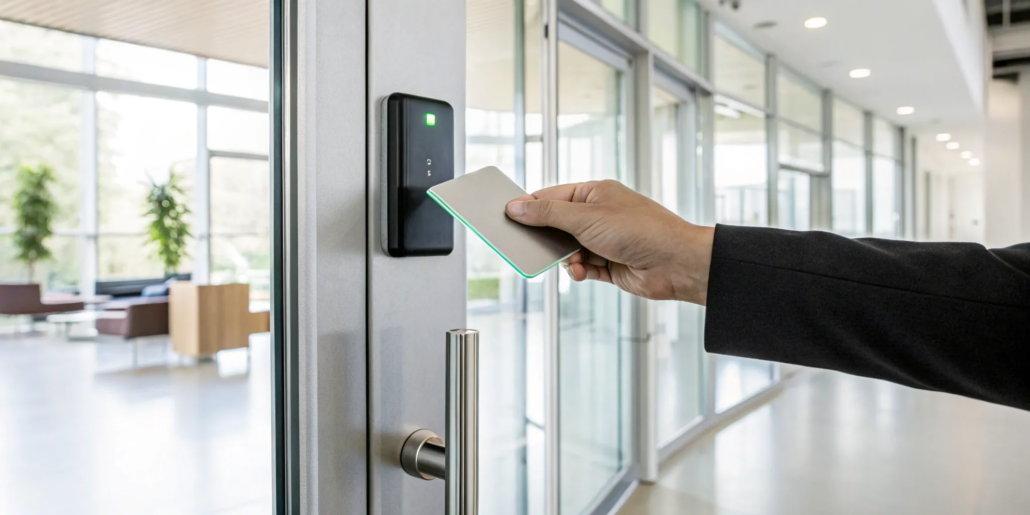
Key fobs and smart cards are an extremely popular and reliable choice for businesses of all sizes. Instead of a code, each user gets a small fob for their keychain or a card for their wallet. A quick tap on a reader grants them entry, making it a fast and frictionless experience.
This technology offers a significant security advantage over PINs. If a card is lost or an employee leaves the company, you can instantly deactivate that specific credential from the system without affecting anyone else. This gives you precise control over who has access and when, making it much easier to manage your building’s security and keep accurate entry logs.
Mobile App-Based Access
Imagine your smartphone is your key. That’s the convenience of mobile-based access control. This modern approach uses Bluetooth or NFC technology on an employee’s phone to unlock doors. It’s highly secure and incredibly flexible, as you can grant, manage, or revoke access credentials remotely from a central dashboard.
For business owners, this means you can let a delivery driver in or grant a contractor temporary access without even being on-site. It also eliminates the cost and hassle of replacing physical cards or fobs. As a core part of our security services, we find that businesses love this option for its blend of cutting-edge technology and real-world practicality.
Biometric Access Control
For areas requiring the highest level of security, biometric access control is the gold standard. This technology uses a person’s unique biological traits, like a fingerprint or facial scan, to verify their identity. Because these markers are nearly impossible to fake or duplicate, biometrics provide unmatched protection.
This type of system is ideal for safeguarding sensitive areas such as server rooms, inventory storage for high-value goods, or executive offices. While it represents a greater investment, the peace of mind it offers is invaluable for protecting your most critical assets. It ensures that only specifically authorized individuals can enter your most secure spaces, leaving no room for error.
Finding the Right Access Control Partner
Choosing the right company to install and manage your access control system is just as important as picking the system itself. You’re not just buying hardware; you’re investing in a long-term security relationship. Your partner should understand your business, offer reliable technology, and provide support when you need it most. A great partner will guide you through the options and help you find a solution that truly fits your needs and budget.
Why Local Expertise Matters
Choosing a partner for your access control system is a big decision, and going with a local expert can make all the difference. American Alarm is based in Roswell and serves businesses across Metro Atlanta, so our technicians understand the mix of offices, retail spaces, warehouses, medical suites, and light industrial buildings in the area. When you need installation guidance or service, local support means faster access to someone who knows your building, your doors, and your security goals. A local company is also invested in the community, building a reputation on reliable service. They can help you find smart, easy-to-use systems that secure your doors and entrances without the complexity of traditional keys, tailored specifically for your business.
Atlanta Examples: Where Access Control Helps Most
Different Atlanta businesses need access control in different ways. A small office may need role-based access for file rooms and IT closets; a retail shop may need employee-only stockroom entry; a warehouse may need scheduled access for receiving doors; a medical or dental office may need tighter entry records for areas with sensitive records; and a light industrial space may need controlled access between production, storage, and administrative areas. The right design gives each team the access they need without opening every door to every credential.
Choosing a Provider with a Proven Track Record
When it comes to your business’s security, you want a partner you can trust. Look for a provider with a long history of protecting businesses in our area. A company with decades of experience has seen it all and has a deep understanding of what works. Check out their customer reviews and ask about the technology they use. The best providers offer modern, cloud-based systems that are flexible and easy to manage. A proven track record means they not only install quality systems but also stand by their work with excellent service. You can learn a lot about a company’s reliability and commitment from their history and values.
Seeking Comprehensive Security Solutions
Your access control system is powerful, but it’s even more effective when it’s part of a complete security strategy. It’s wise to choose a partner who can offer a full range of security options. Think about how access control can work with your alarm monitoring or fire protection systems. When these systems are integrated, they create a stronger, more cohesive shield for your business. A provider that handles all these services can design a solution that fits together perfectly, often using your existing network to save on costs and simplify future upgrades. This approach ensures all your security components are communicating and working toward the same goal: protecting your assets.
Partnering with American Alarm
American Alarm has helped Atlanta-area businesses protect people, property, and sensitive work areas since 1995. We can review your doors, credentials, monitoring needs, and budget, then recommend an Atlanta access control installation plan that fits your business now and can scale later. Call (770) 645-0061 or request a local access control quote from American Alarm.
Breaking Down the Costs of Access Control
Thinking about a new system for your business often comes with one big question: what’s it going to cost? It’s a fair question, and the answer isn’t a single number. The total price of an access control system is made up of a few key parts. Understanding these components will help you create a realistic budget and see the full value of your investment.
The main costs you’ll want to plan for are the initial hardware and equipment, the professional installation and setup, and any ongoing subscription or monitoring fees. While it might seem like a lot to consider, breaking it down makes the process much more manageable. Think of it less as a single, hefty expense and more as a strategic investment in your business’s security and efficiency. Let’s walk through what you can expect for each part of the process.
Hardware and Equipment
The first cost you’ll encounter is for the hardware itself. This includes the electronic locks, card readers, keypads, or biometric scanners that you’ll install at your entry points. The price for these components can vary quite a bit depending on the technology you choose. For example, a basic two-door system might start around a few hundred dollars, while more advanced solutions will be higher. The key is to select the systems and products that fit both your security needs and your budget. This upfront investment covers the physical foundation of your new access control setup.
Installation and Setup
Once you have your hardware, the next step is getting it installed and running correctly. While it might be tempting to cut corners here, professional installation is crucial. A properly installed system ensures that all components work together seamlessly and securely from day one. When you partner with experts, they handle everything from designing the system layout to configuring the software and training your team. This service not only saves you time and potential frustration but also guarantees your system is set up for reliable, long-term performance. Think of it as peace of mind, knowing your security is in capable hands.
Subscription and Monitoring
Many modern access control systems, especially cloud-based ones, come with a monthly or yearly subscription fee. Before you get sticker shock, it’s important to understand what this fee covers. It typically includes access to the management software, remote management capabilities from your phone or computer, regular software updates, and customer support. For many businesses, the convenience of managing access levels and monitoring activity from anywhere is well worth the recurring cost. When you’re looking at different providers, make sure you get a clear breakdown of what’s included in their monitoring services so you can compare apples to apples.
Factoring in Long-Term Savings
While there are upfront and ongoing costs, a good access control system is an investment that pays for itself over time. Consider the money you’ll save by no longer needing to rekey your entire building every time an employee leaves. You can simply deactivate their credential with a few clicks. Modern systems can also be significantly less expensive to operate than older, traditional setups. By choosing a reliable partner, you’re not just buying equipment; you’re investing in a solution that streamlines operations and protects your assets for years to come. It’s a smart move that provides lasting value far beyond the initial price tag.
Common Access Control Challenges (and How to Solve Them)
Implementing a new access control system is a big step forward for your business’s security. Like any new system, it can come with a few hurdles. But don’t worry, a little planning goes a long way. Thinking through these common challenges ahead of time will help you make a smooth transition and get the most out of your investment from day one. Let’s walk through some of the typical questions that come up and how you can solve them.
Balancing Your Budget and Security Needs
It’s no secret that security systems come with a price tag. It’s easy to focus on the upfront cost of equipment, but it’s also smart to think about the long-term picture. This includes potential costs for maintenance, service agreements, and any training your team might need. The key is to find a solution that protects your business without straining your finances. A great first step is to look for providers that offer transparent pricing and even special offers to make top-tier security more accessible. By planning for the total cost, you can find a system that fits your budget and gives you peace of mind.
Addressing Employee Privacy and Buy-In
Bringing a new security system into the workplace can sometimes make employees feel like they’re being watched. The best way to handle this is with open communication. Explain that the system is there to protect everyone and the business itself, not to micromanage. It’s also helpful to think through who really needs access. Beyond your employees, you might have cleaners, delivery services, or maintenance staff who need to get in. A good access control system allows you to create different permission levels for different groups, which helps show your team that the system is thoughtfully managed. You can explore different systems and products to find one that offers this kind of flexibility.
Staying on Top of Maintenance and Audits
An access control system isn’t something you can just set and forget. To keep it working effectively, someone needs to manage it. This means adding new employees, removing access for those who leave, and regularly checking that everything is functioning correctly. Before you install a system, decide who will be in charge of these tasks. It could be a designated person on your team or you could rely on your security provider. Many companies offer monitoring and repair services that take this responsibility off your plate, ensuring your system is always up-to-date and working as it should.
Mitigating Cloud-Based Data Risks
Cloud-based access control systems are incredibly popular, and for good reason. They make it easy to manage access from anywhere and scale your system as your business grows. However, it’s wise to be aware of how they work. Most cloud systems come with a monthly or yearly fee for data storage and remote management. The main challenge is ensuring your business’s data is secure. The solution is to partner with a trusted provider that prioritizes data protection. Don’t hesitate to ask questions about their security protocols and what measures they have in place to keep your information safe.
How to Budget for Your Access Control System
Figuring out the budget for a new access control system can feel like a big task, but it doesn’t have to be. When you’re focused on running your business, adding another major purchase to your plate can seem overwhelming. The key is to approach it methodically. Thinking through the costs ahead of time helps you make a smart investment that protects your business without any financial surprises down the road. It’s about more than just the initial price; it’s about finding a solution that provides real value and security for years to come. This process involves looking at the complete financial picture, from the hardware you see to the software and support that keeps it running smoothly. A well-planned budget ensures you get the protection you need today while preparing for what your business might need tomorrow. By breaking down the expenses and considering your long-term needs, you can confidently choose a system that fits your budget and your business goals. Let’s walk through the key financial aspects to consider so you can make an informed decision.
Calculate the Total Cost of Ownership
When you’re looking at the price tag on a new system, it’s easy to focus only on the upfront cost of hardware and installation. However, a smarter approach is to calculate the total cost of ownership. This includes any recurring expenses you might have over the system’s lifetime. Think about potential ongoing costs like software subscriptions, maintenance plans, and any service agreements. Factoring these in from the start gives you a much more realistic picture of your investment and helps you avoid unexpected bills later on.
Prioritize Scalable, Cloud-Based Solutions
Your business isn’t static, and your security system shouldn’t be either. It’s wise to choose a system that can easily grow with your business. If you plan to expand to a new office, hire more employees, or add more secure doors in the future, you need a system that can adapt without a complete overhaul. Cloud-based systems are fantastic for this, offering the flexibility to scale up as needed. Plus, modern solutions can often save you a lot of money compared to traditional systems, with lower project costs and more efficient operation.
Account for Industry Compliance
Every business has unique assets to protect, from sensitive client data and electronics to cash and inventory. Your industry might also have specific compliance requirements you need to meet. Before you decide on a system, take a moment to identify exactly what you need to secure. This will help you determine the right type of locks and credentials for your facility. Whether you need simple electronic deadbolts or stronger electromagnetic locks, understanding your specific security and compliance needs is essential for choosing the right components.
How to Choose the Right Access Control System
Selecting the right access control system feels like a big decision, but breaking it down makes it much more manageable. It’s not just about the hardware; it’s about finding a solution that fits your business operations, budget, and specific security goals. A great system should simplify your day-to-day, not complicate it. By focusing on your unique needs, the user experience, local support, and clear policies, you can confidently choose a system that protects your business for years to come.
Conduct a Security Needs Assessment
Before you look at any hardware, take a step back and assess what you truly need to protect. Start by walking through your space and identifying key areas. Are you trying to secure the main entrance, a server room, a supply closet, or an office containing sensitive files? Think about what specific items or information you want to protect, like cash, electronics, or client lists. This initial evaluation will help you determine how many entry points need securing and what level of protection each one requires. Understanding your vulnerabilities is the first step toward finding the right systems and products for your business.
Look for a User-Friendly Interface
As a business owner, you have enough on your plate. The last thing you need is a complicated system that requires a manual to operate. Look for a solution with a simple, intuitive interface. Modern, cloud-based systems are often the easiest to manage, allowing you to grant or revoke access, check activity logs, and manage schedules from your computer or smartphone. You shouldn’t need to be a tech wizard to control who enters your building. A user-friendly system saves you time and reduces the chance of errors, ensuring your security management is both effective and efficient.
Choose a Provider with Strong Local Support
When it comes to your business’s security, having an expert you can count on is invaluable. Choosing a local provider means you have a partner who understands the specific challenges of our Atlanta community. A local company can offer personalized services, from designing a system that fits your layout to handling the installation and providing ongoing support. Instead of waiting on hold with a national call center, you can get prompt, hands-on help when you need it most. A provider with deep local roots is invested in your success and the safety of our shared community.
Establish Clear Access Policies
The best technology in the world is only as effective as the rules you set for it. Once your system is in place, you need clear, written policies that define who gets access, when, and to which areas. Don’t just think about your full-time employees. You also need to consider access for part-time staff, cleaning crews, maintenance workers, and delivery personnel. Documenting these rules ensures everyone understands their privileges and responsibilities. If you need help creating these policies, it’s always a good idea to contact an expert who can guide you through the process.
Related Articles
- Access Control for Commercial Buildings: A Full Guide
- How an Access Control System Secures Your Business
- Alarm & Access Control Systems for Atlanta Businesses
- Choosing Door Access Control Systems for Business
- Access Control Security: A Guide for Atlanta Homes
Frequently Asked Questions
Is my business too small for an access control system? Not at all. It’s a common myth that access control is only for large corporations, but modern systems are designed to be affordable and scalable for businesses of any size. Whether you have two employees or two hundred, the benefits of not having to rekey locks or worry about lost keys are immediate. You can start with a single door and expand the system as your business grows, making it a practical investment from day one.
How much does an access control system actually cost? The total cost depends on your specific needs, so there isn’t a one-size-fits-all price. The main factors are the hardware you choose, like readers and locks, and the number of doors you want to secure. Your investment will include the equipment, professional installation, and in some cases, a subscription for cloud management and support. The best way to get an accurate number is to have a professional assess your space and provide a detailed quote based on your goals.
What happens if the power or internet goes out? This is a great question, and professional systems are built with this in mind. Your doors will remain locked and secure during a power outage. Many systems also include a battery backup that keeps the readers operational, so your team can still get in using their credentials. For cloud-based systems, the access permissions are typically stored locally on the hardware, meaning even if your internet connection is down, the system will continue to function as programmed.
How difficult is it to manage the system day-to-day? Modern access control systems are designed to be incredibly user-friendly. You don’t need to be a tech expert to run them. From a simple app on your phone or a web dashboard on your computer, you can add a new employee, remove access for someone who has left, or check an activity log in just a few clicks. The goal is to give you more control while simplifying your workload, not adding another complicated task to your plate.
Can I integrate access control with the security systems I already have? Yes, and this is where access control becomes truly powerful. The best systems are designed to work together with your other security measures, like your alarm monitoring and commercial video systems. For example, you can configure the system to automatically record video when a specific door is opened or to send an alert if a door is forced. This creates a unified network where all your security components work together to provide a more complete picture of what’s happening at your business.


Leave a Reply
Want to join the discussion?Feel free to contribute!