
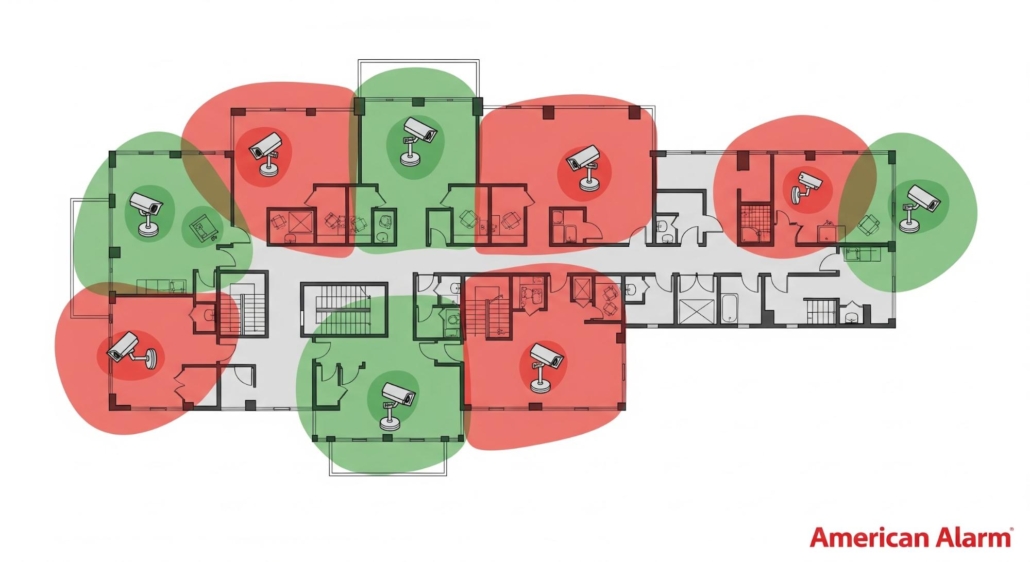
Optimizing Commercial Security: Expert Camera Placement for Warehouses, Offices, & Retail in Atlanta
Key Takeaways
- Strategic security camera placement is crucial for effective loss prevention and safety across commercial properties.
- Specific placement principles vary for warehouses, offices, and retail, focusing on blind spots, high-value areas, and access points.
- Proper camera positioning enhances theft deterrence, employee safety, liability protection, and integrates with full security systems.
- Professional site assessments by experts ensure optimal coverage, scalability, and compliance for Atlanta businesses.
- Avoid common mistakes by understanding lighting, angles, and combining cameras with access control and alarm systems.
Why Strategic Camera Placement is Critical for Atlanta Businesses
In the bustling commercial landscape of Atlanta, from the industrial parks in Norcross to the corporate high-rises in Buckhead, security is not just an option; it’s a necessity. While installing security cameras is a great first step, their effectiveness hinges entirely on strategic placement. Commercial camera placement is the difference between a system that merely records incidents and one that actively deters crime, protects assets, ensures employee safety, and reduces liability.
A well-planned camera layout provides comprehensive visual data, eliminating blind spots that criminals can exploit. For businesses in Sandy Springs, Marietta, and across North Georgia, this means more than just theft prevention. It’s about creating a secure environment for staff, monitoring operational safety, and having clear, usable footage in the event of a dispute or accident. A thoughtful security plan, built around expert camera positioning, is a fundamental component of modern commercial security services that safeguards your investment and reputation.
Universal Principles of Effective Commercial Camera Positioning
Before diving into industry-specific strategies, several universal principles govern effective commercial camera placement. Adhering to these fundamentals ensures that your surveillance system delivers maximum value, regardless of whether you operate a warehouse, office, or retail store. These best practices form the foundation for a robust security posture.
Maximizing Field of View and Minimizing Blind Spots
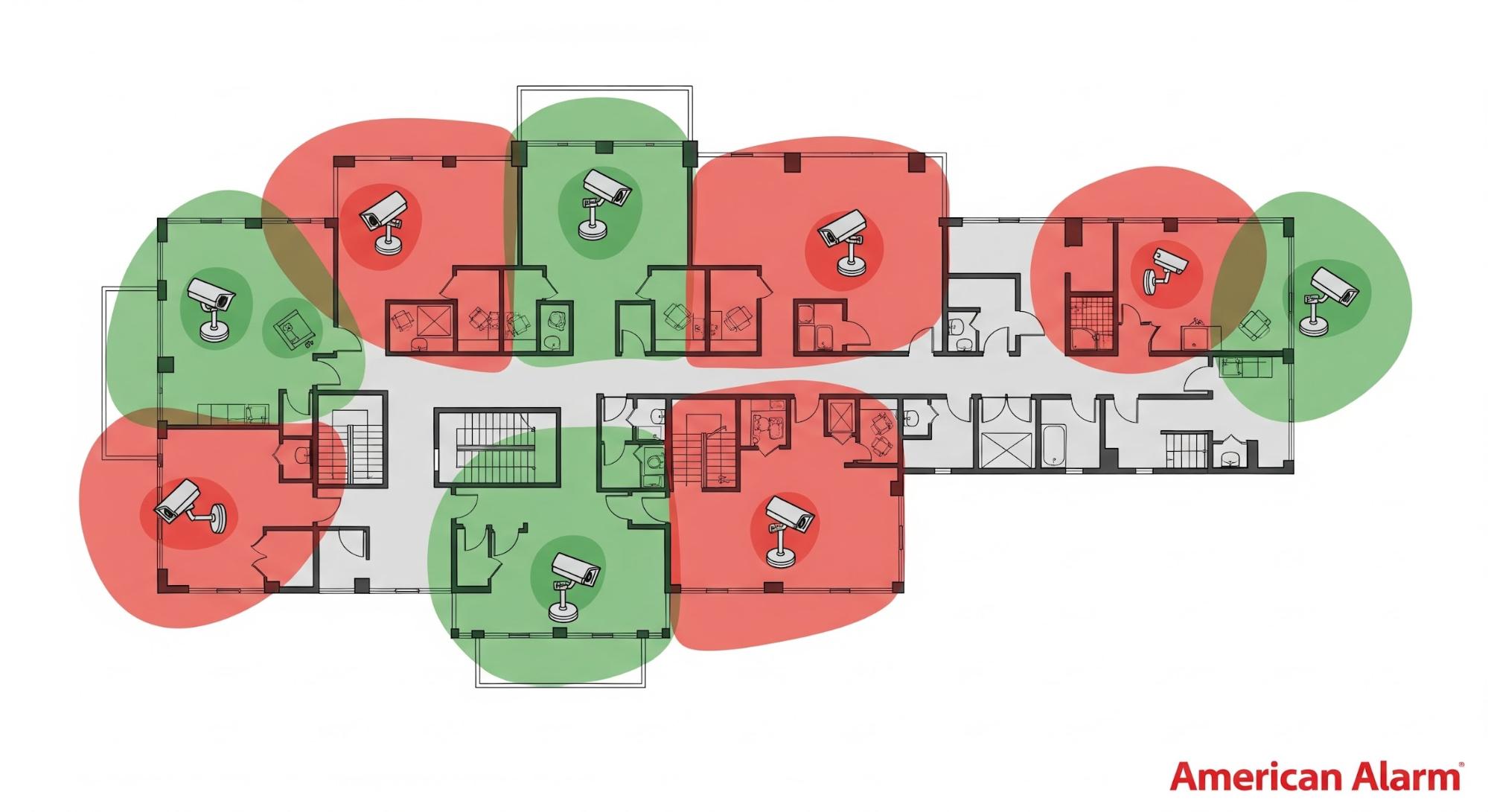
The primary goal of any camera is to see as much as possible of a critical area. This involves selecting cameras with the appropriate lens and field of view for the space. Placing cameras in corners often provides the widest vantage point, but it’s crucial to overlap fields of view from multiple cameras to eliminate blind spots, especially in L-shaped hallways or areas with large obstructions. Utilizing analytic security cameras can also help identify and track movement across wide areas, ensuring no activity goes unnoticed.
The Impact of Lighting on Camera Effectiveness
A camera is only as good as the light it receives. Poor lighting can render even the highest-resolution camera useless. When placing cameras, consider the ambient light throughout the day. Avoid pointing them directly at light sources, which can cause lens flare and glare. For areas with variable or low light, such as exterior perimeters or warehouses after hours, cameras with infrared (IR) night vision or low-light technology are essential for capturing clear images 24/7.
Height and Angle Considerations for Optimal Coverage
Mounting cameras at the right height is a balancing act. They should be high enough to be out of easy reach for tampering, typically 8-10 feet off the ground, but not so high that faces and details become indistinguishable. The angle is equally important. Angling cameras downward provides a clear view of activity below while minimizing glare from overhead lighting. The ideal angle captures identifiable details without being so steep that it distorts the view. Getting this right is a key part of a professional security camera installation in Atlanta.
Tailored Camera Placement for Warehouses in Georgia
Warehouses and industrial facilities in metro Atlanta and North Georgia present unique security challenges due to their large scale, valuable inventory, and constant flow of people and vehicles.
Securing Loading Docks and Shipping Areas
Loading docks are the primary arteries of any warehouse and are highly vulnerable. Cameras should be positioned to capture a clear view of every bay door, both from the inside and outside. This allows you to monitor all incoming and outgoing shipments, record license plates of arriving trucks, and deter unauthorized access or cargo theft.
Monitoring Storage Aisles and High-Value Inventory
Long, tall shelving units create countless blind spots. Placing cameras at the end of each aisle, mounted high and pointing down the corridor, provides coverage of activity. For areas storing particularly high-value goods, consider dedicated cameras with a narrower field of view to capture greater detail. This focused surveillance is a critical element of loss prevention.
Coverage for Equipment and Operational Zones
Warehouses are filled with expensive machinery and busy operational zones. Cameras positioned to overlook these areas can help enforce safety protocols, investigate workplace accidents, and prevent equipment misuse or theft. It’s about protecting not just your inventory, but also your people and capital assets.
Optimal Camera Systems for Office Buildings in Atlanta
For corporate offices in areas like Alpharetta and Johns Creek, security camera placement must balance robust surveillance with employee privacy and a welcoming atmosphere. The focus shifts from large-scale inventory to protecting data, assets, and personnel.
Entry/Exit Points and Reception Area Surveillance
All main entrances, emergency exits, and elevator lobbies should be monitored. A camera positioned with a clear view of the reception desk can capture every visitor who enters the building. This serves as a powerful deterrent and provides a visual log of all foot traffic, supplementing visitor sign-in sheets.
Hallway and Common Area Coverage
Placing cameras at hallway intersections ensures you can track movement throughout the building. Common areas like break rooms or mailrooms can also be monitored to deter personal property theft, but it’s crucial to respect employee privacy and avoid placing cameras in areas where there is a reasonable expectation of privacy.
Protecting Server Rooms and Sensitive Data Zones
Server rooms and file storage areas are the nerve centers of a modern business. These restricted zones require dedicated camera coverage. A camera positioned inside the room, overlooking the server racks, and another outside the door to monitor access, creates multiple layers of security for your most critical digital and physical assets. This is often integrated with robust Atlanta access control systems.
Strategic Retail Security Camera Placement in North Georgia
Retail businesses, from boutiques in Roswell to large stores in Kennesaw, face constant threats of shoplifting and internal theft. Strategic camera placement is a retailer’s most effective tool for loss prevention.
Deterring Theft at Entrances and POS Stations
Position a camera at the entrance to capture a clear facial image of every person who enters your store. At the point-of-sale (POS), cameras should be aimed at monitoring the cash register and the customer interaction. This not only deters cash theft and fraudulent transactions but also helps resolve customer disputes.
Monitoring High-Value Merchandise Displays
High-theft items, such as electronics or jewelry, should have dedicated camera coverage. These cameras act as a visible deterrent and provide clear footage if a theft does occur. The goal is to make high-value displays feel protected without intimidating legitimate customers.
Securing Stockrooms and Employee-Only Areas
A significant portion of retail theft is internal. Cameras placed in stockrooms, receiving areas, and employee entrances can discourage inventory shrinkage. Monitoring these non-public zones is essential for a comprehensive loss prevention strategy, ensuring accountability from the back door to the sales floor.
Integrating Camera Placement with Your Full Security Ecosystem
Effective security is about synergy, not silos. The placement of your cameras should be planned as part of a larger, integrated security strategy that leverages multiple technologies to create a resilient defense.
Synergy with Access Control Systems
When your Atlanta security camera solutions are integrated with access control, you gain powerful verification capabilities. A camera positioned at a card-reader-controlled door allows you to visually confirm that the person using the credential is the authorized user. This integration provides a complete record of who entered, where they entered, and when, creating an airtight audit trail.
Enhancing Alarm System Response
Integrating cameras with your commercial alarm systems in Atlanta allows for video verification of alarms. When an alarm is triggered, our 24/7 security system monitoring team can access live video feeds to confirm a real threat. This reduces false alarms and provides first responders with critical, real-time intelligence, leading to faster and more effective dispatch. This type of integration is crucial for enhancing security with commercial camera systems.
The Value of Professional Site Assessments and Scalability
While these guidelines provide a strong foundation, every business is unique. A DIY approach to camera placement often leads to critical gaps in coverage, poor image quality, and a false sense of security. The true value comes from a professional site assessment.
Experts from American Alarm will walk your property, identify specific vulnerabilities, and consider factors like lighting, workflow, and architectural challenges. We understand the specific risks facing businesses across the Atlanta metro area. This professional approach ensures your system is optimized from day one. Furthermore, we design systems with scalability in mind. As your business grows or your layout changes, your security system can adapt with you, ensuring you remain protected for years to come. This is just one reason why so many Atlanta businesses choose American Alarm. For a comprehensive security plan, it’s best to contact our team for a consultation.
Secure Your Business with Expert Vision
Ready to ensure maximum coverage and peace of mind? Contact American Alarm today for a professional site assessment and discover the ideal camera placement strategy for your Atlanta business. Get a quote today.
FAQs
How often should commercial security camera systems be reviewed for optimal placement?
Answer: Commercial security camera systems should be reviewed annually or whenever there are significant changes to your business layout, operations, or perceived security risks. This ensures ongoing optimal coverage.
Can existing camera systems be re-positioned, or is a new installation always required?
Answer: In many cases, existing cameras can be strategically re-positioned to improve coverage. A professional site assessment can determine the feasibility and cost-effectiveness of re-positioning versus new installation.
What is a common mistake businesses make when planning camera placement?
Answer: A common mistake is placing cameras without a thorough understanding of potential blind spots or neglecting environmental factors like lighting and obstructions, which can severely limit a camera’s effectiveness.
How do professional site assessments differ from a DIY approach to camera placement?
Answer: Professional site assessments by American Alarm involve experts analyzing your specific property layout, operational needs, high-risk areas, and regulatory requirements, ensuring a comprehensive and optimized security solution that a DIY approach often overlooks.
Do different types of businesses require vastly different camera placement strategies?
Answer: Yes, while general principles apply, the specific placement strategies differ significantly based on business type. Retail focuses on customer areas and high-value merchandise, while warehouses prioritize large spaces, entry points, and inventory zones.


Leave a Reply
Want to join the discussion?Feel free to contribute!