Atlanta Event Venue Security System | Atlanta Buyer Guide
An Atlanta event venue security system should reflect how the property operates on event days and between bookings. A reception hall, performance space, and conference venue can have different entry patterns, equipment, and response needs. Start with the doors, people, and procedures the system must support, then compare providers on design, installation, monitoring, and ongoing service.
Discuss venue security options with American Alarm.
What should an Atlanta event venue security system cover?
A practical plan coordinates entry management, intrusion detection, life-safety systems, monitoring, and staff procedures. The right combination depends on the building, event schedule, existing equipment, and how people use each area.
Answer: Map entrances and operational zones, identify who needs access and when, and match alarm coverage and response procedures to those conditions. Plan around the movement of guests, vendors, employees, and emergency responders before choosing equipment.
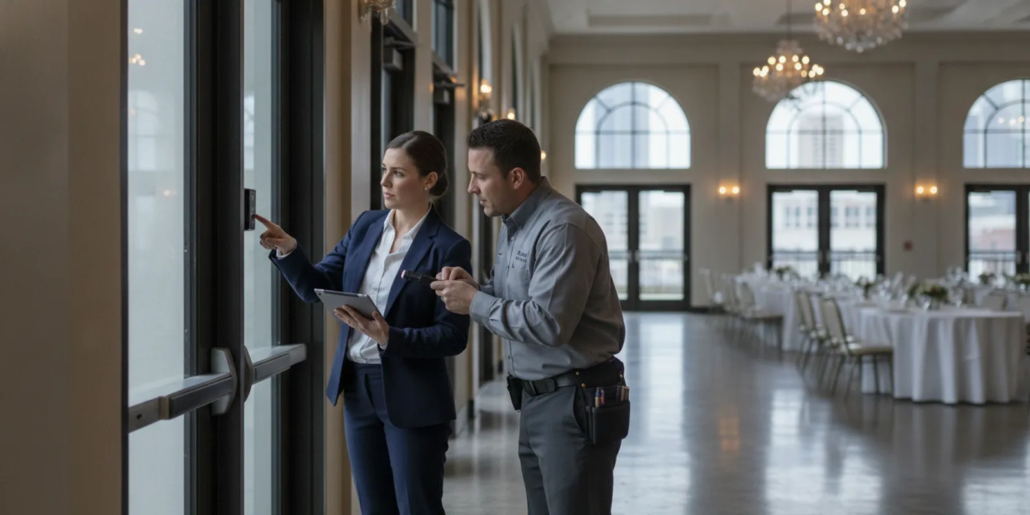
Walk the property during quiet hours and event setup. Note the public entrance, loading or service door, office, storage rooms, equipment areas, and emergency exits. Mark which doors guests may use, which are staff-only, and which should stay secured. Record areas that contain keys, payment materials, sound or lighting equipment, or sensitive business records. The purpose is not to assume each area needs the same device; it is to make a site discussion specific.
How do you assess entry and access needs?
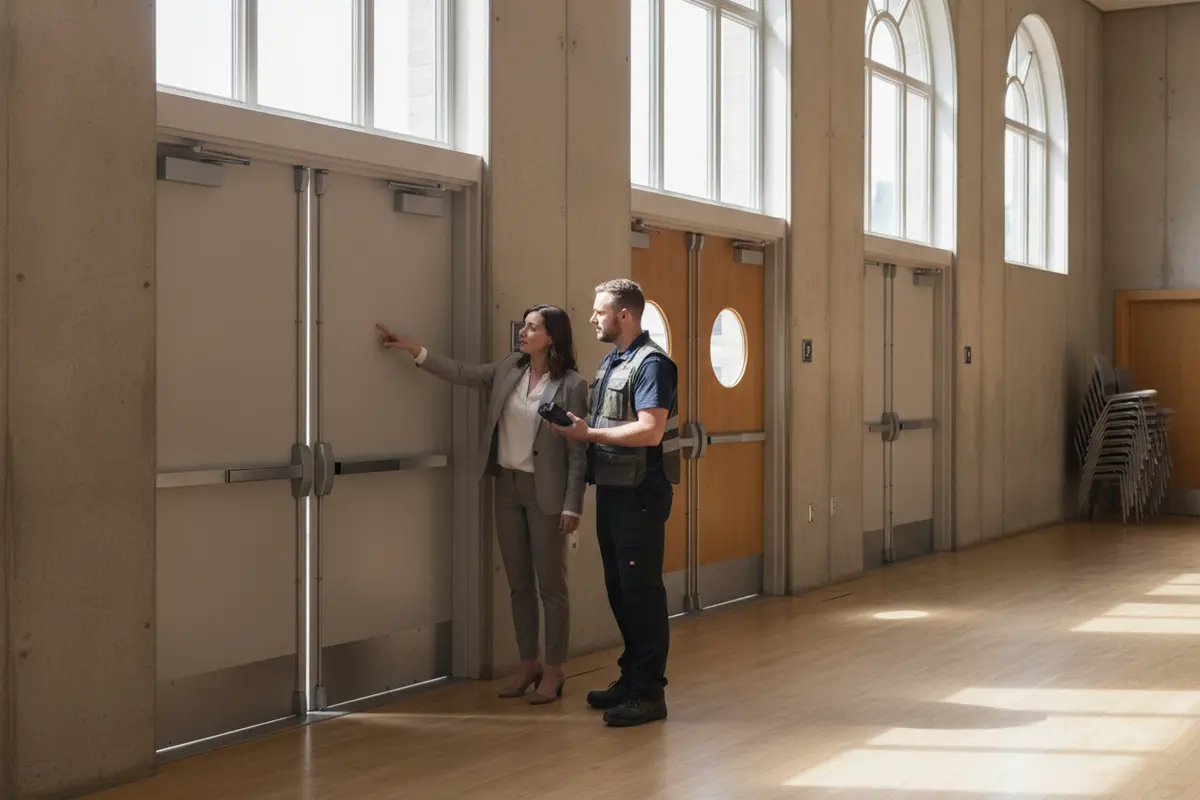
Guest and staff movement changes through the day. Vendors may arrive through a service door during setup, guests may approach the main entrance in a short window, and a small crew may remain after closing. Build an access plan around each phase instead of treating the venue as either fully open or fully closed.
- List doors by purpose: Record public, staff, service, and emergency doors, including doors normally kept closed.
- Define access periods: Note when each door should be available and who is responsible for securing it afterward.
- Assign permissions by role: Decide who needs access to offices, storage, system controls, or equipment areas, and how permissions are reviewed when duties change.
- Plan exceptions: Consider late vendors, an event extension, early setup, and a manager arriving before other staff.
- Check handoff points: Identify who confirms that a service entrance is secured when vendors finish.
For venues considering electronic entry management, compare the operation with a business access control system. Ask how authorized users are managed and what happens during a power or network interruption. A useful design supports the venue’s real procedures rather than assuming one standard arrangement.
For example, a venue might have guests enter through the main doors while caterers use a rear service entrance. The plan should identify who opens the latter, whether it remains supervised, and who checks it after deliveries. If staff need to move between public and restricted areas, clarify which doors should remain controlled without disrupting normal work. These details help avoid a security plan that looks complete on paper but conflicts with event operations.
How should intrusion detection fit event operations?
Intrusion detection works best when zones and arming steps reflect how the property is used. Some venues need to secure storage or office areas while authorized staff remain elsewhere. Ask whether the proposed design can support those conditions and whether staff can operate the controls reliably.
Walk through opening and closing with the provider. Who disarms the system before setup? Who checks the building at close? How are authorized users identified? What should an operator do if a door will not secure or the system reports a trouble condition? Put the agreed sequence in writing, including who may change the plan when an event runs late.
Monitoring is part of the operating plan, not just a device feature. Ask what signals are transmitted, which contacts are called, how contact details are maintained, and what staff should expect when an alarm occurs. Review how a monitored alarm system works before comparing service options. Make sure contact instructions distinguish routine follow-up from an urgent situation and do not conflict with the venue’s emergency procedures.
How do life-safety systems fit the plan?
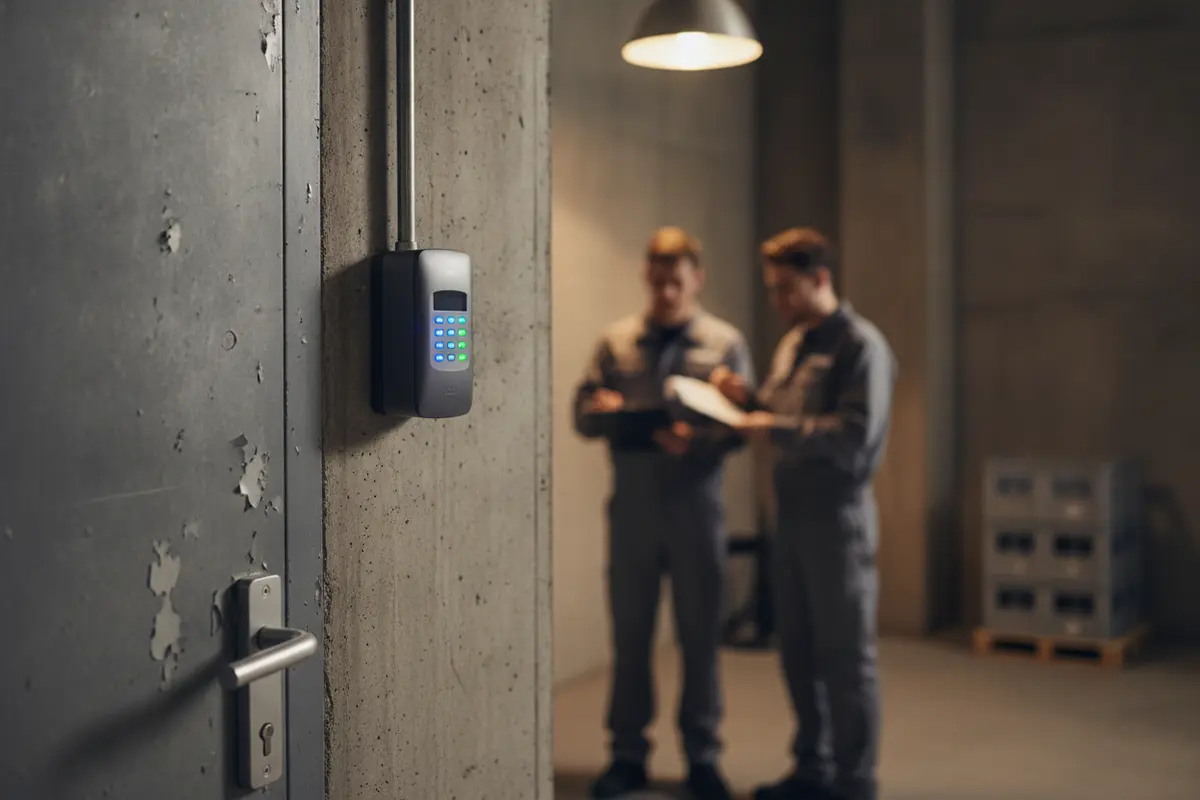
Intrusion alarms do not replace fire detection and notification. Review the existing fire alarm system, the condition of its equipment, how staff recognize an alarm, and how the venue coordinates procedures with applicable requirements and local authorities.
Any commercial fire alarm design or modification should be evaluated by qualified professionals familiar with the building and applicable requirements. Equipment condition, panel compatibility, inspection findings, and the authority having jurisdiction can affect the right approach. The National Fire Protection Association’s NFPA 72 page describes the standard for fire alarm and signaling systems; consult qualified professionals and the relevant authority about requirements for a specific property. American Alarm also provides an overview of NFPA 72 considerations for Atlanta businesses.
Keep event instructions aligned with the property’s established life-safety procedures. Staff should know whom to notify, where written instructions are kept, and what role they have in the approved emergency plan. Avoid creating a separate process that conflicts with fire alarm procedures or instructions from local authorities.
How should you compare system approaches?
There is no single package for every event property. Use this table as a planning tool, then ask providers to map their proposal to your doors, schedule, and response practices.
| Planning area | What to evaluate | Questions for a provider |
|---|---|---|
| Entry management | Public, staff, service, and restricted doors | How are permissions assigned, changed, and reviewed? |
| Intrusion detection | Zones, arming times, authorized users | Can staff remain in selected areas while other zones are secured? |
| Monitoring | Signal handling and contact procedures | Which contacts are notified, and how are instructions updated? |
| Fire alarm and life safety | Existing equipment, condition, inspections, requirements | Who assesses the system and documents recommended work? |
| Service and support | Maintenance, repair process, staff guidance | How are trouble reports handled and restoration confirmed? |
Compare proposals by clarity and scope, not just the equipment list. Ask the provider to identify each covered area, assumptions about event operations, included work, items that depend on building conditions, and responsibilities that remain with venue staff. A written proposal should explain how changes are handled if the venue adds a door, changes a room’s use, or adopts a new operating schedule.
Consider a simple example: one quote includes a keypad and door contacts, while another also describes zones, user permissions, monitoring contacts, staff handoff, and service procedures. The second may be easier to assess because it explains how the components fit together. It is still important to confirm that each proposed feature is appropriate for the property rather than paying for functions the venue will not use.
What questions help you select a provider?
A useful provider conversation should clarify the design, installation process, and support after handoff. Ask for specific explanations tied to the site walk-through rather than relying on broad assurances.
- Experience: What similar commercial properties or operating conditions has the provider handled?
- Site assessment: Will the design account for all doors, event phases, and relevant life-safety systems?
- Documentation: What drawings, user instructions, and completion records will the venue receive?
- Monitoring: How are alarm contacts and response instructions confirmed and kept current?
- Service: What is the process for reporting a fault, arranging repair, and confirming restoration?
- Pricing: Which installation work and recurring monitoring fees are included, and what items are optional?
- Change management: How should the venue request a change when staff roles or room use changes?
American Alarm has served homes and businesses across Metro Atlanta since 1995 and offers security and fire alarm services. The company describes a service approach centered on technical expertise and clear pricing. Review American Alarm’s company information and its Metro Atlanta service areas to see whether the property is within its coverage. You can also review its security and fire alarm services when preparing questions for a consultation.
How can you prepare for installation and handoff?
Assign one venue contact to coordinate access, scheduling, and questions. Share available floor plans, note event dates that affect work access, and identify who can approve changes. List the existing equipment and known issues, and ask which equipment will remain in service during installation.
Agree on a workable schedule with the provider. A venue may need installation staged around rehearsals, booked events, deliveries, or cleaning. Confirm which doors or areas will be unavailable during work and what staff should do if the work uncovers an unexpected condition. Ask how completion will be documented and who confirms that the agreed scope is finished.
At handoff, ask the provider to demonstrate normal operation and explain common trouble messages. Verify that the venue has the right contact list and written operating instructions. Have authorized staff practice the opening and closing sequence, including how to report a fault. Keep a record of system changes and update instructions when access roles or property use changes.
For a broader view of system options, compare the venue’s needs with available security system products and services. Do not assume every product or feature belongs in the final design; use a site assessment to determine what is appropriate.
How do you keep the plan useful after installation?
A system can become harder to use when the building’s routines change but its instructions do not. Set a recurring review point, such as before a busy event season or after a major change in staffing, access, or room use. The review does not need to be complicated; it should verify that the written plan still matches the property.
- Check the contact list: Confirm that primary and alternate contacts can be reached and understand their responsibilities.
- Review user access: Remove permissions that are no longer needed and confirm that current authorized users know the procedures.
- Walk the doors: Verify that the documented public, staff, and service entry arrangements still reflect daily practice.
- Discuss changes: Tell the provider about renovations, new equipment areas, or shifts in event operations that may affect coverage.
- Record lessons: If staff encounter confusion during an alarm or closing routine, capture the issue and ask how the procedure should be clarified.
For instance, if a venue begins allowing earlier vendor access, a procedure built around one late opening may no longer fit. Review who authorizes access, which door is used, whether staff presence is required, and how the property is secured when deliveries end. Keep the change coordinated with the provider when it affects system configuration or monitoring instructions.
Frequently asked questions
Does every event venue need the same alarm design?
No. Layout, entry patterns, event schedule, existing equipment, and staff procedures all affect the design. A site assessment helps identify which functions make sense.
Should the system be armed while staff are setting up?
That depends on the system’s zones and the work underway. Ask the provider to demonstrate a clear procedure for authorized staff who are present, and follow the system’s instructions.
What information should a venue give an alarm provider?
Share a door list, typical event schedule, setup and closing procedures, roles that need access, known system issues, and information about existing fire alarm equipment. These details help the provider assess actual operations.
When should venue procedures be reviewed?
Review them when staff roles, entry practices, event operations, or system configuration changes. Confirm contact details and make sure designated users understand their responsibilities.
Call American Alarm at (770) 645-0061 to discuss your venue.
A well-planned venue system connects entry points, alarm coverage, monitoring arrangements, and staff procedures into one understandable plan. Use a site-specific assessment to decide what your Atlanta property needs and how the people operating it will use it.

Leave a Reply
Want to join the discussion?Feel free to contribute!