
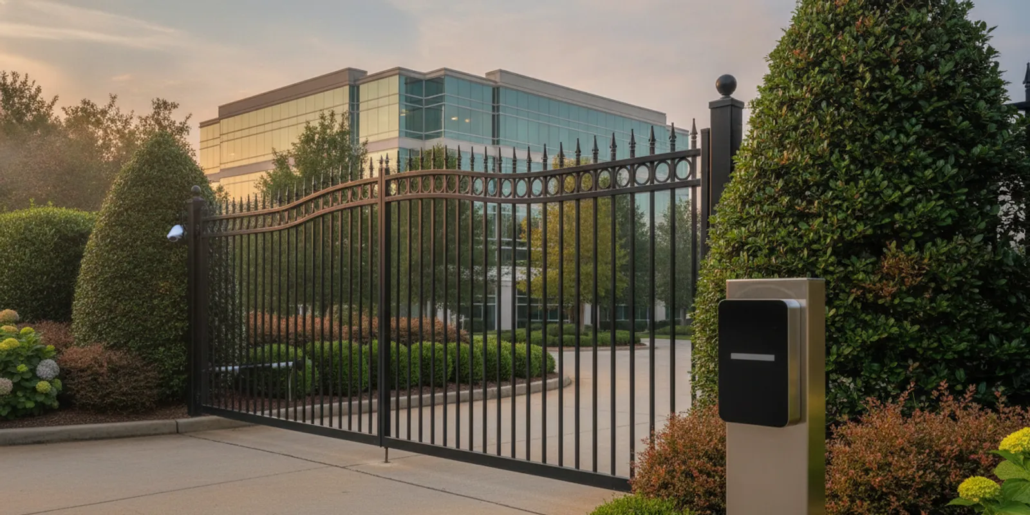
Access Control Gate Systems for Atlanta Commercial Properties
Access control gate systems Atlanta businesses choose should match the way people, vehicles, and deliveries move through a site. A well-planned system can help manage who enters, when they enter, and which gate or door they may use, while giving authorized visitors a practical way in. The right design starts with the property layout and operating rules, not a one-size-fits-all device list.
Discuss an access control project
What should an access control gate system do?
A gate is one point in a larger entry process. Before comparing equipment, define what the system must accomplish on an ordinary day and during an exception. A small office entrance may need to admit staff and occasional visitors. A distribution site may need to separate employee vehicles from deliveries and provide a safe way to handle after-hours arrivals.
Write down the intended outcomes in plain language. For example: allow approved staff to enter by credential, record entry events, let a manager remove access when roles change, and provide a known method for admitting a scheduled vendor. Clear outcomes help you evaluate a proposal by function instead of by a list of product names.
- Control: Decide which people or vehicle groups may use each gate and at what times.
- Convenience: Choose a credential method that suits the people who use the site, such as a card, keypad code, or another approved credential.
- Oversight: Identify who needs access records and how long the business needs to retain them.
- Continuity: Decide how authorized entry should work during a power, network, or equipment fault.
- Safety: Make sure the gate’s movement, controls, and emergency procedures fit the site and applicable requirements.
These decisions shape the gate operator, reader, control equipment, communications, and management process. They also help clarify whether the gate should work independently or connect with other entry points. For broader system planning, see the overview of door access control for businesses.
How do you assess the property before choosing equipment?
Walk the full approach to the gate at the times it will be used. Note the drive direction, available queue space, pedestrian routes, delivery stopping points, and any places where a vehicle might block a public way or another entrance. Record the number of entry lanes and whether vehicles need to enter and exit through separate gates.
Look beyond the gate itself. The control unit and reader need suitable mounting locations, a dependable power plan, and a communications path if the system will be managed remotely. Observe exposure to rain, sun, dust, vehicle impact, and landscaping growth. Ask how routine service access will be maintained without obstructing normal traffic.
List the user groups and exceptions as well. A site may have employees, vendors, scheduled service visits, temporary project workers, and emergency responders. Specify who approves access, how credentials are issued and removed, and what happens when a person forgets a credential or arrives outside normal hours. Avoid leaving these decisions for installers to infer.
Map the arrival sequence from the road to the final destination. Consider whether a vehicle has room to wait without blocking another lane, where a visitor can pause to request entry, and how a person on foot will reach the building without crossing an active vehicle path unnecessarily. If deliveries arrive in predictable windows, include those times in the access plan. If arrivals are irregular, decide who can respond and how that person will be reached. These details can expose a problem with gate placement or visitor handling before equipment is ordered.
Also identify who owns each recurring task. One person may add staff credentials, while a facilities contact handles service requests and a manager approves access exceptions. The names and roles can change, so document the process rather than relying on one person’s memory. Make a simple fallback plan for missed credentials, an unexpected delivery, or a gate that will not open. A written procedure gives staff a consistent next step and helps the installer configure the system around real operations.

For an Atlanta-area site, local weather, terrain, and the property’s approach roads are worth noting during the walk-through. A sloped driveway, limited turning space, or a busy arrival window can change where readers and vehicle detection should go. Document observations with a simple site sketch and photos for the project discussion. American Alarm serves Metro Atlanta and North Georgia; its company overview explains its local service background.
Which gate and credential options should you compare?
There is no single gate arrangement that fits every commercial site. Match the equipment to traffic, security objectives, available space, and the way staff will manage credentials. The table below is a planning aid, not a substitute for a site review or the gate manufacturer’s specifications.
| Option | Often suited to | Planning questions |
|---|---|---|
| Sliding vehicle gate | Sites with a suitable side run and regular vehicle flow | Is there enough clear space beside the opening? Can the path remain free of stored items and landscaping? |
| Swinging vehicle gate | Entrances with room for the leaf to open safely | Does the arc avoid vehicles, walkways, and other obstacles? How will wind and grade affect operation? |
| Barrier arm | Controlled vehicle lanes where a full-height barrier is not the objective | How will the lane handle tailgating, service access, and a raised-arm fault? |
| Pedestrian gate with reader | A separate, managed route for people on foot | Is the route visible, accessible, and coordinated with the vehicle entrance? |
Credential choices matter just as much. Cards or fobs can be straightforward for regular users. Keypads may suit a limited group or a secondary entry, but shared codes can make individual accountability harder. Mobile credentials can be convenient when supported by the selected system and the business’s policies. Ask how lost credentials are disabled, how access schedules are changed, and whether one credential can be limited to a specific gate or time window.
Mechanical gate design and electronic access control are related but separate parts of a project. Confirm who is responsible for the gate operator, safety devices, reader, controls, wiring, and ongoing support. If the business already uses door readers, discuss whether gate events and staff permissions should be managed in one place. A review of available security system products can help start that conversation.
How should the system handle visitors and deliveries?
Routine staff entry is only part of the workflow. Create a consistent process for visitors, deliveries, contractors, and service calls. The process should identify who authorizes a visit, how the person announces arrival, who grants entry, and where the visitor should go after the gate opens.
At a staffed site, an employee may verify a visitor and release the gate. At an unstaffed entrance, an intercom or a scheduled credential may be appropriate, depending on the layout and business needs. In either case, set rules for late arrivals and missed deliveries. A gate that blocks a driver without a way to request help can create delays and unsafe attempts to enter.
Decide whether temporary credentials are appropriate and set a defined expiration time. Give each credential only the access needed for its purpose. Establish a named role that can approve, issue, and revoke access, with a backup contact for absences. These simple procedures are as important as the electronics because the system follows the permissions people configure.
Access control can also be part of a broader alarm and entry plan. If an unauthorized opening should create an alert, define which events matter, who receives them, and what action is expected. Read about how professional alarm monitoring works when considering how alarm signals may fit into the site’s response plan.
Before reviewing prices, agree on the assumptions behind the design. Share expected vehicle volume, operating hours, staffing coverage, and any planned site changes. A proposal based on a quiet weekday may not suit an entrance that receives a wave of vehicles at shift start. Likewise, future expansion may affect the choice of control equipment or the number of entry points that should be included now. Ask the provider to note assumptions and exclusions so you can compare offers on the same basis.
Think about the system’s expected working life as well as the installation day. Ask how parts are serviced, who can make routine permission changes, and whether the business can add users or another entry point later. Confirm how records are accessed and whether the business needs a recurring service arrangement. A design that is easy for authorized staff to administer can reduce confusion over time.
What should a proposal explain?
Ask for a proposal that connects each recommended component to a specific need. It should describe the gate arrangement, credential method, controlled entry points, access schedules, event records, communications, and any requested connection to other systems. It should also identify work that falls outside the access control scope, such as changes to paving, fencing, electrical service, or the gate structure.
Compare proposals on scope and operating detail, not just the initial equipment list. Look for plain answers to the following questions:
- Which entry points and user groups are included, and what is not included?
- Who supplies and installs the gate operator, access reader, control panel, and safety devices?
- What power and network connections are needed, and who prepares them?
- How will staff receive credentials and learn to add, change, or remove access?
- What records can the system produce, and which users may view them?
- What is the expected behavior during a power or communications outage?
- How are testing, handoff, support, and future expansion handled?
Ask for any ongoing fees, service terms, and replacement responsibilities to be stated in writing. Do not assume a feature is included because it appeared in a product discussion. A good scope makes the division of responsibilities clear before work begins. For a wider view of business entry planning, see the guide to business alarm systems in Atlanta.
What happens during installation and handoff?
Installation planning should account for business hours, traffic control, and access to the work area. Confirm the project schedule, any temporary entry procedure, and the person who can make on-site decisions. Keep employees informed about where to enter and how to contact the designated site representative while the gate is unavailable.
After installation, test real workflows, not only the reader’s response. Test each credential type, each gate, the schedules, visitor process, and any alert or record that the business expects. Test the documented fault procedure with the installer. Confirm that the gate moves and stops as designed, and that users know how to request help if it does not operate normally.
Ask for a handoff that includes operating instructions, credential administration, service contacts, system documentation, and a list of the items tested. Have at least two authorized people understand routine access changes. Store records in a controlled place and update the access list when staff roles change. Periodically review active credentials, schedules, and exception procedures so the system continues to reflect the business’s needs.
When a gate uses a magnetic lock on a pedestrian entry, release behavior and life-safety coordination need careful review. The article on magnetic locks for door access offers background on that specific device type. For any gate or door that affects emergency egress, confirm applicable design and approval requirements with the responsible authorities and qualified project professionals.
How can Atlanta businesses make a sound selection?
Start with the site walk, user list, and operating rules. Then compare a short set of proposals against those needs. A sensible evaluation considers entry convenience, access administration, equipment fit, serviceability, documented fault behavior, and the scope of installation. The lowest equipment price may not represent the best fit if key parts of the workflow or support plan are missing.
For professional guidance on security management, consult ASIS International, a professional association for the security field. Use relevant guidance alongside a site-specific review; no general resource can determine the right layout for a particular property.
American Alarm provides security system design, installation, monitoring, and maintenance. A first discussion can help clarify the site’s entry points and operating goals before a system is specified. To ask about the company’s broader security services, contact the team directly.
Call (770) 645-0061 to discuss your site
Frequently asked questions
Can one credential work at a gate and a building door?
It may be possible when the selected access control platform supports both entry points and the system is configured for that purpose. Ask whether the same credential can have distinct schedules and permissions for the gate and each door.
What should happen if power or network service is interrupted?
The planned response depends on the gate hardware, access controls, safety needs, and site procedures. Ask the installer to explain which functions continue, what staff should do, and how authorized access is maintained or restricted during an outage.
How often should access permissions be reviewed?
Set a recurring review that fits staff changes and business operations. Review who has active credentials, which gates they may use, and whether schedules still match their responsibilities. Remove access promptly when it is no longer needed.
Does a gate system replace a complete site security plan?
No. A gate controls one route into a property. Businesses should consider how it fits with building doors, alarms, visitor procedures, staff responsibilities, and emergency planning.
Good access control gate systems Atlanta businesses can rely on start with a clear operating plan, a site-appropriate design, and a careful handoff. Define how entry should work before selecting equipment, then confirm that the finished system supports those daily tasks.

Leave a Reply
Want to join the discussion?Feel free to contribute!