How to Pass a Commercial Fire Alarm Inspection
When you think of a fire alarm, you might just picture a loud horn and flashing lights. But a modern commercial fire alarm is much more than a noisemaker. It’s an intelligent, life-saving network designed to detect a threat at its earliest stage, pinpoint the exact location, and ensure first responders are dispatched in seconds. This level of sophistication is why codes from the NFPA and your local Atlanta AHJ are so strict. They require a system that works flawlessly, from its detection devices to its backup power. Here, we’ll cover the key components that make a system effective and inspection-ready.
Key Takeaways
- Commercial fire alarm systems must meet strict NFPA codes and local AHJ requirements for life safety and legal compliance.
- Key features include addressable control panels, strategically placed detectors, and effective audible/visual notification devices.
- Ongoing inspection, testing, and maintenance are crucial for ensuring continuous system reliability and compliance.
- Proper documentation, system zoning, and integration with other security systems enhance overall building safety.
- Partnering with an experienced Atlanta provider like American Alarm ensures your system is always code-compliant and inspection-ready.
Is Your Atlanta Business Ready for a Fire Inspection?
For any business owner or property manager in Atlanta, a commercial fire alarm system is more than just a piece of equipment; it’s a fundamental component of your life safety and legal strategy. Adhering to strict fire alarm codes isn’t just about avoiding fines; it’s about protecting employees, customers, assets, and the future of your operation. Non-compliance can lead to severe financial penalties, mandated business shutdowns, voided insurance claims, and, most critically, a heightened risk of tragedy. An inspector’s approval isn’t a mere formality; it’s a confirmation that your facility provides a safe environment for everyone who walks through its doors. This is why understanding why NFPA compliant fire alarms are a crucial investment is the first step toward responsible business ownership.
The Reality of Fire Risks
It’s easy to view fire safety codes as just another box to check off a long to-do list, but the risks they address are very real. A fire incident can do more than damage property; it can halt your operations for weeks or months, impacting revenue, your employees’ livelihoods, and your reputation within the Atlanta community. A professionally installed and maintained fire alarm system is your first line of defense. It provides the critical early warnings needed to protect lives and minimize damage, ensuring your business can continue to operate safely. Investing in proper NFPA fire alarm services is a direct investment in your business’s continuity and the well-being of everyone inside.
Understanding the Statistics
The numbers paint a clear picture of why preparedness is so important. Across the United States, more than 470,000 building fires occur each year, a statistic that highlights the ever-present risk for any commercial property. Beyond fires, silent threats like carbon monoxide poisoning lead to over 14,000 emergency room visits annually. These aren’t just abstract figures; they represent real events with serious consequences for businesses and the people who depend on them. An effective commercial fire alarm system does more than just make noise; it buys precious time for people to evacuate safely and for emergency responders to arrive quickly, which can make all the difference when seconds count.
What Fire Alarm Codes Does Your Georgia Business Follow?
The landscape of commercial fire safety is governed by a set of comprehensive standards, with NFPA 72, the National Fire Alarm and Signaling Code, serving as the primary benchmark. This code dictates the minimum requirements for the installation, performance, testing, and maintenance of fire alarm systems. However, compliance doesn’t stop there. In Georgia, the local Authority Having Jurisdiction, typically the city or county fire marshal’s office, has the final say. The AHJ interprets and enforces these codes, often with specific local amendments. Navigating NFPA 72 compliance means understanding both the national standards and the specific expectations of your local Atlanta-area inspector. This dual focus ensures your system is not only designed correctly but also approved without delay.
Beyond NFPA 72: Other Important Standards
While NFPA 72 is the rulebook for your fire alarm system, it’s part of a larger library of safety codes. Think of it this way: your fire alarm doesn’t operate in a vacuum. It needs to work seamlessly with your building’s overall life safety strategy, which is often guided by other standards like the International Building Code (IBC) and NFPA 101, the Life Safety Code. This is why proper system design is so critical. It involves more than just placing detectors; it means creating a cohesive network with addressable control panels and effective notification devices. Furthermore, integrating your fire alarm with other building systems can significantly improve safety. Partnering with an experienced provider who understands how all these pieces fit together ensures your system is not just compliant, but truly effective.
Comparing Commercial Fire Alarm Systems
Choosing the right fire alarm system for your business isn’t a one-size-fits-all decision. The best system depends on your building’s size, layout, and daily operations. From simple, budget-friendly options to highly sensitive systems for critical environments, each type offers unique benefits. Understanding these differences is key to selecting a solution that not only meets Atlanta’s fire codes but also provides the right level of protection for your specific needs. Let’s look at the most common types of commercial fire alarm systems you’ll encounter.
Conventional Systems
Think of conventional systems as the straightforward, classic choice for fire protection. These systems work by dividing your property into different “zones,” with multiple detectors and pull stations wired together in each one. If a device is triggered, the main control panel alerts you to which zone the issue is in, but not the specific device. This approach makes them a cost-effective and reliable option, especially for smaller businesses like retail stores or small offices where quickly identifying a general area is sufficient. While they lack the pinpoint accuracy of newer systems, their simplicity and affordability make them a practical solution for many Atlanta businesses.
Addressable Systems
Addressable systems offer a significant step up in precision. In this setup, every single device—from smoke detectors to manual pull stations—has its own unique digital “address.” When an alarm is triggered, the control panel instantly tells you the exact location of that specific device. This eliminates any guesswork, allowing first responders to go directly to the source of the problem. This speed is critical in larger or more complex buildings like hospitals, high-rises, or sprawling warehouses. The ability to pinpoint issues also simplifies maintenance, making these systems a smart, efficient choice for businesses that need precise information fast. Professional NFPA fire alarm services are essential for designing and installing these complex networks correctly.
Intelligent Systems
Intelligent fire alarm systems, sometimes called “smart” systems, take detection to the next level by actively analyzing their environment. Instead of simply reacting to a certain level of smoke, these systems monitor conditions over time. They can learn to distinguish between a genuine fire and non-threatening particles like dust, steam, or cooking fumes. This analytical capability dramatically reduces the frequency of false alarms, which can be disruptive and costly for any business. They are an excellent fit for environments where nuisance alarms are common, such as restaurants, manufacturing plants, or hotels. By minimizing unnecessary evacuations and fire department calls, intelligent systems provide peace of mind and operational continuity.
Wireless Systems
When running new wires is difficult or undesirable, wireless fire alarm systems provide a modern and flexible solution. These systems use secure radio signals to connect detectors and other devices to the main control panel, eliminating the need for extensive and disruptive wiring. This makes them an ideal choice for historic buildings where preserving the original structure is paramount, or for businesses in leased spaces where major alterations aren’t possible. Installation is typically faster and cleaner than with traditional wired systems. While they offer great flexibility, wireless systems must still be professionally installed to meet strict safety codes and ensure reliable communication between all components, a key part of our comprehensive security services.
Aspirating Smoke Detection (ASD) Systems
For environments that require the earliest possible warning of a fire, Aspirating Smoke Detection (ASD) systems offer unparalleled sensitivity. Instead of waiting for smoke to reach a detector, an ASD system actively pulls air into a network of pipes and samples it for microscopic smoke particles. This continuous air sampling process can detect the very earliest signs of combustion, often long before smoke is visible to the human eye. This makes ASD the gold standard for protecting mission-critical areas where even minor damage from smoke or fire would be catastrophic. Think data centers, clean rooms, and museums with irreplaceable artifacts. It’s a highly specialized solution for protecting your most valuable assets.
What Will Your Fire Inspector Look For?
During an inspection, the AHJ scrutinizes every component of your fire alarm system to ensure it functions as a cohesive, reliable life safety solution. They look for specific features that guarantee early detection, clear notification, and swift emergency response. From the central control panel to the individual devices, every element must meet exacting standards.
Pinpoint the Problem: Addressable Control Panels
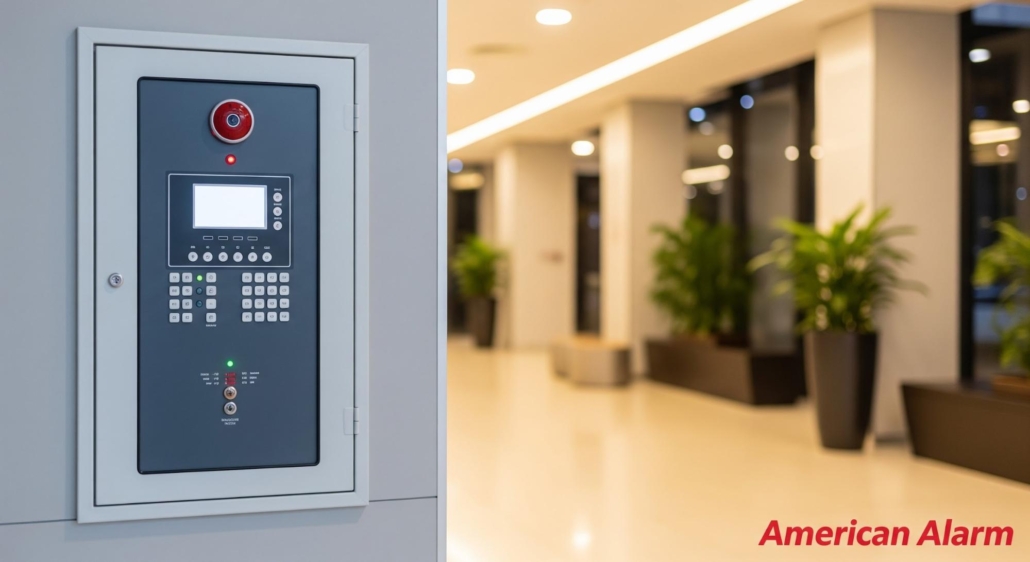
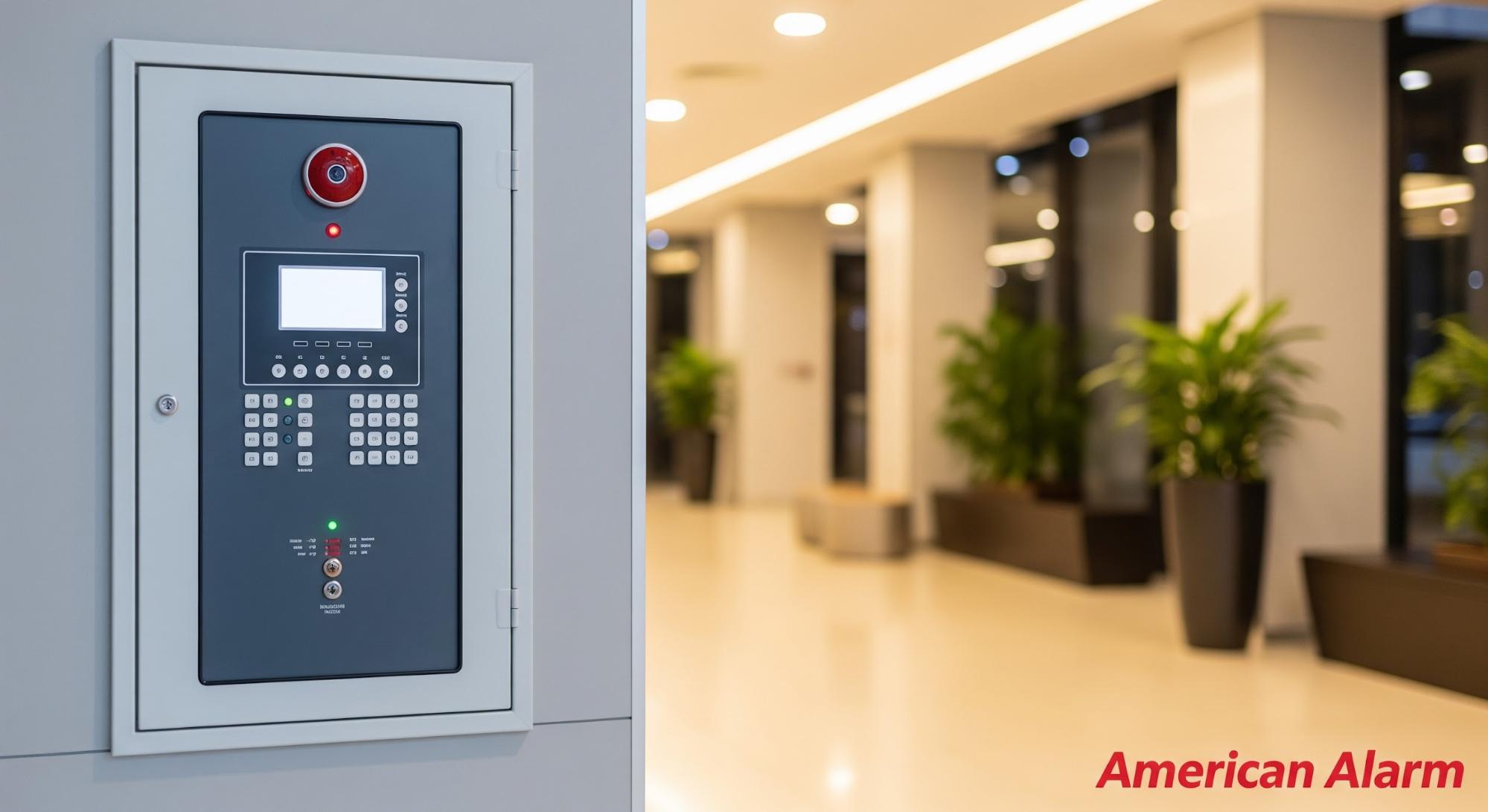
At the heart of any modern, code-compliant system is an addressable fire alarm control panel. Unlike older, conventional systems that only identify a general zone, an addressable panel can pinpoint the exact device that has been triggered. If a smoke detector in “Office 204” activates, the panel tells you precisely that. This level of detail is invaluable for first responders, allowing them to go directly to the source of the problem, saving critical time. For this reason, addressable panels are the preferred choice for most new Atlanta fire alarm systems, offering superior control and diagnostic capabilities.
Smoke and Heat Detectors: Your First Line of Defense
A fire alarm is only as good as its ability to detect a fire at its earliest stage. Inspectors will meticulously check the type, number, and placement of all detection devices. This includes:
- Smoke Detectors: Placed in common areas, corridors, storage rooms, and near electrical closets.
- Heat Detectors: Used in environments where smoke detectors might cause false alarms, such as kitchens, garages, or dusty manufacturing areas.
- Duct Detectors: Installed in HVAC systems to prevent the spread of smoke throughout the building.
- Beam Detectors: Ideal for large, open spaces with high ceilings like warehouses or atriums.
Strategic placement according to NFPA guidelines ensures there are no coverage gaps, providing comprehensive protection for your entire facility.
Ionization Alarms
Think of these as the sprinters of fire detection. Ionization Fire Alarms are engineered to respond quickly to fast-flaming fires—the kind that produce a lot of flames but not necessarily a lot of thick smoke right away. They work by using a tiny, safe particle of a radioactive element to create a steady electrical current inside the unit. When smoke particles enter the chamber, they disrupt this current, which immediately triggers the alarm. Because of their rapid response to open flames, they are often placed in areas where flammable materials might be stored.
Photoelectric Alarms
If ionization alarms are sprinters, photoelectric alarms are the marathon runners, excelling at detecting slow-burning fires. These are the smoldering fires that can fill a room with dangerous smoke long before any flames appear. Photoelectric Fire Alarms operate using a beam of light. When smoke enters the device, it scatters the light beam onto a sensor, setting off the alarm. This makes them ideal for common areas, offices, and spaces near kitchens where an electrical short or smoldering upholstery could pose a risk.
Combination Alarms
For the most comprehensive coverage, many businesses opt for combination alarms. As the name suggests, Combination or Dual-Sensor Alarms incorporate both ionization and photoelectric technologies into a single unit. This dual approach ensures your system is prepared to detect both fast-flaming and slow-smoldering fires, offering a well-rounded defense. Choosing the right type of detector for each specific area of your business is a critical part of a compliant and effective fire safety plan, which is why a professional assessment is so important for creating a truly secure environment.
Alerting Everyone: Audible and Visual Alarms
Once a fire is detected, the system must alert every occupant to evacuate. This is achieved through a combination of audible and visual notification appliances. Horns must be loud enough to be heard over ambient noise, and strobe lights must be bright and properly synchronized to meet Americans with Disabilities Act (ADA) requirements. This ensures that all individuals, including those with hearing or visual impairments, receive a clear and unmistakable warning, making evacuation swift and effective.
How Manual Pull Stations Start the Emergency Response
While automatic detectors are the first line of defense, human observation is also critical. Code requires the installation of manual pull stations at all building exits and on each floor. These devices empower occupants to trigger the alarm system immediately if they spot a fire before a detector does. An inspector will verify that these stations are accessible, unobstructed, and clearly marked, ensuring anyone can activate the emergency response protocol without hesitation.
Who Answers When Your Fire Alarm Goes Off?
A local alarm that only makes noise inside your building is not enough for a commercial property. Code compliance in Atlanta requires that your fire alarm system be connected to a 24/7 professional monitoring service. When an alarm is triggered, a signal is instantly sent to a central station where trained operators verify the emergency and dispatch the local fire department within seconds. This process of Atlanta fire alarm monitoring is non-negotiable; it’s the essential link that ensures help is on the way, whether it’s the middle of the day or night, and whether your building is occupied or empty.
Helping First Responders: Zoning, Labels, and Documentation
For first responders arriving on the scene, clarity is key. Inspectors require that your system be logically “zoned,” with a clear map or annunciator panel located near the entrance. This allows firefighters to immediately identify the alarm’s location within the building. Furthermore, every component, from the control panel to individual wires, must be properly labeled. Inspectors will also demand complete documentation, including design plans, installation records, and proof of regular maintenance. Proper records are essential for obtaining NFPA Certificates for Fire Alarms.
How Often Should Your Commercial Fire Alarm Be Tested?
Achieving compliance is not a one-time event; it’s an ongoing commitment. NFPA codes mandate a strict schedule for Inspection, Testing, and Maintenance (ITM) to ensure your system remains in perfect working order. This includes annual professional inspections and periodic testing of all components. Neglecting regular fire alarm maintenance can lead to system failure, failed inspections, and a false sense of security.
Device Maintenance and Lifespan
Replacing Batteries and Devices
Think of your fire alarm devices like any other critical piece of technology—they need a little upkeep to perform their best. A simple but crucial rule is to change the batteries in your alarms every year. This small task prevents those low-battery chirps and ensures the device has the power it needs to function in an emergency. Beyond batteries, the devices themselves have a limited lifespan. As a general guideline, fire alarms should be replaced about every 10 years because their sensors can become less sensitive over time. Following this replacement schedule is a key part of maintaining a reliable system that you, your employees, and your local fire inspector can trust. Working with a professional for your NFPA fire alarm services ensures these critical timelines are never missed.
Proper Disposal of Old Alarms
When it’s time to replace an old fire alarm, your first instinct might be to toss it in the nearest trash can. However, this is one item that doesn’t belong in a landfill. Many alarms contain materials that require special handling and should not be mixed with regular waste, and it can be difficult to tell the different types apart. The most direct way to find out how to dispose of an old device is to check the back of it for specific instructions from the manufacturer. When you’re ready to upgrade your Atlanta fire alarm, a professional installer can handle the proper disposal of old components for you, taking one more task off your plate.
How Your Fire Alarm Works with Other Building Systems
Modern life safety goes beyond simple detection. Today’s Atlanta commercial alarm systems are often integrated with other building technologies for a coordinated response. For instance, a fire alarm can automatically:
- Unlock doors controlled by an Atlanta access control system to facilitate evacuation.
- Recall elevators to the ground floor.
- Shut down HVAC systems to stop smoke from spreading.
- Activate Atlanta security camera systems in the affected area to provide visual verification for emergency personnel.
This integration creates a smarter, more responsive safety ecosystem, a feature highly valued by inspectors and building managers alike.
Modern System Technology and Features
Fire alarm technology has come a long way from the simple bell-in-a-box. Today’s systems are smarter, faster, and more reliable than ever before, offering features that not only improve safety but also simplify management for business owners. These advancements are designed to provide earlier warnings, reduce false alarms, and ensure that in a real emergency, the connection to help is rock-solid. An inspector will look for these modern capabilities, as they often represent the new standard for code compliance and effective life safety. Understanding these features is key to choosing a system that protects your business now and in the future.
Advanced Communication Methods
One of the most critical upgrades in modern fire alarm systems is the way they call for help. Gone are the days of relying solely on old-fashioned phone lines, which can be easily damaged in a fire or fail during a power outage. Modern systems use dedicated cellular communicators to send an emergency signal to the monitoring station. This method is significantly more reliable and secure, creating a direct and constant link to first responders. An inspector will verify this communication path, as it’s a crucial element in ensuring your alarm signal gets through no matter what.
Cloud-Based Programming and Management
Modern fire alarm control panels are now often “all-in-one” units that can be programmed and managed remotely using cloud-based software. This means a qualified technician can perform diagnostics, make adjustments, and update your system from a smartphone or computer without needing to be on-site for every little thing. For you as a business owner, this translates to faster service, less disruption to your operations, and confidence that your system is always configured correctly. This level of accessibility makes maintaining and managing your fire alarm services more efficient than ever.
Intelligent Detector Features
False alarms are more than just an annoyance; they can lead to costly fines and cause employees to become complacent. Intelligent fire alarm systems are designed to solve this problem. Their advanced detectors can analyze information over time, learning to distinguish between a real fire and harmless environmental factors like dust, steam, or aerosol sprays. By recognizing the unique signatures of a genuine threat, these smart devices drastically reduce the frequency of false alarms. This ensures that when the alarm does sound, everyone takes it seriously, which is a key component of a safe and effective evacuation plan.
Flexible Wiring for Upgrades
The thought of upgrading a fire alarm system in an older building can be daunting, especially with the potential cost and disruption of a complete rewiring. Fortunately, many modern systems are designed with flexibility in mind. They are compatible with many types of existing wiring and can handle long wire runs, which is common in larger commercial properties. This adaptability means that bringing your building up to current code doesn’t always require a massive overhaul. It makes upgrading to a safer, more reliable system a more attainable and affordable goal for Atlanta businesses of all sizes.
Additional Life Safety Components
A truly comprehensive life safety strategy extends beyond just detecting smoke and fire. Modern systems are designed to be the central hub for a range of protective measures, integrating additional components that address other potential dangers within your facility. These elements work together to create a more holistic safety net, ensuring occupants are protected from multiple threats. An inspector will look for these integrations, as they demonstrate a thorough approach to building safety that goes beyond the minimum requirements and provides a higher level of protection for everyone inside.
Voice Evacuation Systems
In a real emergency, confusion can be as dangerous as the fire itself. While a loud horn certainly gets attention, it doesn’t provide direction. Voice evacuation systems replace jarring noises with clear, pre-recorded messages that guide people on how to safely exit the building. These systems can deliver specific instructions tailored to different areas of your facility, helping to prevent panic and ensure an orderly evacuation. For large or complex buildings like schools, hotels, or high-rises, a voice evacuation system is an invaluable tool for managing an emergency effectively.
Carbon Monoxide (CO) Detection
Carbon monoxide is an odorless, colorless gas that can be lethal, and it’s a risk in any building with fuel-burning appliances, furnaces, or an attached garage. Integrating CO detection into your commercial fire alarm system provides a critical layer of protection against this silent threat. When CO is detected, the system sends a distinct signal to your monitoring station, ensuring the right kind of help is dispatched immediately. Combining these life safety systems streamlines your building’s protection, offering peace of mind that you’re covered for more than just fire.
What Happens to Your Alarm When the Power Goes Out?
A fire alarm system must work when it’s needed most, even during a power outage. Compliance standards mandate a reliable secondary power source, typically a set of rechargeable batteries. Inspectors will test this backup system to ensure it can power the entire fire alarm system in a supervisory state for at least 24 hours, followed by several minutes in full alarm mode. This redundancy is a critical compliance checkpoint, guaranteeing your building remains protected no matter the circumstances.
Understanding the Costs of a Commercial Fire Alarm System
When you’re planning for a commercial fire alarm system, it’s helpful to think of it as an investment rather than just an expense. The total cost involves more than just the price of the equipment; it includes professional installation, ongoing maintenance, and round-the-clock monitoring. Understanding these different components will help you budget effectively and see the long-term value in protecting your business. The price can vary significantly based on your specific needs, but breaking it down makes the financial side much clearer. It’s about finding a solution that not only fits your budget but also provides the reliable protection your Atlanta business requires to stay safe and compliant.
Installation and Upfront Costs
Your initial investment covers the hardware and the expert installation required to get your system up and running correctly. For a smaller, more basic setup, you might see costs starting in the range of $600 to $1,000. For larger or more complex facilities that require advanced systems, the upfront cost could be closer to $5,000 or more. A useful way to estimate is by square footage, with typical installation costs running between $1 and $6 per square foot. This initial price ensures that all components, from the control panel to the detectors and notification devices, are installed to meet strict code requirements, giving you a solid foundation for your building’s life safety strategy.
Ongoing Maintenance and Monitoring Costs
After the initial installation, there are recurring costs to keep your system in peak condition. These are not optional extras; they are essential for compliance and reliability. Professional monitoring services, which ensure the fire department is dispatched immediately in an emergency, typically cost between $50 and $60 per month for a commercial property. Additionally, you’ll need to budget for annual inspections and routine maintenance, which can range from $200 to $800 per year. These NFPA fire alarm services guarantee your system is always ready to perform when needed most and will pass any surprise inspections from the local fire marshal.
Factors That Affect Pricing
Several key factors influence the final cost of a fire alarm system. The size and layout of your building are the most significant; a large warehouse with high ceilings has very different requirements than a multi-story office building with complex floor plans. The type of system you choose also plays a major role. A conventional system, which is generally better for smaller spaces, is less expensive upfront. However, most businesses benefit from an addressable system. While it costs more initially, an addressable system can pinpoint the exact location of a fire, saving critical time for first responders and potentially reducing damage.
How to Manage Your Budget
Making a smart financial decision for your fire alarm system starts with gathering the right information. It’s always a good idea to get quotes from a few different qualified providers to ensure you’re receiving a fair and competitive price. When comparing these quotes, look beyond the initial installation number. Consider the total cost of ownership, including the monthly monitoring fees and annual maintenance plans. Sometimes a system with a lower upfront cost can have higher long-term expenses. Planning for all these costs from the beginning ensures there are no surprises and helps you secure a reliable system that protects your investment. You can always contact us for a detailed, no-obligation quote tailored to your property.
Your Local Fire Alarm Experts in North Georgia
From initial design and installation to ongoing maintenance and monitoring, ensuring your fire alarm system meets every code is our specialty. At American Alarm, our team of experts understands the unique requirements of the AHJs across North Georgia. We provide code-compliant commercial alarm solutions for businesses in Atlanta, Alpharetta, Roswell, Sandy Springs, Marietta, and Kennesaw. Our service extends to the thriving commercial markets in Johns Creek, Milton, Buckhead, Dunwoody, Norcross, Peachtree Corners, Smyrna, and Vinings, helping businesses stay safe, compliant, and ready for any inspection. If you have questions about our services, please contact American Alarm to learn more.
Ready to Pass Your Next Fire Inspection?
Don’t leave your Atlanta business vulnerable to non-compliance or fire risks. Ensure your fire alarm system meets all code requirements with American Alarm. Get a quote today to schedule a consultation with our expert team.
FAQs
What is the primary NFPA standard for commercial fire alarm systems? Answer: The primary standard is NFPA 72, the National Fire Alarm and Signaling Code. It sets the requirements for the application, installation, location, performance, inspection, testing, and maintenance of fire alarm and emergency communications systems. How often should commercial fire alarm systems be inspected in Georgia? Answer: Commercial fire alarm systems typically require annual inspections, testing, and maintenance as per NFPA 72 and local Authority Having Jurisdiction (AHJ) requirements. Specific components may require more frequent testing. Can a business owner perform their own fire alarm system maintenance for compliance? Answer: While some minor visual checks can be done, NFPA 72 and most local fire codes require commercial fire alarm system inspections, testing, and maintenance to be performed by qualified, licensed professionals to ensure compliance and system integrity. What is an addressable fire alarm system, and why is it important for commercial buildings? Answer: An addressable fire alarm system allows the control panel to identify the exact location of a triggered device (e.g., a specific smoke detector). This precision is crucial in commercial buildings for rapid incident response, pinpointing the fire source, and ensuring efficient emergency services deployment, aiding compliance. How does backup power affect commercial fire alarm system compliance? Answer: Code-compliant commercial fire alarm systems must include a reliable backup power source, typically batteries, capable of operating the system for a specified duration during a power outage. This ensures continuous protection and is a critical point for inspection.


Leave a Reply
Want to join the discussion?Feel free to contribute!