Best Commercial Video Surveillance Systems for Large Facilities
A few visible surveillance units might offer a sense of security, but for a large commercial property, this feeling can be dangerously misleading. Standard systems often fail when you need them most, delivering blurry footage, missing critical events in poorly lit areas, or leaving vast blind spots across your perimeter. These inadequacies expose your business to significant risks. True protection requires a system designed specifically for the demands of a large-scale environment. So, what are the best commercial video surveillance systems for large facilities? We’ll explore the key features that separate professional-grade solutions from the rest, ensuring your system provides genuine oversight and actionable intelligence, day or night.
Key Takeaways
- Large commercial properties like campuses, warehouses, and multi-building sites require specialized camera systems beyond basic consumer solutions for effective security.
- Professional-grade systems offer critical features such as high-resolution imaging, advanced night vision, wide-angle and PTZ capabilities, and seamless integration with other security infrastructure.
- A centralized Video Management System (VMS) is essential for monitoring and managing complex, multi-camera environments, providing comprehensive oversight.
- Scalability, expert design, professional installation, and 24/7 monitoring are crucial for ensuring reliable, long-term security and mitigating risks in large commercial settings.
- American Alarm provides tailored commercial camera system solutions, expert installation, and dedicated monitoring services for businesses across Atlanta and North Georgia.
 Securing a large commercial property in Atlanta presents a unique set of challenges that go far beyond the needs of a typical small business. The sheer scale, multiple entry points, and valuable assets involved demand a robust and sophisticated security strategy. At the heart of this strategy lies a professionally designed commercial camera system, engineered to provide comprehensive surveillance and peace of mind. Choosing the right system is a critical decision for facility managers, security directors, and property owners aiming to protect their investments and personnel. This guide explores the essential components and considerations for selecting the best commercial camera system for your large-scale facility, ensuring you have the visibility and control needed to mitigate risks effectively. From understanding the specific needs of your property to leveraging advanced technology and professional monitoring, we will cover the key elements that contribute to a powerful and reliable security infrastructure.
Is Your Commercial Property Considered a Large-Scale Facility?
When we talk about “large commercial properties,” we’re referring to facilities whose size, complexity, and operational scope demand more than a simple, off-the-shelf security solution. These are environments where security is not just a precaution but a fundamental component of daily operations. In the Atlanta and North Georgia regions, this includes a diverse range of sites such as:
- Corporate Campuses: Sprawling grounds with multiple office buildings, parking structures, and outdoor common areas.
- Warehouses and Distribution Centers: Expansive single-story buildings storing millions of dollars in inventory, with constant activity at loading docks.
- Manufacturing Plants: Complex facilities with valuable machinery, sensitive production lines, and intellectual property to protect.
- Hospitals and Healthcare Facilities: Multi-building sites with numerous public access points, restricted areas, and a duty to protect patients and staff.
- Office Parks: Collections of separate buildings that share common infrastructure like roads and parking lots, requiring coordinated surveillance.
- Multi-Building Residential or Mixed-Use Sites: Large apartment complexes or developments that combine commercial and residential spaces.
The common thread among these properties is the unique security challenge they present. Their extensive perimeters, multiple entry and exit points, high-value assets, and the constant flow of people and vehicles make them vulnerable to theft, vandalism, liability claims, and other security threats. A comprehensive security plan is essential to manage these risks.
Defining Scale: From a Few Units to Over a Hundred
The difference between a small business and a large facility often comes down to scale. While a small office might be secured with a handful of surveillance units, a large warehouse or corporate campus could require anywhere from 64 to 128 surveillance units, or even more, all managed through a single, cohesive system.
The leap from securing a small storefront to protecting a large commercial property is significant, and it’s measured in more than just square footage. It’s about the sheer number of surveillance units required for complete coverage. A small business might only need a few devices, but a sprawling warehouse or multi-building campus can easily require a network of 64, 128, or even more units working in unison. This isn’t just about adding more hardware; it’s about designing a system that can manage and record high-quality footage from every single unit, 24/7. These robust commercial surveillance systems are built to handle the demands of constant operation in busy environments, ensuring that every corner of your property is accounted for without overwhelming your network or your team.
Why Standard Video Systems Fail Large Facilities
Attempting to secure a large commercial property with consumer-grade or basic security cameras is a recipe for failure. These systems, while suitable for small offices or retail shops, are fundamentally inadequate for the demands of a large-scale environment. Their limitations create dangerous blind spots and a false sense of security. Standard systems typically fall short in several critical areas. Their coverage is often limited, with cameras that lack the range and field of view to monitor vast open spaces like parking lots or warehouse floors effectively. Image resolution is another common issue; lower-quality cameras may fail to capture essential details like license plates or facial features, rendering footage useless for investigations. Furthermore, these systems are not built for scalability. As your facility grows or your security needs change, a basic system cannot easily expand to accommodate new cameras or integrate with other security platforms. Durability is also a concern, as consumer-grade hardware is not designed to withstand the harsh conditions often found in outdoor or industrial settings. Finally, they lack advanced features—such as robust night vision, intelligent analytics, and centralized management—that are crucial for proactive threat detection and efficient monitoring across a large, complex site.
The High Cost of Inadequate Surveillance
Visible surveillance systems are a powerful deterrent. Studies show that they can help prevent up to 60% of burglaries. For businesses, the stakes are high, as losses from theft can accumulate rapidly. A robust system isn’t just a preventative measure; it’s a critical tool for protecting your bottom line.
When security measures fall short, the consequences for a large commercial property can be devastating. The financial stakes are incredibly high, as losses from theft, vandalism, or operational disruptions can quickly spiral. A professionally installed, visible surveillance system is one of the most effective tools for managing these risks. More than just a way to record events, these systems act as a powerful deterrent against potential threats. An inadequate system fails to discourage criminals and leaves your business exposed. Investing in a robust surveillance solution is not just a preventative measure; it’s an essential strategy for protecting your assets, ensuring employee safety, and securing your bottom line from preventable losses.
Handling Harsh Environmental Conditions
Large facilities, especially those with outdoor components, face environmental challenges that can disable standard systems. A commercial-grade solution must be able to withstand issues like extreme heat or cold, dust, and potential power outages to ensure continuous operation.
Large facilities in Georgia, particularly those with extensive outdoor areas like parking lots, loading docks, or campus grounds, face environmental challenges that can easily disable standard systems. The intense summer heat, high humidity, and sudden thunderstorms can wreak havoc on sensitive electronics. Commercial-grade surveillance equipment is specifically engineered to handle these tough conditions, featuring weatherproof housings and durable components that ensure continuous, reliable operation. Unlike consumer-grade alternatives that might fail when you need them most, a professional solution is built to withstand dust, moisture, and temperature extremes, guaranteeing that your property remains protected year-round, no matter what the weather brings.
Understanding Modern Surveillance Technology
Choosing the right surveillance system involves more than just picking out hardware; it requires understanding the underlying technology that powers it. The terminology can seem confusing at first, but the core differences between systems come down to how they capture, transmit, and store video data. For large-scale commercial applications, this choice directly impacts the system’s quality, flexibility, and long-term value. The two primary types of surveillance technology you’ll encounter are traditional CCTV and modern IP systems. Knowing how each one works is the first step in designing a solution from our range of systems and products that truly meets the complex security needs of your facility.
CCTV vs. IP Surveillance Systems
While often used interchangeably, CCTV and IP surveillance are different. Traditional CCTV (Closed-Circuit Television) systems use analog signals sent over cables to a local recorder. Modern IP (Internet Protocol) systems are digital, sending high-quality video over a network, which allows for greater flexibility, higher resolutions, and easier integration with other systems.
Though people often use the terms interchangeably, CCTV and IP surveillance are fundamentally different technologies. Traditional CCTV systems rely on analog signals sent over coaxial cables to a local recording device. In contrast, modern IP (Internet Protocol) systems are fully digital, capturing high-resolution video and transmitting it over a computer network. This digital approach offers significant advantages, including superior image quality, greater flexibility in system design, and easier integration with other security platforms like access control. For these reasons, IP-based solutions have become the standard for new commercial installations, providing the clarity and advanced capabilities needed to secure large, dynamic environments effectively.
Key Surveillance Tools for Complete Coverage
A successful surveillance strategy for a large property relies on using a strategic mix of specialized camera types, each deployed to leverage its unique strengths. An effective design combines different models to ensure every critical area is monitored appropriately. Opting for advanced commercial security camera systems means selecting the right tools for the job.
Specialized Units for Every Angle
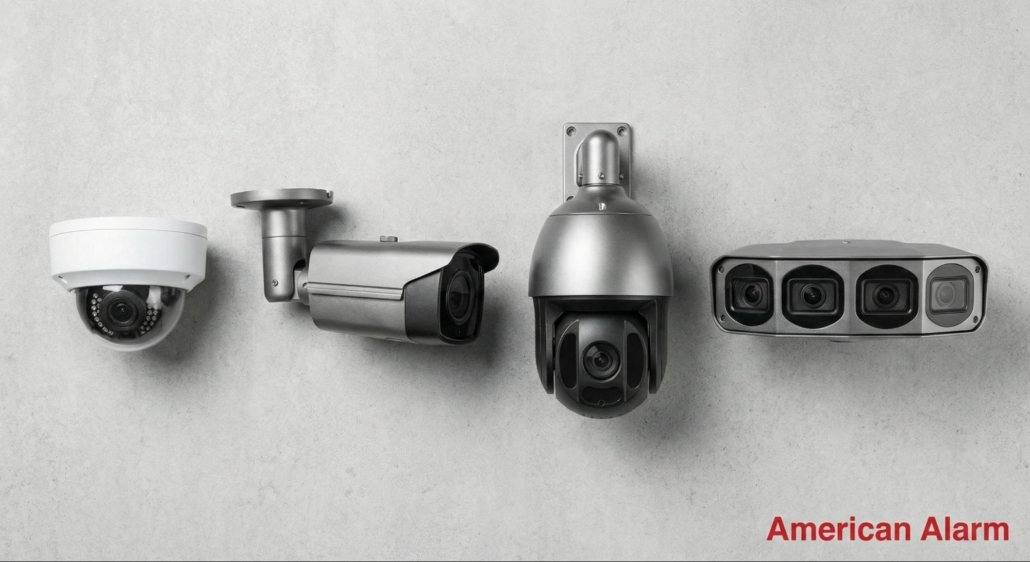
A truly effective surveillance plan uses a mix of specialized units designed for specific tasks. Think of it like building a team where each player has a distinct role. For monitoring long distances like a parking lot or a property’s perimeter, bullet-style units are ideal due to their focused view and visible presence, which acts as a deterrent. For indoor spaces or outdoor entryways where you want a wider view without an obtrusive device, dome units are a perfect fit. They are discreet and often built to be tamper-resistant. To cover a vast indoor area like a warehouse floor or a lobby from a single point, a panoramic unit can provide a full 360-degree perspective, ensuring there are no hidden corners. The key is to design a system that combines these elements to create seamless coverage.
Built for Durability
Commercial surveillance equipment is engineered to operate reliably in demanding environments, unlike off-the-shelf consumer products. Your system needs to withstand Atlanta’s summer heat, sudden downpours, and everything in between. This is where industry durability ratings become so important. For any outdoor units, you should look for an IP67 rating, which certifies that the hardware is sealed against dust and can handle being submerged in water. For units in vulnerable areas like loading docks or public-facing entryways, an IK10 rating is crucial. This rating signifies that the housing is highly impact-resistant and can withstand vandalism. Investing in durable, properly-rated equipment ensures your system remains operational when you need it most, protecting your property year-round.
Covering Key Areas with Fixed and Wide-Angle Views
Fixed cameras are the workhorses of any security system, providing consistent, reliable monitoring of a specific area. They are ideal for covering critical points that require constant observation, such as entrances, exits, loading docks, and sensitive interior rooms. Because they don’t move, you can be certain that these key areas are always in view. For monitoring large open spaces like lobbies, production floors, or parking lots, wide-angle or panoramic cameras are invaluable. These cameras offer an expansive field of view, sometimes up to 360 degrees, which minimizes blind spots and reduces the total number of cameras needed for complete situational awareness. This broad coverage allows security personnel to observe activity across a large area from a single viewpoint.
Using PTZ and Long-Range Views for Active Monitoring
Pan-Tilt-Zoom (PTZ) cameras offer unparalleled flexibility for active surveillance. Operators can remotely control the camera to pan across a wide area, tilt up and down, and zoom in to get a closer look at distant objects or track a moving subject. This capability is essential for monitoring large perimeters, expansive parking facilities, and other outdoor areas where threats can be unpredictable. The ability to zoom in with powerful optical lenses means you can capture critical details like facial features or license plates from hundreds of feet away. For highly specialized needs, dedicated long-range cameras can provide clear imaging over even greater distances, ensuring that no part of your property is beyond reach. 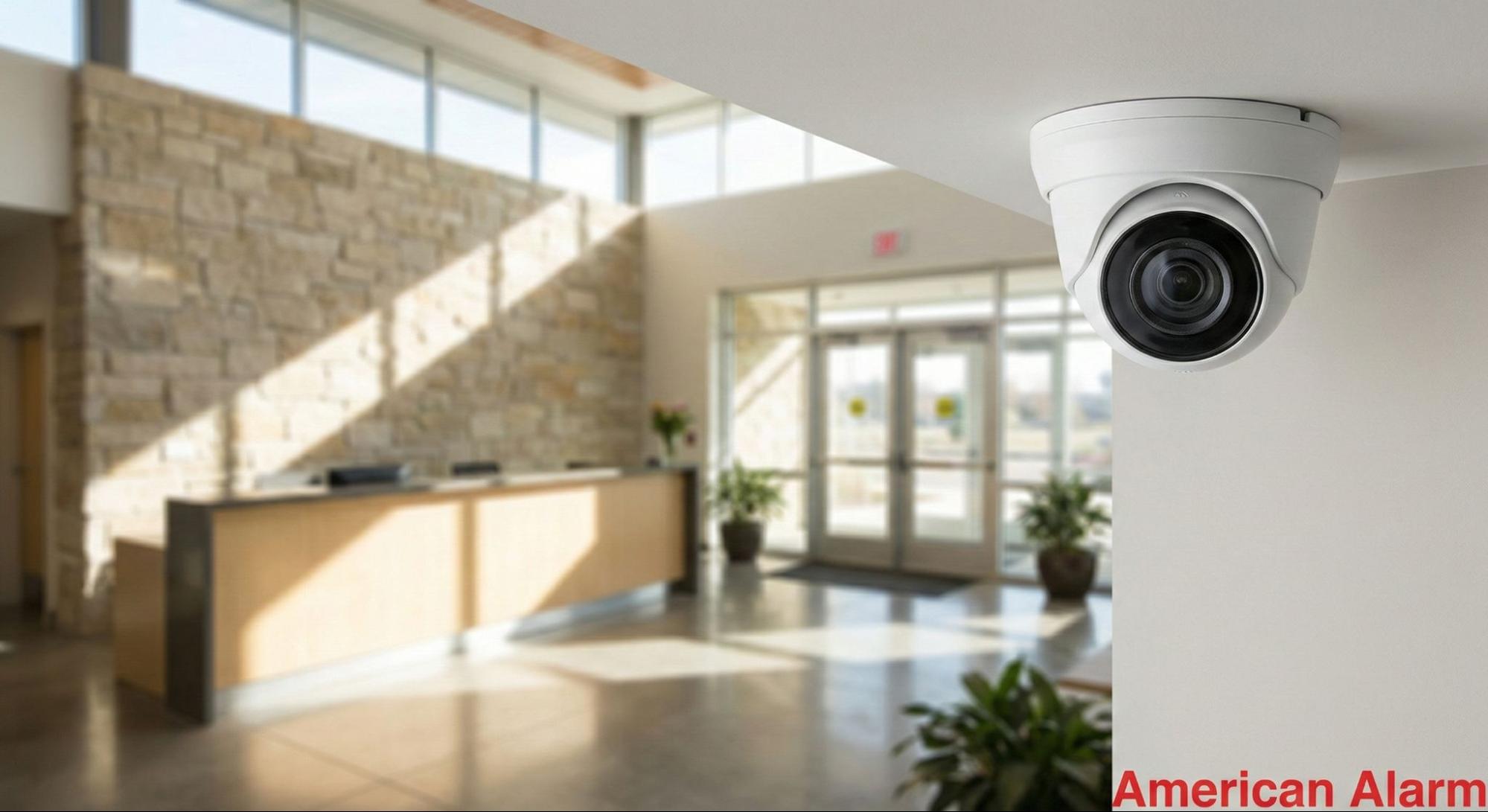
Motorized Lenses and High Frame Rates
Beyond the type of unit, specific technical features make a significant difference in performance. Features like motorized varifocal lenses allow operators to adjust the zoom and focus remotely, which is crucial for adapting to changing surveillance needs without physical adjustments. This means a security manager can fine-tune the view from a central control room instead of dispatching a technician to climb a ladder. Additionally, a recording speed of 30 frames per second (FPS) ensures the video playback is smooth and captures events in real-time without choppiness. This fluid motion is essential for accurately identifying subjects and understanding the sequence of events during an incident, providing clear and usable evidence when you need it most.
Choosing Your System’s Foundation: Connectivity and Storage
The cameras themselves are only one part of the equation. The backbone of your surveillance system—how it connects, where it’s managed, and how it stores footage—is just as critical to its overall effectiveness and reliability. Making the right choices here will determine how easily you can access your video, how secure your data is, and whether the system can grow with your business. For a large commercial property, these foundational decisions about connectivity and storage management are essential for building a system that is both powerful today and prepared for tomorrow’s challenges. These choices impact everything from initial installation costs to long-term operational efficiency, so it’s important to get them right from the start.
Wired vs. Wireless Systems
One of the first decisions you’ll face is how your system will connect. Wired systems are known for their reliability, making them a top choice for large facilities where a stable connection is paramount. Because they are physically connected, they are less susceptible to signal interference, ensuring a consistent video feed from critical areas. Wireless systems offer more flexibility and are easier to install, especially in buildings where running new cables would be difficult or disruptive. Modern wireless technology is highly secure, and models with battery backups can continue operating even during a power outage, providing an extra layer of protection. The best solution often involves a hybrid approach, using wired connections for key infrastructure and wireless for harder-to-reach locations.
On-Premise vs. Cloud-Based Management
How you manage your system is another key consideration. An on-premise system stores video footage on hardware located at your facility, offering you complete control with a higher initial investment. This gives your team direct oversight of the hardware and data, which can be a requirement for certain industries with strict compliance standards. On the other hand, a cloud-based system stores footage online, providing easy remote access and scalability, typically for a monthly subscription fee. This is ideal for businesses with multiple locations or for managers who need to monitor their property from anywhere. Cloud management also simplifies system updates and maintenance, as it’s handled by the service provider.
Video Storage Options: Local vs. Cloud
Similar to management, you have options for where your video footage is stored. You can store your video footage locally on a Network Video Recorder (NVR) or Digital Video Recorder (DVR), which often comes with no recurring fees after the initial hardware purchase. This keeps all your data on-site. Alternatively, cloud storage saves your video online, ensuring it’s safe from on-site damage or theft. If a fire, flood, or break-in were to compromise your physical recorders, your footage would remain secure and accessible from the cloud. Many modern security systems offer a hybrid model, recording locally while backing up critical events to the cloud for redundancy.
Calculating Storage Capacity and Retention Policies
It’s crucial to plan for adequate storage. Storage needs can range from 1 TB to over 64 TB, depending on the number of surveillance units, video resolution, and frame rates. Most businesses retain footage for 30 to 90 days, which is typically sufficient for investigating incidents and addressing liability claims. However, certain industries may have legal or regulatory requirements for longer retention periods. Properly calculating your needs ensures you don’t run out of space at a critical moment. A professional consultation can help you determine the right storage capacity and retention policy to meet your operational and legal obligations.
Connectivity for Remote Locations
Not all commercial properties have easy access to high-speed internet. For properties without reliable internet access, such as construction sites, agricultural facilities, or remote storage yards, traditional systems can be a challenge. Fortunately, some systems can use 4G or 5G mobile networks to transmit video data, ensuring you stay connected no matter where you are. This cellular connectivity provides a reliable link for live viewing and data transfer, making it possible to secure even the most isolated parts of your operation. It’s a flexible solution that brings modern surveillance capabilities to locations that were previously difficult to monitor effectively.
How a VMS Unifies Your Entire System
Managing dozens or even hundreds of cameras across a large campus or multi-building facility would be nearly impossible without a centralized Video Management System (VMS). A VMS is the brain of your surveillance operation, providing a single, unified platform to monitor, record, and analyze footage from every camera on your network. This centralized control is essential for operational efficiency. Instead of checking multiple systems or monitors, your security team can view live feeds, review recorded video, and manage all cameras from one interface. A robust VMS allows for easy scalability, so you can add new cameras as your needs evolve. Advanced systems also support sophisticated features like video analytics, which can automatically detect and alert personnel to unusual activity, and provide powerful search tools to quickly locate specific events. For any large-scale deployment, a VMS transforms a collection of cameras into an intelligent, cohesive, and manageable security ecosystem.
Why Image Clarity Matters, Day or Night
On a large property, the ability to see clearly is non-negotiable, regardless of distance or time of day. This is why advanced imaging capabilities are a cornerstone of effective commercial surveillance. High-resolution cameras, such as those with 4K or higher resolution, are crucial for capturing footage with enough detail to be actionable. Whether identifying a person of interest, reading a license plate on a vehicle, or examining a specific incident, the clarity provided by high-resolution video can be the difference between a successful investigation and a dead end. Security threats don’t stop when the sun goes down, and neither should your surveillance system. Superior night vision and low-light performance are critical for maintaining 24/7 visibility. Modern commercial cameras use advanced infrared (IR) technology and highly sensitive sensors to produce clear, detailed images even in complete darkness or poorly lit conditions. This ensures that your perimeter, parking lots, and building exteriors are protected around the clock, mitigating the heightened risks that come after business hours.
Choosing the Right Video Resolution
When it comes to surveillance footage, detail is everything. While a standard 2MP (1080p) resolution might be adequate for general monitoring, it often falls short when you need to identify critical information. Capturing fine details, such as the numbers on a license plate or the facial features of an individual from a distance, typically requires a resolution of 4MP or higher. This level of clarity can be crucial for investigations and liability claims. However, it’s important to strike the right balance. Higher-resolution video produces larger file sizes, which in turn demands significantly more data storage capacity. A professional assessment can help you determine the optimal resolution for different areas of your property, ensuring you get the clarity you need without investing in unnecessary storage.
Advanced Night Vision Capabilities
Modern commercial surveillance systems have transformed nighttime monitoring. Gone are the days of blurry, indistinct black-and-white footage. Today’s advanced systems use powerful infrared (IR) technology and highly sensitive imaging sensors to produce crisp, clear visuals even in complete darkness. Some units even offer color night vision, which can provide more detailed and useful footage in low-light conditions. For large properties, the effective range of this technology is a key factor. Night vision capabilities can vary from around 100 feet to over 600 feet, a critical consideration for ensuring your entire perimeter, from the building exterior to the far corners of a parking lot, remains fully visible and protected after dark.
Integrating Video with Alarms and Access Control
The most effective security strategies are layered, with different systems working together to create a unified defense. Modern commercial camera systems are designed to integrate seamlessly with other core security components, transforming them from passive monitoring tools into active parts of your threat response mechanism. Integrating your cameras with commercial alarm systems allows for immediate video verification. When an alarm is triggered, the system can instantly push live footage from the relevant cameras to your monitoring team, allowing them to assess the situation in real-time and ensure a faster, more accurate response from law enforcement. Similarly, pairing cameras with integrated access control systems provides visual confirmation for every entry event. If a door is forced open or an unauthorized access card is used, the system can automatically flag the associated video, streamlining incident review and investigation. This intelligent integration creates a security infrastructure that is more than the sum of its parts—it’s a responsive, intelligent, and highly effective shield for your property. 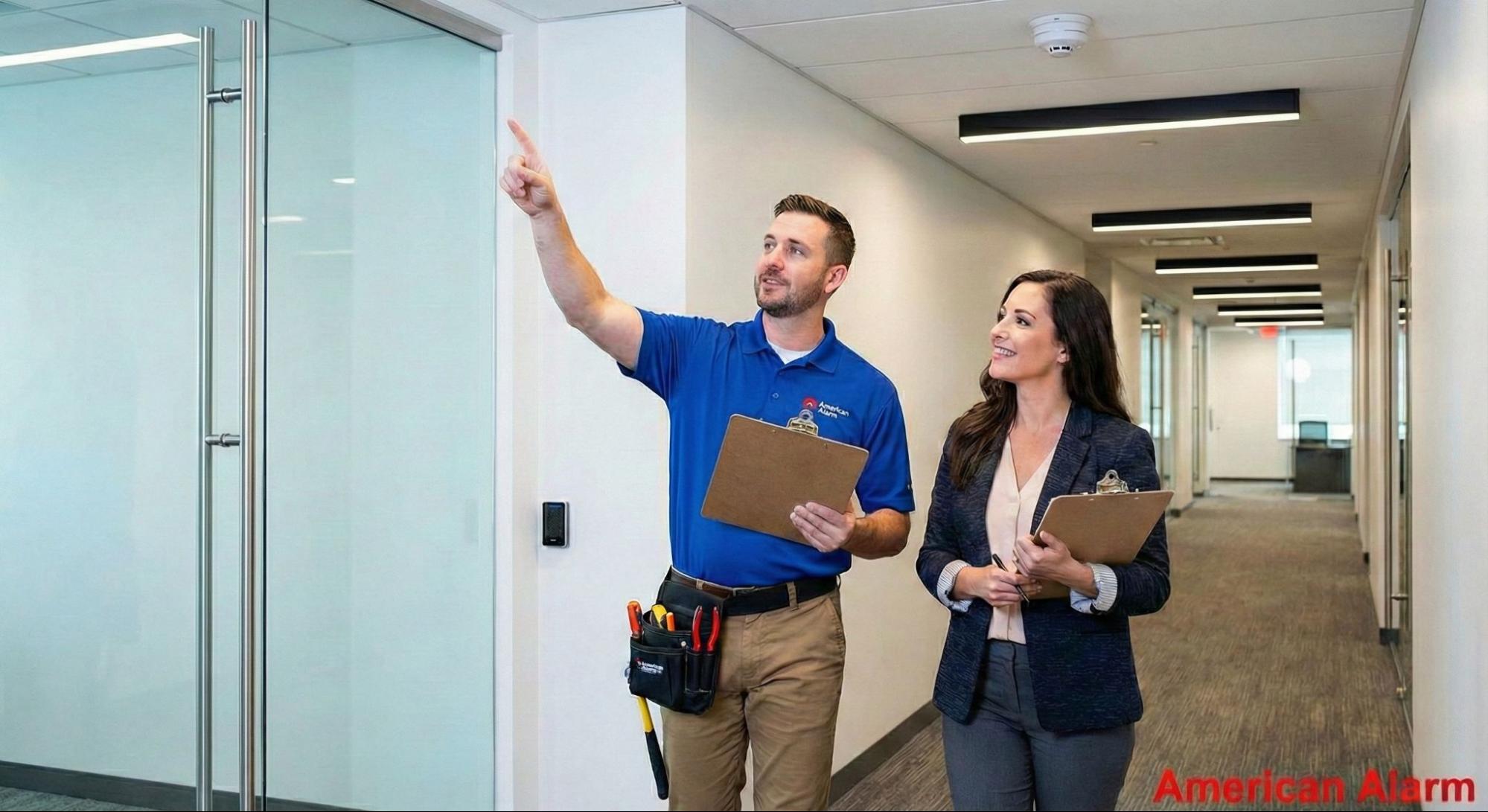
Intelligent Analytics for Smarter Alerts
Older surveillance systems were notorious for sending alerts for every swaying tree branch or passing animal, leading to a flood of notifications that were mostly ignored. Modern systems have evolved far beyond simple motion detection. By using intelligent analytics, today’s commercial surveillance solutions can distinguish between significant and irrelevant events. This technology can identify specific objects like people and vehicles, allowing you to set up rules that trigger alerts only for meaningful activity, such as a person loitering near a restricted entrance after hours. This level of precision drastically reduces false alarms, ensuring that when you do get a notification, it’s something that genuinely requires your attention. This makes your entire security posture more responsive and effective.
Active Deterrence Features
A truly effective security system doesn’t just record a crime in progress—it helps stop it from happening in the first place. Active deterrence features transform your surveillance units from passive observers into an active line of defense. When the system’s analytics detect a potential threat, it can automatically trigger built-in deterrents like flashing strobe lights and loud sirens to signal that the intruder has been spotted. Furthermore, integrated two-way audio allows professional monitoring personnel to speak directly through the unit, warning the trespasser that they are being watched and that authorities are on the way. This immediate, proactive response is often enough to scare off potential criminals before they can cause any damage or loss.
Beyond Security: Leveraging Video for Business Operations
While the primary goal of a commercial surveillance system is to protect your property, its value extends far beyond security. The visual data captured by your system is a powerful business intelligence tool that can provide critical insights into your daily operations. By shifting your perspective, you can see the system not just as a security expense, but as an investment in operational efficiency, quality control, and employee development. This multi-faceted approach helps you get a greater return on your investment by using the same infrastructure to solve business challenges, streamline processes, and reinforce best practices across your organization.
Improving Processes and Employee Training
The footage from your surveillance system offers an objective look at your business’s day-to-day activities. For a warehouse or manufacturing facility, this can be an invaluable resource for identifying workflow inefficiencies. You can review footage from loading docks to find bottlenecks or analyze assembly line procedures to ensure safety protocols are consistently followed. This visual record also serves as an excellent training tool. You can use clips of exemplary work to demonstrate best practices to new hires or review footage of a workplace incident to provide clear, constructive feedback. This helps create a safer, more efficient work environment while reinforcing company standards.
Why Professional Design and Monitoring Are Non-Negotiable
Technology alone is not enough to secure a large property; professional expertise is the critical element that ensures your system is effective, reliable, and scalable. The process begins with expert system design. A professional security provider will conduct a thorough assessment of your property to identify vulnerabilities and design a custom camera layout that provides optimal coverage without any gaps. Precision installation is equally important. Professional technicians ensure that cameras are positioned correctly, focused accurately, and securely connected to the network to guarantee reliable performance. After installation, ongoing maintenance and support are vital for keeping the system operating at peak condition over the long term. Perhaps the most valuable component is 24/7 professional monitoring. For a large property, having a dedicated team of security experts watching over your facility around the clock is invaluable. These professionals can respond to alerts immediately, verify threats, and dispatch authorities when necessary, significantly reducing your risk exposure, especially after hours. American Alarm’s 24/7 professional monitoring services provide this constant vigilance for businesses across Atlanta and North Georgia.
Strategic Planning and Placement
A professional design is about creating a custom security plan tailored to your property’s unique layout and vulnerabilities. The process begins with a comprehensive site assessment, where an expert walks your facility to identify high-risk areas and potential weak points. This isn’t just about covering the obvious spots; it’s a detailed strategy that maps out placement for all entry and exit points, loading docks, storage rooms, and expansive parking lots. A well-thought-out plan also accounts for variables like changing light conditions throughout the day and carefully considers viewing angles to eliminate blind spots. This meticulous approach ensures your surveillance coverage is seamless and effective, all while adhering to relevant privacy regulations.
Your Top Questions About Commercial Surveillance Answered
For facility managers and property owners in the competitive Atlanta market, investing in a major security system comes with valid concerns. Questions about coverage gaps, system reliability, potential liability issues, and the speed of response are common. A professionally designed and installed system directly addresses these worries. By working with an experienced Atlanta security provider, you ensure that your system is tailored to your property’s unique layout, eliminating blind spots and ensuring comprehensive coverage. High-quality commercial-grade equipment, combined with professional installation and ongoing support, guarantees system reliability. Proactive management and monitoring help mitigate liability by providing a clear record of events and demonstrating due diligence in protecting your property. Ultimately, partnering with a local expert like American Alarm means you have a responsive team that understands the specific security landscape of Atlanta. We offer a full range of security services to create a solution that not only meets your technical requirements but also provides confidence and peace of mind. To discuss your property’s unique needs, get a customized security quote, and learn how we can help you build a truly secure environment.
FAQs
What types of commercial properties are considered “large” for security camera systems in Atlanta? Large commercial properties typically include corporate campuses, multi-building office parks, extensive warehouses, manufacturing plants, distribution centers, hospitals, and any facility requiring comprehensive perimeter and interior surveillance across significant acreage or multiple structures in Atlanta and North Georgia. Why are standard security cameras insufficient for large commercial facilities? Standard or consumer-grade cameras lack the necessary resolution, durability, range, and advanced features (like robust night vision or multi-site management) required to effectively cover large areas, integrate with complex security infrastructure, or withstand commercial environmental demands. They often result in coverage gaps, poor image quality, and scalability limitations. How does a Video Management System (VMS) benefit large commercial properties with many cameras? A VMS centralizes control and monitoring of all cameras across multiple buildings or locations from a single platform, enhancing operational efficiency. It enables real-time viewing, intelligent alerts, efficient data storage, and advanced analytics, making it easier to manage a complex surveillance network. How important is night vision and high-resolution imaging for commercial properties in Atlanta? Extremely important. High-resolution imaging (e.g., 4K) ensures clear, detailed footage for identification and evidence, while advanced night vision and low-light performance are critical for 24/7 surveillance, especially after hours when businesses may be dark and more vulnerable to crime. What are the advantages of integrating commercial camera systems with alarm and access control systems? Integration creates a unified, layered security defense. It enables instant verification of alarms with real-time video, proactive threat detection through AI analytics, centralized monitoring, and streamlined access management, leading to faster response times and more effective protection for your Atlanta business.


Leave a Reply
Want to join the discussion?Feel free to contribute!