
How to Prevent Internal Theft in Retail Stores
Learning how to prevent internal theft in retail stores starts with more than one alarm or a single inventory count. Atlanta store owners and managers need a layered plan that connects access control, monitored alarms, video surveillance, inventory discipline, transaction review, and clear staff procedures. The goal is to reduce opportunities, identify irregularities early, and respond fairly when something does not add up.
Schedule a free consultation. Call (770) 645-0061 or contact American Alarm online.
Why internal theft requires a layered retail plan
Internal theft prevention works best when no single employee, doorway, record, or transaction provides an unchecked path to merchandise or money. Retail owners can reduce risk by combining clear accountability, limited access, monitored alarms, video evidence, routine reconciliation, and a consistent response process.
Internal loss can involve merchandise, cash, refunds, discounts, sensitive business information, or unauthorized use of store systems. A control that addresses only the sales floor may leave the stockroom, receiving area, office, point-of-sale access, or closing routine exposed. A layered plan looks at the entire flow of products and information from delivery to sale.
For Metro Atlanta businesses, the right mix depends on the store layout, operating hours, merchandise profile, staffing model, and existing equipment. A professional assessment can help a manager prioritize the most important gaps instead of adding disconnected devices or policies.
1. How to prevent internal theft in retail stores by mapping controls
Start by mapping how merchandise, cash, credentials, and records move through the store. This simple exercise gives a retail manager a practical baseline for deciding where access, alarm, video, and process controls should work together.
- Receiving: Document who accepts deliveries, where items are staged, and when quantities are checked against purchase records.
- Stockroom: Identify who can enter, which shelves hold high-value items, and whether access is logged or reviewed.
- Sales floor: Note blind spots, unattended displays, fitting-room procedures, and times when staffing is thinnest.
- Checkout and office: Review who can approve refunds, void sales, change prices, open cash drawers, or access reports.
- Closing and opening: Define who may disarm the system, enter before opening, close alone, or handle deposits and keys.
Walk the route at different times of day. A store that appears well controlled during a busy afternoon may have a very different risk profile during delivery, shift change, lunch, or closing. Write down each handoff and ask what evidence would exist if an item or transaction later required review.
2. Control access to stockrooms, offices, and systems
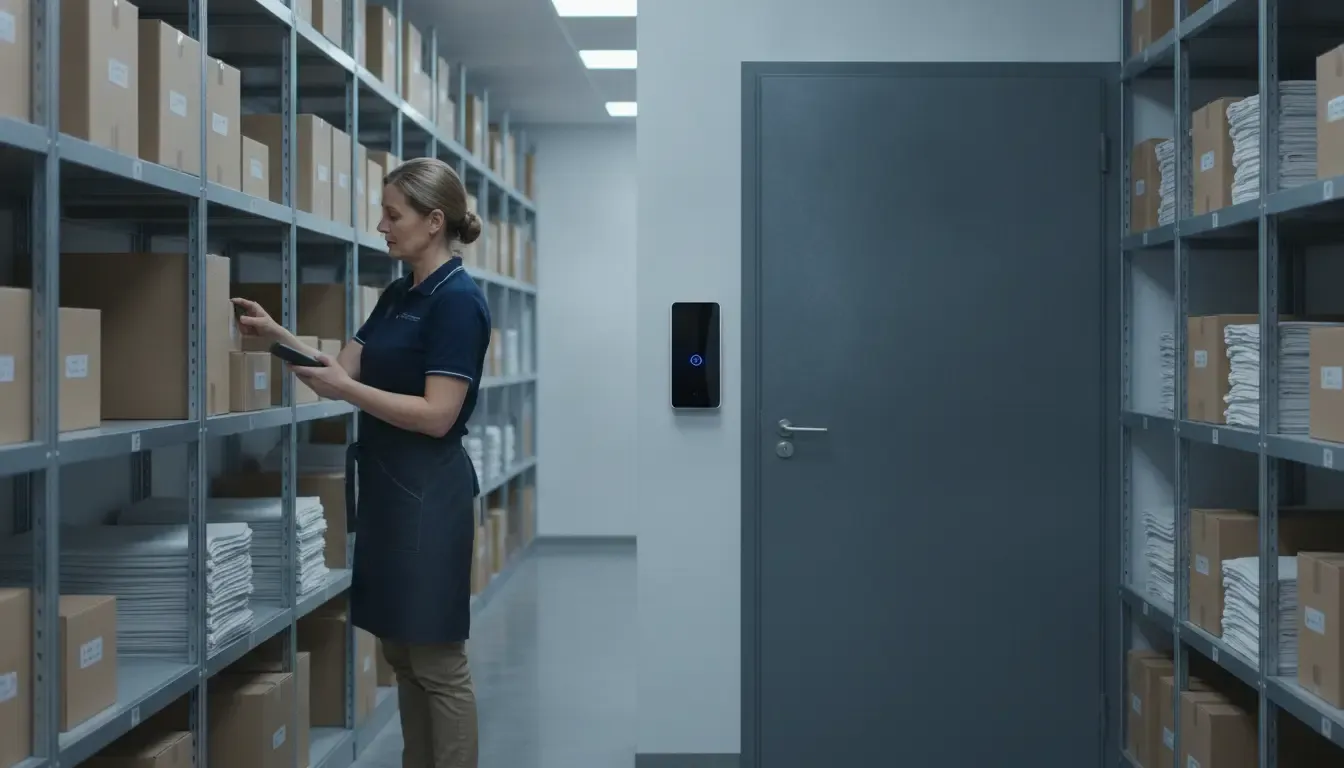
Access control is one of the most direct ways to prevent internal theft in retail stores because it limits opportunity before a loss occurs. Give each person only the access needed for the role, use individual credentials where practical, and review permissions whenever duties change.
Begin with the staff-only areas that contain merchandise, cash, records, keys, or system controls. A controlled entry point can make it easier to identify who entered and when. It also gives managers a defined place to apply opening, closing, and after-hours procedures instead of relying on shared keys or informal handoffs.
Use individual credentials and role-based permissions
Avoid shared codes for alarm panels, offices, point-of-sale functions, and staff-only doors when the system supports individual users. Individual credentials improve accountability without requiring a manager to rely on memory. Remove or change access promptly when someone changes roles or leaves the company.
Protect high-risk merchandise and records
Place high-value or frequently missing items where staff access is easier to observe and count. Keep keys, deposit records, return documentation, and administrator credentials in controlled locations. The goal is not to make normal work difficult. It is to separate duties so one person cannot receive, alter, and remove an item without another review.
American Alarm provides commercial access control systems for Atlanta businesses. A consultation can help determine whether a store needs controlled doors, credential management, integration with an existing alarm system, or a broader plan for multiple locations.
3. Connect alarms and video surveillance to the plan
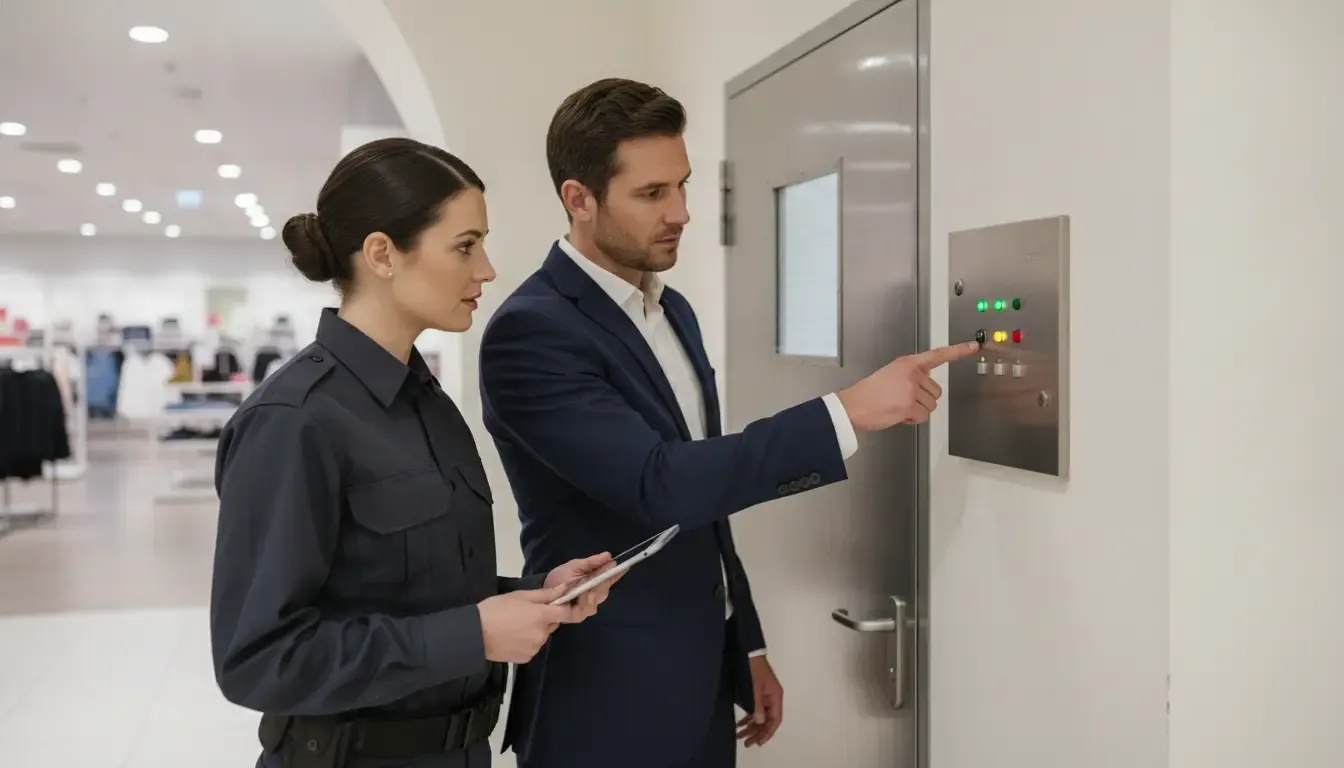
Alarms and video surveillance are most useful when they support a defined response process. A monitored alarm can help protect staff-only doors and other restricted areas, while video can provide context around access events, receiving activity, inventory movement, or a disputed transaction.
Do not treat video surveillance as a substitute for inventory controls or manager oversight. Instead, use it to strengthen the layers around the highest-risk moments. Store managers should know which areas are covered, how long recordings are retained, who may review them, and how a relevant event is documented.
| Security layer | Primary role | Manager review |
|---|---|---|
| Controlled entry | Limits access to stock, offices, and system areas | Check permissions and entry records |
| Monitored alarm | Signals activity at protected doors or during restricted hours | Review schedules, users, and response contacts |
| Video surveillance | Provides visual context for incidents and process checks | Confirm coverage, retention, and review authority |
| Inventory controls | Shows whether product movement matches records | Compare counts, receiving, returns, and adjustments |
| Manager approval | Creates a second check for sensitive actions | Review refunds, voids, discounts, and deposits |
American Alarm designs commercial alarm systems with intrusion detection, access control, video surveillance, remote monitoring, and system integration options. Its security system monitoring and commercial alarm repair support can help Atlanta businesses maintain the protective layers after installation, including 24/7 UL-certified central station monitoring.
4. Reconcile inventory, transactions, and schedules
Routine reconciliation turns a loss-prevention policy into a measurable process. Compare what the store received, sold, returned, transferred, discounted, damaged, and counted. The purpose is to spot patterns early, not to accuse staff based on one unexplained discrepancy.
Use a schedule that matches the risk. High-value items may need frequent counts, while a full inventory review can follow a regular calendar. Unannounced spot checks can add useful assurance, but they should be documented and applied consistently across shifts and locations.
- Receiving records: Match delivered quantities to purchase orders before items move into general stock.
- Returns and refunds: Review who approved the action, whether the item was physically returned, and whether the record matches the policy.
- Voids and discounts: Look for repeated adjustments, unusual timing, or activity concentrated around one user or shift.
- Damaged goods: Require a documented disposition and a second review for high-value items.
- Shift handoffs: Record cash, keys, restricted-area status, and unresolved discrepancies at each transfer.
Managers should compare patterns rather than focus on isolated numbers. A recurring shortage tied to one product, shift, or process may point to a control gap. The same review may reveal a training issue, a receiving error, a system configuration problem, or a need for stronger oversight.
5. Build a fair response process before an incident
A written response process helps retail managers protect evidence, treat people consistently, and make decisions based on documented facts. Define who receives a report, who reviews access and transaction records, how relevant video is preserved, and when an owner, attorney, insurer, or law enforcement agency should be consulted.
- Secure the facts: Preserve relevant records, access events, alarm activity, inventory counts, and video before normal retention cycles remove them.
- Limit unnecessary access: Share information only with the people responsible for the review and avoid discussing allegations broadly.
- Compare multiple sources: Check the physical count, transaction history, schedules, credentials, and documented procedures together.
- Interview consistently: Use the same basic process for comparable incidents and document the answers without turning the review into a public confrontation.
- Correct the control: After the review, change the permission, approval step, layout, training, or system setting that allowed the gap to continue.
Retail loss prevention should support a safe workplace and a reliable customer experience. Clear expectations, respectful training, and consistent documentation are stronger than suspicion-driven rules that vary from one shift to another.
6. Turn the plan into daily store habits
Internal theft prevention remains effective when managers review it as an operating routine rather than a one-time project. Assign an owner for access reviews, inventory checks, alarm user management, and incident documentation. Revisit the plan after a remodel, staffing change, new product line, new point-of-sale workflow, or move to another location.
At least once each quarter, walk the store with the people who open, close, receive deliveries, manage inventory, and handle transactions. Confirm that the documented process matches real work. Test alert contacts and confirm that a manager knows how to request technical support if an alarm, entry point, or monitoring connection needs attention.
American Alarm has served Atlanta homes and businesses since 1995. The company combines local service with commercial alarm, access control, video surveillance, monitoring, and repair capabilities. Scott Gilkey’s NICET IV certification and unlimited Georgia low-voltage credentials support technical planning for businesses that need a coordinated security and life-safety approach.
Frequently Asked Questions
Retail owners can reduce internal theft risk by combining restricted access, monitored alarms, video surveillance, inventory reconciliation, transaction review, staff training, and a consistent incident process. The right combination depends on the store layout, merchandise, staffing, operating hours, and existing equipment.
What is the best way to prevent internal theft in a retail store?
The best approach is a layered program rather than one device or policy. Limit access to stock and systems, review inventory and transactions, use monitored alarms and video surveillance for important areas, train staff on procedures, and investigate discrepancies consistently.
How can access control reduce employee theft?
Access control reduces opportunity by limiting staff-only doors and sensitive areas to people with a business reason to enter. Individual credentials can also create a useful record of access, support role-based permissions, and make it easier to remove access when duties change.
Should a retail store use video surveillance for internal loss prevention?
Video surveillance can support internal loss prevention by providing context for receiving, stockroom access, checkout activity, and incident reviews. It works best when managers define coverage, retention, review authority, and a process for preserving relevant recordings.
How often should retail inventory be checked?
Inventory frequency should match the value, movement, and risk of the merchandise. Use regular full counts along with documented spot checks for high-risk items, and compare counts with receiving, sales, returns, damage, transfers, and adjustments.
Can American Alarm help plan retail security in Atlanta?
Yes. American Alarm works with Atlanta-area businesses on commercial alarm systems, access control, video surveillance, monitoring, and repair. Call (770) 645-0061 to discuss the store layout, current equipment, operating procedures, and priority gaps.


Leave a Reply
Want to join the discussion?Feel free to contribute!