Access Control Installer Atlanta: Choose With Confidence
Choosing an access control installer Atlanta businesses can rely on is a decision about more than a card reader or keypad. The right partner helps match credentials, door hardware, software, life-safety requirements, and ongoing service to the way your property operates. A careful review also protects your schedule, limits unclear assumptions, and gives your team a practical standard for evaluating follow-up proposals. This guide explains what to look for, what to ask before signing, and how to compare proposals without reducing the decision to a single line-item price.
Schedule a free consultation. Call (770) 645-0061 or contact American Alarm online.
What Should an Atlanta Access Control Installer Evaluate First?
An access control installer should begin with your property, users, doors, schedules, and operational priorities. A credible recommendation explains which entry points need control, how credentials will be managed. How the system will connect with existing protection, and how the plan can adapt as your organization changes. The installer should assess before recommending equipment. Ask for a written scope before approving the design.
Short answer: Choose an installer that evaluates the full access plan, not just the device mounted at the door. The assessment should cover entry points, user groups, credential types, network and power needs, emergency operation, system integration, documentation, and post-installation support.
- Property scope: The proposal should identify the main entrance, employee entrances, loading areas, restricted rooms, gates, and any other opening that needs a defined access rule.
- People and schedules: Ask how the system will handle employees, managers, visitors, vendors, and temporary credentials across normal hours, after-hours access, and schedule changes.
- Operational goals: Clarify whether your priority is access records, faster credential changes, remote administration, stronger control of sensitive areas, or integration with a broader security plan.
- Future needs: A good design leaves a practical path for additional doors, users, locations, or features without forcing an unnecessary replacement of the original system.
American Alarm’s Atlanta access control systems service page describes options such as proximity readers, biometric credentials, keypads, gate controls, mobile credentials, time-based permissions, reporting, and remote oversight. Use that range as a prompt for your own evaluation, not as a reason to buy features you do not need.
Does the Installer Understand Your Property and Access Needs?
A site assessment is one of the clearest ways to separate thoughtful design from a generic proposal. The installer should ask how people move through the property, which openings need different rules. Where equipment can be mounted, and what must happen during a power or alarm event. The assessment should result in a written scope that another decision-maker can understand.
Before accepting a recommendation, ask whether the installer will:
- Walk the openings: Inspect door type, frame condition, hardware, wiring paths, power availability, network conditions, and the location of controllers and related equipment.
- Map permissions: Show how access groups, schedules, credential changes, and audit records will work for the people who administer the property.
- Address life safety: Explain how controlled doors will operate during an emergency and how the access system will coordinate with applicable fire alarm requirements and local authority expectations.
- Document assumptions: State what the installer is including, what another contractor must provide, and which site conditions could change the scope.
These questions matter for an office, retail location, warehouse, healthcare facility, school, or residence. The correct design depends on the building and its daily use. A provider that skips the assessment may leave you with equipment that looks modern but does not support the way the property actually functions.
What Credentials and Technical Capabilities Should You Verify?
Credentials do not replace a good design, but they give you a useful way to evaluate technical accountability. Confirm that the company is authorized to perform the work in Georgia, carries appropriate insurance. Uses trained technicians, and can explain how access control connects with related low-voltage systems. Ask for evidence and a clear point of contact instead of relying on a sales claim.
- Georgia authorization: Ask which license or credential covers the proposed low-voltage work and who is responsible for permitting or coordination when the project requires it.
- Technical leadership: Look for an organization that can explain design decisions in plain language and identify the person responsible for engineering, programming, testing, and documentation.
- Relevant experience: Ask for examples involving a property type and access pattern similar to yours, without requesting confidential customer information.
- System knowledge: Confirm that the installer understands the selected hardware, credentials, software, network requirements, and any existing equipment that must remain in service.
- Safety coordination: Require a clear explanation of emergency release, exit hardware, power, and coordination with other life-safety systems where those conditions apply.
American Alarm has served Atlanta-area homes and businesses since 1995. Founder Scott Gilkey holds NICET IV certification and unlimited low-voltage licenses in Georgia, Alabama, and North Carolina. Those credentials are relevant trust signals, but the final decision should still be based on the scope, communication, technical fit, and service commitments documented for your project.
How Should You Compare Access Control Proposals?
Compare proposals by what each installer is responsible for delivering, not by the headline amount alone. A useful proposal identifies equipment, labor, programming, credentials, cabling, power, network coordination, testing, training, warranty terms, and ongoing service. It also calls out exclusions so two proposals can be compared on the same basis.
| Proposal area | Question to ask | What a clear answer includes |
|---|---|---|
| System scope | Which openings and restricted areas are included? | A door-by-door or area-by-area list with quantities and assumptions. |
| Credentials | How will users receive, change, suspend, and recover access? | Credential types, administrator roles, schedules, and a change process. |
| Integration | What existing systems must connect or remain independent? | Defined interfaces, responsibilities, testing, and any needed third-party coordination. |
| Project delivery | Who handles programming, testing, training, and closeout? | Named responsibilities, deliverables, acceptance testing, and training time. |
| Support | What happens when a reader, controller, credential, or software function fails? | Contact path, service scope, maintenance options, response expectations, and warranty terms. |
Be cautious when a proposal uses broad phrases such as “complete installation” without defining what complete means. Ask the installer to revise unclear language before you approve the work. Written clarity protects both sides and makes later service conversations easier.
Can the Installer Integrate Access Control With Other Systems?
Integration should solve a defined operational problem, not appear as a vague promise. Ask the installer to identify what will share information, what will remain separate, what events will be reported, and who will test the connection. A qualified provider should be able to explain the practical result for administrators, occupants, and service personnel.
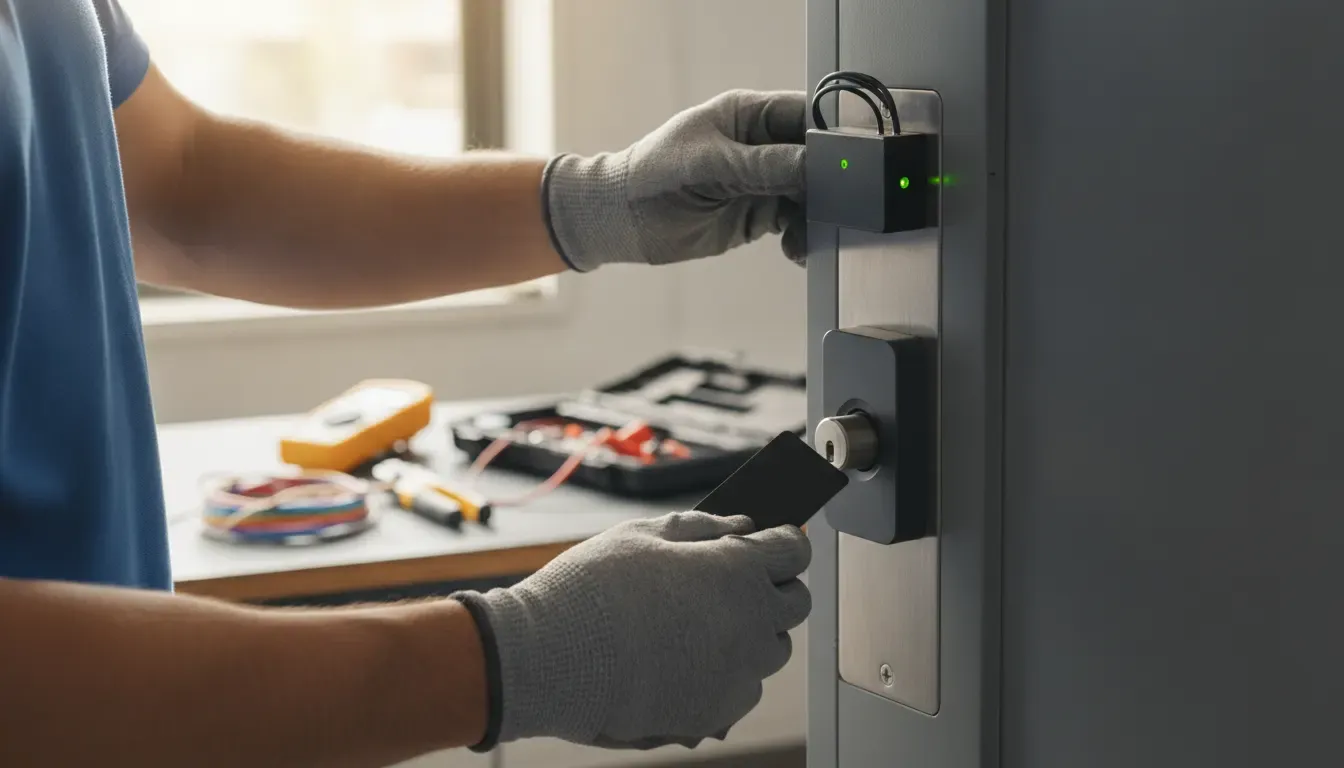
- Alarm coordination: Ask how access events and alarm conditions will be handled together, including who receives notifications and how the system behaves during an emergency.
- Entry records: Confirm what access events are recorded, how administrators review them, and how long records remain available under the selected platform.
- Remote administration: Clarify which tasks can be completed remotely, which require a local visit, and how administrator accounts are protected.
- Existing equipment: Ask whether useful equipment can be retained safely and what testing will confirm compatibility before the proposal depends on it.
Integration can also affect network planning, permissions, privacy, and maintenance. The installer should identify those dependencies before work begins and include them in the final handoff materials.
What Support Should You Expect After Installation?
Access control is an operating system for your property, not a one-time hardware delivery. Ask how the provider handles credential changes, user questions, service calls, software updates, failed devices, and future expansion. Strong post-installation support gives you a known path to help and keeps the system aligned with the people and doors it protects.
- Training: Administrators should receive practical instruction on adding users, changing permissions, reviewing events, and responding to routine system messages.
- Documentation: Request as-built information, equipment details, credential procedures, administrator information, testing records, and warranty documents.
- Service access: Confirm how to request help, what information the service desk needs, and which issues can be handled by phone before a visit.
- Maintenance: Ask how the provider checks readers, locks, power, communications, software, and related equipment over time.
- Expansion: Confirm whether the same provider can support added doors, changed departments, or another site if your needs grow.
American Alarm provides security services for Atlanta-area businesses and residences, with technical support and service options that can be discussed during a consultation. Review the company’s security services before the conversation so you can identify which parts of the project need design, installation, monitoring, repair, or ongoing support.
Why Does Local Atlanta Experience Matter?
Local experience matters when it improves communication, site familiarity, service access, and coordination with the conditions found across Metro Atlanta. It should not be used as a vague slogan. Ask where the installer works, how service is dispatched, who will coordinate with local parties when needed. And how the company supports customers after the initial project is complete.
American Alarm has operated in the Atlanta area since 1995 from its Roswell headquarters and serves communities across Metro Atlanta and North Georgia. The company emphasizes local service, long-term customer relationships, and technical guidance for both commercial and residential properties. You can learn more about the company’s history and operating approach on its why choose American Alarm page.
Whether you are securing a small office, a growing business, a home, or a multi-area property, choose the installer that makes the scope understandable. A good partner will explain tradeoffs, document responsibilities, and give you a service path you can use after the project is finished.
Questions to Ask Before Hiring an Installer
A short, consistent question set makes provider conversations easier to compare. Bring these questions to each consultation and ask for answers in the written proposal or follow-up documentation.
- Start with scope: Will you complete a site assessment before finalizing the design, and which doors, credentials, software functions, integrations, training, and closeout documents are included?
- Verify credentials: Which Georgia licenses, insurance, certifications, and technician qualifications apply to this project?
- Confirm safety: How will the system coordinate with emergency egress and any applicable fire alarm requirements?
- Plan administration: How will we add, change, suspend, and audit access for employees, visitors, and vendors?
- Define testing: What will you test before handoff, and what records will we receive?
- Establish support: Who do we contact for service, credential problems, expansion, and system questions after installation?
- Protect continuity: What information will we retain if our administrator, facility contact, or service needs change?
Schedule a free consultation. Call (770) 645-0061 or contact American Alarm online.
Frequently Asked Questions About an Access Control Installer Atlanta
These common questions summarize the main decision points for Atlanta property owners comparing access control installers. Use the answers as a starting point, then ask each provider to explain how the recommendation applies to your specific doors, users, systems, and support needs.
What does an access control installer do?
An access control installer evaluates the property, recommends a suitable design, installs and configures the equipment, tests the system, trains administrators, and provides documentation and service. The exact responsibilities should appear in the written proposal.
How do I compare access control installers in Atlanta?
Compare the completeness of the site assessment, the clarity of the written scope, relevant credentials, integration knowledge, testing plan, documentation, support path, and ability to serve your property. Compare equivalent scopes rather than headline prices alone.
Should an installer inspect the property before proposing a system?
Yes. A site assessment helps identify door hardware, wiring, power, network, emergency operation, user groups, and integration requirements. It also gives you a more reliable basis for comparing proposals and identifying exclusions.
What credentials should an Atlanta access control installer have?
Ask about Georgia authorization for the proposed low-voltage work, insurance, technician training, relevant project experience, and the credentials of the people responsible for design and supervision. Request documentation when appropriate.
What should be included after access control installation?
Expect testing records, administrator training, system and equipment documentation, credential procedures, warranty information, and a clear service contact. Ask how future user changes, repairs, maintenance, and expansion will be handled.
Schedule a free consultation. Call (770) 645-0061 or contact American Alarm online.

Leave a Reply
Want to join the discussion?Feel free to contribute!