Fire Alarm System Smyrna: Installation and Service
A fire alarm system is more than a collection of detectors on a ceiling. For a Smyrna business or commercial property, it must be designed for the building, installed to recognized standards, connected to a dependable monitoring service, and maintained so it is ready when people need it.
A properly designed fire alarm system Smyrna businesses can rely on typically includes code-conscious equipment selection, professional installation, monitoring, documented testing, and responsive service. NFPA 72 provides the national framework for fire alarm and signaling systems, while local review may apply during construction and occupancy planning.
Schedule a free fire alarm system consultation. Call (770) 645-0061 today.
That combination matters because a system can look complete while still having gaps in coverage, notification, documentation, or ongoing maintenance. Understanding the role a reliable system plays in protecting people, operations, and property is the right starting point for making informed decisions in Smyrna.
Why a Reliable Fire Alarm System Matters for Smyrna Businesses
A dependable fire alarm system helps Smyrna businesses detect danger quickly, notify occupants, and support the life-safety responsibilities that come with operating a commercial property. Compliance, correct installation, and professional monitoring all matter because a system is only valuable when it performs under pressure.
For small and mid-size businesses in Smyrna, a fire alarm system is more than a collection of detectors mounted throughout a building. It is a coordinated life-safety system designed to identify an emergency, alert people inside the property, and communicate with a monitoring service when an alarm signal requires attention. The system should be selected and installed around the building’s use, layout, occupancy, and specific risks.
Commercial properties also have compliance obligations that residential systems do not. American Alarm’s guidance identifies NFPA-compliant fire alarm systems as a need for Smyrna businesses, while commercial fire alarm solutions must account for applicable NFPA standards and local requirements. Commercial fire alarm system installation should therefore begin with a site-specific review, not a one-size-fits-all equipment package.
Early notification protects people and operations
Rapid detection and notification give occupants more time to respond safely and give responsible parties an opportunity to coordinate with emergency responders. Monitoring is a critical part of that life-safety process. When a commercial alarm signal is communicated to a monitoring center, it creates an additional layer of response beyond the people who happen to be onsite at the time.
That reliability depends on more than installing equipment once. Detectors, notification appliances, initiating devices, control panels, and communication paths must work together. Maintenance and testing should be handled by a trained person who understands the operation and functions of the specific system. As OSHA explains in its requirements for fire detection systems: OSHA fire detection system requirements.
Local requirements deserve local attention
Smyrna businesses must also be prepared for city-level fire and life-safety expectations. The Smyrna Fire Marshal’s construction inspection process is intended to reduce fire and life-safety risks during construction and confirm compliance with applicable codes and standards before a building or area is occupied. A provider familiar with the area can help align system design, documentation, installation, and inspection preparation with the property’s situation.
Local expertise is especially useful when a business is remodeling, changing occupancy, expanding a monitored area, or correcting deficiencies identified during an inspection. American Alarm serves Smyrna and other Metro Atlanta communities, bringing regional knowledge to the design and service process while keeping the discussion clear and practical.
What a Complete Fire Alarm System in Smyrna Includes
Summary: A complete system combines a control panel, initiating devices, notification appliances, and a monitoring service. Proper placement, protection, testing, and replacement planning help each component perform when it matters.
A dependable fire alarm installation is more than a collection of detectors mounted throughout a building. Each component must communicate with the others, cover the right areas, and remain accessible for inspection and service. For a Smyrna business, the design should reflect the building’s layout, occupancy, environmental conditions, and fire protection requirements.
Control panel
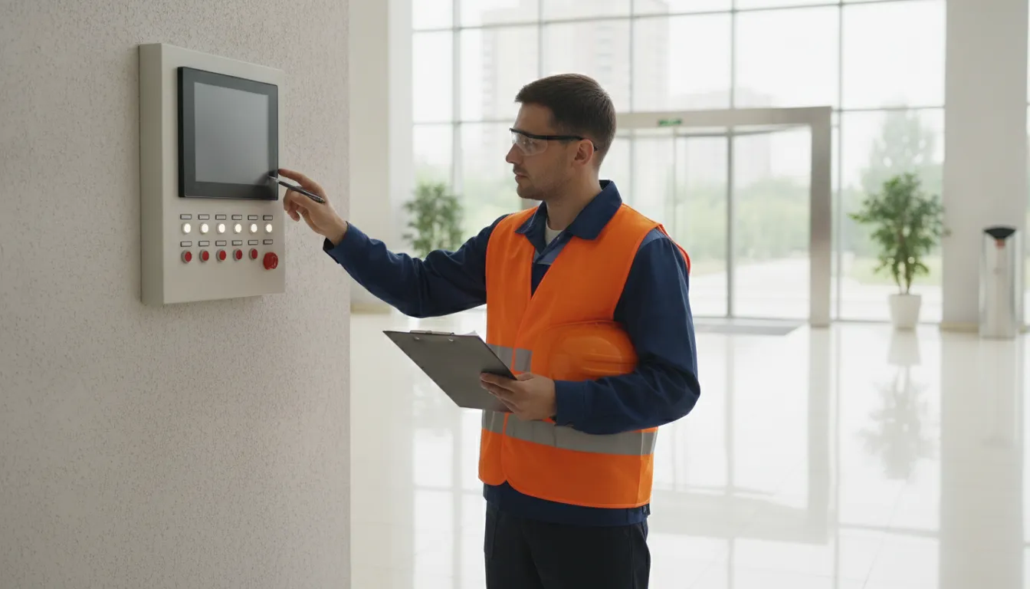
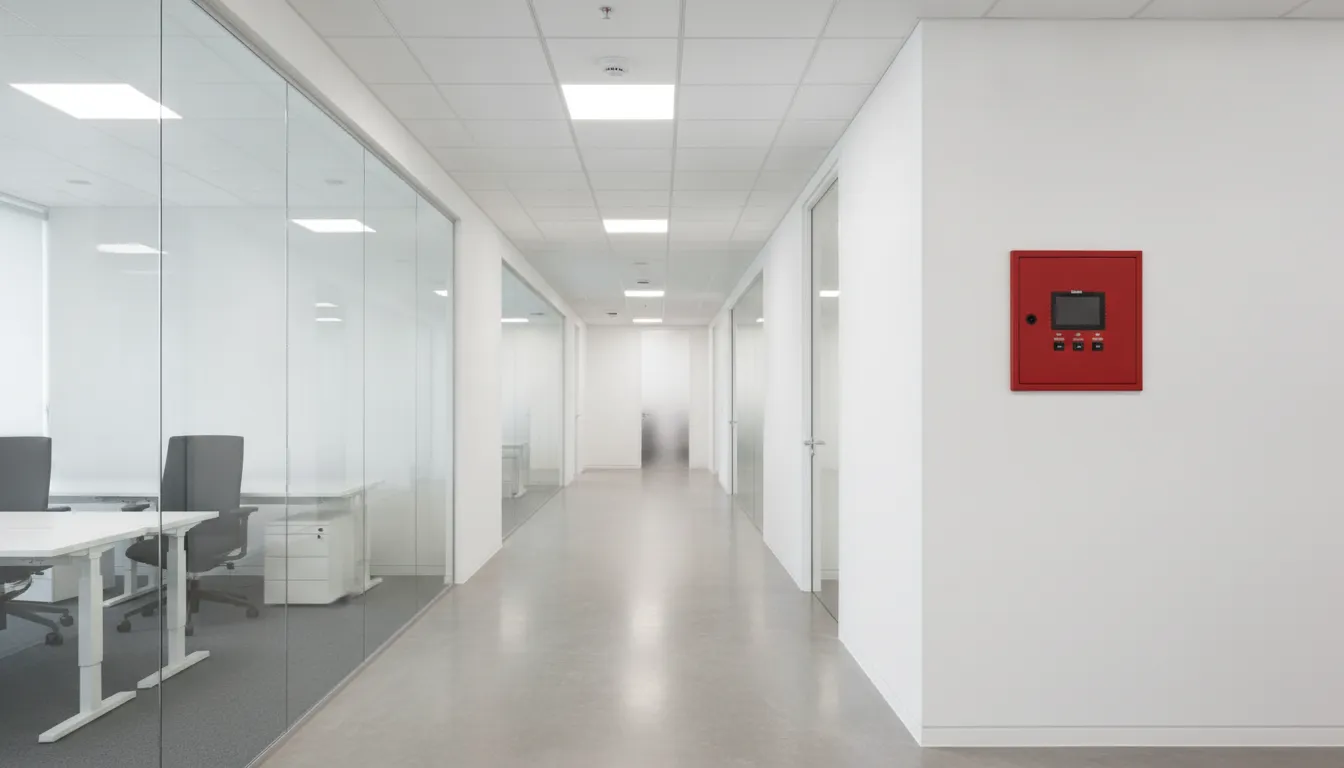
The control panel is the system’s central point. It receives signals from initiating devices, identifies the affected zone or device, supervises system circuits, and activates notification appliances. A properly configured panel helps occupants and responding personnel understand whether the system is reporting an alarm, a supervisory condition, or a trouble signal.
The panel also provides a practical service record. Technicians can use its indicators and event history to identify disconnected devices, power problems, communication faults, and other conditions that need attention. The panel should be installed where authorized personnel can reach it, while remaining protected from accidental impact and environmental hazards.
Initiating devices for early detection
Initiating devices detect conditions that may indicate a fire and send a signal to the control panel. Common examples include smoke detectors and heat detectors. Smoke detectors can respond to combustion particles, while heat detectors are useful in locations where dust, steam, or other conditions could create unwanted smoke detector activity. A qualified designer selects and positions devices based on the space, ceiling configuration, expected conditions, and required coverage.
Installation details affect reliability. OSHA requires detection equipment to be protected from mechanical or physical impact that could make it inoperable. Equipment installed outdoors or in corrosive atmospheres also needs protection from corrosion, such as an appropriate canopy or hood. Detectors must be supported independently rather than relying on wiring or tubing for structural support. These requirements are addressed in OSHA 1910.164.
Notification appliances
Notification appliances communicate an alarm to people in the building. Depending on the property and its occupants, these may include horns, strobes, speaker-strobes, or other approved audible and visual devices. Their placement and intensity should provide clear warning in occupied areas, noisy workspaces, and locations where occupants may not be able to hear an audible signal.
Monitoring service and system support
A monitoring service adds another layer of protection by transmitting alarm signals to a supervising station for prompt handling. This matters when a building is unoccupied or when no one nearby can respond to a panel signal. Monitoring works best when paired with accurate contact information, documented response procedures, and regular communication testing.
Ongoing support is part of a complete system. OSHA states that fire detection systems should be maintained in operable condition, with servicing, maintenance, and testing performed by a trained person knowledgeable about the specific system. The standard also calls for spare detection devices and components to be available on-site or through a local supplier for prompt restoration. Factory-calibrated detectors generally do not require adjustment after installation, but they still require appropriate inspection and maintenance over the life of the system.
Choosing a Fire Alarm System in Smyrna, GA
Summary: A reliable fire alarm system in Smyrna should be designed, installed, tested, and maintained by professionals who understand NFPA 72 and the needs of local businesses. Professional oversight reduces compliance gaps, protects system performance, and gives owners a clear path through inspections and ongoing service.
Choosing a system is not simply a matter of selecting detectors and connecting them to a control panel. The design must account for the building’s layout, occupancy, notification needs, equipment protection, and the way signals will be handled during an alarm. For small to mid-size businesses in Smyrna, an NFPA-compliant system is a core life-safety requirement, not an optional technology upgrade. NFPA 72, the National Fire Alarm and Signaling Code, provides the recognized framework for fire alarm and signaling systems across the United States. Review the NFPA 72 standard for the code’s scope and purpose.
| Unlicensed or in-house setup | Licensed professional installation |
|---|---|
| May focus on individual devices without a documented, building-wide design. | Begins with a site assessment and a system design matched to the building, occupancy, and notification requirements. |
| Can overlook device placement, wiring support, signal coverage, or environmental conditions that affect reliability. | Uses appropriate equipment placement and installation practices, with attention to protection from impact and other conditions that could make detection equipment inoperable. |
| Leaves testing and troubleshooting dependent on staff who may not know the specific panel, devices, or sequence of operation. | Provides servicing, maintenance, and testing through a trained person knowledgeable about the system’s operation and functions, as OSHA requires. See OSHA fire detection requirements. |
| May create uncertainty during a Fire Marshal review if drawings, records, testing, or installed components do not support compliance. | Creates a documented compliance path that supports inspections, service records, and required system changes as the property evolves. |
| Places responsibility for alarms, faults, maintenance, and corrective action entirely on the business. | Connects the system to a professional monitoring service and ongoing support plan, giving the owner a defined contact for alarms, trouble signals, inspections, and repairs. |
Professional design and installation also make future service more predictable. A knowledgeable provider can explain what the system does, identify when a component needs attention, and keep testing focused on the actual equipment installed at the property. That matters because a fire alarm system is only valuable when it remains operational and can notify occupants and responders as intended.
Smyrna’s Fire Marshal construction inspection process is intended to reduce fire and life-safety risk throughout construction and confirm compliance with applicable codes and standards before occupancy. See Smyrna construction inspection information. Selecting a qualified professional at the design stage helps prevent avoidable corrections later and gives your business a stronger foundation for compliance.
Smyrna Fire Marshal and NFPA 72 Compliance Requirements
Summary: Commercial properties in Smyrna must coordinate fire alarm permitting, construction inspections, system testing. And ongoing maintenance so the installed system remains aligned with NFPA 72 and local fire safety requirements.
Compliance starts before a fire alarm system is installed. A commercial property owner, tenant improvement contractor, or building manager should identify the applicable permit and inspection steps early. Then ensure the system design reflects the building’s use, size, occupancy, and fire protection needs. The Smyrna Fire Marshal’s Office states that construction inspections reduce fire and life safety risk throughout the construction process. They confirm compliance with applicable codes and standards before a building or area is occupied. See the Smyrna construction inspection requirements before scheduling final approval.
Permitting and construction inspection in Smyrna
Permitting is not simply an administrative step. It creates a documented path from the approved design to the system that is actually installed. Changes to device locations, notification appliances, control equipment, wiring pathways, or building use can affect the final inspection. A qualified fire alarm professional can help coordinate drawings, installation details, testing records, and corrections so the project is ready for review.
Construction inspections may occur at important stages of the project, not only at the end. The goal is to identify life safety issues while they can still be corrected without delaying occupancy. Before an inspection, the responsible party should confirm that devices are accessible, labeled where required, installed in their approved locations, and connected to the correct control and notification functions. Keeping current plans and testing documentation available also makes it easier to answer questions from the inspector.
How NFPA 72 guides the system
NFPA 72, the National Fire Alarm and Signaling Code, provides the recognized framework for fire alarm and signaling systems. Requirements can depend on the property’s use and local adoption, but the central objective is consistent: detect a fire promptly and notify occupants and responding parties effectively. That includes more than selecting a control panel. Design, power supplies, initiating devices, notification appliances, monitoring connections, testing, and documentation must work together as a life safety system.
For a deeper review of NFPA 72 compliance requirements, property owners should consider how the standard applies to the entire installation rather than treating compliance as a one-time equipment purchase. The system also needs to remain operable after occupancy. Testing and service should be performed by a trained person knowledgeable about the specific system, as described by OSHA fire detection system requirements.
Preparing for ongoing compliance
After approval, assign responsibility for inspections, service records, impairments, and corrective work. Maintenance should address detector conditions, notification performance, backup power, communication pathways, and changes to the protected space. If a system is altered or temporarily out of service, document the condition and restore protection promptly. The Fire Marshal inspection preparation guide can help organize the records and practical checks that support a smoother review.
Working with a local provider familiar with Smyrna’s process helps connect the technical requirements to the property’s actual conditions. It also gives the owner a clear point of contact when the building changes, an inspection identifies a correction, or the fire alarm system needs qualified service.
How Often Should Your Commercial Fire Alarm System Be Inspected?
Summary: A commercial fire alarm system needs a documented inspection and testing program, not a one-time check. The right cadence depends on the system, its environment, applicable requirements, and the manufacturer’s instructions, with trained personnel addressing performance, cleanliness, records, and needed repairs.
There is no responsible one-size-fits-all answer for every Smyrna facility. A system exposed to dust, construction debris, humidity, temperature changes, or other demanding conditions may need closer attention than equipment in a clean, stable environment. Your inspection plan should also account for changes to the building, occupancy, notification devices, monitoring service, and any observations from the Smyrna Fire Marshal.
- Establish the baseline at installation or takeover. Start with a complete review of the control panel, initiating devices, notification appliances, power supplies, monitoring connection, documentation, and visible conditions. Confirm that the system is operating as designed and that any outstanding deficiencies are recorded. OSHA requires employers to maintain fire detection systems in operable condition, except while they are undergoing repair or maintenance. OSHA’s fire detection requirements provide an important maintenance baseline.
- Follow the required testing schedule. Set recurring inspection and testing dates based on the system design, applicable code requirements, manufacturer instructions, and the facility’s risk profile. The schedule should cover the complete system, not only the panel. Testing should confirm that detectors, manual initiating devices, alarms, communication paths, and related components respond correctly. The purpose is practical: inspections help maintain reliability and reduce avoidable false alarms. American Alarm’s fire alarm system inspection service can help organize that recurring program.
- Clean detectors at regular periodic intervals. Dirt, dust, and other particulates can interfere with a detector’s operation. OSHA specifically requires employers to ensure that detectors needing cleaning are cleaned at regular periodic intervals. The interval should reflect actual conditions in the building and the detector manufacturer’s guidance. Document what was cleaned, why it was needed, and whether the device passed its follow-up test.
- Use a trained, system-knowledgeable technician. Servicing, maintenance, and testing should be performed by a person knowledgeable about the specific system’s operations and functions. This matters because a passing panel display does not necessarily prove that every field device, circuit, notification appliance, or monitoring signal is performing correctly. A qualified technician can identify a deficiency, protect the system during maintenance, and explain what must be corrected.
- Reinspect after changes, incidents, or deficiencies. Schedule additional evaluation after remodeling, tenant or occupancy changes, device relocation, alarm events, water or smoke exposure, repeated false alarms, power issues, or repairs. Corrected deficiencies should be retested rather than simply marked complete. Keep inspection reports, test results, service records, and corrective actions together so the business can demonstrate an organized program during a Fire Marshal review. Preparation guidance for Smyrna businesses is available in this Fire Marshal inspection guide.
A well-managed program turns inspection frequency into a clear operating routine. Your fire alarm professional should review the system’s history and environment, explain the recommended cadence, and identify any work that needs prompt attention. That approach supports dependable notification when it matters and helps your business stay prepared for regulatory review.
Why American Alarm Is the Trusted Fire Alarm Partner in Smyrna
Summary: American Alarm combines advanced fire alarm expertise, responsive monitoring service, transparent fees, and consultative local support for Smyrna businesses and properties.
Choosing a provider for a fire alarm system in Smyrna is a decision about long-term protection, not simply equipment installation. The right partner should understand how system design, monitoring, maintenance, and local expectations work together. American Alarm brings that perspective to businesses throughout Smyrna and the greater Metro Atlanta area.
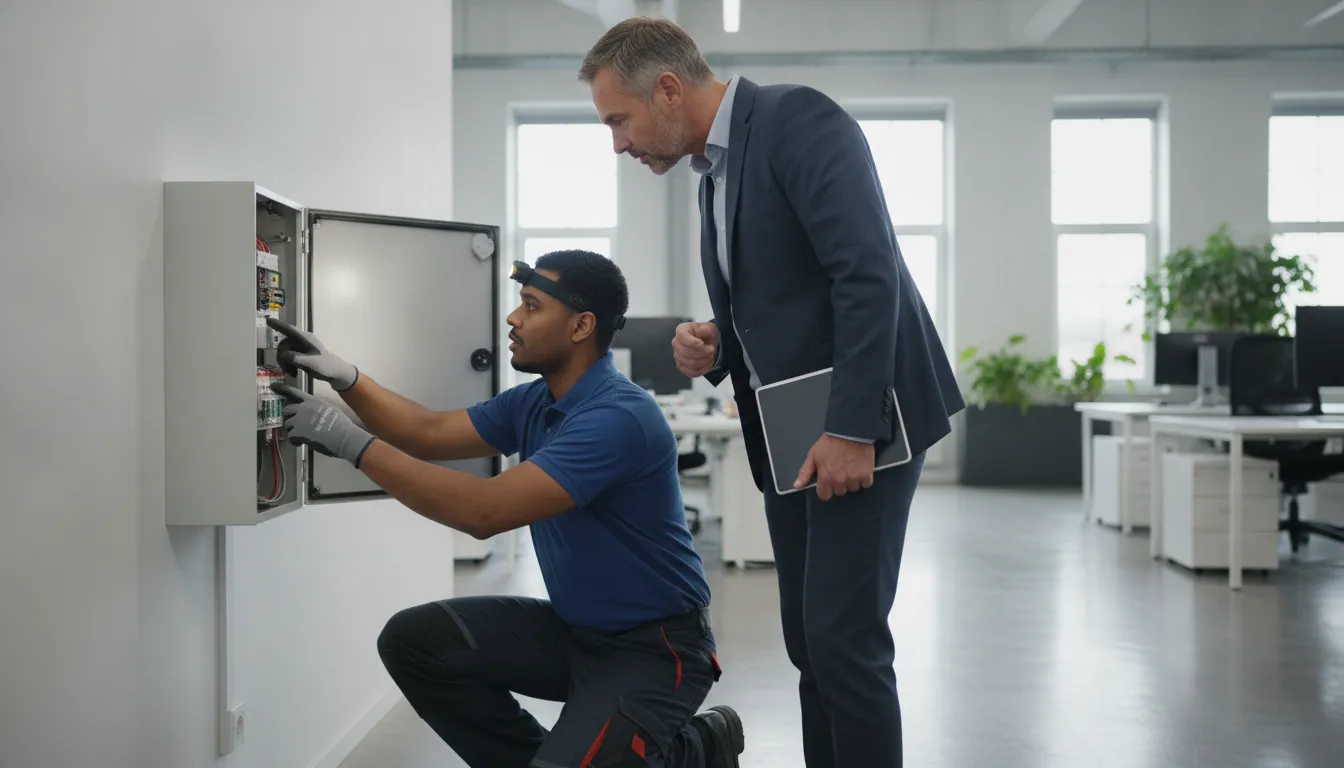
Technical knowledge is central to that service. American Alarm’s leadership includes NICET IV certification, the highest level of technical expertise in the National Institute for Certification in Engineering Technologies fire alarm track. Fewer than 10% of professionals reach this level, making it a meaningful indicator of advanced knowledge for complex commercial fire alarm planning and service. That expertise supports thoughtful recommendations based on the building, occupancy, risk profile, and operational needs rather than a one-size-fits-all package.
Local experience matters as well. American Alarm has protected homes and businesses throughout Metro Atlanta since 1995 and specifically serves Smyrna among more than 24 Metro Atlanta cities. A provider with regional experience can help customers prepare for practical requirements, coordinate service, and keep the system aligned with the property’s changing needs. For an overview of strategies that support reliable fire alarm monitoring, business owners can review American Alarm’s false alarm prevention guide.
Responsive support after installation
A fire alarm system has to remain dependable after the initial project is complete. American Alarm provides non-emergency response within 24 hours for monitored customers in the Metro Atlanta area. That response commitment gives property owners a clear path when they need service, troubleshooting, or follow-up attention. It also reinforces why monitoring service should be viewed as an ongoing life-safety resource, not an optional administrative add-on.
Cost clarity is another part of a trustworthy relationship. American Alarm publishes transparent monitoring fees, with residential rates listed from $18.95 to $29.95 depending on the monitoring option. Monitored customers also receive a $69 service call rate, creating a predictable starting point when an on-site visit is needed. Customers can review current monitoring service costs before discussing their property and service needs.
A consultative relationship, without pressure
American Alarm takes a consultative, relationship-driven approach. The goal is to explain available options clearly, identify the protection gaps that matter, and recommend a practical path forward. The company emphasizes direct communication and explicitly rejects high-pressure sales tactics. That makes it easier for a Smyrna business owner or property manager to ask questions, compare solutions, and make an informed decision.
Call (770) 645-0061 to discuss your Smyrna fire alarm needs with American Alarm.
Frequently Asked Questions
Do I need a permit for fire alarm system installation in Smyrna?
Commercial projects generally require coordination with the Smyrna Fire Marshal’s Office, including construction inspections intended to verify fire and life safety compliance before occupancy. Confirm the permit and plan-review requirements for your property before installation begins. Smyrna’s construction inspection guidance explains the city’s role.
How often should a commercial fire alarm system be inspected?
Inspection, testing, and maintenance should follow the system design, applicable requirements, and the schedule established by your qualified fire alarm provider. Detectors may also need periodic cleaning when dirt or dust could affect operation. OSHA requires servicing, maintenance, and testing by a trained person knowledgeable about the specific system. OSHA’s fire detection standard provides the relevant guidance.
What is included in a professional fire alarm inspection?
A professional inspection reviews the control panel, initiating devices, notification appliances, power supplies, communication paths, and visible wiring for proper operation. The technician documents deficiencies, tests applicable functions, and identifies repairs or component replacement needed to restore reliable protection.
Why is monitoring important for a business fire alarm system?
Monitoring adds an important communication path when an alarm or system trouble condition occurs. It supports faster awareness and coordinated response, while regular service helps reduce avoidable false alarms and keeps the system dependable. Ask your provider how monitoring, testing, emergency contacts, and after-hours service work together for your property.
Who can install and service a fire alarm system in Smyrna?
Choose a qualified fire alarm provider with experience in commercial systems, local inspection coordination, NFPA 72 requirements, installation, testing, and repairs. The right provider should explain the design, documentation, monitoring service, and maintenance plan clearly before work begins.
Schedule a Smyrna Fire Alarm Consultation
A site-specific conversation can help clarify your fire alarm system installation, service, inspection, and monitoring needs before the next step is chosen. American Alarm can discuss your property, answer practical questions, and outline an appropriate path for your business or facility.
Schedule a free fire alarm system consultation. Call (770) 645-0061 today.


Leave a Reply
Want to join the discussion?Feel free to contribute!