Fire Alarm System Douglasville: Installation and Service
For a Douglasville business, a fire alarm is more than a collection of detectors on the ceiling. It is a life-safety system that must be properly designed, installed, tested, maintained, and connected to dependable monitoring. Local fire inspections and building requirements add another layer of responsibility for owners and property managers.
Schedule a free consultation. Call (770) 645-0061 or contact American Alarm online.
A properly designed fire alarm system Douglasville businesses can rely on should follow NFPA 72, support required inspections and testing, and provide 24/7 monitoring when an alarm or system trouble signal occurs. American Alarm installs NFPA 72-compliant systems and brings NICET IV technical expertise to commercial life-safety projects.
The right approach begins with understanding the risks specific to the property, from occupancy and building layout to device placement, notification coverage, and emergency procedures. It also means choosing a provider that can support the system after installation, not just complete the initial project. Here is why dependable fire protection matters for Douglasville businesses and what to evaluate before selecting a system.
Why Douglasville Businesses Need a Reliable Fire Alarm System
Summary: A dependable fire alarm system helps Douglasville businesses detect danger early, alert everyone in protected areas, and support compliance with local inspection requirements. NFPA 72 is the recognized national standard for fire alarm and signaling system application, installation, inspection, testing, and maintenance.
Fire can spread quickly through a commercial property, especially when smoke, heat, storage materials, and occupied work areas are involved. A reliable system gives people an early warning while helping protect the building, equipment, inventory, and the continuity of the business. It is not simply a collection of detectors on a ceiling. The system must be designed for the property’s layout, occupancy, risks, and emergency procedures.
Douglasville businesses also operate within a local inspection and code-compliance environment. The Douglas County Fire/EMS Department provides fire inspections for commercial properties, making it important for owners and managers to keep life-safety equipment accessible, functional, and ready for review. Requirements can vary based on the building and its use, so a qualified provider should evaluate the property rather than apply a generic package. Douglas County Fire/EMS fire inspection information can help property stakeholders understand the local process.
NFPA 72 establishes the technical foundation
NFPA 72, the National Fire Alarm and Signaling Code. Is the recognized national standard for how fire alarm and signaling systems are applied, located, installed, inspected, tested, and maintained. Following that standard helps connect the design to the actual life-safety goals of the property. American Alarm performs fire alarm installations according to NFPA 72 fire alarm code requirements, giving Douglasville property owners a clear technical framework for planning and documentation. Learn more about NFPA 72 from the National Fire Protection Association.
Every protected area needs a meaningful warning
An alarm is only useful if people can recognize it and respond in time. Alarm signaling systems must be designed to be audible throughout the entire building, including protected areas. That consideration matters in offices, warehouses, retail spaces, schools, and other properties where walls, machinery, storage, or background noise can affect how a signal is heard. System planning should account for notification appliance placement and the building’s real operating conditions, not just its floor plan.
For a business owner searching for a fire alarm system Douglasville provider, the right evaluation starts with life safety, code requirements, and dependable operation. A properly designed system supports evacuation, helps reduce property loss, and provides a stronger foundation for inspections and ongoing maintenance.
How to Choose a Fire Alarm System Provider in Douglasville
Choose a provider that can design, install, document, and support the complete life-safety system. For a business in Douglasville, technical credentials matter as much as equipment selection. A provider should understand the building’s occupancy, notification needs, permitting path, inspection expectations, and ongoing maintenance requirements, not simply sell a panel and subcontract the rest.
American Alarm serves the Douglasville service area with local accountability. Its owner, Scott Gilkey, holds NICET IV, the highest level of technical certification in the fire alarm and life safety industry. NICET certification is recognized as a benchmark for engineering technicians working in fire protection design and installation, making it a meaningful qualification to ask about when comparing providers.
| Capability | Dedicated local fire alarm provider | Generic option |
|---|---|---|
| System design | Evaluates the building, occupancy, initiating devices, notification appliances, and communication needs before recommending a system. | May focus on readily available equipment or treat fire alarm work as one part of a broader electrical project. |
| Technical authority | Provides access to NICET IV leadership and fire alarm expertise for design decisions, documentation, and troubleshooting. | Credentials and life-safety experience can vary by technician, subcontractor, or assigned service team. |
| Code approach | Installs systems according to NFPA 72 fire alarm code compliance, supporting consistent inspection and maintenance planning. | May install components correctly but leave code interpretation, documentation, or follow-up with another party. |
| Local accountability | Maintains a direct relationship with Douglasville-area customers and can coordinate service for the property over time. | A national provider may route questions through a call center or change the local technician assigned to the account. |
| Long-term support | Can connect installation, monitoring, inspections, maintenance, and troubleshooting into one service relationship. | Installation and monitoring may be separated among vendors, making ownership of service issues less clear. |
Before signing an agreement, ask who is responsible for the design, whether installations follow NFPA 72. Who handles deficiencies found during testing, and how quickly service requests reach a qualified technician. Also confirm that the provider will explain the system to your staff and retain accurate documentation for future inspections.
- Verify credentials: Ask for the lead designer’s relevant fire alarm certification and experience with properties similar to yours.
- Confirm the service model: Identify the actual local contact for maintenance, troubleshooting, and inspection follow-up.
- Review the complete scope: Compare design, installation, monitoring, testing, documentation, and service terms rather than comparing panel prices alone.
This approach helps Douglasville property owners choose a fire alarm partner based on competence and accountability, not just a familiar brand name or a low initial estimate.
Fire Alarm System Compliance: NFPA 72 for Douglasville Properties
NFPA 72 compliance is an ongoing responsibility, not a one-time installation milestone. Douglasville commercial properties need fire alarm systems that remain operative, are inspected and tested on schedule, and are documented well enough to support approval and continued occupancy.
NFPA 72, the National Fire Alarm and Signaling Code, is the recognized national standard for the application. Location, installation, inspection, testing, and maintenance of fire alarm and signaling systems. For a business evaluating a fire alarm system Douglasville property, that means compliance must be considered from system design through every subsequent inspection. American Alarm performs installations according to NFPA 72 fire alarm code requirements, with an emphasis on practical reliability and clear accountability.
Keep the system operative between inspections
Commercial fire alarm and detection systems must be maintained in an operative condition at all times and repaired or replaced when defective. A passing inspection does not make a system compliant indefinitely. A disabled circuit, trouble signal, failed communication path, damaged detector, or other unresolved condition can leave a building exposed before the next scheduled visit.
NFPA 72 requires systems to be inspected, tested, and maintained according to the code. Annual testing is also identified as a requirement for automatic and manual fire alarm and fire detection systems under applicable workplace and state licensing rules. Property managers should keep inspection reports, repair records, alarm histories, and system changes together so technicians and authorities can verify what was tested and when.
Testing and approval affect occupancy
Required fire alarm and detection systems must be tested and approved before occupancy is permitted under applicable state requirements. This is especially important during a new construction project, a major renovation, a change in use, or an expansion that alters protected areas. In Douglasville, commercial properties should also coordinate with Douglas County Fire/EMS regarding fire inspections and confirm whether the project requires a City of Douglasville building permit. Permit and inspection requirements vary by project scope, so confirm them with the relevant authority before work begins.
Compliance is more than checking whether the control panel powers on. Inspection checklists commonly verify initiating devices, including smoke detectors, heat detectors, and manual fire alarm stations. Notification appliances, wiring, batteries, communication equipment, and the system’s response to supervisory or trouble conditions also need appropriate attention.
Address common inspection failures early
- Accessible detection devices: Blocked, dirty, painted, or relocated sensors can prevent proper detection and make testing difficult.
- Reliable notification appliances: Problems with horns, strobes, or other notification devices can keep occupants from receiving an effective alarm throughout protected areas.
- Maintained wiring and communication: Improperly maintained wiring and communication issues can create trouble conditions or prevent signals from reaching the monitoring station.
- Complete testing records: Inadequate testing or incomplete documentation can create avoidable questions during an inspection, even when individual devices appear functional.
For a deeper explanation of NFPA 72 compliance requirements, review the applicable inspection, testing, maintenance, and documentation expectations with a qualified fire alarm professional before your next inspection.
24/7 Monitoring: Keeping Douglasville Fire Alarms Connected
Summary: A monitored fire alarm system gives a Douglasville business a continuous communication path to a UL-certified central station. When a signal is received, trained operators can follow established response procedures, helping reduce delays when staff are away or an incident occurs outside normal business hours.
Why monitoring matters for life safety and continuity
A local fire alarm can alert people inside a building, but monitoring adds an important layer when no one is present to hear the notification appliances. An occupied business may have employees, visitors, or customers who need clear warning and time to evacuate. After hours, the same building may be empty while a fire continues to damage equipment, inventory, records, or critical infrastructure.
Monitoring also supports business continuity. A prompt signal gives the central station an opportunity to notify the appropriate contacts and emergency responders according to the account’s response plan. That does not replace evacuation procedures, fire prevention planning, or regular system maintenance. It helps connect those plans to an active response when an alarm, supervisory condition, or trouble signal occurs.
How UL-certified central station monitoring works
The fire alarm control panel communicates system conditions to the central monitoring station. That communication path must be dependable, because monitoring is only effective when the station receives an accurate signal from the building. The account is configured with site details, authorized contacts, and response instructions. When a signal arrives, operators handle it under defined procedures rather than leaving the building’s notification system to stand alone.
American Alarm provides 24/7 UL-certified central station monitoring. UL-certified central stations operate under strict requirements for reliability, testing, and operations. This level of oversight matters for Douglasville businesses that need a monitoring service aligned with life-safety expectations, not simply a device that sends an occasional notification.
Response expectations and monitoring service options
American Alarm provides a less-than-24-hour response guarantee for non-emergency service issues. Emergency alarm signals follow the account’s established response procedures. Ask how signals, contact lists, testing, and communication-path supervision will be handled before selecting a provider. A professional review should also confirm that the monitoring setup matches the fire alarm system and the building’s operating needs.
Transparent monitoring fees make it easier to compare options. Current monitoring service rates are $18.95 per month for landline service and $29.95 per month for cellular service. The appropriate option depends on the system, available communications infrastructure, and the level of resilience needed. Review the monitoring service rates and ask which communication method is recommended for the property.
For a fire alarm system Douglasville business owners can depend on, monitoring should be evaluated alongside installation quality, NFPA 72 compliance, and ongoing testing. A connected system is valuable only when its signals reach the right people and the account remains current.
What Fire Alarm System Installation Costs in Douglasville
Installation costs depend on the building, the system design, and the level of protection required. Device counts, wiring, labor, permitting, and the selected monitoring service all affect the final investment. A reliable proposal should explain each cost rather than present one unexplained package price.
For a Douglasville business, the first step is a site assessment and system design. The design must account for the building’s layout, occupancy, protected areas, notification coverage, and the devices needed for detection and alarm signaling. A small commercial space may need a comparatively straightforward system. While a larger or more complex property can require additional initiating devices, notification appliances, control equipment, and communication infrastructure.
Primary factors that shape the estimate
- System design: Engineering and planning determine where devices are placed, how zones are configured, and how the system supports the property’s life-safety requirements. American Alarm performs installations according to NFPA 72 fire alarm code compliance.
- Device count: Smoke detectors, heat detectors, manual stations, horns, strobes, modules, and other components add to equipment and installation time. The correct count is based on the building, not a generic package.
- Installation labor: Labor can include mounting devices, routing wire, programming the panel, connecting communication equipment, testing signals, and coordinating final approval. Existing wiring and the condition of an older system can also affect the scope.
- Permits and approvals: The City of Douglasville requires a building permit for significant commercial building changes or improvements. A fire alarm installation may fall within that scope, so the project should account for permit requirements and local review before work begins. Confirm the specific requirement for your property with the City of Douglasville.
- Monitoring service: Ongoing monitoring fees are separate from installation. American Alarm lists transparent monitoring rates of $18.95 per month for landline service and $29.95 per month for cellular service. The appropriate communication path depends on the system and site conditions.
Comparing proposals by total price alone can hide important differences in device coverage, testing, documentation, and ongoing support. Ask whether the estimate includes design, permitting coordination, programming, inspection support, and monitoring activation. For related budgeting context, review the commercial fire alarm inspection cost for the recurring inspection side of ownership.
For installations, new builds, expansions, and system upgrades, review how American Alarm approaches fire alarm systems for commercial properties and how the project is designed around local requirements.
A qualified local provider can explain which items are required now, which upgrades are recommended, and which costs may arise later. That approach gives Douglasville property owners a clearer path to a compliant, dependable fire alarm system without paying for features that do not fit the building.
Keeping Your Douglasville Fire Alarm System in Good Working Order
Summary: Regular inspection, testing, and maintenance help keep a commercial fire alarm system ready to detect danger and communicate an alarm. Scheduling service before small issues become inspection failures also supports dependable protection for employees, customers, and emergency responders.
A fire alarm system is not a set-it-and-forget-it improvement. Its reliability depends on the condition of each part, from smoke and heat detectors to manual stations, notification appliances, control panels, wiring, and communication equipment. Establish a recurring maintenance schedule with a qualified fire alarm professional, then keep service records available for property managers, inspectors, and anyone responsible for life-safety systems.
What routine maintenance should cover
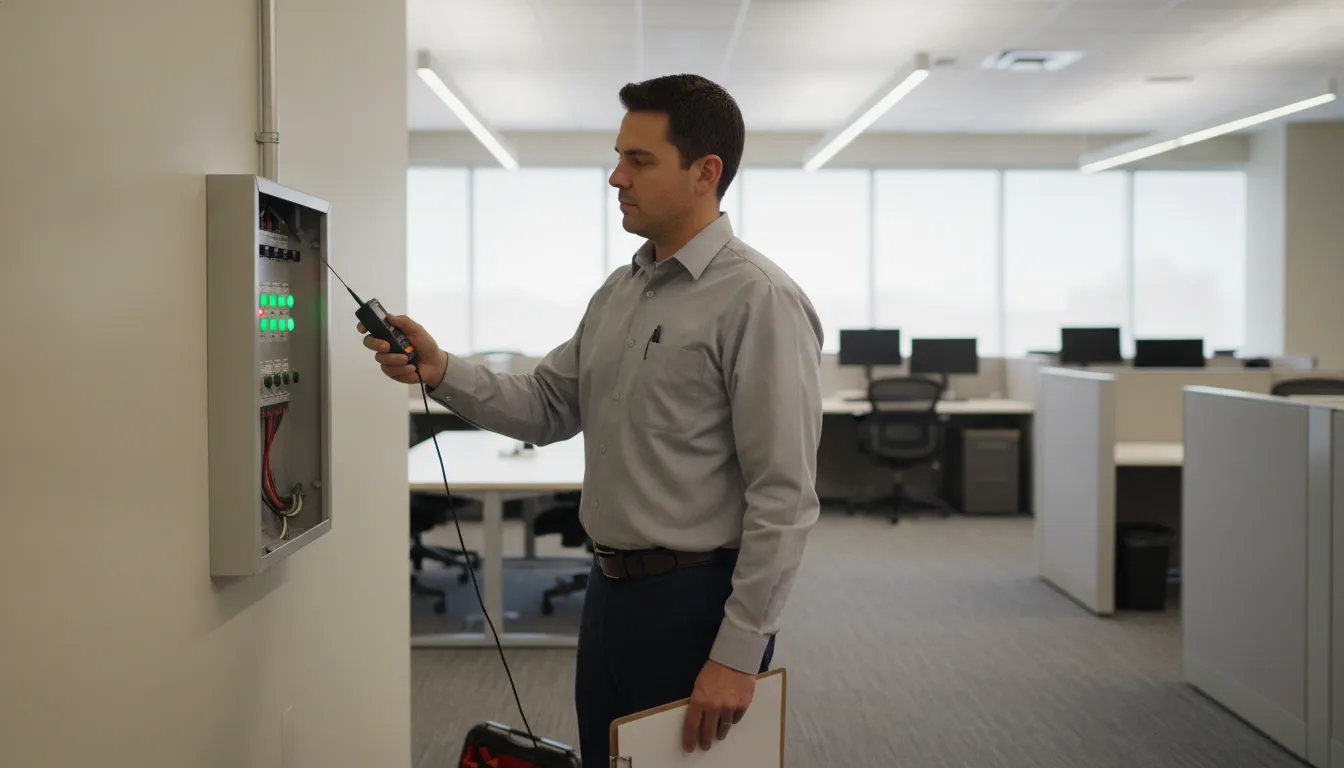
Maintenance should be based on the system design, building use, and applicable inspection requirements. A qualified technician can inspect initiating devices, confirm that signals reach the control panel. Test notification equipment, and look for changes in the building that could affect detection or evacuation. Smoke detectors also need proper placement and spacing so they can identify developing fires as intended. NFPA guidance addresses these placement considerations and the broader inspection, testing, and maintenance process.
- Check detection devices: Inspect smoke detectors, heat detectors, and manual fire alarm stations for damage, contamination, obstruction, or signs that their coverage has changed.
- Confirm notification: Test horns, strobes, and other notification appliances so occupants in protected areas can receive the alarm clearly.
- Review communication: Verify that alarm, supervisory, and trouble signals communicate properly with the monitoring station when monitoring is part of the system.
- Inspect wiring and power: Look for wiring problems, battery issues, panel troubles, and other conditions that can weaken system reliability.
Prevent common inspection failures
Blocked sensors, improperly maintained wiring, inadequate testing, and problems with detection, notification, or communication are common reasons commercial fire alarm systems fail inspections. Building changes can create these issues without anyone intentionally altering the alarm system. New walls, storage, ceilings, equipment, or renovations may obstruct a device or change the area it was designed to protect.
Keep fire alarm devices accessible and clearly marked for emergency responders. Do not place inventory, furnishings, or equipment where they restrict access to panels, pull stations, sprinkler monitoring components, or other alarm devices. Review the site after remodels, tenant improvements, and changes in room use, then schedule testing when the building is ready for inspection. For additional troubleshooting guidance, review commercial fire alarm maintenance resources.
A documented service relationship makes this easier. The technician can track recurring trouble signals, identify aging components, and recommend corrections based on observed conditions rather than guesswork. Douglasville businesses should coordinate required inspections with their maintenance schedule and address deficiencies promptly, so the system remains operational when people depend on it most.
Schedule a free consultation. Call (770) 645-0061 or contact American Alarm online.
Frequently Asked Questions
Can any electrician install a fire alarm system in Douglasville?
Not necessarily. Commercial fire alarm work involves life-safety design, device placement, notification coverage, testing, documentation, and coordination with local requirements. Choose a provider with dedicated fire alarm expertise, demonstrated NFPA 72 experience, and qualified technical oversight. American Alarm installations follow NFPA 72, the national standard for fire alarm application, installation, inspection, testing, and maintenance: NFPA 72 reference.
How much does a commercial fire alarm system cost in Douglasville?
Pricing depends on the building’s size, occupancy, number and type of initiating devices, notification requirements. Existing wiring, monitoring communicator, permitting, and whether the project is new installation, expansion, or replacement. Monitoring is a separate ongoing service. American Alarm lists monitoring at $18.95 per month for landline service and $29.95 per month for cellular service. Request a site-specific proposal rather than relying on a generic square-foot estimate.
Does Douglasville require a permit for fire alarm installation?
Commercial projects may require City of Douglasville building permits, along with coordination for fire inspections and approvals. The exact requirements depend on the property and scope of work. So confirm the current process with the City of Douglasville Building Division and Douglas County Fire/EMS before installation begins: Douglasville building permit information.
What maintenance is required for a commercial fire alarm system?
Maintenance includes scheduled inspection, testing, and repair of initiating devices, notification appliances, control equipment, backup power, and communication paths. Keep devices accessible and clearly marked, correct trouble signals promptly, and retain service records. Fire alarm systems must be inspected, tested, and maintained in accordance with NFPA 72, with annual testing commonly required for fire protection systems: fire protection testing guidance.
Schedule a Free Consultation for Your Douglasville Property
A clear review of your building, fire alarm needs, and monitoring goals can help you plan the next step with confidence.
Schedule a free consultation. Call (770) 645-0061 or contact American Alarm online.
American Alarm can discuss your property and help identify a practical path toward dependable fire alarm protection.


Leave a Reply
Want to join the discussion?Feel free to contribute!