Understanding the Critical Differences: Commercial Fire Alarm Systems vs. Residential Alarms
Key Takeaways
- Commercial fire alarms are complex, code-driven systems essential for business safety and compliance.
- Significant distinctions exist in design, components, monitoring, and integration needs compared to residential systems.
- NFPA standards and Authority Having Jurisdiction (AHJ) requirements mandate rigorous commercial system specifications.
- Professional 24/7 monitoring and stringent maintenance are non-negotiable for commercial fire safety.
- Utilizing residential fire alarm solutions in a commercial setting leads to significant risks, legal liabilities, and non-compliance.
What is a Fire Alarm System? (Residential vs. Commercial Basics)
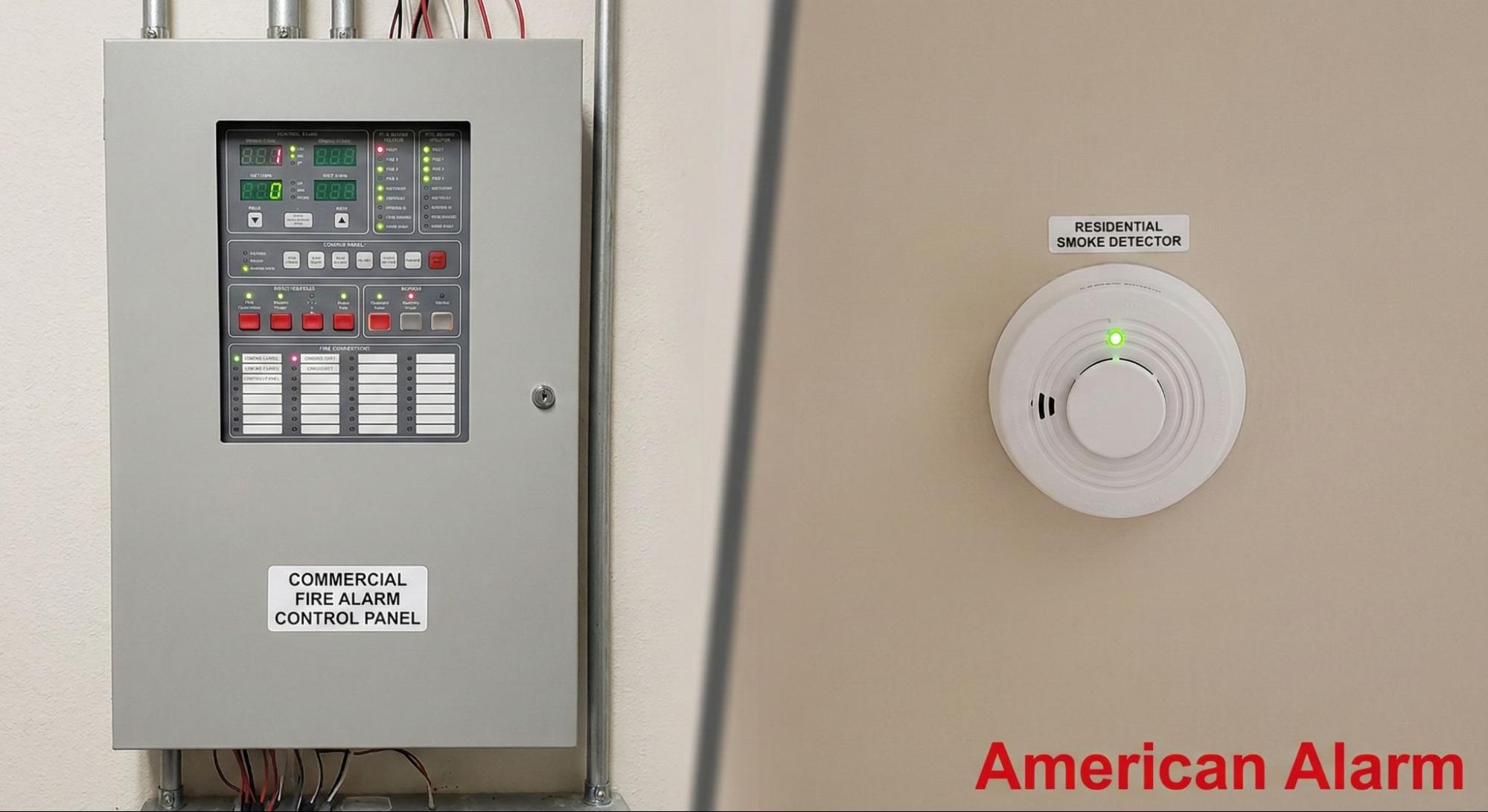
At their core, all fire alarms share a common purpose: to save lives and protect property by providing an early warning in the event of a fire. However, how they achieve this goal differs dramatically between a home and a business. A residential fire alarm, often a battery-powered smoke detector, is designed for a simple environment, a single-family home with a predictable layout and a small number of occupants who are familiar with the space. Its primary role is to wake a sleeping family, giving them crucial seconds to escape.
Commercial fire alarm systems operate on a much grander and more complex scale. They are engineered life-safety systems designed to protect employees, customers, and the public in diverse and often large-scale environments like office buildings, retail stores, warehouses, and schools. Their function extends far beyond a simple audible alert; they must manage evacuation, notify emergency services automatically, and comply with strict legal standards. For Atlanta business owners, understanding this distinction isn’t just a matter of choice; it’s a critical component of legal compliance and responsible operation.
Design & Scale: Built for Different Environments
The fundamental difference between commercial and residential fire alarms begins with their design philosophy. A home system can be simple because the environment is contained. A commercial building, however, presents a multitude of challenges. Consider an office in Buckhead or a warehouse in Kennesaw; these structures have vast square footage, multiple floors, numerous exits, and a high density of occupants who may be completely unfamiliar with the layout.
Commercial fire alarm systems are custom-engineered to meet these demands. The design process involves a detailed analysis of the building’s floor plan, occupancy load, specific uses of different areas, and local fire codes. The system must ensure that an alarm is not only detected quickly but that the warning reaches every corner of the building effectively, guiding people to safety. This contrasts sharply with a residential setup, where a few strategically placed smoke detectors are typically sufficient.
Component Breakdown: More Than Just a Smoke Detector
While a homeowner might think of a fire alarm as a single device on the ceiling, a commercial system is a sophisticated network of interconnected components. These devices work in concert to provide comprehensive detection, notification, and response capabilities far beyond what a residential alarm can offer. The complexity of these commercial security systems in Atlanta is necessary to meet the demanding safety requirements of a business environment.
Control Panels & Central Hubs
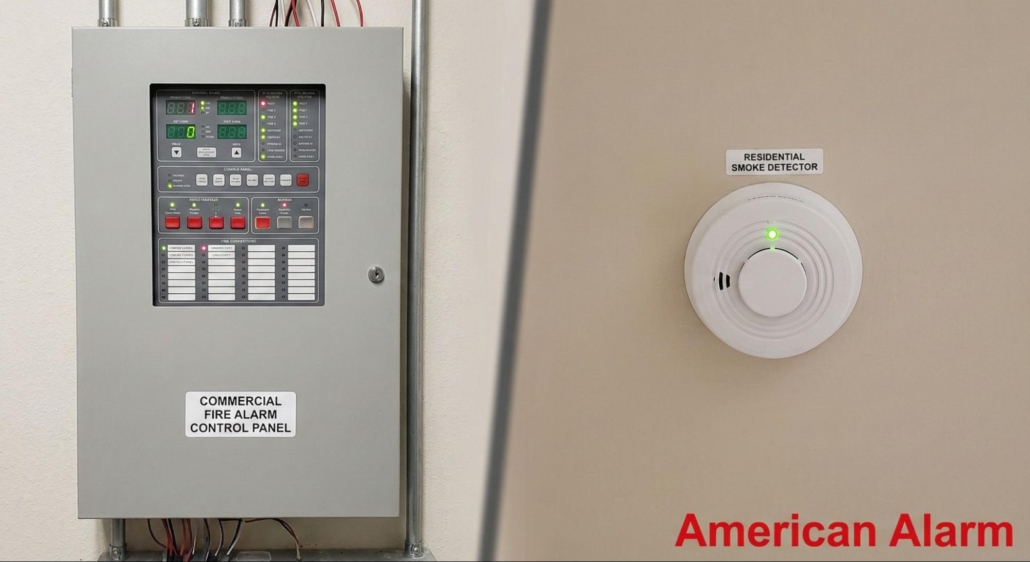
The brain of any commercial fire alarm system is the Fire Alarm Control Panel. This central hub continuously monitors all connected devices, pinpoints the exact location of an alarm, and executes pre-programmed responses, such as activating notification devices and alerting the monitoring station. Modern addressable panels can identify the specific detector or pull station that was triggered, providing invaluable information to first responders. This is a world away from a residential smoke detector, which operates as a standalone unit with no central intelligence.
Specialized Detectors & Sensors
Commercial properties contain varied environments that require different types of detection. While a home relies primarily on smoke and carbon monoxide detectors, a business may need a multi-layered approach. This includes:
- Heat Detectors: Used in areas like kitchens or workshops where smoke is common, preventing false alarms.
- Flame Detectors: Deployed in high-risk industrial settings where flammable materials could ignite quickly.
- Duct Detectors: Installed in HVAC systems to shut down airflow and prevent smoke from spreading throughout the building.
- Multi-Sensor Detectors: Advanced devices that combine multiple detection methods (e.g., smoke and heat) to improve accuracy and reduce false alarms.
Advanced Notification & Evacuation Devices
Getting people’s attention in a noisy warehouse or a sprawling office complex requires more than a simple beeping sound. Commercial systems utilize powerful notification appliances, including high-decibel horns, bright strobe lights to assist the hearing-impaired, and voice evacuation systems that provide clear, pre-recorded instructions for a safe and orderly exit. These components are strategically placed to ensure the alert is unmistakable, regardless of where someone is in the building.
The Code & Compliance Imperative: NFPA Standards & AHJ
Perhaps the most significant differentiator is the legal and regulatory framework governing commercial fire alarms. While homeowners are encouraged to install smoke detectors, business owners are legally mandated to install, maintain, and monitor systems that meet stringent codes. The primary standard governing these systems is NFPA 72, the National Fire Alarm and Signaling Code. This comprehensive document dictates everything from system design and component placement to testing schedules and maintenance procedures. Adhering to these rules is a cornerstone of commercial fire safety & NFPA compliance.
Understanding NFPA 72 Requirements for Businesses
NFPA 72 is the gold standard for fire alarm systems in the United States. It provides the minimum requirements for performance and reliability, ensuring that a system will function as intended during an emergency. Compliance involves much more than just buying equipment; it requires professional design, certified installation, and documented proof of ongoing maintenance. For businesses, this often means obtaining NFPA certificates for their fire alarm system as proof of compliance.
Local Code Enforcement & AHJ in Atlanta and North Georgia
In addition to national standards, businesses in Atlanta, Roswell, and across North Georgia must comply with local ordinances. The Authority Having Jurisdiction (AHJ), typically the local fire marshal or building inspector, has the final say on whether a system meets all required codes. The AHJ reviews plans, inspects installations, and witnesses system tests before a business can receive its Certificate of Occupancy. This rigorous oversight ensures every commercial system is properly installed and fully operational, a level of scrutiny that simply doesn’t exist for residential alarms.
Professional Monitoring: A Commercial Necessity
For a residential alarm, monitoring is often optional or a DIY affair where an alert is sent to the homeowner’s phone. For a business, professional fire alarm monitoring for businesses is almost always a requirement. A commercial fire alarm system is connected to a 24/7 central monitoring station staffed by trained professionals.
When an alarm is triggered, a signal is instantly transmitted to the station. Operators verify the alarm and immediately dispatch the local fire department, often before employees on-site are even aware of the full situation. This rapid, professional response is critical for minimizing damage, protecting assets, and, most importantly, ensuring life safety. This is why 24/7 professional security monitoring in Atlanta is a non-negotiable part of any robust commercial safety plan.
Installation, Inspection, Testing & Maintenance: Ongoing Vigilance
A commercial fire alarm system is not a “set it and forget it” device. NFPA codes mandate a strict schedule of inspection, testing, and maintenance (ITM) to ensure the system remains in perfect working order. Installation must be performed by licensed, factory-trained technicians who understand the complexities of the system and local code requirements.
Following installation, the system undergoes rigorous and regular testing. This can include daily checks of the control panel, weekly visual inspections, and comprehensive annual tests of every single device. All of this activity must be meticulously logged and available for review by the AHJ. This contrasts sharply with a residential detector, where the homeowner is solely responsible for occasionally pressing a test button and changing batteries.
Integrated Security: Fire Alarms as Part of a Unified System
Modern commercial security is about creating a holistic, integrated ecosystem. Fire alarm systems in a commercial setting rarely stand alone. They are often integrated with other critical building systems to enhance safety and automate emergency responses. For example, when a fire alarm is activated, it can automatically:
- Signal the Atlanta access control systems to unlock emergency exit doors.
- Trigger the Atlanta security camera systems to record the event area.
- Recall elevators to the ground floor.
- Shut down HVAC systems to stop smoke from circulating.
This level of integration creates a powerful, automated response that streamlines evacuation and provides first responders with critical situational awareness.
The Risks of Residential Solutions in Commercial Settings
Attempting to protect a commercial property in Smyrna, Marietta, or Johns Creek with residential smoke detectors is not just inadequate, it’s dangerous and illegal. The risks are severe and multifaceted. First and foremost, these devices lack the power and scope to alert everyone in a large, complex building, putting lives at extreme risk.
Legally, using non-compliant equipment will result in failed inspections, fines from the AHJ, and potentially a shutdown of the business until the violations are corrected. Furthermore, in the event of a fire, an insurance company could deny a claim if it discovers the property was not protected by a code-compliant commercial fire alarm system. The liability for any injuries or fatalities would fall squarely on the business owner. Making the right choice in a professional partner is crucial, which is why you should choose American Alarm for your business’s safety needs.
Securing Your Atlanta Business with Expert Fire Alarm Solutions
For business owners in Atlanta, Alpharetta, Sandy Springs, and throughout North Georgia, fire safety is a foundational responsibility. The differences between residential and commercial fire alarms are not minor details; they are critical distinctions rooted in design, technology, and legal code. Protecting your employees, customers, and assets requires a system built specifically for the unique challenges of your commercial environment.
Navigating the complexities of NFPA standards and AHJ requirements demands expertise. American Alarm specializes in designing, installing, and monitoring advanced commercial alarm systems that ensure your business is not only protected but fully compliant. We provide tailored, NFPA-compliant commercial fire alarm solutions that give you peace of mind. Don’t leave your business’s safety to chance; contact American Alarm for a quote and a professional assessment of your fire safety needs.
Protect Your Business with Confidence: Get a Tailored Fire Alarm Solution
Don’t leave your business vulnerable to fire risks or non-compliance. Understand the complex world of commercial fire alarms and ensure your property is protected with the right system. Get a quote today from American Alarm for expert installation, monitoring, and peace of mind in Atlanta and North Georgia.
FAQs
What is NFPA 72, and why is it important for commercial fire alarms?
Answer: NFPA 72 is the National Fire Alarm and Signaling Code, a widely adopted standard that provides comprehensive requirements for the installation, inspection, testing, and maintenance of fire alarm and emergency communication systems. For commercial buildings in Atlanta and Georgia, adherence to NFPA 72 is critical for legal compliance, ensuring optimal life safety, and protecting property from fire hazards.
Can a business use residential smoke detectors for fire protection?
Answer: No, commercial buildings cannot use residential smoke detectors as their primary fire protection system. Commercial fire alarm systems require specialized, robust components, advanced monitoring capabilities, and must comply with stringent commercial fire codes like NFPA 72, which residential alarms are not designed to meet. Using residential equipment in a commercial setting can lead to significant safety risks, legal penalties, insurance complications, and may not trigger an appropriate emergency response.
How often should commercial fire alarm systems be inspected and tested?
Answer: Commercial fire alarm systems require regular, scheduled inspection, testing, and maintenance (ITM) to ensure continuous compliance and functionality. NFPA 72 outlines specific frequencies, which can include daily, weekly, monthly, quarterly, semi-annual, and annual tests for various system components. These ITM activities are typically performed by qualified, licensed professionals, such as those at American Alarm.
What is an AHJ, and how does it affect my commercial fire alarm system in Georgia?
Answer: AHJ stands for Authority Having Jurisdiction. In the context of fire alarm systems, this refers to the local government body, such as the fire marshal’s office or building department in Atlanta or other Georgia cities, responsible for enforcing building codes, fire codes, and related standards. The AHJ inspects and approves commercial fire alarm system designs and installations to ensure they meet local and state regulations, which often adopt NFPA standards.
How do commercial fire alarms integrate with other security systems?
Answer: Commercial fire alarm systems can integrate seamlessly with a range of other security measures to create a unified safety and security platform. This includes access control systems (e.g., automatically unlocking exit doors or recalling elevators during an alarm), security cameras (recording footage during an emergency event), and even HVAC or building management systems to control airflow. This integration enhances overall safety, response capabilities, and operational efficiency for businesses.


Leave a Reply
Want to join the discussion?Feel free to contribute!