Understanding the Cost of Commercial Security Camera System Installation in Atlanta
Key Takeaways
- Commercial security camera system costs vary significantly based on business needs, property specifics, and desired features.
- Key cost drivers include camera type, quantity, resolution, installation complexity, and storage solutions.
- Professional design and installation ensure optimal coverage, reliability, and integration with existing security systems.
- Considering ongoing costs like maintenance and monitoring is crucial for a complete understanding of your investment.
- American Alarm offers tailored solutions for businesses across Atlanta and North Georgia.
Why Commercial Camera System Costs Vary for Atlanta Businesses
When securing a commercial property, one of the first questions decision-makers ask is, “How much will it cost?” The reality is that there’s no simple, one-size-fits-all price tag for a commercial security camera system installation. The cost is as unique as your business itself. A small retail shop in Roswell will have vastly different security requirements and therefore a different budget than a multi-story office building in Buckhead or an industrial warehouse in Kennesaw.
The primary reason for this variation is that a truly effective security solution is never off-the-shelf. It must be custom-designed to address specific threats, property layouts, operational needs, and compliance requirements. Factors like the size of your facility, the value of your assets, the number of entry points, and your industry’s specific risks all play a crucial role in determining the final investment. This guide will break down the key components that influence commercial video surveillance pricing, helping you understand what drives the cost and why a professional approach is essential for protecting your Atlanta-based business.
Major Cost Factors: Cameras, Resolution, and Quantity
The most direct influence on the cost of your commercial camera system is the hardware itself, specifically the cameras. The number of cameras needed, their type, and their resolution are foundational elements that shape the initial investment. A larger facility with multiple blind spots will naturally require more cameras than a compact office space, directly scaling the equipment cost.
Selecting the Right Camera Type for Your Business Needs
Different areas of your property demand different types of surveillance. Choosing the right camera for each location is critical for effective security and cost management.
- Dome Cameras: Often used indoors, these are discreet and offer a wide viewing angle. Their protective casings make them somewhat vandal-resistant.
- Bullet Cameras: Highly visible and weather-resistant, these are ideal for outdoor perimeter monitoring. Their presence alone can act as a deterrent.
- PTZ (Pan-Tilt-Zoom) Cameras: These offer dynamic coverage, allowing a security operator to remotely control the camera’s view. They are perfect for monitoring large areas like parking lots or warehouses, but come at a higher price point.
- Thermal Cameras: Capable of detecting heat signatures, these are used for high-security applications, detecting intruders in complete darkness or through visual obstructions like smoke or fog.
Understanding Resolution and Image Quality vs. Cost
The clarity of your video footage is paramount. Higher resolution means more detailed images, which can be crucial for identifying faces, license plates, or specific actions. While 1080p (Full HD) is a common standard, 4K (Ultra HD) cameras provide superior detail at a higher cost. The decision often comes down to balancing the budget with necessity. For general surveillance, 1080p may suffice, but for critical areas like cash registers or entry points, the added investment in 4K can provide invaluable evidence if an incident occurs. Our team at American Alarm helps businesses find the right balance for their security goals.
Property & Coverage: How Size and Layout Impact Installation Costs
The physical characteristics of your commercial property in Atlanta are a major determinant of your security camera installation cost. A sprawling industrial complex in Marietta has fundamentally different needs than a boutique in Sandy Springs. The larger the square footage, the more cameras and cabling are required to eliminate blind spots and ensure comprehensive coverage.
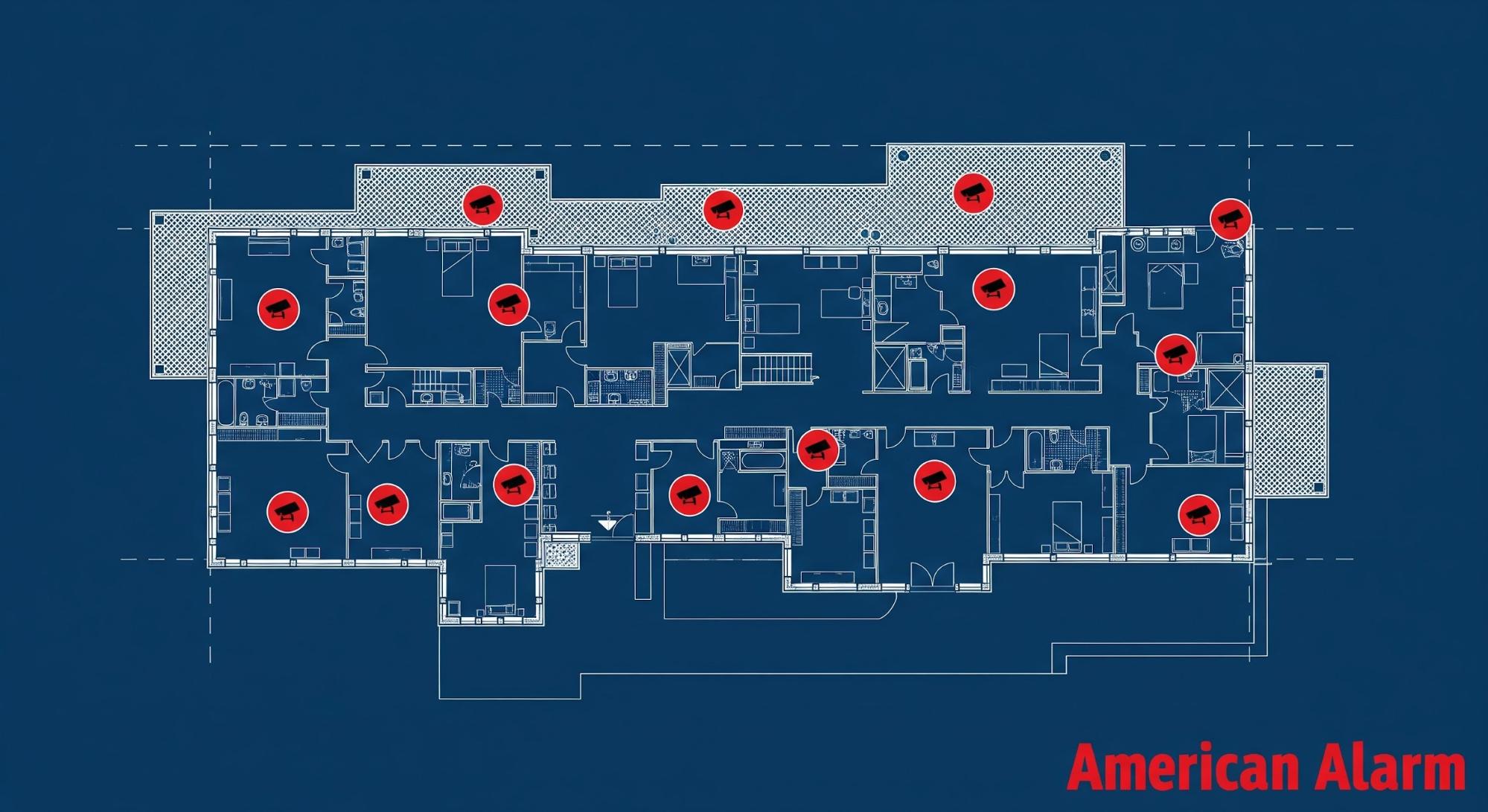
The layout is just as important as the size. A building with a simple, open-plan design is easier to secure than one with numerous hallways, individual offices, stairwells, and separate storage areas. Each distinct zone may require its own dedicated camera. Key areas that often drive up camera counts include entry and exit points, parking lots, loading docks, high-value inventory storage, and customer-facing areas. A professional site survey is the only way to accurately map these coverage zones and determine the optimal number and placement of cameras, ensuring your investment is both efficient and effective.
Installation Complexity: Wiring, Infrastructure, and Conduit Requirements
The labor involved in a professional camera installation in Atlanta is a significant component of the overall cost. This is where the difference between a simple setup and a complex project becomes clear. Running wires through modern office buildings with drop ceilings and accessible wall cavities is relatively straightforward. However, installing cameras in older buildings with solid concrete walls, historic structures, or facilities with high ceilings requires more time, specialized tools, and expertise, increasing labor costs.
Furthermore, protecting the cabling is essential for system reliability. In many commercial settings, especially outdoors or in industrial environments, wires must be run through conduit to protect them from weather, tampering, or accidental damage. The material and length of conduit needed add to the project’s material cost and installation time. The readiness of your existing network infrastructure also plays a role. A robust network can support modern IP cameras, but an outdated one may require upgrades, adding another layer to the project scope and budget.
Indoor vs. Outdoor Cameras: Equipment Differences and Environmental Costs
There is a distinct cost difference between indoor and outdoor security cameras, driven by the need for durability and resilience against the elements. Outdoor cameras must withstand the heat and humidity of a Georgia summer, as well as rain, wind, and colder temperatures. This requires them to have weather-resistant ratings that certify their protection against dust and water ingress.
Additionally, outdoor cameras are often equipped with vandal-resistant casings to protect them from tampering or direct impacts. They may also require more robust mounting hardware and specialized features, such as enhanced night vision, to be effective in low-light conditions. These necessary features for durability and performance mean that outdoor-rated cameras are inherently more expensive than their indoor counterparts.
Data Storage Options: NVR Systems, Retention, and Data Security
How you record and store your video footage is a critical cost consideration. For most commercial applications, a Network Video Recorder is the central hub of the system. An NVR is a dedicated device that records and stores footage from IP cameras on local hard drives. The cost of an NVR system depends on the number of camera channels it can support and the total storage capacity of its hard drives.
NVR vs. Cloud Storage: Cost and Feature Comparison
While NVRs represent a one-time hardware investment, cloud storage involves a recurring subscription fee. Cloud storage offers benefits like remote accessibility and off-site backup, protecting your data from on-site theft or damage. However, the monthly fees can become significant, especially for businesses requiring high-resolution video and long retention periods. An NVR system provides control over your data without ongoing fees, but requires physical space and maintenance. Many businesses opt for a hybrid approach for ultimate security.
Legal Compliance and Data Retention Needs
Your industry may have specific legal or regulatory requirements for how long you must retain video footage. For example, some businesses may need to keep recordings for 30, 60, or even 90 days. The longer the retention period, the more storage capacity you’ll need, which directly impacts the cost of your NVR’s hard drives or your cloud storage subscription.
Advanced Features and Analytics: Influencing Your Investment
Modern security cameras can do much more than just record video. Advanced features and video analytics can transform your surveillance system into a proactive business intelligence tool, though they add to the overall investment. For instance, analytic security cameras can be programmed to detect specific events, like a person entering a restricted area or a vehicle lingering too long.
Other valuable features include license plate recognition for parking management and facial recognition for access control. Pan-Tilt-Zoom cameras provide active surveillance capabilities, allowing operators to track subjects in real-time. While these features increase the upfront cost, they can provide a significant return on investment through enhanced security, loss prevention, and operational efficiency. The right solution depends on a careful analysis of your business needs, a process where expert guidance is invaluable.
The Value of Professional Design, Site Surveys, and Placement Planning
Attempting to save money by skimping on professional design is a common but costly mistake. The true value of a security partner like American Alarm lies not just in the installation but in the expertise that precedes it. A professional site survey is the cornerstone of an effective security system. During this process, a trained technician assesses your property, identifies vulnerabilities, and understands your operational workflow.
This expert planning ensures that every camera is placed for maximum coverage, avoiding blind spots and capturing clear, usable footage. It prevents common errors like placing cameras where they are easily obstructed or affected by glare. Ultimately, a professionally designed system ensures your investment works as intended, providing reliable protection and peace of mind. For customized commercial security camera systems designed for your unique business needs, explore our solutions.
System Integration: Alarms, Access Control, and Monitoring
A video surveillance system is most powerful when it works as part of a cohesive security ecosystem. Integrating your cameras with other systems creates a layered defense that is far more effective than standalone components. For example, when your commercial alarm system is triggered, integrated cameras can automatically focus on the affected area, providing immediate visual verification.
Similarly, integrating with access control systems allows you to link video footage to every door entry event, creating a clear audit trail. This level of integration adds to the initial project cost but delivers exponentially greater security and control. Adding 24/7 professional security system monitoring ensures that a trained team is ready to respond to any event, turning your passive recording system into an active deterrent.
Understanding Ongoing Costs: Maintenance, Monitoring, and Upgrades
The initial installation cost is only part of the total cost of ownership. To ensure your system remains reliable and effective for years to come, you must account for ongoing expenses. A professional maintenance plan is crucial for performing regular system health checks, cleaning camera lenses, updating firmware, and ensuring everything is functioning correctly.
If you opt for professional monitoring, this will be a recurring monthly fee. While it is an added expense, the value of having experts watching over your property around the clock is immeasurable for most businesses. Finally, technology evolves. Budgeting for future upgrades will allow you to incorporate new features and maintain a state-of-the-art security posture, protecting your initial investment long-term. Understanding these costs is why it pays to partner with a company that has a long history of serving Georgia businesses. To learn more, contact us for a quote.
Secure Your Atlanta Business with a Tailored Camera System
Ready to discuss the best security camera solution for your commercial property in Atlanta or North Georgia? Contact American Alarm today for a personalized quote tailored to your specific needs.
FAQs
How long does it take to install a commercial security camera system in Atlanta?
Answer: The installation timeline for a commercial security camera system in Atlanta varies greatly depending on the property’s size, the number and type of cameras, and wiring complexity. A typical installation can range from a few days to several weeks after the initial site survey and design phase.
Do commercial security camera systems require ongoing maintenance?
Answer: Yes, ongoing maintenance is crucial for optimal performance. This includes regular checks of camera functionality, lens cleaning, software updates, and ensuring recording equipment is working correctly. Professional maintenance plans can help prolong system lifespan and ensure reliability.
Can a commercial camera system integrate with my existing alarm system?
Answer: Many modern commercial security camera systems are designed for seamless integration with existing alarm systems, access control solutions, and professional monitoring services. This creates a unified security platform, enhancing responsiveness and overall protection for your business.
What’s the difference in cost for NVR vs. cloud storage for commercial cameras?
Answer: NVR (Network Video Recorder) systems typically involve a higher upfront hardware cost but often lower recurring fees. Cloud storage may have lower initial hardware costs but involves ongoing subscription fees, which can accumulate over time depending on retention length and storage capacity.
Why is professional installation recommended for commercial security cameras?
Answer: Professional installation ensures optimal camera placement, proper wiring, system integration, and adherence to local codes. Experts provide tailored design, minimize vulnerabilities, and offer ongoing support, leading to a more reliable and effective security solution for your commercial property.


Leave a Reply
Want to join the discussion?Feel free to contribute!