The Definitive Guide to Multi-Tenant Fire Alarm Systems for Atlanta Businesses
Key Takeaways
- Multi-tenant commercial buildings require a highly specialized fire alarm system design.
- Key features like intelligent zoning, addressable devices, and centralized control are crucial for complex properties.
- Strict adherence to NFPA standards and local Georgia fire codes is essential for life safety and compliance.
- Professional 24/7 monitoring and integration with other security systems enhance overall protection for multi-tenant properties.
- Regular inspection, testing, and maintenance ensure ongoing system reliability and compliance.
Understanding Multi-Tenant Commercial Buildings in Atlanta
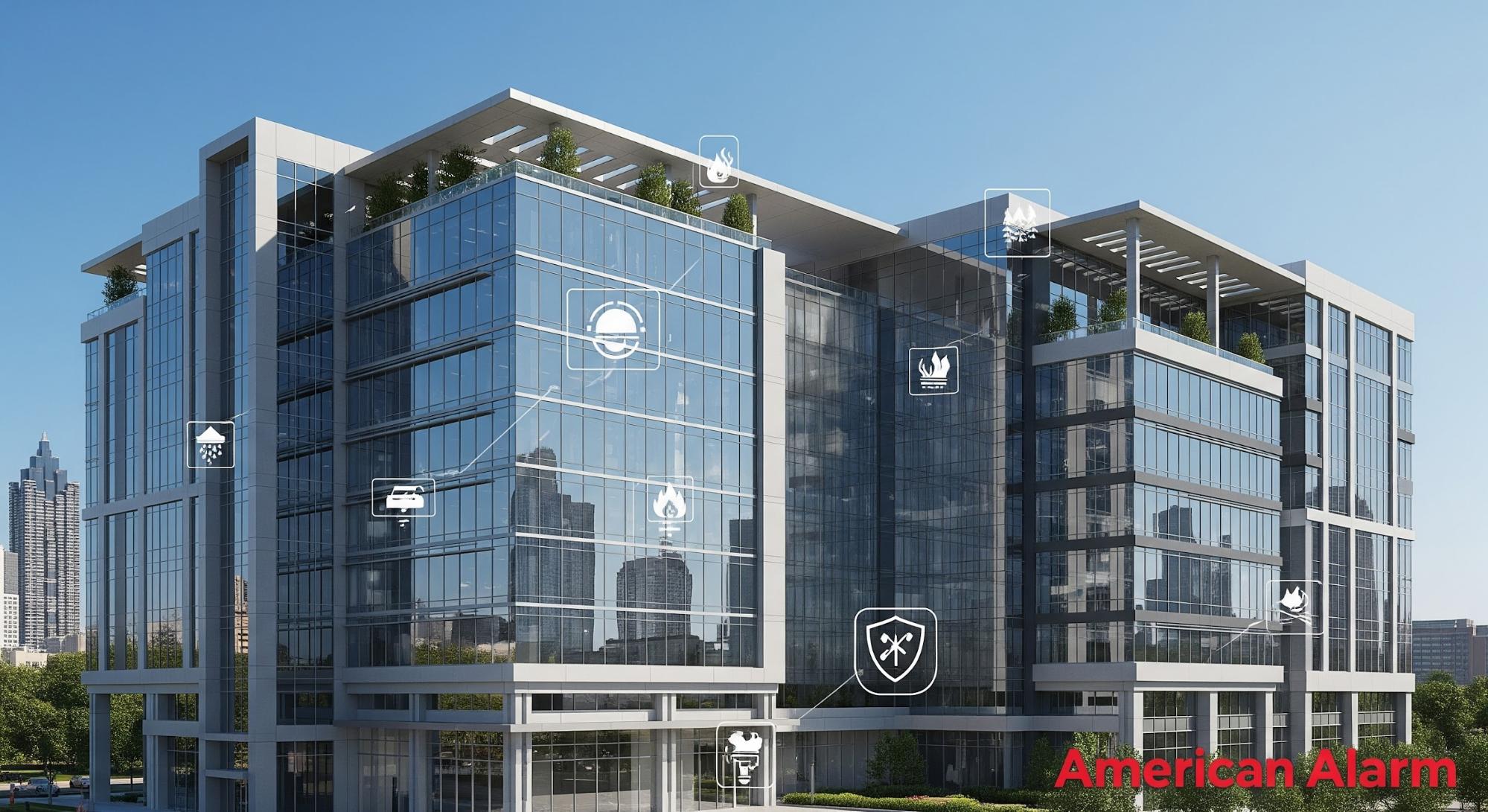
Managing a commercial property in Atlanta comes with a unique set of responsibilities, and none are more critical than life safety. When that property houses multiple businesses, the complexity multiplies. A multi-tenant commercial building is any property designed to be occupied by more than one business entity. This includes sprawling office complexes in Buckhead, bustling retail centers in Alpharetta, mixed-use developments in Midtown, and expansive industrial parks around Marietta.
Each of these property types shares common areas like lobbies, hallways, and parking structures, but each tenant has its own distinct space, operational hours, and specific risks. A law firm on the fifth floor has different fire safety needs than a restaurant on the ground floor. This inherent diversity is precisely why a one-size-fits-all fire alarm system is not only inadequate but also non-compliant. These properties demand specialized life safety and security solutions designed to protect diverse occupants and valuable assets under one roof.
Why Multi-Tenant Properties Demand Specialized Fire Alarm Design
A standard fire alarm might suffice for a single-occupant warehouse, but multi-tenant environments present unique challenges that necessitate a more sophisticated approach. The varied responsibilities of tenants, the flow of public traffic through common areas, and the potential for an incident in one unit to affect all others require a fire alarm system that is intelligent, scalable, and adaptable.
The primary goal is to ensure a swift, orderly response without causing unnecessary panic or disruption to unaffected tenants. For instance, a small, contained fire in a single retail unit shouldn’t trigger a full-scale evacuation of an entire shopping mall if it’s not necessary. This requires a system capable of targeted notifications and phased evacuations. A specialized design for Commercial Fire Alarm Systems accounts for these complexities, providing property managers with the control needed to manage emergencies effectively and tenants with clear, relevant instructions.
Essential Fire Alarm System Features for Multi-Tenant Environments
To meet the demands of a complex commercial property, a fire alarm system must incorporate specific technologies designed for precision, control, and clear communication. These features are not just beneficial; they are often required for ensuring the safety of everyone in the building.
Intelligent Zoning and Segmentation for Targeted Response
Intelligent zoning is the foundation of an effective multi-tenant fire alarm system. This process involves digitally dividing the building into distinct zones, which could correspond to individual tenant suites, specific floors, common areas, or mechanical rooms. When an alarm is triggered, the system immediately identifies the exact zone of origin. This allows property management and first responders to pinpoint the issue instantly, facilitating a targeted response. For tenants, it means that an alert in one part of the building doesn’t automatically disrupt business for everyone, preserving continuity and minimizing unnecessary evacuations.
Addressable Devices for Pinpoint Accuracy
Taking precision a step further, addressable fire alarm systems assign a unique digital address to every single device, from smoke detectors to pull stations. If a smoke detector in Suite 301 is activated, the central control panel won’t just report an alarm in “Zone 3”; it will display “Smoke Detector, Suite 301, Conference Room.” This pinpoint accuracy is invaluable during an emergency, shaving critical minutes off response times for firefighters and enabling building staff to investigate the precise location of the potential threat immediately.
Tenant-Specific Notification and Communication Systems
In a multi-tenant building, communication is key. Modern systems, particularly those with Emergency Voice/Alarm Communication Systems (EVACS), allow for customized and pre-recorded messages to be delivered to specific zones or tenants. This means you can direct an evacuation notice to the affected floor while instructing adjacent floors to shelter in place or prepare for a phased evacuation. This level of control is essential for preventing panic and ensuring an orderly, safe response tailored to the specific emergency.
Centralized Control Panels and Property-Wide Monitoring Capabilities
For a facility director or property manager, having a single point of command is non-negotiable. A centralized control panel provides a comprehensive overview of the entire property’s fire safety status. From this hub, managers can monitor all devices, acknowledge alarms, and manage notifications across the building. This unified control simplifies system management, streamlines testing procedures, and provides the holistic oversight needed to protect a large, complex commercial property effectively.
Navigating Fire Safety Code Compliance in Georgia
For property owners in Atlanta and across North Georgia, ensuring life safety is also a matter of strict legal compliance. Fire alarm systems in multi-tenant commercial buildings are heavily regulated by national standards and local ordinances. The primary standard is NFPA 72, the National Fire Alarm and Signaling Code, which provides the benchmark for system design, installation, and maintenance. If your business needs help navigating NFPA 72 compliance, it is crucial to partner with experts.
Local Authorities Having Jurisdiction (AHJ), such as the Atlanta Fire Rescue Department, enforce these codes and may have additional requirements. Failing to meet these standards can result in significant fines, operational shutdowns, and increased liability. A professionally designed system ensures that your property not only meets but exceeds these requirements, providing peace of mind and demonstrating a commitment to safety. Obtaining the proper NFPA Certificates Fire Alarm is a critical step in this process, validating that your system is up to code. For more details on compliance, you can explore resources on commercial fire safety NFPA-compliant alarms.
Evacuation Coordination and Life Safety Across Multiple Tenants
A fire alarm’s ultimate purpose is to facilitate a safe and efficient evacuation. In a building with hundreds or thousands of occupants across dozens of businesses, this is a significant logistical challenge. A well-designed system is integral to the building’s overall emergency action plan. It does more than just sound an alarm; it actively guides people to safety.
Features like phased evacuation, where the system first alerts the floor in alarm along with the floors immediately above and below, prevent chaotic rushes to the exits. The system can also integrate with other building components to unlock doors along exit routes, activate emergency lighting, and recall elevators to the ground floor for firefighter use. This synchronized approach ensures that evacuation routes are clear, illuminated, and accessible, helping to manage the movement of people in a calm and orderly fashion.
The Critical Role of Professional Fire Alarm Monitoring
An unmonitored fire alarm system is only effective if someone is present to hear it and act. For a multi-tenant property that may have varied operating hours or be unoccupied overnight, this is a major vulnerability. Professional Fire Alarm Monitoring Atlanta services provide a constant, vigilant watch over your property 24/7/365.
The moment a fire alarm is triggered, a signal is sent to a central monitoring station staffed by trained professionals. They verify the alarm and immediately dispatch the appropriate fire department to your location, whether it’s day or night. This rapid response is critical for mitigating property damage and, most importantly, protecting lives. This constant oversight is a fundamental component of comprehensive 24/7 Security System Monitoring Atlanta, ensuring your investment is always protected.
Integrating Fire Alarms with Comprehensive Security Solutions
True commercial property fire safety extends beyond detection; it involves creating a holistic security ecosystem. Modern multi-tenant fire alarm systems are designed to integrate seamlessly with other critical infrastructure. This integration transforms disparate systems into a single, intelligent life safety platform.
For example, when a fire alarm is triggered, the system can automatically communicate with your Atlanta Access Control Systems to unlock emergency exit doors while securing other areas to contain the threat. Simultaneously, it can direct your Atlanta Security Camera Systems to display live feeds of the affected area on the central monitoring screen, giving first responders crucial visual intelligence before they even arrive. By combining fire detection with access control and surveillance, you create comprehensive commercial alarm systems that enhance situational awareness, speed up response times, and provide a superior level of protection for everyone on the property. Learning how to start protecting your Atlanta business with commercial alarm systems is the first step toward total security.
Maintenance, Inspection, and Testing Requirements for Multi-Tenant Properties
Installing a state-of-the-art fire alarm system is only the first step. To ensure ongoing reliability and compliance, a rigorous schedule of inspection, testing, and maintenance (ITM) is mandatory. NFPA standards and Georgia fire codes mandate regular professional servicing to verify that every component of the system is functioning correctly.
This includes testing detectors and pull stations, checking batteries and power supplies, verifying communication with the monitoring station, and ensuring all audible and visual alarms are operational. Regular maintenance helps identify and correct potential issues before they become critical failures during an emergency. For property managers, maintaining detailed ITM records is essential for demonstrating compliance and ensuring the life safety of their tenants. If you need help, don’t hesitate to Contact American Alarm to discuss a maintenance plan that fits your needs. Understanding Why Choose American Alarm means choosing a partner dedicated to your property’s long-term safety.
Secure Your Multi-Tenant Property with Confidence
Don’t compromise on life safety and compliance. Contact American Alarm today to discuss the best fire alarm system for your Atlanta multi-tenant commercial building and get a personalized quote.
FAQs
How often should multi-tenant fire alarm systems be inspected in Atlanta, Georgia?
Answer: In Atlanta and across Georgia, multi-tenant fire alarm systems generally require annual inspections and regular testing according to NFPA 72 standards and local fire codes to ensure continuous reliability and compliance.
What is the primary difference between addressable and conventional fire alarm systems for commercial buildings?
Answer: Addressable fire alarm systems identify the exact location of a fire or fault, providing precise information for faster response. Conventional systems only indicate a general zone where an alarm originated.
Can a multi-tenant fire alarm system integrate with existing access control or security camera systems?
Answer: Yes, modern multi-tenant fire alarm systems are often designed for seamless integration with access control, commercial security systems, and camera surveillance to create a unified life safety and security platform.
What NFPA 72 requirements are most critical for multi-tenant commercial properties in Georgia?
Answer: Critical NFPA 72 requirements for multi-tenant properties in Georgia include proper system design, installation, regular testing, maintenance, and features like emergency voice/alarm communication, which are vital for phased evacuations.
How does fire alarm zoning specifically benefit a multi-tenant building during an emergency?
Answer: Fire alarm zoning in a multi-tenant building allows for specific areas or floors to be notified and evacuated independently, minimizing disruption and ensuring an orderly, safe evacuation without impacting the entire property unnecessarily.


Leave a Reply
Want to join the discussion?Feel free to contribute!