How a Commercial Fire Alarm Protects Your Business
Protecting your business involves more than just a security system; it requires an integrated safety strategy. A modern commercial fire alarm can work in concert with your other systems to create a smarter, faster emergency response. When a fire is detected, it can automatically unlock emergency exits through your access control system, providing a clear path for evacuation. It can also activate video systems, allowing monitoring professionals to visually confirm the fire and give real-time updates to the fire department. This guide explores how connecting these technologies creates a seamless safety protocol that protects your people and property more effectively.
Key Takeaways
- Monitored fire alarm systems provide a direct, verified link to emergency services, significantly reducing dispatch times.
- Professional monitoring ensures immediate action, even in unoccupied commercial buildings or after-hours events.
- Redundant communication and integration with access control enhance overall life safety and operational continuity.
- Ongoing inspection and testing, coupled with monitoring, are crucial for NFPA compliance and maximum protection in Georgia.
 In the event of a fire, every second is critical. For Atlanta business owners and property managers, the difference between a minor incident and a catastrophic loss often comes down to the speed and efficiency of the emergency response. While having a fire alarm is a crucial first step, it’s the professional monitoring behind it that transforms the system from a simple alert into a life-saving, rapid-response tool. A monitored system doesn’t just make noise; it initiates an immediate, professional reaction that protects your property, assets, and people. This guide explores how professionally Fire Alarm Monitoring Atlanta services work to guarantee the fastest possible emergency dispatch, ensuring your commercial property in Georgia is protected around the clock.
Monitored vs. Unmonitored Alarms: What’s the Real Difference?
Understanding the distinction between monitored and unmonitored systems is fundamental to appreciating the value of professional oversight. An unmonitored fire alarm is a standalone device. When it detects smoke or heat, it triggers local alarms, sirens, bells, and strobes within your facility. While this alerts anyone on-site, its effectiveness stops there. It relies entirely on an employee, visitor, or a nearby good Samaritan to hear the alarm, correctly interpret the emergency, and call 911. This manual process introduces dangerous potential for delays, confusion, or complete failure to notify authorities. A monitored fire alarm system, by contrast, is connected to a 24/7 central monitoring station. The moment a detector is triggered, it sends an automated signal to a team of highly trained professionals. This direct link eliminates the reliance on human intervention, ensuring that an emergency signal is received and acted upon instantly, regardless of the time of day or whether the building is occupied.
More Than a Smoke Detector: Commercial vs. Residential Alarms
It’s a common misconception to think of a commercial fire alarm as just a larger version of the smoke detector in your home. In reality, they are fundamentally different systems designed for entirely separate purposes and environments. While a residential alarm is built to alert a few people in a small, straightforward space, a commercial system is an integrated life-safety network engineered to protect large, complex properties, numerous occupants, and valuable assets. The design, technology, and regulatory requirements for business systems are far more stringent because the stakes are significantly higher. Understanding these differences is key to ensuring your business is properly protected.
Power Source and Reliability
One of the most critical distinctions lies in the power source. Most residential smoke detectors are battery-operated or plug into a standard wall outlet. Commercial fire alarm systems, however, are hardwired directly into a building’s electrical system. This ensures a constant and reliable power supply that isn’t dependent on someone remembering to change a battery. Furthermore, these systems are required to have a secondary power source, typically a robust battery backup, that can keep the entire network operational for an extended period during a power outage. This dual-power setup guarantees the system remains vigilant and ready to respond 24/7, no matter the circumstances.
Advanced Detection Technology
Commercial spaces like offices, warehouses, and retail stores are much larger and more complex than a typical house. Because of this, their fire protection systems must use more advanced technology to provide adequate coverage. Instead of single-station detectors, commercial systems use a network of interconnected sensors that communicate with a central fire alarm control panel. These systems often employ specialized detectors designed to find different types of fires, such as those caused by chemicals or electrical faults, which are more common in business environments. This sophisticated approach ensures that a fire is detected quickly, no matter where it starts in the facility, providing the earliest possible warning.
Strict Regulatory Compliance
Unlike residential alarms, commercial fire systems are subject to strict codes and standards set by authorities like the National Fire Protection Association (NFPA). These regulations dictate every aspect of the system, from design and installation to maintenance and monitoring. For Atlanta businesses, meeting these requirements is not optional; it’s a legal necessity for obtaining a certificate of occupancy and avoiding significant fines. This is why ongoing inspection and testing are crucial. Partnering with a certified provider for NFPA fire alarm services ensures your system remains compliant and provides maximum protection for your employees and property.
What Does a Commercial Fire Alarm System Actually Monitor?
A modern commercial fire alarm system does much more than just wait for a puff of smoke. It’s a comprehensive monitoring network that constantly keeps watch over various environmental conditions and its own operational health. The central control panel acts as the brain, receiving signals from a wide array of detection devices strategically placed throughout your facility. These devices are designed to detect not only the obvious signs of a fire but also the subtle, invisible threats that can precede it. This multi-layered approach provides a complete picture of your building’s safety, ensuring that any potential hazard is identified and addressed immediately.
Smoke, Heat, and Flame Detection
The most fundamental job of a fire alarm system is to detect the primary indicators of a fire. Smoke detectors are the first line of defense, using different technologies to sense airborne particles. Heat detectors serve a different but equally important purpose; they are triggered by a rapid rise in temperature or when the ambient temperature exceeds a fixed point. This makes them ideal for environments like commercial kitchens, loading docks, or mechanical rooms, where smoke or dust could cause a false alarm. Together, these devices provide reliable coverage for a wide range of fire types and scenarios.
Ionization vs. Photoelectric Alarms
Not all smoke detectors are created equal. The two main types are ionization and photoelectric, and they specialize in detecting different kinds of fires. Ionization alarms are particularly responsive to the small particles produced by fast, flaming fires. Photoelectric alarms, on the other hand, are better at sensing the larger particles characteristic of slow, smoldering fires. Because it’s impossible to predict which type of fire might occur, many modern commercial systems use dual-sensor detectors that incorporate both technologies, offering the most comprehensive protection available.
Flame Detectors
In high-risk environments where highly combustible materials are present, flame detectors provide an essential layer of protection. These specialized sensors don’t wait for smoke or heat to reach them. Instead, they are designed to recognize the specific infrared (IR) or ultraviolet (UV) light signatures emitted by flames. This allows them to detect a fire almost instantly from a distance, making them invaluable in places like chemical storage areas, industrial facilities, and fuel stations, where speed of response is absolutely critical to preventing a disaster.
Gas and Air Quality Monitoring
Fire isn’t the only threat a commercial property faces. Invisible and odorless gases can pose a silent but deadly risk to occupants. That’s why many commercial life-safety systems integrate detectors for various airborne threats beyond smoke. These sensors continuously sample the air, providing an early warning of dangerous conditions before they reach critical levels. This capability extends the system’s function from fire detection to comprehensive air quality and safety monitoring, protecting people from a wider range of potential hazards within the building.
Combustible and Toxic Gas Detection
For facilities that use or store flammable materials, combustible gas detectors are a necessity. These devices can identify the presence of gases like natural gas, propane, and methane long before they reach a concentration that could lead to an explosion. Similarly, toxic gas detectors are crucial in industrial settings or laboratories where hazardous chemicals are handled. They can alert personnel to leaks of substances like ammonia or chlorine, allowing for safe evacuation and mitigation before anyone is harmed.
Carbon Monoxide (CO) Detection
Carbon monoxide is often called the “silent killer” because it is a colorless, odorless, and highly poisonous gas produced by incomplete combustion. It can emanate from faulty heating equipment, generators, or vehicles running in an attached garage. Because it’s impossible for humans to detect on their own, integrated CO detectors are a vital component of any commercial life-safety system. They provide an essential warning that protects employees and visitors from the severe health risks of carbon monoxide poisoning, ensuring the air inside your building is safe to breathe.
System Integrity and Manual Triggers
A fire alarm system is only effective if it’s fully operational when you need it most. That’s why these systems are designed to constantly monitor their own health and status. The central control panel supervises every wire, sensor, and component in the network, ensuring everything is functioning correctly. In addition to this automated supervision, the system also includes manual triggers. These devices empower the people inside your building to take action, providing a way to activate the alarm the moment they spot a hazard, ensuring no time is lost in the emergency response.
System Health and Tamper Alerts
Your fire alarm control panel is always working, running diagnostics to check for any issues that could compromise its performance. It monitors for problems like a disconnected wire, a low battery on the backup power supply, or a malfunctioning detector. If any fault is found, it creates a trouble signal that alerts the property manager and the monitoring station. The system also generates alerts if any component is tampered with, ensuring that the integrity of your life-safety network is never compromised without your knowledge.
Manual Pull Stations
While automatic detectors are highly reliable, there are times when a person may spot a fire before a sensor does. Manual pull stations—the familiar red boxes mounted on walls throughout a building—are a critical part of the system for this very reason. They allow anyone who sees a fire to immediately activate the alarm and initiate the evacuation and emergency response process. This simple but effective tool ensures that human awareness is integrated into the building’s safety plan, providing a crucial manual backup to the automated detection system.
Environmental Condition Tracking
Beyond fire and gas threats, many advanced commercial security systems can be expanded to monitor other environmental conditions that could damage your property. For instance, water detectors can be placed in basements, server rooms, or near critical plumbing to provide an early warning of a leak or flood, preventing catastrophic water damage. Temperature sensors can also be used to protect sensitive areas, sending an alert if the climate in a data center gets too hot or if a freezer in a restaurant fails, helping you protect valuable assets from loss.
Beyond Bells: Types of Commercial Fire Alarm and Suppression Systems
Detecting a fire is only the first step; controlling and extinguishing it is the ultimate goal. Many commercial fire alarm systems are directly integrated with automatic suppression systems that can actively fight a fire, often putting it out before the fire department even arrives. These systems go far beyond simple bells and strobes, deploying an active agent—whether it’s water, gas, or foam—to contain the blaze. The type of suppression system used depends heavily on the environment it’s protecting, with specialized solutions designed for everything from standard office buildings to high-tech data centers and industrial facilities.
Water-Based Sprinkler Systems
Automatic sprinkler systems are the most common form of fire suppression found in commercial buildings. They are incredibly effective, reliable, and have a long history of protecting lives and property. When a fire starts, the heat activates the nearest sprinkler head, which then releases water directly onto the flames. It’s a myth that all the sprinklers go off at once; in most systems, only the head or heads directly affected by the fire will activate. This targeted approach efficiently controls the fire while minimizing water damage to the rest of the property.
Dry Pipe Sprinkler Systems
In buildings or areas exposed to freezing temperatures, such as unheated warehouses or parking garages, a standard water-filled sprinkler system isn’t practical. That’s where dry pipe sprinkler systems come in. The pipes in this type of system are filled with pressurized air or nitrogen instead of water. When a sprinkler head is activated by heat, the air pressure drops, which opens a valve that allows water to rush into the pipes and out of the open sprinkler. This design provides reliable fire protection without the risk of frozen and burst pipes.
Pre-Action Sprinkler Systems
For environments containing highly sensitive and valuable equipment, like data centers, museums, or libraries, the risk of accidental water damage is a major concern. Pre-action sprinkler systems are the ideal solution for these spaces. They are similar to dry pipe systems but require a two-step activation process. First, a fire detector must sense smoke or heat, which triggers the pre-action valve to open and allow water into the pipes. The water is only released when a sprinkler head itself is activated by heat. This dual-trigger design provides excellent protection against accidental discharge.
Deluge Sprinkler Systems
Deluge systems are designed for high-hazard areas where fire can spread with extreme rapidity, such as in aircraft hangars or chemical plants. Unlike other sprinkler systems, the heads in a deluge system are always open. The pipes are dry, and a deluge valve holds the water back. When the detection system is triggered, the valve opens and releases water through every single sprinkler head simultaneously. This action is designed to quickly “deluge” the entire protected area with water to control a fast-growing fire.
Foam-Water Sprinkler Systems
In facilities where flammable liquids are stored or used, water alone may not be an effective extinguishing agent. Foam-water sprinkler systems are designed for these specific risks. When activated, these systems mix a foam concentrate with the water before discharging it. The resulting foam blanket smothers the fire, cutting off its oxygen supply while also cooling the fuel source. This makes it highly effective at combating fires involving substances like gasoline, oil, and industrial solvents, providing a level of protection that water alone cannot.
Specialized Suppression Systems
Sometimes, water is not the right tool for the job. In fact, in certain situations, it can cause more harm than good, destroying irreplaceable documents, priceless artifacts, or mission-critical electronic equipment. For these unique environments, specialized suppression systems offer an alternative that can extinguish a fire quickly and effectively without causing collateral damage. These systems use chemical agents or inert gases instead of water, leaving behind no residue and allowing for a rapid return to normal operations once the threat has been neutralized.
Gas Suppression Systems
Gas suppression systems, often called clean agent systems, are the gold standard for protecting high-value assets. These systems release a gas—such as nitrogen, argon, or a chemical agent like FM-200—that extinguishes a fire by either displacing oxygen or chemically interrupting the combustion process. Because the agent is a gas, it can penetrate enclosures and protect complex equipment without leaving any harmful residue. This makes it the perfect choice for server rooms, telecommunication facilities, control rooms, and archives where water would be catastrophic.
Advanced Notification Systems
In an emergency, clear and effective communication is just as important as detection and suppression. Simply sounding a loud bell or siren can cause confusion and panic, potentially slowing down an evacuation. Modern commercial fire alarm systems incorporate advanced notification appliances that are designed to provide clear, unambiguous instructions to building occupants. These systems use both audible and visual signals to ensure that everyone, including those with hearing or vision impairments, receives the emergency message and knows exactly what to do.
Voice Evacuation Systems
Instead of a generic alarm tone, voice evacuation systems use pre-recorded or live voice messages to guide people to safety. These systems can provide specific instructions, such as which exits to use and which to avoid, which is far more effective than a simple bell. In a large or complex building, this clear direction can dramatically reduce evacuation times and prevent panic. The combination of audible voice commands and synchronized flashing strobe lights ensures the message is delivered with authority and clarity, helping to manage an orderly and safe evacuation for everyone in the building.
Why Monitored Alarms Mean Faster Emergency Dispatch
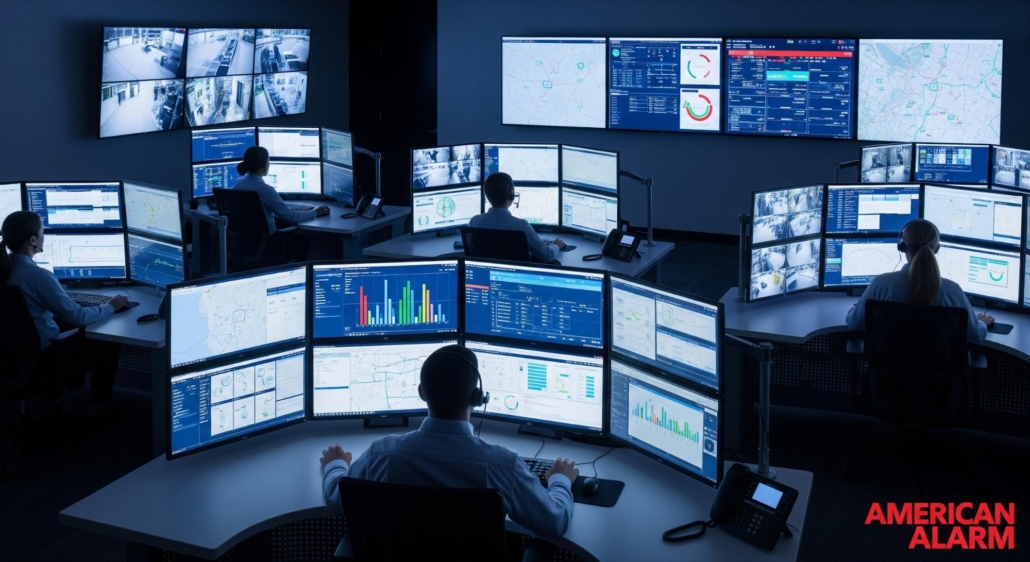
When a signal from your commercial fire alarm reaches a professional monitoring center, a precise and rapid protocol is initiated. Operators are trained to quickly verify the alarm to minimize false dispatches, which can be costly and divert emergency resources. This verification can involve cross-referencing signals from multiple zones or, in more advanced systems, using integrated video feeds to confirm a fire visually. Once the alarm is verified, the operator has a direct line to the dispatchers at the appropriate Atlanta-area fire department. This professional-to-professional communication is far more efficient than a typical 911 call from a panicked individual. The operator can provide clear, accurate information, including the business address, the specific zone where the fire was detected, and any other critical details. This streamlined process cuts through potential confusion and human error, drastically reducing the time it takes for firetrucks to be dispatched and get en route to your location. This 24/7 Security System Monitoring is the key to minimizing damage and enhancing life safety.
Protecting Your Property, Even When You’re Not There
One of the most significant vulnerabilities for any business is a fire that starts after hours, over a weekend, or during a holiday. In an unoccupied building with an unmonitored system, a fire can burn undetected for a dangerously long time, often until it’s too late and visible smoke or flames are noticed by someone outside. By then, the damage is often extensive and irreversible. Professional fire alarm monitoring provides a constant, vigilant watch over your property. Whether your business is in Atlanta, Roswell, Sandy Springs, or Marietta, the system ensures an immediate emergency response is triggered automatically. This protection is invaluable, safeguarding your inventory, equipment, and the structural integrity of your building from the devastating impact of an unattended fire. It provides peace of mind, knowing your investment is protected 24/7/365.
How Do We Ensure Your Alarm Signal Always Gets Through?
A fire alarm signal is only effective if it can reach the monitoring center. Traditional systems often relied on a single phone line, which could be compromised by a fire, a power outage, or even intentional tampering. Modern Commercial Fire Alarm Systems utilize redundant communication paths to guarantee signal transmission. These systems typically use both an internet (IP) connection and a cellular backup. If the primary internet line fails or is cut, the system automatically switches to the cellular network to send the emergency signal. This dual-path technology creates a highly reliable and resilient connection, ensuring that no matter the circumstances, the alert will get through to the monitoring professionals who can dispatch help.
Pinpointing the Fire: Safety for Large Georgia Properties
Managing fire safety in large or multi-tenant commercial properties like office parks, apartment complexes, or industrial facilities in North Georgia presents unique challenges. A simple alarm bell isn’t enough; responders need to know the exact origin of the fire. Advanced, monitored systems provide this critical detail. They can identify the specific zone, floor, or even the individual detector that triggered the alarm, relaying this precise location data to the fire department. This level of detail allows firefighters to respond with greater speed and accuracy, saving time they might otherwise spend searching for the source of the fire. For property managers and facility directors, integrating these features into comprehensive commercial alarm systems in Atlanta is not just a matter of convenience; it’s a critical component of a robust life safety strategy.
Connecting Fire Alarms and Access Control for Safer Evacuations
A truly integrated safety system ensures all components work together during an emergency. When a monitored fire alarm is connected to your building’s Access Control Systems Atlanta, a fire signal can automatically trigger pre-programmed life safety protocols. This can include instantly unlocking designated emergency exit doors to allow for unimpeded evacuation while securing other areas to control the fire’s spread. It can also unlock exterior doors or gates to provide immediate, barrier-free access for arriving firefighters and their equipment. This seamless integration removes physical obstacles when every second counts, facilitating a faster and safer evacuation for everyone inside.
How Video Verification Speeds Up a Real Response
The integration of Commercial Camera Systems with fire alarm monitoring adds another powerful layer of intelligence to your emergency response. When an alarm is triggered, monitoring center operators can be given access to live video feeds from cameras near the source of the alarm. This visual verification provides immediate situational awareness. Operators can confirm if there is visible smoke or fire, distinguish a real emergency from a system malfunction, and relay vital, real-time information to first responders. They can report on the fire’s size, location, and whether any people are visible in the area. This drastically reduces false alarm dispatches and equips firefighters with the intelligence they need to form an effective plan of action before they even arrive.
Is Your Commercial Fire Alarm System Up to Code?
A monitored fire alarm system is a cornerstone of compliance with state and local fire codes, including standards set by the National Fire Protection Association (NFPA). However, simply having the system isn’t enough. To remain effective and compliant, these systems require regular inspection, testing, and maintenance. Partnering with a professional fire alarm provider ensures that your system not only meets initial installation requirements but also stays compliant over the long term. This includes scheduling regular tests and helping you secure the necessary NFPA Certificates Fire Alarm. A well-maintained and professionally monitored system is essential for any business committed to Commercial Fire Safety NFPA Compliant Commercial Alarms.
Annual Inspection Requirements
Installing a state-of-the-art fire alarm system is a critical first step, but the work doesn’t stop there. To ensure your system functions flawlessly during an emergency and remains compliant with local and national regulations, ongoing maintenance is essential. The National Fire Alarm Code, for instance, requires businesses to have their fire alarm systems professionally tested at least once a year. This isn’t just about checking a box; it’s a thorough process that verifies every component—from detectors to communication links—is in perfect working order. Insurance companies also frequently ask for proof of these annual inspections to validate your coverage, making it a crucial part of your operational responsibilities.
The Impact on Business Insurance
A professionally monitored and regularly inspected fire alarm system is one of the smartest financial decisions a business owner can make. Insurance providers view these systems as a significant reduction in risk, which can often translate into lower annual premiums. More importantly, maintaining a compliant system protects you from potential liability. Having a working fire alarm and the documentation to prove it has been properly inspected can be your best defense in preventing an insurance claim from being denied. It also helps reduce your legal responsibility if an incident occurs, demonstrating that you took proactive steps to protect your employees, customers, and property.
Understanding the Cost of a System
When considering a commercial fire alarm, it’s helpful to view it as a long-term investment in your business’s safety and continuity. The cost of a system isn’t one-size-fits-all; it depends on factors like the size of your facility, the complexity of the layout, and the specific technologies required to meet code. The most effective approach is to work with a provider who offers a system that is professionally designed, installed, and maintained to meet all safety rules. At American Alarm, we focus on creating smart, affordable solutions tailored to your specific needs. Regular testing and inspections are part of ensuring your system is always working perfectly, giving you reliable protection and peace of mind. For a personalized assessment, you can always contact us directly.
Why Atlanta Businesses Trust American Alarm for Fire Safety
Since 1995, American Alarm has been dedicated to protecting businesses throughout Atlanta and North Georgia. We understand that rapid, reliable emergency response is not a luxury; it’s a necessity. Our expertise lies in designing, installing, and monitoring commercial fire alarm systems that provide the highest level of protection and ensure the fastest possible dispatch of emergency services. When you partner with us, you’re not just getting a system; you’re gaining a team of local safety experts committed to your security. If you want to learn Why Choose American Alarm, Contact Us today to see how our solutions can safeguard your business.
Get a Custom Plan for Your Commercial Fire Alarm
Don’t wait for disaster to strike. Contact American Alarm today to discuss a professionally monitored commercial fire alarm system tailored for your Atlanta business and get a custom quote.
FAQs
What are the key benefits of 24/7 commercial fire alarm monitoring in Atlanta? Answer: Key benefits include faster emergency dispatch, continuous protection for unoccupied buildings, reduced response delays, redundant communication paths for reliability, and support for NFPA compliance, ensuring your Atlanta business is always protected. How does a monitored fire alarm system improve response time compared to an unmonitored system? Answer: A monitored system automatically transmits signals to a professional central station, which then immediately verifies and dispatches the fire department. An unmonitored system only triggers local alarms, relying on someone on-site or a passerby to contact emergency services, which can cause significant delays. Is commercial fire alarm monitoring required by law in Georgia? Answer: For many commercial properties, particularly those with specific occupancy types or sizes, monitored fire alarm systems are mandated by local and state building codes, including NFPA 72. American Alarm can help ensure your system meets all Georgia compliance requirements. Can existing commercial fire alarm systems be upgraded for monitoring? Answer: Yes, in many cases, existing commercial fire alarm systems can be integrated with professional monitoring services. Our team can assess your current setup and recommend the best solutions to upgrade your system for enhanced protection and faster response. How do security cameras assist with a monitored commercial fire alarm system? Answer: Security cameras can provide visual verification of an alarm event, allowing monitoring center operators to confirm a fire’s presence and provide critical real-time information to first responders. This helps reduce false alarms and ensures a more effective emergency response.


Leave a Reply
Want to join the discussion?Feel free to contribute!