Essential Commercial Fire Alarm Features for Atlanta Code & Inspection Compliance
Key Takeaways
- Commercial fire alarm systems must meet strict NFPA codes and local AHJ requirements for life safety and legal compliance.
- Key features include addressable control panels, strategically placed detectors, and effective audible/visual notification devices.
- Ongoing inspection, testing, and maintenance are crucial for ensuring continuous system reliability and compliance.
- Proper documentation, system zoning, and integration with other security systems enhance overall building safety.
- Partnering with an experienced Atlanta provider like American Alarm ensures your system is always code-compliant and inspection-ready.
Why Code Compliance & Inspection Readiness Are Critical for Your Atlanta Business
For any business owner or property manager in Atlanta, a commercial fire alarm system is more than just a piece of equipment; it’s a fundamental component of your life safety and legal strategy. Adhering to strict fire alarm codes isn’t just about avoiding fines; it’s about protecting employees, customers, assets, and the future of your operation. Non-compliance can lead to severe financial penalties, mandated business shutdowns, voided insurance claims, and, most critically, a heightened risk of tragedy. An inspector’s approval isn’t a mere formality; it’s a confirmation that your facility provides a safe environment for everyone who walks through its doors. This is why understanding why NFPA compliant fire alarms are a crucial investment is the first step toward responsible business ownership.
Navigating Governing Standards: NFPA Codes & Local AHJ Requirements in Georgia
The landscape of commercial fire safety is governed by a set of comprehensive standards, with NFPA 72, the National Fire Alarm and Signaling Code, serving as the primary benchmark. This code dictates the minimum requirements for the installation, performance, testing, and maintenance of fire alarm systems. However, compliance doesn’t stop there. In Georgia, the local Authority Having Jurisdiction, typically the city or county fire marshal’s office, has the final say. The AHJ interprets and enforces these codes, often with specific local amendments. Navigating NFPA 72 compliance means understanding both the national standards and the specific expectations of your local Atlanta-area inspector. This dual focus ensures your system is not only designed correctly but also approved without delay.
Critical Fire Alarm System Features Inspectors Look For
During an inspection, the AHJ scrutinizes every component of your fire alarm system to ensure it functions as a cohesive, reliable life safety solution. They look for specific features that guarantee early detection, clear notification, and swift emergency response. From the central control panel to the individual devices, every element must meet exacting standards.
The Brains of the System: Addressable Fire Alarm Control Panels
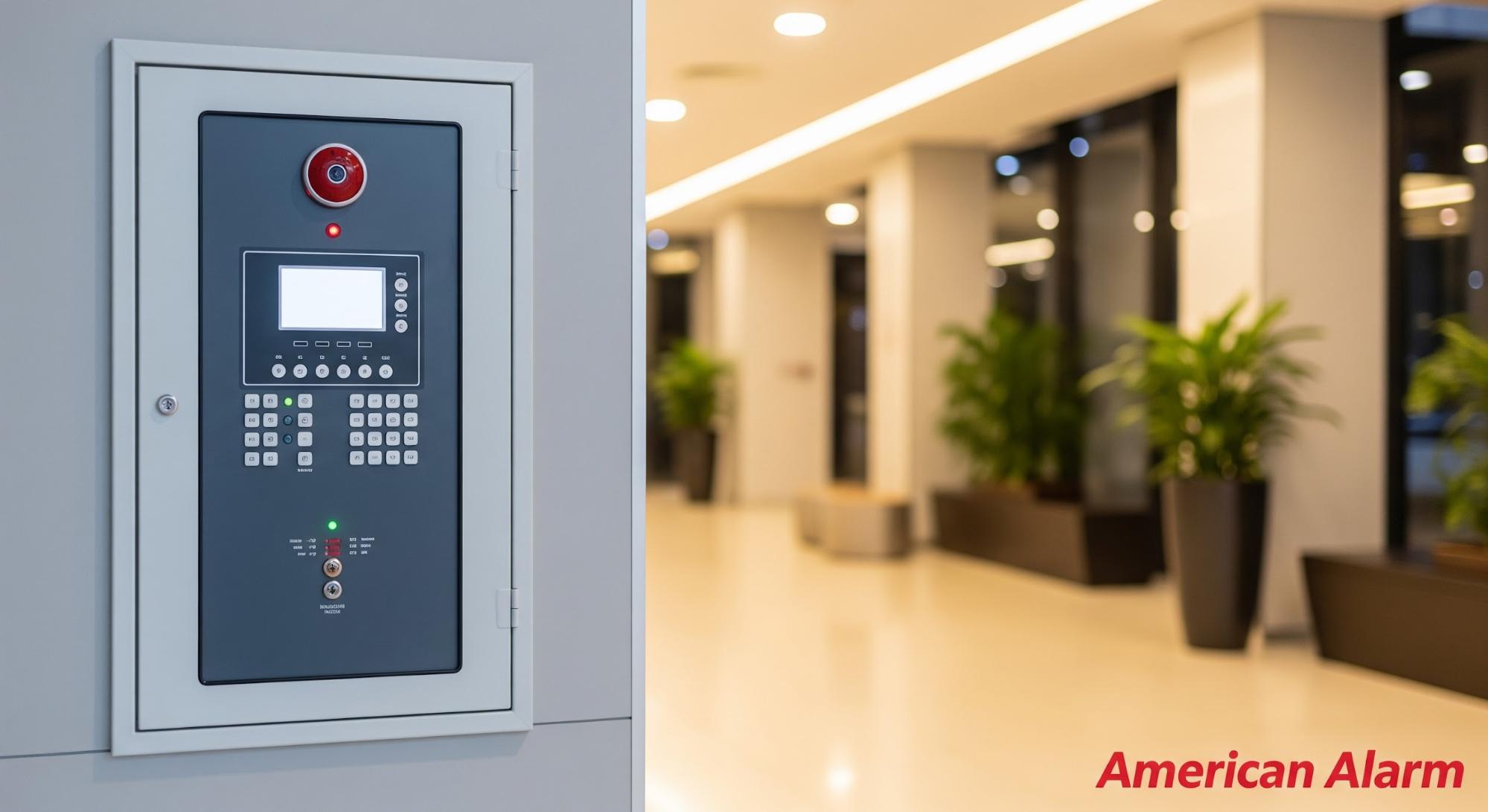
At the heart of any modern, code-compliant system is an addressable fire alarm control panel. Unlike older, conventional systems that only identify a general zone, an addressable panel can pinpoint the exact device that has been triggered. If a smoke detector in “Office 204” activates, the panel tells you precisely that. This level of detail is invaluable for first responders, allowing them to go directly to the source of the problem, saving critical time. For this reason, addressable panels are the preferred choice for most new Atlanta fire alarm systems, offering superior control and diagnostic capabilities.
Early Detection: Properly Placed Smoke, Heat, and Specialty Detectors
A fire alarm is only as good as its ability to detect a fire at its earliest stage. Inspectors will meticulously check the type, number, and placement of all detection devices. This includes:
- Smoke Detectors: Placed in common areas, corridors, storage rooms, and near electrical closets.
- Heat Detectors: Used in environments where smoke detectors might cause false alarms, such as kitchens, garages, or dusty manufacturing areas.
- Duct Detectors: Installed in HVAC systems to prevent the spread of smoke throughout the building.
- Beam Detectors: Ideal for large, open spaces with high ceilings like warehouses or atriums.
Strategic placement according to NFPA guidelines ensures there are no coverage gaps, providing comprehensive protection for your entire facility.
Clear Warnings: Audible & Visual Notification Appliances
Once a fire is detected, the system must alert every occupant to evacuate. This is achieved through a combination of audible and visual notification appliances. Horns must be loud enough to be heard over ambient noise, and strobe lights must be bright and properly synchronized to meet Americans with Disabilities Act (ADA) requirements. This ensures that all individuals, including those with hearing or visual impairments, receive a clear and unmistakable warning, making evacuation swift and effective.
Manual Initiation & Emergency Response Protocols
While automatic detectors are the first line of defense, human observation is also critical. Code requires the installation of manual pull stations at all building exits and on each floor. These devices empower occupants to trigger the alarm system immediately if they spot a fire before a detector does. An inspector will verify that these stations are accessible, unobstructed, and clearly marked, ensuring anyone can activate the emergency response protocol without hesitation.
The Lifeline: Monitored Fire Alarm Connections & Emergency Dispatch
A local alarm that only makes noise inside your building is not enough for a commercial property. Code compliance in Atlanta requires that your fire alarm system be connected to a 24/7 professional monitoring service. When an alarm is triggered, a signal is instantly sent to a central station where trained operators verify the emergency and dispatch the local fire department within seconds. This process of Atlanta fire alarm monitoring is non-negotiable; it’s the essential link that ensures help is on the way, whether it’s the middle of the day or night, and whether your building is occupied or empty.
Organization & Clarity: System Zoning, Labeling, and Documentation Requirements
For first responders arriving on the scene, clarity is key. Inspectors require that your system be logically “zoned,” with a clear map or annunciator panel located near the entrance. This allows firefighters to immediately identify the alarm’s location within the building. Furthermore, every component, from the control panel to individual wires, must be properly labeled. Inspectors will also demand complete documentation, including design plans, installation records, and proof of regular maintenance. Proper records are essential for obtaining NFPA Certificates for Fire Alarms.
Sustaining Compliance: Inspection, Testing, and Maintenance (ITM)
Achieving compliance is not a one-time event; it’s an ongoing commitment. NFPA codes mandate a strict schedule for Inspection, Testing, and Maintenance (ITM) to ensure your system remains in perfect working order. This includes annual professional inspections and periodic testing of all components. Neglecting regular fire alarm maintenance can lead to system failure, failed inspections, and a false sense of security.
Integrated Safety: How Fire Alarms Connect with Other Security Systems
Modern life safety goes beyond simple detection. Today’s Atlanta commercial alarm systems are often integrated with other building technologies for a coordinated response. For instance, a fire alarm can automatically:
- Unlock doors controlled by an Atlanta access control system to facilitate evacuation.
- Recall elevators to the ground floor.
- Shut down HVAC systems to stop smoke from spreading.
- Activate Atlanta security camera systems in the affected area to provide visual verification for emergency personnel.
This integration creates a smarter, more responsive safety ecosystem, a feature highly valued by inspectors and building managers alike.
Powering Through Emergencies: Backup Power & System Redundancy
A fire alarm system must work when it’s needed most, even during a power outage. Compliance standards mandate a reliable secondary power source, typically a set of rechargeable batteries. Inspectors will test this backup system to ensure it can power the entire fire alarm system in a supervisory state for at least 24 hours, followed by several minutes in full alarm mode. This redundancy is a critical compliance checkpoint, guaranteeing your building remains protected no matter the circumstances.
Serving North Georgia’s Commercial Sector
From initial design and installation to ongoing maintenance and monitoring, ensuring your fire alarm system meets every code is our specialty. At American Alarm, our team of experts understands the unique requirements of the AHJs across North Georgia. We provide code-compliant commercial alarm solutions for businesses in Atlanta, Alpharetta, Roswell, Sandy Springs, Marietta, and Kennesaw. Our service extends to the thriving commercial markets in Johns Creek, Milton, Buckhead, Dunwoody, Norcross, Peachtree Corners, Smyrna, and Vinings, helping businesses stay safe, compliant, and ready for any inspection. If you have questions about our services, please contact American Alarm to learn more.
Ready for Peace of Mind and Full Compliance?
Don’t leave your Atlanta business vulnerable to non-compliance or fire risks. Ensure your fire alarm system meets all code requirements with American Alarm. Get a quote today to schedule a consultation with our expert team.
FAQs
What is the primary NFPA standard for commercial fire alarm systems?
Answer: The primary standard is NFPA 72, the National Fire Alarm and Signaling Code. It sets the requirements for the application, installation, location, performance, inspection, testing, and maintenance of fire alarm and emergency communications systems.
How often should commercial fire alarm systems be inspected in Georgia?
Answer: Commercial fire alarm systems typically require annual inspections, testing, and maintenance as per NFPA 72 and local Authority Having Jurisdiction (AHJ) requirements. Specific components may require more frequent testing.
Can a business owner perform their own fire alarm system maintenance for compliance?
Answer: While some minor visual checks can be done, NFPA 72 and most local fire codes require commercial fire alarm system inspections, testing, and maintenance to be performed by qualified, licensed professionals to ensure compliance and system integrity.
What is an addressable fire alarm system, and why is it important for commercial buildings?
Answer: An addressable fire alarm system allows the control panel to identify the exact location of a triggered device (e.g., a specific smoke detector). This precision is crucial in commercial buildings for rapid incident response, pinpointing the fire source, and ensuring efficient emergency services deployment, aiding compliance.
How does backup power affect commercial fire alarm system compliance?
Answer: Code-compliant commercial fire alarm systems must include a reliable backup power source, typically batteries, capable of operating the system for a specified duration during a power outage. This ensures continuous protection and is a critical point for inspection.


Leave a Reply
Want to join the discussion?Feel free to contribute!