What Is Centralized Control for Multi-Site Security?
For any business owner with multiple locations, the daily questions can be a source of constant stress. Is the alarm set at the downtown office? Who has access to the stockroom at the northside branch? A lack of real-time visibility leaves you guessing and hoping for the best. A centralized security system replaces that uncertainty with confidence. From a single screen on your computer or phone, you can manage employee access, check system status, and review incidents across all properties. This is the essence of centralized control for multi-site security guard operations, empowering you to manage your entire enterprise with precision and respond to events instantly.
Key Takeaways
- Multi-location businesses, from retail chains to healthcare groups, face unique security challenges that demand a unified approach.
- Centralized security platforms integrate intrusion detection, access control, security cameras, and fire alarm systems for cohesive management across all sites.
- A unified management dashboard provides real-time visibility and control, streamlining operations and enhancing incident response.
- Scalability, standardized installation, and professional monitoring are critical for consistent protection and compliance as your business grows across Atlanta and North Georgia.
- Implementing integrated security solutions helps prevent losses, ensure employee safety, and maintain regulatory compliance.
Managing a business across multiple locations in Atlanta and North Georgia presents a unique set of operational challenges, especially when it comes to security. Ensuring consistent protection for your people, assets, and property requires more than just a collection of separate systems. It demands a cohesive, centralized strategy that simplifies management, enhances visibility, and scales with your growth. This is where integrated commercial security systems become an indispensable asset for any multi-site enterprise.
What Qualifies as a Multi-Location Business?
In the context of security, a multi-location business is any enterprise that operates out of more than one physical site. While this might bring to mind large national corporations, the reality includes a wide range of organizations right here in Georgia. These can include retail chains with stores in different neighborhoods, healthcare groups with multiple clinics or offices, franchise operations with standardized but distinct locations, and companies with a network of offices or industrial facilities. The common thread is their distributed nature. Each site has its own assets, employees, and vulnerabilities, but they all fall under a single brand and operational umbrella. This structure creates complex security requirements that a one-size-fits-all approach cannot effectively address. A security breach at one location can have ripple effects, impacting brand reputation, operational continuity, and overall profitability across the entire organization. Therefore, the need for a unified security posture is not just a matter of convenience but a fundamental business necessity.
Why Centralized Security is Crucial for Multiple Sites
Managing security across multiple locations with disparate, non-integrated systems is a recipe for inefficiency and risk. When each site has its own alarm panel, camera system, and access control method, a lack of cohesion creates significant blind spots. A centralized approach directly confronts these issues by bringing every component under a single management platform. This unification delivers powerful benefits for Atlanta businesses. It improves operational efficiency by eliminating the need to manage multiple vendors, platforms, and protocols. It enhances control by giving decision-makers a comprehensive, real-time view of their entire security landscape from a single dashboard. Most importantly, it enables faster and more coordinated response times. When an alarm is triggered in one location, the central system can immediately correlate it with video feeds and access logs, providing a complete picture of the event for a swift, informed reaction.
Overcoming Traditional Security Challenges
Fragmented security setups are plagued by persistent problems. Inconsistent systems are a major issue; one location might have an advanced IP camera system while another relies on outdated analog technology, creating uneven protection. This inconsistency leads to a lack of remote visibility, making it impossible for a regional manager or business owner to check on multiple sites without being physically present or logging into several different platforms. Furthermore, these traditional setups create burdensome manual processes. Managing employee access credentials, pulling incident reports, or even just arming and disarming systems across multiple sites becomes a time-consuming and error-prone task. This complexity multiplies costs, not just in terms of hardware but also in administrative overhead and the potential for unaddressed security gaps that can lead to significant losses.
The Pros and Cons of Centralized Security Systems
While a centralized security system offers incredible efficiency and oversight for your multi-location business, it’s smart to look at the complete picture. Understanding the potential downsides of centralization, as well as the benefits of a different approach, helps you make the most informed decision. The goal is to create a security strategy that is not only powerful but also resilient. By weighing the pros and cons, you can work with a security partner to design a system that maximizes protection while minimizing vulnerabilities across all your locations. Exploring the full range of available systems and products ensures you find the perfect balance between unified control and operational resilience for your enterprise.
Potential Drawbacks of Centralization
Putting all your security management into a single basket, so to speak, streamlines operations, but it also introduces specific risks that need to be managed. If your central hub experiences a technical problem, it can have a cascading effect on every connected location, potentially leaving your properties vulnerable. Furthermore, concentrating all your sensitive security data in one place requires rigorous protection to guard against unauthorized access. Acknowledging these challenges is the first step toward building a truly robust and reliable security infrastructure that protects your assets without creating new weaknesses in the process.
Single Point of Failure
The most significant concern with a purely centralized model is that it “can create a single point of failure; if the main system breaks, all video surveillance might stop working.” A critical server malfunction, a targeted cyberattack on your main office, or even a simple network outage at your headquarters could potentially disable security across your entire network of sites. This is why the design and maintenance of your central system are so important. Building in redundancies, having reliable backup power, and partnering with a professional team to manage your system helps ensure that one issue doesn’t compromise your whole operation.
Data Privacy Risks
When you centralize video feeds and access logs, you create a valuable repository of data. With this concentration of information, “there’s a risk that private video could be seen by the wrong people, raising concerns about data privacy and security.” A breach at the central server could expose sensitive information from all your business locations. That’s why it’s essential to implement strong encryption, multi-factor authentication, and strict access controls to protect who can view and manage your data. Partnering with a security provider who understands these risks is key to protecting your business and customer information effectively.
Benefits of a Decentralized Approach
On the other side of the coin, a decentralized or distributed security model offers its own set of advantages, particularly for businesses concerned with resilience and local autonomy. In this setup, each location operates its own security system independently. While this can mean less unified oversight from a single dashboard, it builds a layer of insulation between your sites. If one location experiences a security failure—like a power outage or equipment malfunction—the others remain completely unaffected, maintaining their protective measures without interruption and ensuring the issue remains contained to a single property.
System Redundancy
The core strength of a decentralized system is its inherent redundancy. As one expert notes, “In a decentralized system, if one store’s system breaks, other stores’ video systems keep working, ensuring continued surveillance across locations.” This structure isolates failures, so a localized issue at one of your Atlanta properties won’t impact the security of your other sites. This compartmentalization provides peace of mind, knowing that your entire security network can’t be taken down by a single event, which is a crucial consideration for maintaining operational continuity and consistent protection across your enterprise.
Faster Local Response
Decentralized systems also empower on-site managers to act quickly when an incident occurs. This model “allow[s] each store to react faster to problems happening right there, improving incident response times.” Local teams can manage access, review footage, and respond to alarms without needing to go through a central command. For many businesses, the ideal solution is a hybrid one that combines local control with professional, centralized monitoring. This approach gives you the best of both worlds: immediate on-site response capabilities backed by 24/7 expert oversight to ensure every event is handled properly.
Core Components of an Integrated Multi-Location Security System
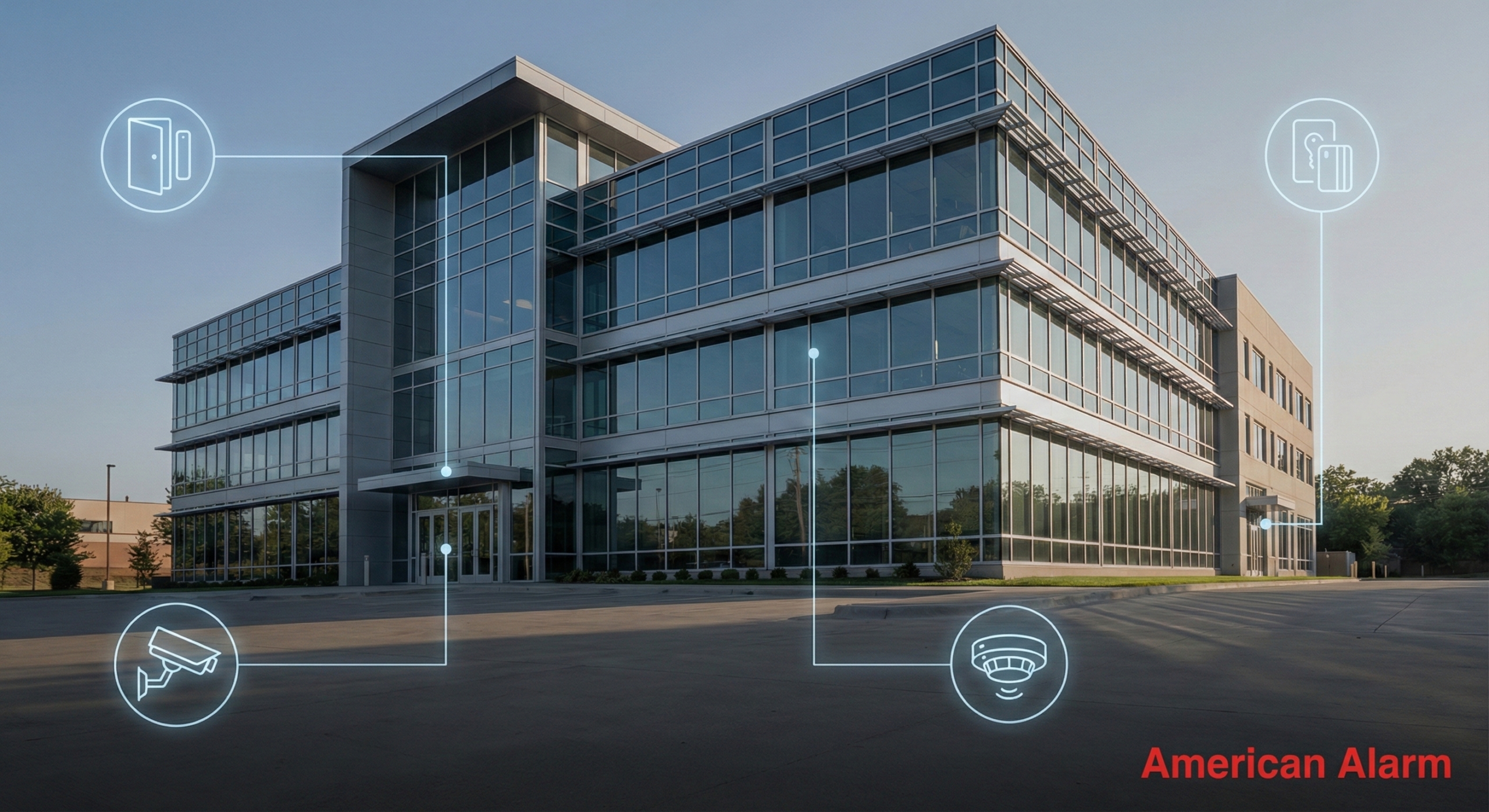
A robust centralized security solution is built on several key pillars that work in concert. A true enterprise-grade system integrates these components, allowing them to share information and automate responses for a stronger security posture. The core elements include:
- Intrusion Detection: This is the foundation of physical security. A comprehensive commercial alarm system for a multi-location business includes door and window sensors, motion detectors, glass-break sensors, and duress or panic buttons. In a centralized model, all alerts are funneled to one management interface, giving you a clear view of any potential threats across all properties.
- Access Control: Managing who can go where and when is critical. Centralized access control systems allow you to create and revoke employee credentials, set access schedules, and lock down all facilities remotely with a single command. This eliminates the need for physical keys and provides a detailed digital audit trail of every entry attempt.
- Advanced Security Cameras: Modern commercial camera systems offer more than just recording. High-definition IP cameras, equipped with AI-powered video analytics, can proactively detect unusual activity and send real-time alerts. When integrated, an alarm event can automatically trigger relevant cameras to record and display footage on the central dashboard.
- Fire Alarm Systems: Life safety is non-negotiable. An integrated fire alarm system ensures that every location is protected and compliant. Centralized monitoring means that a fire signal from any site is immediately relayed to emergency services, protecting both people and property around the clock.
Integration with Existing Business Systems
The most effective security solutions don’t operate in a silo. True integration means your security platform can communicate with other essential business systems, like HR or operations software. This connectivity transforms your security setup from a simple protective measure into a powerful business intelligence tool. For instance, when an employee’s status changes in your HR platform, their access credentials can be automatically updated or deactivated across all locations. This not only saves administrative time but also eliminates the risk of human error, ensuring access is always current.
By funneling data from your alarm, access control, and video surveillance systems into a single, unified dashboard, you gain a comprehensive overview of your entire operation. This centralized view allows you to correlate events, identify patterns, and make more informed decisions. For example, you can streamline employee management by cross-referencing access logs with time and attendance records, turning your security investment into an asset that improves overall business efficiency and accountability.
Centralized Monitoring and Management Dashboards
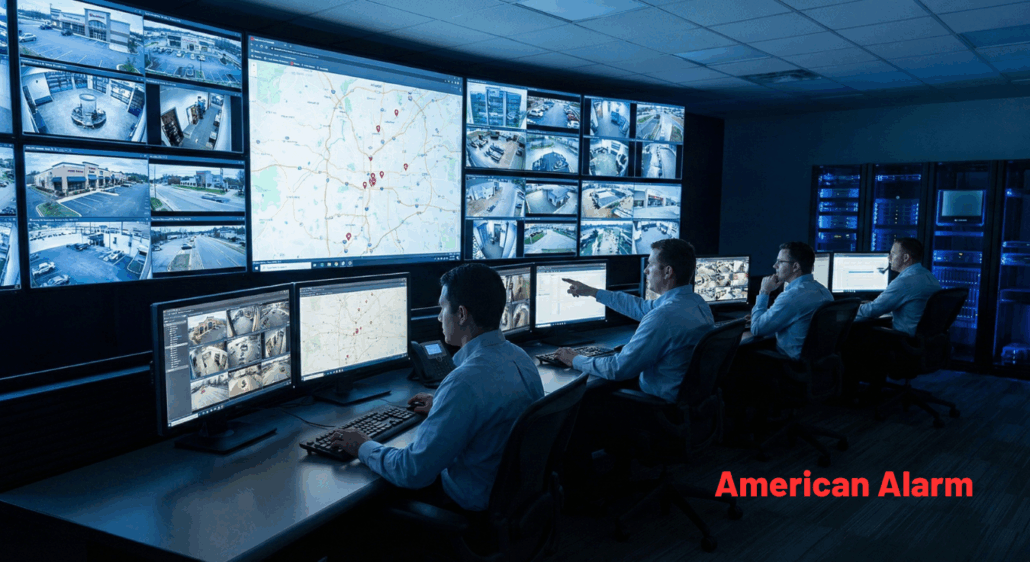
The heart of any multi-location security system is the centralized management dashboard. This software platform is the command center, providing authorized personnel with real-time visibility and control over every connected device across all sites. From a single screen on a computer or mobile device, you can arm or disarm alarm systems, view live and recorded video feeds, lock or unlock doors, and manage user access permissions. This unified interface streamlines administration and dramatically improves situational awareness. Instead of chasing down information from different systems, you receive unified alerts that provide a complete context for any event. This empowers your team to make faster, more effective decisions, whether it’s responding to a break-in at one store or a fire alarm at another.
The Power of 24/7 Professional Monitoring for All Locations
While a management dashboard provides incredible control, it is most powerful when backed by professional 24/7 monitoring services. For multi-location businesses, this service is indispensable. It ensures that every alarm—be it for intrusion, fire, or panic—at every single one of your sites receives an immediate response from trained security professionals, day or night. Even when your managers are off-duty, American Alarm’s monitoring center is on guard. Upon receiving a signal, operators can verify the emergency, filter out false alarms, and dispatch the appropriate first responders to the correct location in Atlanta or North Georgia, providing peace of mind and an essential layer of protection.
Automated System Responses
One of the most significant advantages of an integrated system is its ability to create automated, intelligent responses to security events. Instead of relying on manual intervention for every alert, you can establish rules that trigger specific actions automatically. For example, if an unauthorized access attempt is detected at a warehouse after hours, the system can instantly lock all doors, activate high-decibel sirens, and focus all nearby security feeds on that entry point. This immediate, coordinated reaction can deter intruders and minimize potential losses before a human operator even needs to step in, ensuring your security protocols are enforced consistently across every location.
The Importance of Human Judgment in Monitoring
While automation is a powerful tool, it can’t replace the critical thinking and intuition of a trained professional. Technology is excellent at detecting events, but it takes human judgment to interpret the context and determine the appropriate response. Even when your managers are off-duty, American Alarm’s monitoring center is on guard. Upon receiving a signal, our operators can visually verify the emergency using integrated video feeds, filter out costly false alarms, and dispatch the appropriate first responders to the correct location. This human element ensures that a real emergency receives a swift, accurate response, providing a level of assurance that a purely automated system cannot match.
Leveraging Advanced Technology and AI
Modern commercial security has evolved far beyond simple motion detectors and alarms. Today’s most effective systems leverage advanced technology, including artificial intelligence (AI), to provide proactive and intelligent protection. Instead of just reacting to events after they happen, these systems are designed to identify potential threats and alert you before an incident occurs. This shift from reactive to proactive security is a game-changer for multi-location businesses, offering a more dynamic and responsive way to safeguard assets and personnel across a distributed enterprise.
The core of this technological leap lies in AI-powered video analytics. Modern commercial security systems do more than just record footage; they analyze it in real time. High-definition IP systems can be programmed to detect unusual activity, such as a person loitering in a restricted area after hours or a vehicle parked in a fire lane. When the system identifies a potential issue, it can send an immediate alert to your management dashboard and our central monitoring station. This allows you to address situations as they unfold, rather than discovering a problem by reviewing footage the next day, giving you unprecedented control over your properties.
Predictive AI for Proactive Security
The true power of AI in security is its ability to help your team make decisions *before* problems happen. By analyzing vast amounts of data from sensors and video feeds across all your locations, AI algorithms can learn normal patterns of activity. When a deviation from this baseline occurs—like an employee accessing a sensitive area at an unusual time—the system can flag it as a potential risk. However, technology alone isn’t the whole story. People are still essential to understand the nuances of a situation and make informed judgments, as AI can’t fully grasp human intent or complex scenarios, making the partnership between smart tech and professional oversight crucial for effective security solutions.
Hybrid Security Models: Combining Technology and Oversight
The most effective strategy for protecting multiple business locations is a hybrid model that blends advanced technology with professional human oversight. This approach combines the strengths of both, creating a comprehensive and cost-effective security posture. It integrates remote video monitoring and smart analytics with the indispensable services of a 24/7 central monitoring station. This synergy ensures constant oversight, enables faster and more accurate emergency responses, and offers a scalable solution that can easily adapt as your business grows. By pairing intelligent automation with expert human judgment, you create a security framework that is both resilient and efficient.
Enhancing Security with Unified Access Control and Camera Systems
Integrating access control and video surveillance creates a powerful synergy for loss prevention and incident review. When these systems are centralized, you can establish consistent access policies that apply across the entire organization. An employee’s credentials can grant them access to specific areas in multiple offices or stores, all managed from one database. This unified approach also provides invaluable context. If an unauthorized access attempt occurs, the system can automatically flag the event and present the associated camera footage for immediate review. This simplifies investigations and provides clear, irrefutable evidence. For retail chains, this integration is crucial for monitoring sensitive areas like stockrooms and cash offices, helping to reduce internal and external theft. 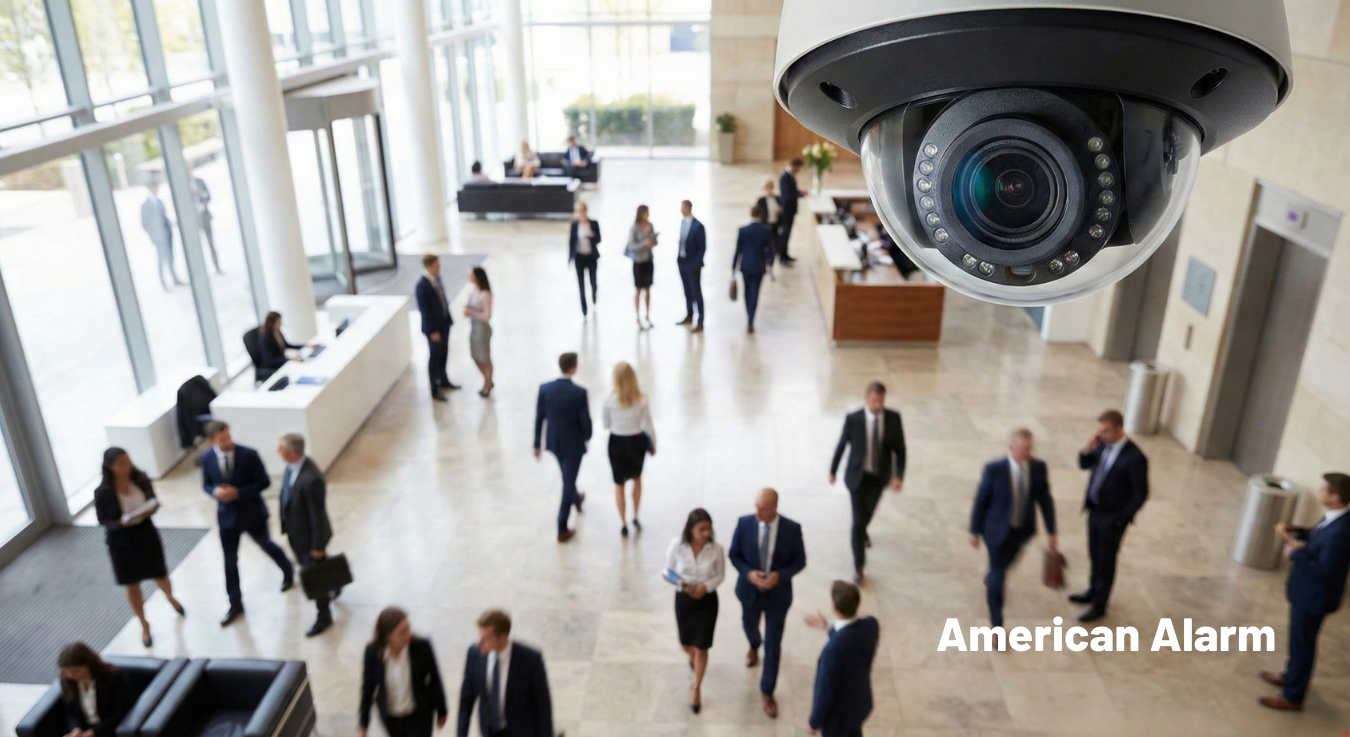
Types of Access Control Models
Not all access control is created equal. Depending on your organization’s complexity and security needs, different models can be applied to ensure the right people have access to the right places. These models provide a framework for how permissions are assigned and managed across all your locations, forming the logical backbone of your security strategy. Understanding the main types helps you choose the approach that best fits your business operations in the Atlanta area.
Role-Based Access Control (RBAC)
Role-Based Access Control, or RBAC, is one of the most common and practical models for businesses. Access permissions aren’t assigned to individuals but to specific job roles. For example, everyone in the HR department is granted access to personnel files, while the marketing team has access to creative asset storage. When a new person joins the HR team, they are simply assigned the “HR” role and automatically receive all the necessary permissions. This simplifies administration, reduces the chance of error, and makes it easy to manage permissions for a large workforce across multiple sites.
Mandatory and Discretionary Access Control
For organizations with higher security requirements, Mandatory Access Control (MAC) and Discretionary Access Control (DAC) offer different levels of stringency. MAC is the most restrictive model, where a central authority or system administrator defines all access rules, and users cannot alter them. This is common in government and military settings. DAC, on the other hand, provides more flexibility. The owner of a resource, like a specific room or file cabinet, can decide who gets to access it. While less common for enterprise-wide physical access, this principle can be applied to specific departments or projects requiring more localized control.
Visitor Management Systems
Managing the flow of non-employees—like clients, contractors, and delivery personnel—is a critical aspect of securing any commercial property. Modern visitor management systems integrate seamlessly with your access control platform to streamline this process. These systems allow you to pre-register guests, who can then check in quickly upon arrival, often using a self-service kiosk. You can issue temporary credentials, such as a printed badge or a mobile pass, that grant access only to specific areas for a limited time. This not only enhances security by creating a digital log of all visitors but also presents a professional and efficient experience for everyone who walks through your doors.
Modern Features for User Convenience
Today’s advanced security systems prove that you don’t have to sacrifice convenience for protection. The goal is to make security so seamless that it becomes a natural part of the workday for your employees. Features that reduce friction and simplify daily routines are no longer a luxury; they are a core component of an effective and well-adopted security program. These modern conveniences help ensure that security protocols are followed consistently without burdening your team.
One Pass for All Sites
For employees who travel between different offices or retail locations, juggling multiple key cards or fobs is inefficient and frustrating. A unified access control system solves this by enabling “one pass” functionality. An employee can use a single credential—whether it’s a physical card or a digital pass on their smartphone—to gain authorized entry to any of your company’s locations. This simplifies life for your team and makes it incredibly easy for administrators to manage permissions from a single, centralized platform.
Hands-Free Access
Imagine opening a secured door without ever reaching for your keys or phone. Hands-free access control makes this possible. Using Bluetooth or other wireless technologies, the system detects an authorized user’s smartphone as they approach a door and unlocks it automatically. This is especially useful for employees who are carrying equipment, documents, or deliveries. It creates a fluid, frictionless experience that enhances both efficiency and security, representing the next step in smart building technology.
Fundamental Principles for Multi-Site Security
Beyond the hardware and software, a truly effective security strategy for a multi-location business is built on a foundation of proven principles. These concepts guide how you implement technology and shape your operational policies to create a resilient and intelligent security posture. They are the “why” behind the “what,” ensuring that your security measures are not just reactive but are thoughtfully designed to minimize risk from the ground up. Adopting these principles helps create a culture of security awareness that permeates every level of your organization, from the stockroom to the boardroom.
The Principle of Least Privilege
The Principle of Least Privilege is a simple yet powerful concept: every user should only have the absolute minimum level of access required to perform their job duties. An accountant, for example, doesn’t need access to the server room, and a warehouse employee doesn’t need entry to the executive offices. By limiting access to a need-to-know basis, you significantly reduce your organization’s exposure to risk. If a user’s credentials are ever compromised, this principle contains the potential damage by restricting where an unauthorized individual can go, protecting your most sensitive areas.
Implementing a Zero Trust Framework
A Zero Trust framework is a modern approach to security built on the motto, “Never trust, always verify.” This model assumes that threats can exist both outside and inside your network. In practice, it means that no user or device is trusted by default, regardless of their location. Every access attempt must be authenticated and authorized before entry is granted. Applying this to your building security means continuously verifying that the person trying to open a door is who they say they are and has the proper authorization for that specific time and place.
Separation of Duties
Separation of Duties is a classic security principle that prevents any single individual from having too much control over a critical process. It involves dividing a task among multiple people, creating a system of checks and balances. For example, the person who authorizes new access credentials should not be the same person who issues them. This division of responsibility makes it much more difficult for fraudulent or malicious activity to occur without collusion, adding a crucial layer of internal control that protects your business from the inside out. If you’re ready to implement these principles, you can contact our team to design a tailored solution.
Fire Safety and Compliance Across All Locations in Georgia
Maintaining fire safety compliance is a critical responsibility for any business, and the complexity grows with each new location. Every site must adhere to National Fire Protection Association (NFPA) standards as well as specific regulations set by local Georgia fire marshals. A centralized fire alarm system helps ensure uniformity and compliance across the board. With an integrated system, you can standardize the hardware, testing schedules, and maintenance protocols for all locations. Centralized monitoring ensures that every site meets the requirements for professional supervision. Regular inspections and maintenance, managed through our comprehensive security services, are crucial for keeping your systems in proper working order and satisfying regulatory demands, thereby protecting your business from potential fines and, more importantly, from the devastating consequences of a fire.
Meeting Specific Compliance Standards
Beyond fire codes, many multi-location businesses operate in industries with strict data security and privacy regulations. For healthcare providers, retail chains, and financial services, protecting sensitive information is just as important as protecting physical assets. A centralized security system provides the framework to enforce and document compliance-related controls consistently across every office, clinic, or store, helping you build a secure and auditable environment.
HIPAA, PCI DSS, and GDPR
For healthcare organizations, the Health Insurance Portability and Accountability Act (HIPAA) requires stringent safeguards to protect patient data. An integrated system helps by restricting access to records rooms and data centers, ensuring only authorized staff can enter. For retailers, the Payment Card Industry Data Security Standard (PCI DSS) mandates controls over the cardholder data environment. Centralized access management and video surveillance are essential tools for securing these sensitive areas. Even regulations like the GDPR, which governs the data of EU citizens, emphasize the need for strong security measures. Using a centralized platform helps you standardize policies and procedures across all locations, which is a cornerstone of effective compliance and risk management.
Scalability and Standardized Operations for Multi-Location Growth
As your business expands, your security system should grow with it. One of the greatest advantages of a centralized platform is scalability. When you open a new location, it can be seamlessly integrated into your existing security infrastructure without requiring a complete overhaul. This “plug-and-play” capability saves time, reduces costs, and ensures your security standards are maintained from day one. Standardization is another key benefit. By using the same equipment, installation practices, and user protocols across all sites, you create a consistent and predictable security environment. This makes it easier to train employees, manage maintenance, and troubleshoot issues. It ensures that every location, whether in the heart of Atlanta or in a quieter part of North Georgia, receives the same high level of protection, creating a secure foundation for sustainable growth. If your multi-location business is ready to move beyond fragmented security, it’s time to explore the benefits of a unified solution. Get a quote today to learn how a centralized commercial security system can protect your entire enterprise.
FAQs
What defines a multi-location business in the context of commercial security? A multi-location business refers to any enterprise operating across two or more physical sites, such as retail chains, office networks, healthcare groups, or franchise operations, all requiring unified security management. Why are centralized security systems more effective for businesses with multiple locations? Centralized systems offer a unified platform to manage all security components across different sites, providing consistent protection, streamlined operations, real-time visibility, and faster, coordinated responses to incidents. What core security components are essential for a multi-location business? Essential components typically include integrated intrusion detection, advanced access control systems, high-definition security cameras with analytics, and NFPA-compliant fire alarm systems, all managed through a central dashboard. How do access control systems support consistent employee access policies across multiple sites? Centralized access control allows businesses to uniformly manage employee permissions, issue digital credentials, and enforce access schedules across all locations from a single interface, ensuring consistent security protocols and generating comprehensive audit trails. What role does professional monitoring play for multi-location businesses in Atlanta and North Georgia? Professional 24/7 monitoring ensures that all security and fire alarms across every location in Atlanta and North Georgia are immediately addressed by trained personnel, who can verify threats and dispatch emergency services, providing critical after-hours protection and peace of mind.
Understanding the Security as a Service (SaaS) Model
The Security as a Service (SaaS) model transforms how businesses approach their protection. Instead of a large, one-time capital investment in hardware, this approach treats security as an ongoing, managed service with a predictable monthly fee. This subscription covers not just the equipment but also the professional installation, regular maintenance, software updates, and dedicated support. For a multi-location business, this is a game-changer. It converts a potentially prohibitive upfront cost into a manageable operational expense, making it far simpler to budget for consistent, high-quality protection across all your sites. This model ensures every location is equipped with the latest systems and products without requiring a new round of capital investment for each upgrade or expansion.
This service-based approach also future-proofs your security infrastructure. Technology evolves quickly, and a system that is state-of-the-art today could be outdated in a few years. With a SaaS model, the responsibility of keeping the technology current falls to the service provider. This means your business benefits from continuous improvements and updates without the headache and expense of researching, purchasing, and installing new hardware yourself. It ensures that your intrusion detection, access control, and other integrated components remain effective against emerging threats, giving you a durable and adaptable security posture that grows with your enterprise.
Outsourcing Security to a Specialized Provider
At its core, the SaaS model is about outsourcing your security needs to a specialized provider with the expertise to manage it effectively. Partnering with a company like American Alarm means you’re not just buying equipment; you’re gaining a dedicated partner focused on protecting your business. We handle the complexities of designing, installing, and maintaining a cohesive system across all your locations. This includes setting up a unified management dashboard that acts as your central command center, giving you real-time visibility and control over every site from a single interface.
This partnership extends beyond technology to include the critical human element of professional 24/7 monitoring. Our trained professionals are always on watch, ready to respond to any alarm from any of your locations. They verify threats, filter out false alarms, and coordinate with first responders, ensuring a swift and appropriate reaction day or night. By entrusting your security to a specialized provider, you free up your own resources to focus on your core business operations, confident that your properties, assets, and people are protected by experts.


Leave a Reply
Want to join the discussion?Feel free to contribute!