How Fire Alarm Integration Creates Safer Buildings
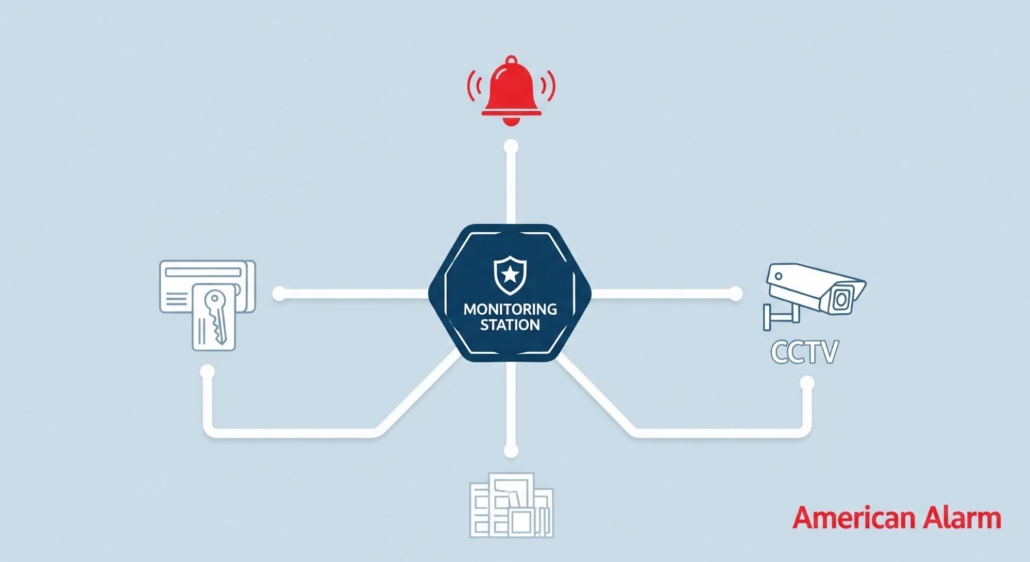
When an emergency happens at your property, first responders are on their way. The question is, what will they find when they arrive? A blaring, non-specific alarm creates a dangerous guessing game. A smarter system, however, gives them the intelligence they need to act decisively and safely. This is the power of fire alarm integration. By connecting your fire panel to your access control and video surveillance systems, you provide emergency personnel with critical situational awareness from the moment they’re dispatched. They can know the fire’s exact location and see what’s happening in real-time, allowing for a faster, more effective response that better protects your property and everyone inside.
Key Takeaways
- Fire alarm integration unifies disparate safety systems for a cohesive emergency response.
- Seamless integration with access control ensures swift, secure emergency egress.
- Coordinating fire alarms with security systems and cameras provides critical situational awareness.
- Integrated systems improve evacuation coordination and compliance with Georgia fire codes.
- Professional monitoring is essential for maximizing the effectiveness of integrated safety solutions.
What Does Fire Alarm Integration Mean for Your Business?
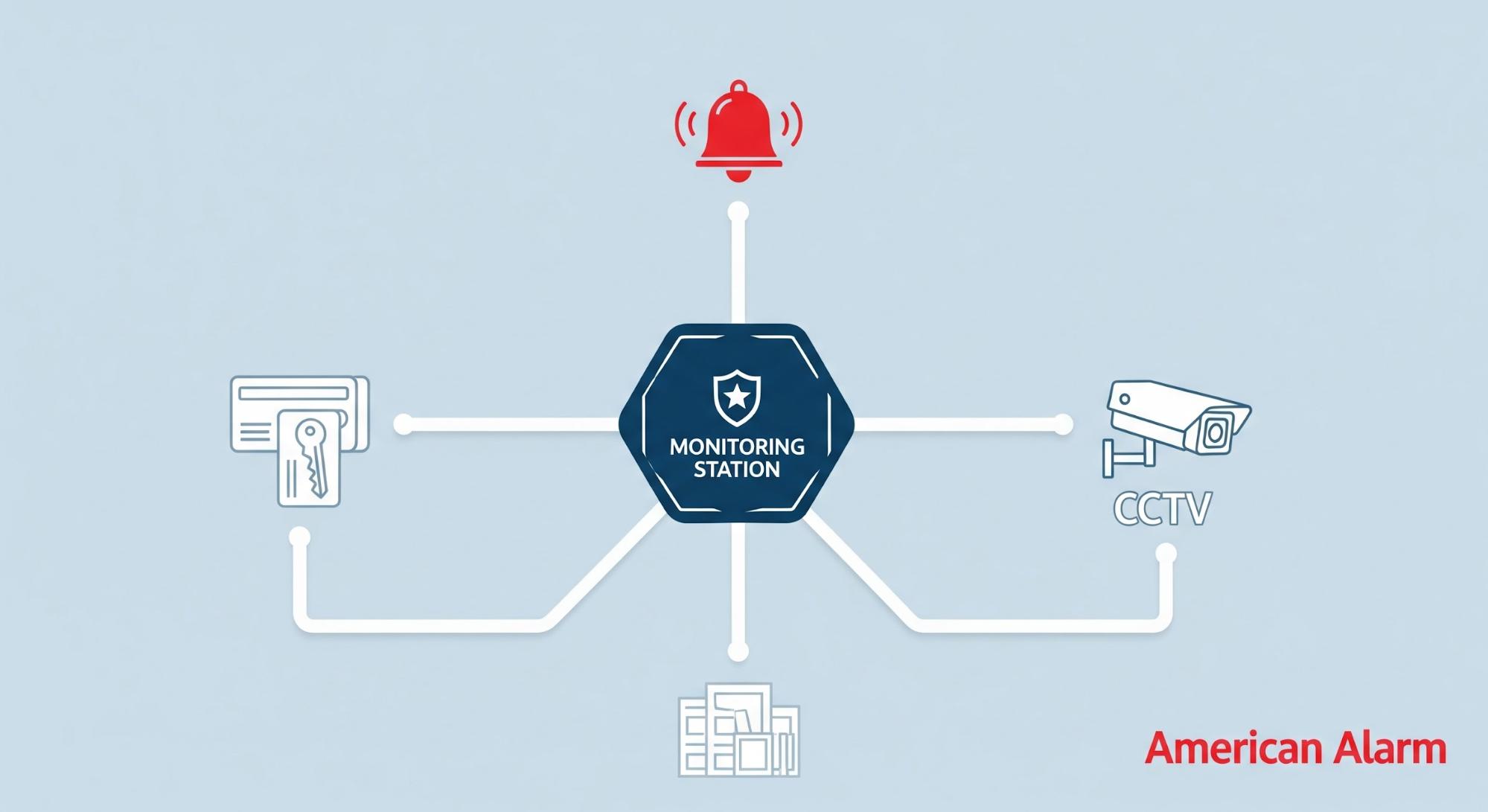
In today’s complex commercial environments, standalone safety systems are a thing of the past. Fire alarm integration is the process of connecting your building’s fire detection system with other critical safety and security components, such as access control, security cameras, and HVAC systems. This creates a single, intelligent, and cohesive network that acts in unison during an emergency. Instead of having isolated alarms that simply make noise, an integrated system orchestrates a building-wide, automated response. This transition from siloed alerts to a synchronized safety infrastructure is a game-changer for businesses in Atlanta and North Georgia. A modern, integrated building safety system doesn’t just detect a fire; it actively manages the situation to protect lives and property. It ensures that every component of your safety apparatus works together, from unlocking emergency exits to alerting first responders with precise information. This unified approach is the cornerstone of modern commercial fire alarm systems, moving beyond mere detection to intelligent, automated action.
How Systems Technically Connect
So, how do all these different systems—fire alarms, access control, video surveillance—actually talk to each other? It might sound like a complex technical puzzle, but the methods that make it happen are fairly straightforward. These connections are the secret sauce that transforms a group of standalone devices into a single, intelligent safety network for your property. Understanding the basics of how these components link up helps clarify what’s possible for your building’s safety infrastructure and highlights why a professional installation is crucial for creating a system you can count on in an emergency.
Hardwired Relays and Protocol Gateways
One of the most reliable and time-tested methods for connecting systems is through hardwired relays. You can think of a relay as a simple, physical switch. When your fire panel detects a problem, it sends a direct electrical signal to another system—like your access control—telling it to perform an action, such as unlocking emergency exit doors. For systems from different manufacturers that don’t naturally speak the same language, we use protocol gateways. According to research on fire alarm system integration, these devices act as translators, converting a proprietary signal into a universal one that other systems can understand, ensuring all your equipment works in harmony.
Modern APIs and IoT Platforms
For more advanced setups, Application Programming Interfaces (APIs) and Internet of Things (IoT) platforms provide a more dynamic and flexible way to connect your safety systems. An API acts as a software messenger, allowing different programs to share detailed data and instructions with one another, going far beyond a simple on/off signal. Taking this concept a step further, IoT platforms function as a central command center. They gather and process information from all your connected safety devices in one place, which allows for the creation of custom, automated responses to a wide range of events, turning your building into a truly smart and responsive environment.
Beyond the Siren: Levels of Fire Alarm Integration
It’s important to know that not all integrations are the same. The degree to which your fire alarm is connected with your other safety systems directly impacts the quality of information you receive during an emergency. You can opt for a basic setup that gives a general alert, or you can implement a highly detailed integration that provides specific, actionable intelligence when every second is critical. The difference between these levels is substantial, affecting everything from how quickly people can evacuate to how effectively first responders can handle the situation. Choosing the right level of integration is a key part of your building’s safety strategy, and it’s where professional expertise in designing and installing these services becomes invaluable.
Basic vs. Detailed System Information
A basic integration is straightforward and functions much like a light switch. When a fire is detected, the system sends a universal “alarm” signal to all connected components. This might trigger the unlocking of all emergency exits and send a general notification to a monitoring center. While this is a necessary first step, it lacks important context. In contrast, a detailed integration provides a much richer and more specific stream of information. As experts at Layered Solutions Inc. point out, this type of connection shares precise data directly from the fire alarm panel, giving you a complete and immediate picture of what’s happening and where.
The Value of Specific Alerts
The true benefit of a detailed integration is found in those specifics. Instead of receiving a generic “fire alarm” notification, your building managers and monitoring station get a clear message, such as “Smoke detector activated in the second-floor server room” or “Pull station triggered at the west entrance.” This level of detail is priceless in an emergency. It allows for a more focused response, guiding occupants away from the specific point of danger and giving first responders the exact location of the problem the moment they arrive. Having the right systems and products in place to enable this kind of detailed communication transforms your fire alarm from a simple noisemaker into a powerful information tool.
Connecting Fire Alarms and Access Control for Safe Evacuations
One of the most critical functions of fire alarm integration is its connection with building access control. During normal operations, your access control systems in Atlanta are designed to keep unauthorized individuals out. However, during a fire, these same systems can become dangerous obstacles if not managed correctly. When a fire alarm is triggered, an integrated system automatically sends a signal to the access control panel. This command can instantly unlock designated emergency exit doors along evacuation routes, allowing occupants to escape quickly and without confusion. Simultaneously, it can keep other doors secured to prevent unauthorized access during the chaos or to compartmentalize the fire. This delicate balance, maintaining security while ensuring immediate, safe egress, is a hallmark of a professionally designed integrated safety system. It’s an automated process that removes human error and saves precious seconds when they matter most.
Assisting First Responders with Occupant Data
Beyond ensuring a clear path for evacuation, integrated systems play a vital role in communicating with emergency services. When a traditional, non-integrated alarm sounds, it sends a generic alert. First responders arrive with limited information. An integrated system, however, transforms the response. Instead of just a siren, it transmits specific data—like the exact floor, the specific room, or which smoke detector was triggered. This level of detail is invaluable, providing critical situational awareness before emergency personnel even step foot inside. They can formulate a plan of action while en route, saving precious time and allowing for a much more effective and targeted response. This intelligent communication helps protect your occupants and gives first responders the head start they need to manage the situation safely.
Fire Alarms and Security Systems: Working Together in an Emergency
Integrating fire alarms into your broader security network creates a unified command center for emergency management. When a fire is detected, the event is immediately flagged across all platforms. This allows building managers and security personnel to view the alarm status alongside other security data, providing a complete picture of the situation. This level of coordination is a core component of comprehensive commercial alarm systems that protect assets from multiple threat vectors. This synergy provides invaluable assistance to first responders arriving on the scene in places like Alpharetta or Sandy Springs. They can be given immediate, accurate information about the fire’s location and status, helping them strategize before entering the building. Furthermore, integrated systems can help verify alarms, reducing the frequency and cost associated with false alarms. By having multiple data points, the system can provide a higher degree of certainty, ensuring that emergency resources are dispatched only when truly needed.
Get Eyes on the Scene: Integrating Fire Alarms with Video
Visual verification is a powerful tool in emergency response. By integrating fire alarms with your network of Atlanta security camera systems, you gain immediate situational awareness the moment an alarm is triggered. When a smoke or heat detector is activated, the system can automatically display the video feed from the nearest camera on a security monitor. This allows facility managers and monitoring professionals to see exactly what is happening in real-time. Is it a genuine fire, a cloud of dust, or a system malfunction? This instant visual data helps confirm the threat, assess its severity, and track its spread. For first responders, this information is critical for determining the safest entry points and understanding the conditions they will face inside, significantly improving their effectiveness and safety.
Visualizing Emergencies with On-Screen Maps
Let’s take visual verification a step further. Imagine not just seeing a live video feed, but also seeing the exact location of the alarm pinpointed on a digital floor plan of your building. Advanced integrated systems can do just that. When a detector is triggered, the system doesn’t just show you what’s happening; it shows you where it’s happening. This on-screen map provides immediate spatial awareness, which is incredibly valuable in a large or complex facility. Instead of trying to decipher a vague alert, your team can instantly see that the alarm is in the second-floor storage room or the west wing corridor. This capability, part of a modern commercial security service, transforms a chaotic event into a manageable situation by providing clear, actionable information right from the start.
More Than Alarms: Connecting to Your Building’s Core Systems
True building safety integration extends beyond just security components. Advanced systems interface with core building infrastructure to mitigate damage and protect occupants automatically.
- HVAC Systems: Upon fire detection, the system can automatically shut down the building’s HVAC (Heating, Ventilation, and Air Conditioning) units. This is a crucial step that prevents the circulation of smoke and toxic gases through the ductwork, containing the threat and keeping evacuation routes clearer.
- Elevator Recall: In a fire, elevators can become deadly traps. An integrated system will automatically recall all elevator cars to a designated level, typically the ground floor, and prevent them from being used by occupants, ensuring no one gets trapped.
- Mass Notification Systems: The fire alarm can trigger pre-recorded announcements over an intercom or digital signage system, providing clear, calm instructions for evacuation. This is especially vital in large venues, multi-story office buildings in Buckhead, or sprawling industrial facilities in Marietta.
Predictive Maintenance with Building Management Systems (BMS)
Integrating your fire alarm with a Building Management System (BMS) shifts your safety strategy from reactive to proactive. A BMS acts as the central nervous system for your facility, and when connected to your fire alarm, it does more than just react to emergencies. It can continuously monitor the health and status of every detector, panel, and component in your fire safety network. This connection allows the system to identify potential issues, like a detector nearing the end of its service life or a communication fault, long before they could cause a failure during a real event. This predictive capability is a cornerstone of modern NFPA fire alarm services, ensuring your system is always reliable and ready to perform when you need it most.
Understanding the Technology Behind the Integration
So, how do all these different systems actually talk to each other? At its core, integration is about creating a common language for your building’s safety and security devices. Think of it like a team where every player knows the playbook and can react instantly to a teammate’s actions. This is achieved through a combination of hardware and software that allows separate systems—like your fire panel, access control, and security network—to share critical information. When a fire detector is triggered, it doesn’t just send a signal to its own panel; it broadcasts that event across the integrated network. This message is then interpreted by the other systems, which execute their pre-programmed emergency protocols, like unlocking doors or directing video feeds to a monitor.
This seamless communication is what transforms a collection of individual devices into a single, intelligent response unit. The technology can range from hardwired connections that use relays to trigger specific actions, to more advanced software-based integrations using Application Programming Interfaces (APIs). The goal is always the same: to ensure that a trigger in one system prompts an immediate and appropriate reaction from all others. This level of sophisticated coordination is what we specialize in designing and implementing, ensuring all your safety and security services work in perfect harmony to protect your Atlanta-area business.
Types of Smoke Detectors: Ionization vs. Photoelectric
Not all smoke is the same, and neither are smoke detectors. The two primary types you’ll find in commercial buildings are ionization and photoelectric. Ionization detectors are best at sensing the small particles produced by fast, flaming fires—think a fire fueled by paper or flammable liquids. On the other hand, photoelectric detectors excel at spotting the larger particles from slow, smoldering fires, like a cigarette dropped on furniture or an electrical short. Because you can’t predict what kind of fire might occur, many modern safety codes and best practices recommend using dual-sensor detectors or a strategic mix of both types. A professional assessment of your facility can determine the right technology for each area, ensuring the earliest possible detection no matter how a fire starts.
What Standard Smoke Detectors Can’t Sense
While ionization and photoelectric detectors cover the most common fire scenarios, they can’t sense everything. Standard smoke detectors are designed to identify particles of combustion, but they may not react to threats like carbon monoxide (CO) or the release of certain chemical gases that don’t produce visible smoke. In environments like commercial kitchens, manufacturing plants, or facilities with fuel-burning appliances, specialized detectors are essential for comprehensive protection. These devices are designed to sense specific invisible threats, providing a critical layer of safety that standard smoke detectors might miss entirely.
How Devices Communicate: SLC vs. NAC Circuits
The wiring behind your fire alarm panel is the highway that carries all this critical information. Two key components are the Signaling Line Circuits (SLC) and Notification Appliance Circuits (NAC). The SLC is the “brain” of the operation; it’s a two-way digital loop that connects the control panel to intelligent devices like smoke detectors and pull stations. This circuit constantly communicates, carrying detailed data back and forth, so the panel knows the exact location and status of every device. The NAC, in contrast, is the “muscle.” It’s a one-way circuit that sends power from the panel out to the notification appliances—the horns, strobes, and speakers that alert occupants to evacuate. Understanding this distinction highlights the complexity and importance of a professionally installed and maintained fire alarm system.
How Integrated Systems Create a Safer Evacuation
The ultimate goal of fire alarm integration is to enhance life safety. By automating critical responses and providing clear communication, these systems make evacuations more efficient and orderly. Instead of a chaotic scene driven by a blaring horn, occupants are guided by a series of coordinated actions. Doors unlock, mass notifications provide instructions, and smoke is contained. This streamlined process is invaluable in large commercial properties or multi-tenant buildings where confusing layouts can hinder a speedy exit. It ensures that every technological asset in the building is working together to create the safest possible environment, transforming a potentially disorienting emergency into a structured and manageable procedure. This proactive approach is a cornerstone of effective commercial security solutions.
Enhancing Communication During an Emergency
An integrated system transforms a blaring siren into a powerful communication tool. Instead of just creating noise, it delivers critical information to everyone who needs it. For occupants, this means clear, pre-recorded instructions broadcast through intercoms or digital signs, guiding them to safety with calm authority. For building managers and monitoring centers, the system creates a unified command center. It flags the alarm’s exact location and can pull up a live feed from nearby security camera systems for immediate visual verification. This synergy provides invaluable assistance to first responders, giving them a clear picture of the threat’s location and severity before they even step foot inside. This level of advanced communication is a hallmark of the comprehensive safety services that protect modern Atlanta businesses.
Why Professional Monitoring is a Must for Integrated Systems
An integrated system is only as effective as the response it generates. That’s why 24/7 professional monitoring in Atlanta is essential. These complex, interconnected systems generate vast amounts of data that require expert interpretation. When an alarm sounds, a team of trained professionals at a central monitoring station is immediately alerted. They can verify the alarm using integrated video feeds, assess the situation, and dispatch the correct emergency services in seconds. This eliminates delays and ensures a rapid, appropriate response, whether it’s a fire in a Roswell office or a security breach in a Dunwoody retail store. For Atlanta business owners, expert commercial alarm monitoring provides invaluable peace of mind, knowing that their property is protected around the clock by professionals who understand how to manage sophisticated, integrated systems.
Staying Compliant: Georgia’s Fire Codes and Inspections
For commercial properties in Georgia, adhering to fire codes is not optional. Integrated systems must be designed and installed in strict compliance with NFPA 72 (National Fire Alarm and Signaling Code) as well as local ordinances in jurisdictions from Kennesaw to Johns Creek. These codes dictate everything from system design and equipment standards to testing and maintenance schedules. Navigating NFPA 72 compliance can be complex, and a failure to meet these standards can result in significant fines, business interruption, or even tragedy. Working with certified professionals who understand these regulations is critical. Experts ensure that every component is correctly integrated and that your business can secure the necessary NFPA certificates & fire alarm compliance documents. This guarantees not only the safety of your occupants but also the legal and operational integrity of your business, which is a key aspect of commercial fire safety in Atlanta.
The Importance of UL 864 Compliance
Beyond the broader NFPA codes, you’ll often hear about UL 864. This is a critical standard specifically for fire alarm control units and their components. Think of it as a seal of approval that guarantees the system has passed rigorous testing for reliability and safety. A UL 864 listing ensures that your fire alarm’s “brain” will function correctly under emergency conditions, from detecting a threat to signaling other integrated systems. This compliance is non-negotiable for a dependable system because true resilience comes from knowing every part can work together seamlessly. Ensuring your system meets this standard is a fundamental part of a professional installation, confirming that your building is protected by equipment that is proven to be safe and effective when it matters most.
Tailoring Fire Alarm Integration for Your Unique Building
The security challenges of a high-rise in Midtown Atlanta are vastly different from those of an industrial park in Norcross or a medical facility in Peachtree Corners. That’s why a one-size-fits-all approach to fire alarm integration doesn’t work. Customization is key to providing effective safety solutions for the diverse commercial landscape of North Georgia. A tailored system considers the unique layout, occupancy, and operational needs of each property. American Alarm specializes in designing and implementing these customized, integrated systems. By understanding the specific risks your business faces, we can build a cohesive safety network that provides optimal protection. It’s important to understand why choosing American Alarm means partnering with an expert dedicated to your specific safety needs. To discuss a custom solution for your property, contact American Alarm for a professional consultation.
See It in Action: Atlanta Industry Examples
- Retail: In a large retail center, integrated systems can unlock main exits while keeping service and inventory doors secured to prevent theft during an evacuation.
- Healthcare: For a hospital, integration is critical for controlling access to sensitive areas like pharmacies and patient wards while ensuring evacuation routes are clear for those with limited mobility.
- Education: On a school campus, a fire alarm can trigger lockdowns in unaffected areas, activate campus-wide notifications, and provide first responders with camera access to coordinate their response safely.
The Right Process for Successful Integration
Getting your safety systems to work together isn’t just about connecting a few wires; it’s about thoughtful design. The right process creates a unified command center where every component communicates instantly. When a fire is detected, this integration allows for automated emergency responses that enhance life safety. For example, the system can simultaneously unlock evacuation routes, send clear instructions through a notification system, and alert monitoring professionals. The ultimate goal is to make evacuations more efficient and orderly. Because every building is different, this process must be tailored to your property’s unique layout and operational needs. A professional approach ensures all your security services are orchestrated into a single, intelligent network that acts decisively in an emergency.
The Need for Specialized Maintenance Technicians
Integrated safety systems are sophisticated and require a high level of expertise to install and maintain. Technicians must have specialized knowledge of both fire detection and building security protocols, ensuring everything works in harmony without conflict. More importantly, they must be experts in national and local regulations, including NFPA 72. This ensures your system is compliant from the start. Ongoing maintenance from certified professionals is just as critical, as they understand how to test and service interconnected components to guarantee reliability. This expertise is essential for securing the necessary NFPA certificates & fire alarm compliance documents, protecting your business and giving you confidence that your system is always ready to perform.
Ready to Integrate Your Building’s Safety Systems?
Ready to enhance your commercial property’s safety, streamline emergency response, and ensure robust code compliance? Contact American Alarm today for a tailored quote on advanced fire alarm integration and comprehensive security solutions for your Atlanta or North Georgia business.
FAQs
What is the primary benefit of integrating my commercial fire alarm system in Atlanta? Answer: The primary benefit is a unified, intelligent safety network that ensures faster, more coordinated responses during emergencies. This improves occupant safety, streamlines evacuation procedures, and simplifies compliance with local Georgia fire codes. How does fire alarm integration impact emergency egress requirements for commercial buildings? Answer: Integrated fire alarm systems automatically interface with access control to unlock designated doors during an alarm. This ensures immediate and secure emergency egress, allowing occupants to evacuate safely and quickly while preventing unauthorized entry in other areas. Is professional monitoring necessary for integrated fire and security systems in Georgia? Answer: Yes, 24/7 professional monitoring is crucial. Integrated systems are complex, and expert monitoring ensures that any alarm, whether fire or security, is immediately verified and dispatched to the appropriate emergency services without delay, significantly enhancing overall safety and response times. What are the key code compliance considerations for integrated fire alarms in Atlanta? Answer: Key considerations include adherence to NFPA 72 (National Fire Alarm and Signaling Code) and specific local Atlanta and Georgia building codes. This requires professional design, installation, and regular inspection by certified technicians to ensure all integrated components meet strict safety and operational standards. Can existing fire alarm systems in my commercial property be integrated with other building safety systems? Answer: Often, existing fire alarm systems can be integrated with other building safety components, depending on their age and compatibility. A professional assessment by an expert like American Alarm can determine the feasibility and best approach for upgrading to a fully integrated system.
Related Articles
- Fire Alarm Integration: Essential for Atlanta Building Safety
- Atlanta Fire Alarm Installation & Monitoring | American Alarm Corp
- Commercial Fire Alarm Systems Installation Guide for Georgia | American Alarm Corp
- Commercial Building Fire Alarm Systems: A GA Guide
- Atlanta Fire Alarm Installation & Monitoring for Businesses


Leave a Reply
Want to join the discussion?Feel free to contribute!