Top Commercial Access Control Companies Compared
Business security has evolved far beyond a simple lock and key. Today’s technology allows you to manage who enters your building from an app on your phone, grant temporary access to a delivery driver while you’re across town, and receive instant alerts for unusual activity. This isn’t a futuristic concept; it’s the new standard for smart, efficient business protection. These advanced systems offer a level of control and convenience that was once reserved for large corporations. In this guide, we’ll explore the latest advancements in access control and introduce the innovative commercial access control companies that are making this technology accessible and affordable for businesses of all sizes.
Key Takeaways
- Match the System to Your Daily Operations: The best access control solution fits how your business actually runs. Prioritize key features like mobile access for convenience, remote management for flexibility, and seamless integration with your existing cameras and alarms for a complete security overview.
- Plan for Your Future Growth: Your business won’t stand still, and your security system shouldn’t either. Choose a scalable solution that allows you to easily add more users or secure new locations down the road, protecting your initial investment as you expand.
- Select a Partner, Not Just a Product: The company you choose is just as important as the hardware they install. Look for an experienced provider who understands your industry and offers reliable, local support to ensure your system works flawlessly when you need it most.
What is a Commercial Access Control Company?
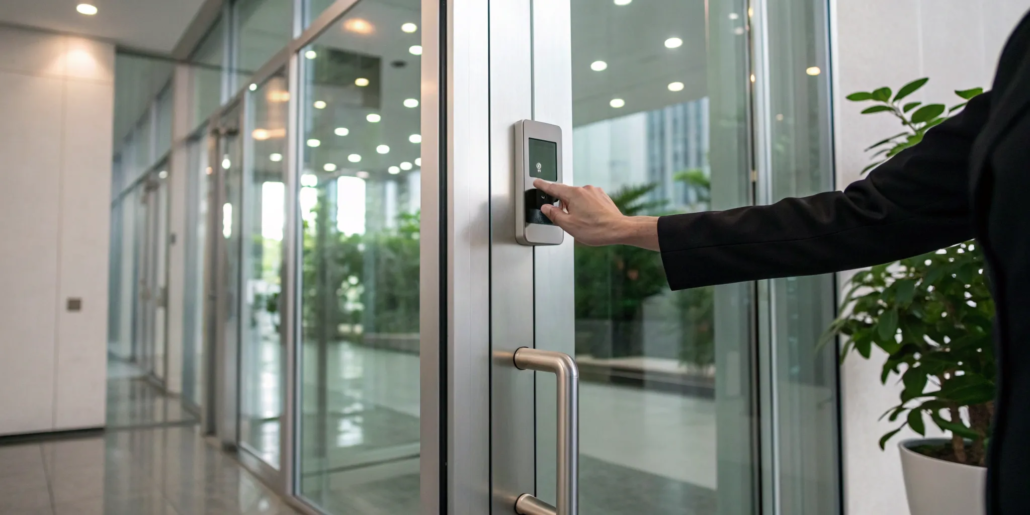
Ever wonder how you can manage who walks through your doors without juggling a giant ring of keys? That’s where a commercial access control company comes in. In simple terms, these companies design and install systems that let you decide who can enter your building, specific offices, or sensitive areas—and when. Instead of a traditional lock and key, these systems use credentials like key cards, PIN codes, mobile apps on your phone, or even biometrics like fingerprints to grant access.
This isn’t just about locking doors; it’s about creating a more secure and manageable environment for your team and protecting your company’s assets. A major benefit is the digital trail. The system keeps a log of who enters and exits, which gives you a clear record for accountability. Modern access control systems are a fundamental part of a solid business security plan, helping to safeguard your property, people, and important information from unauthorized entry.
You might think this level of security is reserved for large corporations, but that’s no longer the case. Businesses of all sizes, from local retail shops to growing office complexes, rely on these systems. A professional access control company doesn’t just sell you equipment. They act as your security partner, helping you figure out the best setup for your unique space, handling the complete installation, and providing the support you need to keep everything running smoothly.
A Look at the Top Commercial Access Control Companies
Choosing the right company to handle your business’s access control can feel like a huge decision, and it is. You’re not just buying hardware; you’re investing in the safety of your property, your assets, and your people. The market is filled with options, from global corporations to local specialists, each offering a different approach to managing who comes and goes. So, how do you sort through the noise and find the right fit for your specific needs?
The best place to start is by understanding what the top players bring to the table. Some companies excel at cloud-based solutions that you can manage from anywhere, while others are known for their heavy-duty hardware designed for high-security environments. You’ll find providers that focus on slick, mobile-first experiences and others that offer deeply integrated systems for large, complex facilities. We’re going to walk through some of the most respected names in the industry to give you a clear picture of their strengths. This will help you identify what features matter most to you and find a partner who can deliver a system that truly works for your business.
American Alarm: Atlanta’s Trusted Security Partner
As a dedicated Atlanta-area provider, American Alarm offers a personal touch that larger national companies often can’t match. We specialize in creating custom access control systems that are tailored to your business, whether you need to secure a single stockroom door or manage hundreds of entry points across a large facility. Our systems are designed for simplicity and efficiency, featuring browser-based administration that lets you manage access without needing costly on-site servers or IT infrastructure. We believe in a unified approach to protection, which is why our access control solutions integrate smoothly with your security alarms and video surveillance, giving you a complete and cohesive overview of your property’s safety from one central point.
Brivo: Cloud-Based Access Control
Brivo is a major player in the cloud-based access control world. Their entire platform, the Brivo Security Suite, is built around the idea of managing your building’s entry points from anywhere with an internet connection. This is a fantastic option for business owners who are always on the go or manage multiple properties. By consolidating different tools into one user-friendly platform, they make it simpler to handle day-to-day operations. If you’re looking for a modern, flexible system that gets rid of the need for on-site servers and allows for easy remote management, Brivo’s cloud solution is definitely one to consider.
Honeywell: Integrated Systems for Large Businesses
Honeywell is a household name for a reason. They are known for building robust, reliable systems that are particularly well-suited for large businesses and enterprises, especially those with multiple locations. Their strength lies in integration. Honeywell’s access control systems are designed to work seamlessly with their other security products, creating a powerful, unified environment. They also offer a wide range of entry methods, from traditional key cards to modern mobile credentials and biometrics like fingerprints. For a large-scale organization that needs a comprehensive and scalable solution from a reputable brand, Honeywell is a strong contender.
Kisi: Access Control from Your Smartphone
If you’re looking for a system that feels modern, intuitive, and mobile-first, Kisi is worth a look. Their entire approach is centered around using smartphones as digital keys, which offers incredible convenience for both employees and administrators. Their app is known for being clean and user-friendly, allowing you to grant or revoke access, track entries, and manage permissions with just a few taps. Kisi also integrates with a variety of popular office tools, making it a great fit for tech-forward companies that want their building access to work as smoothly as their other software.
Bosch: High-Tech Biometrics and Readers
Bosch has built a reputation for German engineering, and that extends to their security products. They are known for high-quality, durable hardware that can stand up to demanding environments. Bosch is often the choice for facilities with complex security requirements, such as industrial plants or research labs, that need more than just a basic system. They offer advanced monitoring capabilities and integrate well with other Bosch building systems, like video surveillance and intrusion alarms. If your top priorities are durability, reliability, and access to high-tech features, Bosch delivers a powerful and resilient solution.
ButterflyMX: Smart Systems for Property Managers
ButterflyMX has carved out a specific niche by focusing on the needs of multi-tenant residential and commercial properties. They cleverly combine access control with a video intercom system, all managed through a smartphone app. This makes life easier for everyone—tenants can grant access to visitors remotely, and property managers can oversee entry permissions without having to deal with physical keys or fobs. Their system is designed to simplify guest and delivery access while maintaining a secure environment. For apartment buildings, student housing, or managed office spaces, ButterflyMX offers a smart, streamlined solution that residents and tenants love to use.
Key Features to Look for in an Access Control System
Choosing an access control system can feel like a big decision, but it really comes down to finding the right features for your business. Not all systems are built the same, and what works for a small retail shop might not be the best fit for a large office building with multiple entry points. The goal is to find a solution that secures your property without making life difficult for you or your employees.
Think about your daily operations. Who needs to get in and when? Do you need to track entry and exit times? Do you have sensitive areas that require extra security? Answering these questions will help you pinpoint the features that matter most. A great system should feel like a natural part of your workflow, giving you peace of mind and control over who comes and goes. Let’s walk through the key features you should have on your checklist.
Ways to Get In: Key Cards, Biometrics, and Mobile Access
The days of handing out metal keys are long gone. Modern access control systems offer several ways for authorized people to get in, each with its own benefits. You can choose from credentials like key cards or fobs, keypads that require a PIN, or even biometric readers that use a fingerprint or facial scan. These methods help you manage exactly who can enter your building or specific rooms.
Many businesses are also moving toward mobile access, which lets employees use their smartphones as their key. This is incredibly convenient since most people always have their phones with them. When considering your options, think about what will be easiest for your team to use and what level of security you need for different areas of your business. The right access control products will offer a mix of these options to fit your needs.
How It Works with Your Current Security Setup
Your access control system shouldn’t operate on an island. For the best protection, it needs to work seamlessly with the other security measures you already have in place. A truly effective system will integrate with your existing security cameras, alarm systems, and even your IT network. This creates a unified security front that’s much stronger and easier to manage.
For example, when someone uses their credential to open a door, the system can automatically trigger a nearby camera to record the event. This gives you a visual record tied to every entry, which is invaluable for security audits or investigating an incident. When you explore security services, always ask how a new access control system can connect with your current setup to create a more comprehensive and automated security solution.
Manage Access from Anywhere, Anytime
As a business owner, you can’t be on-site 24/7. That’s why remote management is one of the most valuable features of a modern access control system. Look for a cloud-based solution that lets you manage your security from anywhere with an internet connection. Whether you’re at home, on vacation, or just running errands, you can use your phone or laptop to grant or revoke access, check activity logs, or even unlock a door for a delivery.
This level of control offers incredible flexibility and peace of mind. If an employee leaves the company, you can instantly disable their access without having to track down a physical key. If there’s an after-hours emergency, you can grant temporary access to first responders. To see how this could work for your business, you can contact us for a consultation and explore your options.
A System That Grows with You and Won’t Let You Down
Your business isn’t static, and your security system shouldn’t be either. It’s important to choose a system that can scale with you. As your company grows, you might add more employees, open new locations, or need to secure more doors. A scalable system allows you to easily expand your security without having to start from scratch, saving you significant time and money in the long run.
Reliability is just as crucial. Your access control system is your first line of defense, so it has to work flawlessly every single time. You need a system backed by a company with a proven track record of dependability. At American Alarm, we’ve been protecting Atlanta businesses since 1995, so we understand the importance of installing robust systems you can always count on.
Comparing Features and Pricing: What to Expect
Choosing an access control system means looking closely at what different companies offer and how they price their services. It’s not always an apples-to-apples comparison, but understanding the key differences in features, cost structures, and technology will help you find the perfect fit for your business. Let’s break down what you can expect to see as you explore your options.
Side-by-Side Feature Comparison
When you start comparing providers, you’ll notice they often specialize in different areas. Some companies bundle everything into a single platform, combining access control with video and visitor management. Others focus heavily on cloud-based systems that let you manage everything remotely from your phone or computer. At American Alarm, we focus on creating integrated access control systems that work seamlessly with your security alarms and video surveillance. This gives you a complete picture of your business’s security, all managed from one place, providing you with better oversight and control.
Understanding the True Cost: What’s Included?
The price for an access control system can vary quite a bit, typically ranging from $500 to $5,000 per door. This cost depends on the type of hardware you choose, the software features you need, and the complexity of the installation. It’s important to ask what’s included in the quote. We design our systems to be scalable, whether you need to secure one door or one hundred. A major benefit is the long-term savings—you’ll no longer have to pay a locksmith to change the locks every time an employee leaves. Check out our current specials to see how we make security affordable.
Hardware vs. Software: What’s the Difference?
Getting familiar with the basic components will make your decision easier. The hardware includes the readers (like key card scanners or keypads) and the locks on the door. The software is the brain of the operation, where you grant or remove access and monitor activity. Systems can be wired directly into your building or be IP-based, using your network for more flexibility. The software can be hosted on-premise on your own server or be cloud-based, which allows for easy remote management. We can help you figure out which combination of systems and products makes the most sense for your specific needs.
Common Roadblocks When Installing Access Control (and How to Avoid Them)
Upgrading your security with a new access control system is a smart move, but the installation process can have its challenges. Knowing what to expect can make the transition much smoother. From technical compatibility to team training, a little foresight helps you avoid common hurdles and ensures your new system is a success from day one. Here’s a look at some frequent roadblocks and how to clear them.
Making Sure Everything Works Together
One of the biggest challenges is ensuring your new access control system can integrate with your existing security setup. If your system can’t communicate with your security cameras or alarm monitoring, you’re left with security gaps and operational headaches. Compatibility is crucial. Before you commit to a system, confirm it will work seamlessly with the technology you already have. Working with a professional installer can help you assess your current infrastructure and choose from a range of systems and products that will function as a single, unified solution, not a collection of separate parts.
Getting Your Team Comfortable with the New System
A new system is only effective if your team can use it properly. If the interface is confusing or managing credentials is a chore, people will find workarounds that can compromise security. A user-friendly system is essential for quick adoption. Look for a solution with a simple, intuitive dashboard that makes it easy to add or remove users, change permissions, and pull reports. The goal is to make security feel effortless for your team, not like another complicated task on their to-do list. A smooth user experience helps everyone feel confident and in control.
Keeping Your Project on Budget
Sticking to a budget is a priority for any business project, and access control is no exception. It’s important to establish a clear budget upfront, but be wary of cutting corners on critical features just to save a few dollars. The cheapest option isn’t always the best value, especially if it lacks the reliability or scalability your business needs. Think of it as an investment in your company’s safety and efficiency. You can often find great value with bundled security specials that provide comprehensive protection without breaking the bank, giving you peace of mind that your property is secure.
Trusting Your System to Work When It Matters Most
An access control system has to be dependable—period. If the system goes down, your doors might not lock, or your employees could be stuck outside, creating both security risks and operational delays. Reliability is non-negotiable. Choose a system from a reputable brand known for its durability and consistent performance. Just as important is the company that installs and services it. Professional installation ensures everything is set up correctly from the start, and ongoing support means help is available when you need it. To discuss a reliable solution for your business, feel free to contact us for a consultation.
Who Uses Which Type of Access Control System?
Not every business needs the same level of security, which is why access control systems aren’t one-size-fits-all. The right solution depends on your industry, the size of your team, and the layout of your building. A small retail shop has very different needs from a sprawling hospital or a multi-site corporation. Understanding these differences is the first step to finding a system that protects your property without getting in the way of your daily operations.
Choosing the right system means thinking about who needs access, where they need to go, and when. Do you need to track employee hours, secure sensitive documents, or manage visitor access at a loading dock? Each scenario calls for a different set of features. The goal is to find a solution that fits seamlessly into your workflow, providing robust protection that feels intuitive, not intrusive. Let’s look at what different types of businesses typically use to secure their spaces and keep their people safe.
For Small Businesses and Shops
If you run a small business, you need a security solution that’s straightforward and reliable. You don’t have time for a complicated system that requires constant attention. For most shops and small offices, the goal is simple: keep unauthorized people out while making it easy for employees to come and go. This is where user-friendly access control systems shine. Systems that use key cards, fobs, or keypad codes are popular because they are easy to install and manage. You can quickly grant or revoke access without the hassle of changing locks, giving you peace of mind without a steep learning curve.
For Schools and Healthcare Facilities
Schools and healthcare facilities handle sensitive information and are responsible for the safety of many people. For these organizations, access control is about more than just locking a door; it’s about creating a secure environment. These places need systems that can keep a detailed log of who enters and exits specific areas, like a server room or pharmacy. Features like custom alerts are essential for flagging unusual activity. The ability to schedule access—for example, restricting entry to certain wings after hours—and implement emergency lockdowns adds another critical layer of protection for students, patients, and staff.
For Large Companies with Multiple Locations
Managing security across multiple locations can be a major challenge. Large companies need a way to maintain consistent security policies without having to be physically present at every site. This is where cloud-based access control comes in. Systems like those offered by Brivo allow you to manage security for all your locations from a single, centralized platform. From your main office in Atlanta, you can grant a new employee access to a building across the state or instantly revoke credentials for a departing team member. This centralized approach simplifies administration and ensures your security standards are upheld everywhere.
For Warehouses and Logistics Centers
Warehouses and logistics centers are busy hubs with constant movement of people, vehicles, and goods. Security here is about controlling the flow. An access control system needs to manage entry points for both employees and third-party vendors, from the front office to the loading dock. The best systems for these environments often integrate directly with door operators and other loading equipment. This gives you full control over every entry point, ensuring that only authorized personnel can access sensitive areas and that your operations run smoothly and securely.
What’s Next in Access Control Technology?
Access control isn’t just about who gets in and who stays out anymore. The technology is evolving quickly, becoming more integrated, intelligent, and user-friendly. Keeping an eye on these advancements helps you make smarter decisions for your business, ensuring your property is protected with the best tools available. From cloud-based management to using your smartphone as a key, the future of access control is focused on providing seamless, robust protection that adapts to your needs. These trends aren’t just futuristic concepts; they are practical solutions that businesses are adopting right now to make their operations smoother and more secure.
The Move to the Cloud
One of the biggest shifts in access control is the move away from on-premise servers to cloud-based systems. Instead of housing bulky hardware that needs constant maintenance, you can manage your entire system online from any device. This gives you the power to grant or revoke access, monitor entry logs, and change schedules remotely, whether you’re at the office or at home. It’s no surprise that a majority of organizations are planning to invest in modern access control systems. Cloud management offers incredible flexibility, making it easier to scale your system as your business grows without the headache of a major hardware overhaul.
Touchless and Biometric Entry
The demand for convenient, touch-free solutions has accelerated the adoption of biometric technology. Systems that use fingerprints, facial recognition, or even iris scans are becoming more common and affordable for commercial use. These methods offer a higher level of protection because they verify a person’s unique biological traits, which are nearly impossible to duplicate or steal. Biometrics simplify the entry process for authorized individuals while creating a formidable barrier for anyone who shouldn’t be there. It’s a clean, fast, and highly secure way to manage who comes and goes, eliminating the risks associated with lost or stolen key cards.
Using Your Phone as Your Key
Think about how much you already rely on your smartphone. Now, it can also be the key to your business. Mobile access control turns an employee’s smartphone into their credential. Through a secure app, they can unlock doors with a simple tap or even by just approaching the reader. For managers, this is a game-changer. You can issue or revoke digital keys instantly without ever needing to collect a physical card. This approach is not only incredibly convenient for your team but also gives you precise, real-time control over your building’s access points, all from a central dashboard.
Smarter Security with AI and Better Protection
Artificial intelligence (AI) is making access control systems more proactive. Instead of just recording events, smart systems can now analyze them. By integrating with your camera systems, AI-driven analytics can learn the normal rhythm of your business—who typically arrives when, which doors are used most often, and what constitutes a normal delivery. When the system detects unusual activity, like someone trying to access a sensitive area after hours, it can instantly send an alert. This intelligent oversight helps you spot potential risks before they become real problems, adding a powerful layer of protection to your business.
What Are Real Customers Saying?
When you’re considering a new system for your business, it helps to hear from people who have already been there. Looking at feedback on access control systems, a few key themes pop up again and again. Business owners aren’t just talking about locking doors; they’re talking about how these systems change the way they operate for the better, bringing both security and simplicity to their day-to-day.
One of the biggest takeaways is that access control is no longer seen as a tool just for giant corporations. What we’re hearing now is that businesses of all sizes are seeing the benefits, from small retail shops managing stockroom access to mid-sized offices keeping track of who comes and goes after hours. This is paired with a huge appreciation for convenience. The ability to manage everything from one central place is a huge win, and people love the efficiency of cloud-based systems that let them grant or revoke access remotely.
Flexibility is another major point of praise. No two businesses are exactly alike, and owners appreciate that modern access control reflects that. They value having options for how people get in, whether it’s with key cards, fobs, or even their smartphones. This versatility means you can create a system that fits your team’s needs perfectly. This level of tailored access control makes managing entry points for employees, vendors, and visitors much simpler.
Finally, there’s a lot of positive buzz around the innovations happening in the field. Business owners are genuinely excited about how new technology is making their properties safer and smarter. The move toward cloud access control and the integration of features like biometrics aren’t just cool gadgets; they’re seen as practical upgrades that offer better protection. People view access control not as a static expense, but as an evolving investment that will continue to add value.
How to Choose the Right Access Control Company for Your Business
Picking the right access control company is about more than just hardware; it’s about finding a partner who gets your business. The right provider will take the time to understand your daily operations, your security concerns, and your budget to recommend a system that truly fits. Whether you’re a small shop or a large corporation, the goal is to find a company that offers reliable technology and the support you need to keep your property and people safe.
Best Options for Small to Medium Businesses
Access control systems aren’t just for giant corporations with sprawling campuses. Today, businesses of all sizes can benefit from managing who comes and goes. For small to medium businesses, the key is finding a system that is both affordable and easy to manage without a dedicated IT department. Look for a provider that offers user-friendly software and scalable solutions that can grow with you. A local company can be a huge advantage, offering personalized service and quick support when you need it. The best access control systems for your business will give you peace of mind without complicating your day-to-day.
Top Picks for Enterprise-Level Needs
Large businesses with multiple locations or highly sensitive areas have a different set of needs. For enterprise-level operations, you’ll want a robust system that can handle thousands of users across various sites. Look for advanced features like detailed audit trails, integration with video surveillance and alarm systems, and centralized management from a single dashboard. The access control industry is constantly evolving, with new technologies making systems more powerful and interconnected. A company with experience in complex, large-scale installations will be essential to ensure your system is designed and implemented correctly from the start.
Finding the Right Fit for Your Industry
Every industry has unique security challenges. A healthcare clinic needs to secure patient records and pharmaceutical storage, while a warehouse must manage employee and delivery driver access to loading docks. Before choosing a provider, think about your specific needs. How many doors do you need to secure? How many people need access? Does the system need to connect with other tools you already use, like property management software? The best partner will have experience working with businesses in your field and can design a solution that meets your operational and regulatory requirements. A company that offers a wide range of security services can often provide a more comprehensive and tailored plan.
Related Articles
- Top Commercial Alarm Systems to Protect Your Business in 2025
- Why Atlanta Businesses Need Access Systems
- Security Monitoring and Access Control for Business
- Top Access Control Systems for Enhanced Security and Peace of Mind
- Access Control Systems for Enhanced Security and Peace of Mind
Frequently Asked Questions
Is an access control system really necessary for my small business? It’s a great question, and for many small businesses, the answer is a definite yes. Think of it less as an expense and more as a tool for simplifying your operations. Beyond the obvious security benefits, it eliminates the need to change the locks every time an employee leaves. You can also see who is coming and going, which is helpful for accountability. It gives you a level of control and peace of mind that traditional keys just can’t offer.
What’s the difference between a cloud-based system and one with an on-site server? The main difference comes down to where your system’s information is stored and how you manage it. An on-site system uses a dedicated computer or server at your location to run the software. A cloud-based system, on the other hand, lets you manage everything through a secure website or app from anywhere with an internet connection. This remote flexibility is why many modern businesses prefer cloud solutions.
What happens if an employee loses their key card or phone? This is one of the best reasons to have an access control system. Instead of calling a locksmith and paying to have your locks rekeyed, you can simply log into your system and deactivate the lost card or mobile credential in seconds. The lost item becomes useless for entry, and you can issue a new one just as quickly. It turns a potential security crisis into a minor administrative task.
Can I add more doors to my system later on? Absolutely. A good access control system is designed to be scalable, meaning it can grow right alongside your business. Whether you’re expanding into a new office suite or just want to secure an additional storeroom down the hall, adding new doors to your existing system is a straightforward process. It’s an investment that adapts to your needs over time.
Why should I choose a local Atlanta company over a big national brand? While national companies have brand recognition, a local partner offers a more personal level of service. A local provider understands the specific security landscape in the Atlanta area and can offer more tailored advice. When you need support or service, you’re working with a team that’s right around the corner, not a call center hundreds of miles away. This often means faster response times and a relationship with people who know you and your system personally.

Leave a Reply
Want to join the discussion?Feel free to contribute!